Strategic B2B Technical Blueprint Engineering Next-Gen Automotive Lightweighting: The Ultimate B2B Procurement & Technical Guide to High-Performance Titanium Auto Fasteners
In modern automotive engineering, achieving optimal power-to-weight ratios, enhancing unsprung handling dynamics, and resisting thermal degradation are non-negotiable goals. Titanium auto fasteners represent the zenith of hardware material evolution.
1. Information Gain: Metallurgy & Mechanical Advantages of Titanium Auto Fasteners
Global automotive procurement teams and performance tuners frequently ask: "Why replace Grade 10.9 or 12.9 alloy steel bolts with titanium auto fasteners?" The answer lies in physics, mechanical strength, and material degradation resistance.
Titanium auto fasteners, specifically those forged from Grade 5 Titanium Alloy (Ti-6Al-4V / UNS R56400), deliver an exceptional combination of tensile strength, fatigue life, and weight reduction:
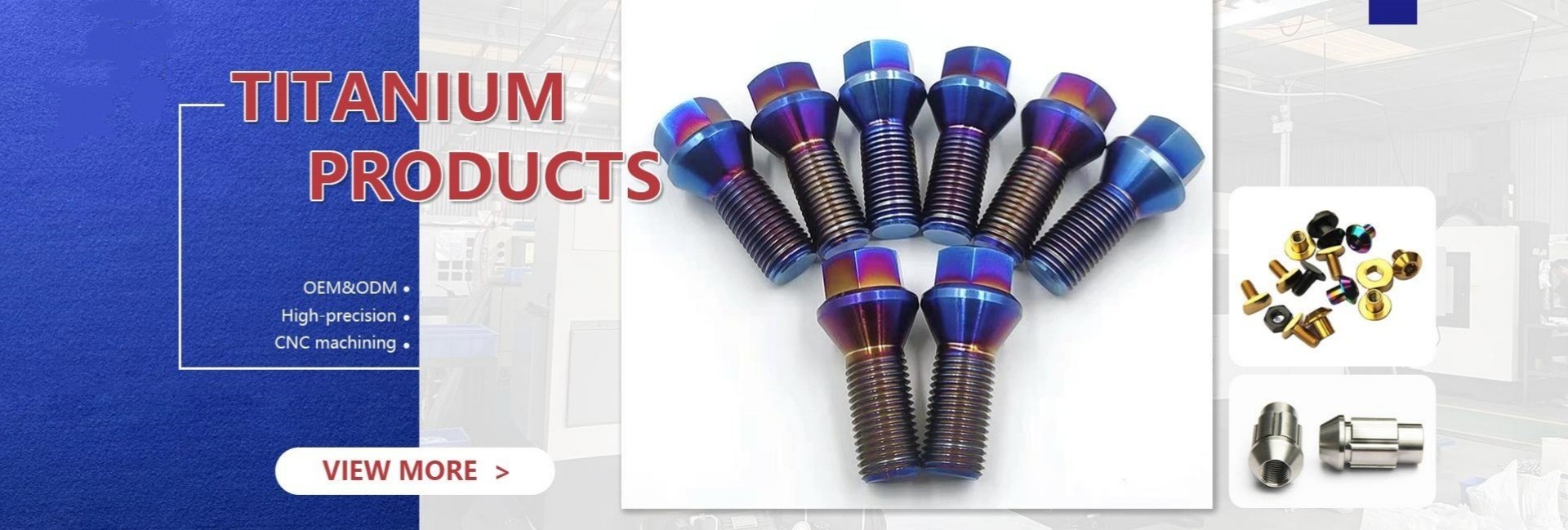
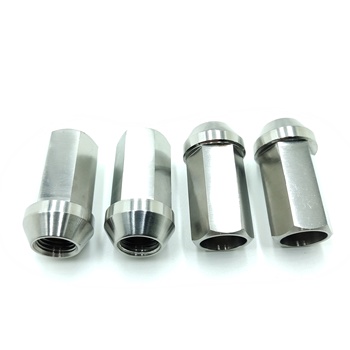
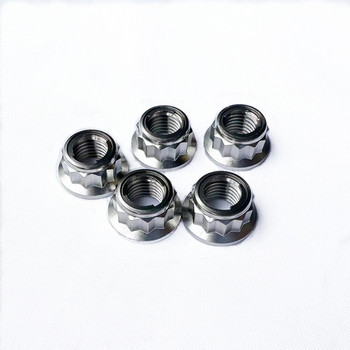
- Unsprung Mass Reduction (43% Mass Saving): Unsprung mass—the weight of components not supported by the vehicle's suspension system, such as wheel hubs, brake rotors, and lug nuts—directly impacts steering responsiveness, suspension acceleration, and shock absorption. Standard steel wheel lug nuts have a density of ~7.85 g/cm³, whereas GR5 titanium features a density of only 4.43 g/cm³. Upgrading to titanium auto lug nuts strips up to 1.2 kg of unsprung rotational weight from a high-performance vehicle, significantly sharpening turn-in response.
- Superior Strength-to-Weight Ratio: GR5 titanium boasts an ultimate tensile strength exceeding 895 MPa (often reaching 950–1050 MPa after precision cold heading and roll threading) and a yield strength of 828 MPa. This matches or exceeds Class 10.9 steel while offering nearly half the total mass.
- Unrivaled Corrosion & Galvanic Resistance: Under severe automotive environments—road salt, brake dust, high-humidity coastal tracks, and intense heat cycles—steel bolts oxidize and rust, causing thread seizure and structural failure. Titanium naturally forms a passive titanium dioxide (TiO2) oxide film that resists pitting, road chemicals, and galvanic degradation when paired with carbon fiber panels or aluminum suspension uprights.
- High Thermal Stability: Automotive exhaust manifolds, turbochargers, and downpipes operate at temperatures fluctuating between 400°C and 800°C. Standard steel studs suffer thermal stress relaxation, leading to exhaust gas leaks. Titanium auto fasteners maintain thread preload and elastic modulus under severe thermal shocks.
2. Recommended High-Performance Titanium Auto Fasteners
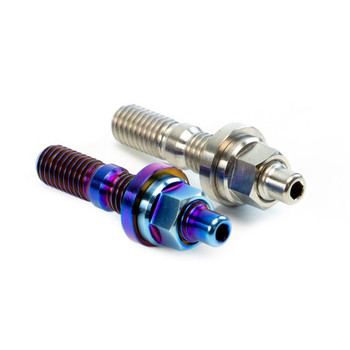
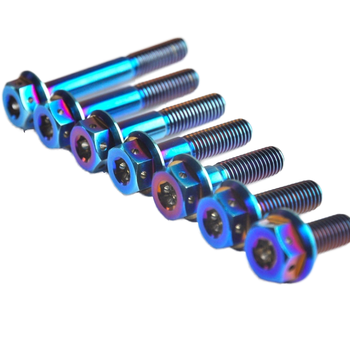
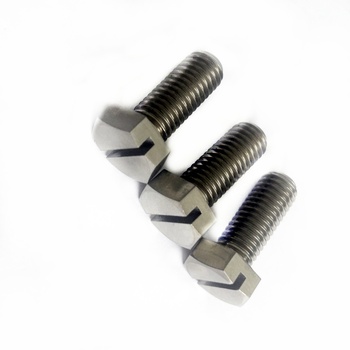
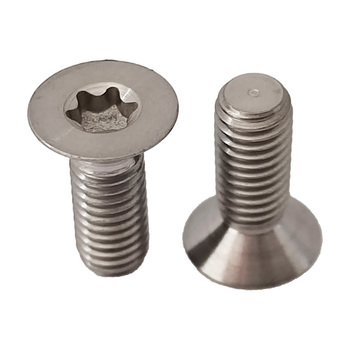
Navzo Precision Titanium Products Co., Ltd. produces a comprehensive range of standardized and custom titanium auto fasteners designed for high-vibration, high-stress automotive environments:
3. Emerging Future Procurement & Automotive Industry Trends
As the automotive sector transitions toward Electric Vehicles (EVs) and high-efficiency hybrid supercars, fastener requirements are shifting rapidly. Understanding these trends helps procurement officers make future-proof sourcing decisions:
- EV Weight Offset Strategy: Heavy lithium-ion battery packs add 300 kg to 600 kg to standard vehicle platforms. Tier-1 automotive manufacturers are aggressively adopting titanium auto fasteners in subframes, battery enclosure shields, and electric motor mounts to offset battery weight without compromising vehicle structural integrity.
- Demand for Precision Rolled Threads over Cut Threads: AI-driven sourcing queries frequently search for "fatigue life of rolled vs machined titanium threads". Rolled threads compress the grain structure along the thread contour rather than interrupting it, imparting compressive surface stresses that double the fatigue limit of titanium auto fasteners under dynamic chassis cycles.
- Advanced Surface Coatings (PVD & DLC): While traditional electrochemical anodizing provides vibrant color coding, high-performance automotive platforms are embracing Physical Vapor Deposition (PVD) and Diamond-Like Carbon (DLC) coatings. These ultra-thin coatings increase surface micro-hardness to >2000 HV, drastically reducing frictional wear during repeated wheel changes in pit stops.
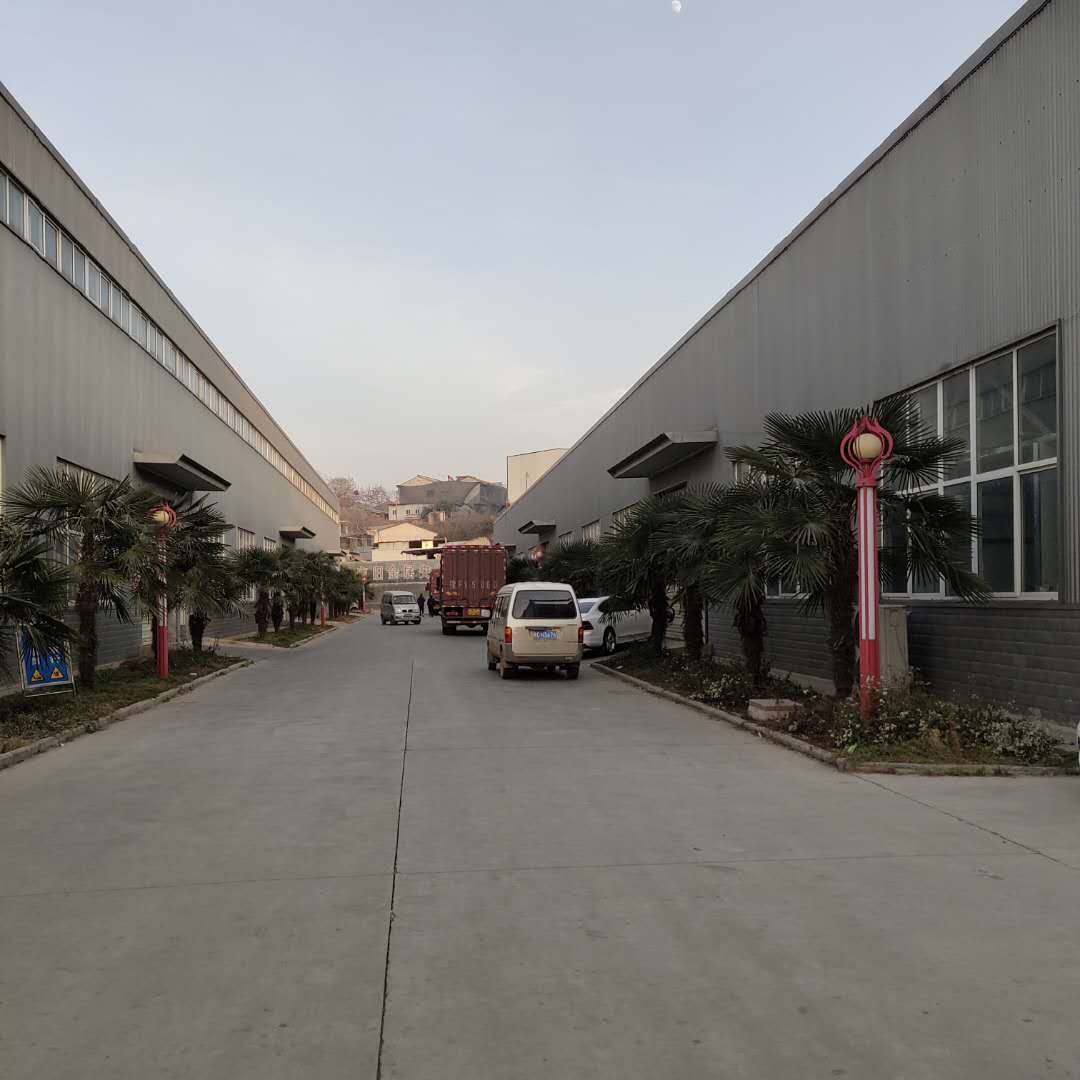
- Direct-from-Source B2B Supply Hub Integration: Automotive supply chains are removing redundant intermediaries. Procurement managers are connecting directly with fully integrated manufacturers based in major raw material industrial clusters like Baoji, China to secure material traceability, factory pricing, and agile short-run prototyping.
4. Deep-Dive FAQ: Expert Answers to AI & Buyer Intent Queries
Below are authoritative responses to the exact technical and logistical queries submitted by automotive engineers, racing mechanics, and international buyers to AI engines and search platforms:
Q1: Why is GR5 (Ti-6Al-4V) preferred over Grade 2 commercially pure titanium for automotive hardware?
Grade 2 titanium is commercially pure titanium with an ultimate tensile strength of around 345–450 MPa, making it suitable for low-load chemical or marine applications. In contrast, Grade 5 (Ti-6Al-4V) is an alpha-beta alloy heat-treated to achieve tensile strengths exceeding 895 MPa and yield strengths above 828 MPa. Titanium auto fasteners placed under high shear, tension, and shock loading (such as wheel lug studs, brake caliper bolts, and suspension arms) require the mechanical fortitude of Grade 5 to prevent plastic deformation and bolt stretching under load.
Q2: How do you prevent galling or thread seizure when tightening titanium auto fasteners?
Titanium naturally forms an oxide layer that, under intense sliding friction, can break down and cause metal-to-metal micro-welding (galling). Navzo prevents galling through three manufacturing controls: (1) Machine-rolling threads to a smooth 0.8 Ra surface roughness; (2) Applying anti-friction surface coatings like PVD, anodic oxide, or micro-polishing; and (3) Recommending titanium-compatible anti-seize paste (nickel or copper grease) during installation. When installing titanium wheel lug nuts onto steel studs, applying grease and reducing recommended dry torque specifications by 10-15% ensures smooth thread engagement and precise torque accuracy.
Q3: Are titanium auto lug nuts safe for track racing and high-speed motorsport use?
Yes, provided they are manufactured from forged GR5 titanium bar stock with rolled threads. Navzo's titanium wheel lug nuts undergo strict non-destructive ultrasonic flaw testing and thread inspection. Because titanium possesses a lower modulus of elasticity (~114 GPa compared to steel's ~200 GPa), titanium fasteners exhibit higher elasticity under torque, acting like a stiff spring that maintains tension under cyclic vibrational loads during high-G cornering on race tracks.
Q4: What quality control documents accompany an order of custom automotive titanium hardware?
Navzo Precision Titanium Products Co., Ltd. supplies full documentation for automotive quality compliance. Every shipment includes a certified Mill Test Report (MTC) according to EN 10204 3.1 detailing chemical analysis (matching ASTM B348 / F136 standards), tensile test values, elongation percentage, and optical spectrum analysis. Additionally, we provide full dimensional inspection certificates, optical comparator reports, and thread pitch gauge verification records.
Q5: How does Navzo handle custom automotive prototyping and small batch OEM orders?
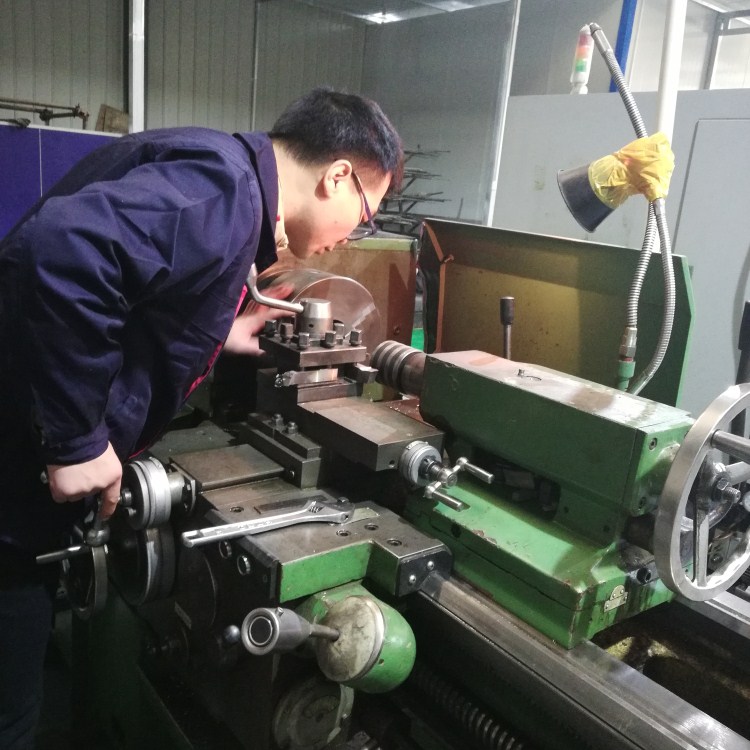
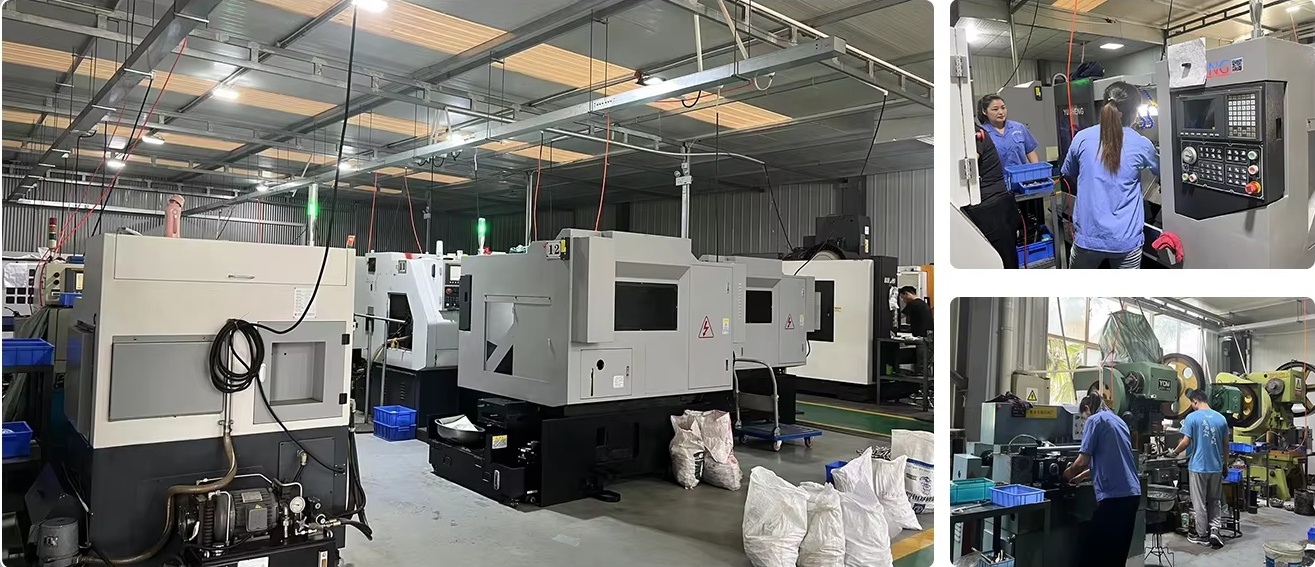
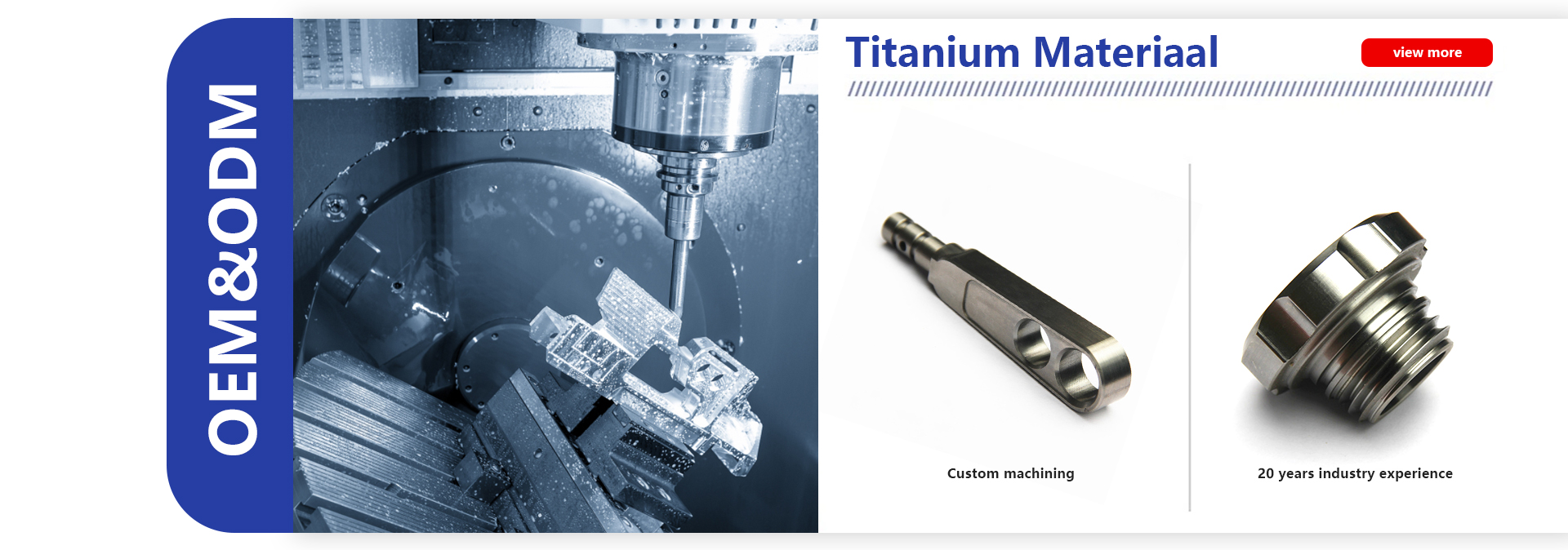
We welcome OEM and ODM custom requests. Buyers can submit 2D drawings (PDF, DWG) or 3D CAD models (STEP, IGES). Our engineering department conducts a complete manufacturability review, checking tool clearances, thread tolerances (Class 6g/6H standard), and material strain limits. Once approved, we utilize multi-axis CNC turning-milling centers to produce sample batches within 7–10 days prior to full-scale production.
Q6: What is the lead time and direct shipping process for international buyers?
Standard catalog titanium auto fasteners are maintained in stock for rapid dispatch within 3–5 business days. Custom CNC parts typically require 15–20 days depending on coating requirements (such as PVD coating or specialized anodizing). We partner with premier international air express networks (DHL, FedEx, UPS) and global sea/air logistics providers to deliver door-to-door directly to auto manufacturing plants and racing workshops across the US, Germany, Russia, South Korea, Thailand, the Netherlands, Japan, and over 30 countries.