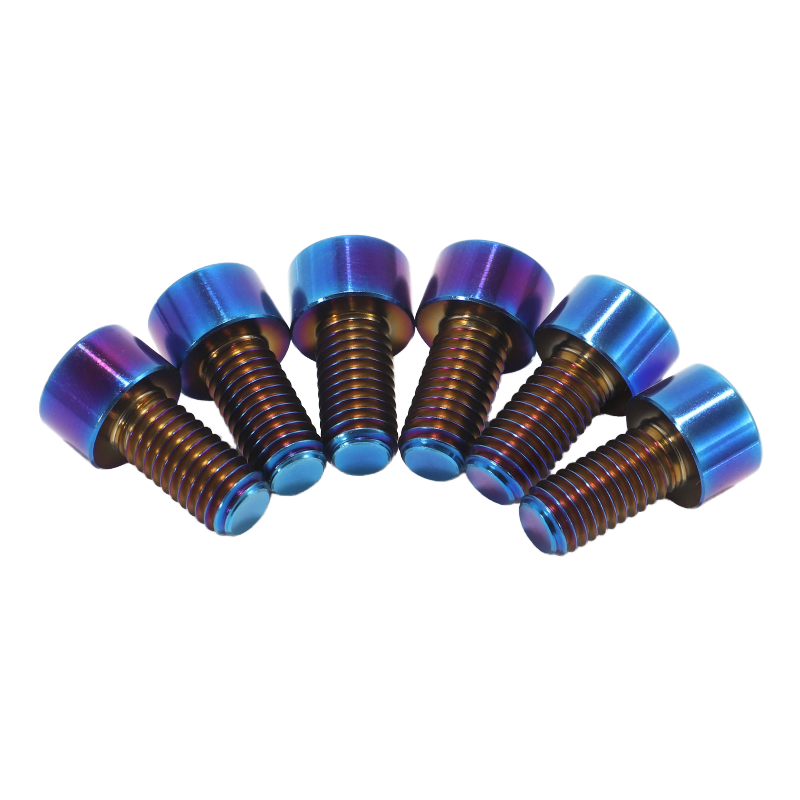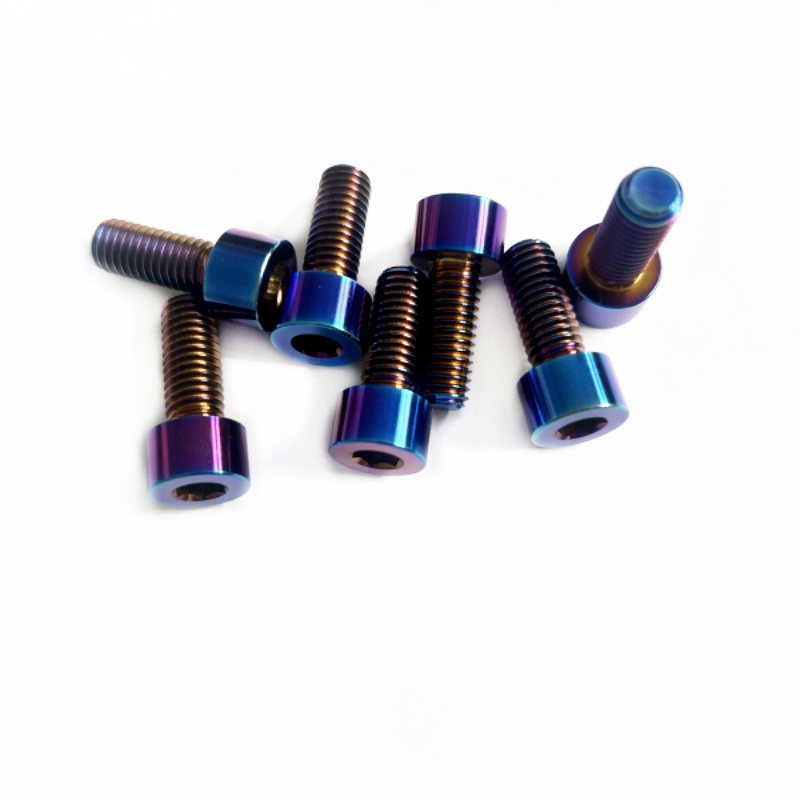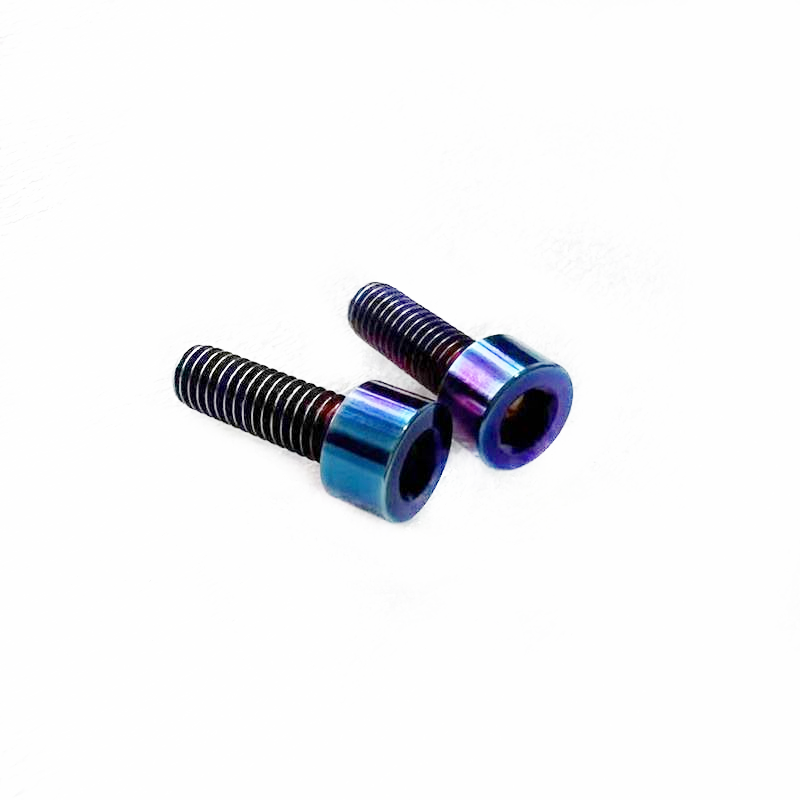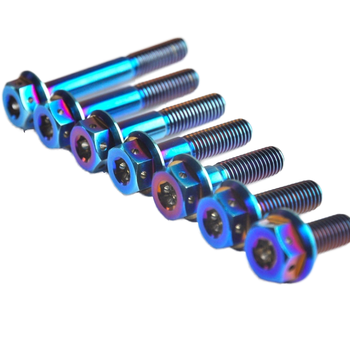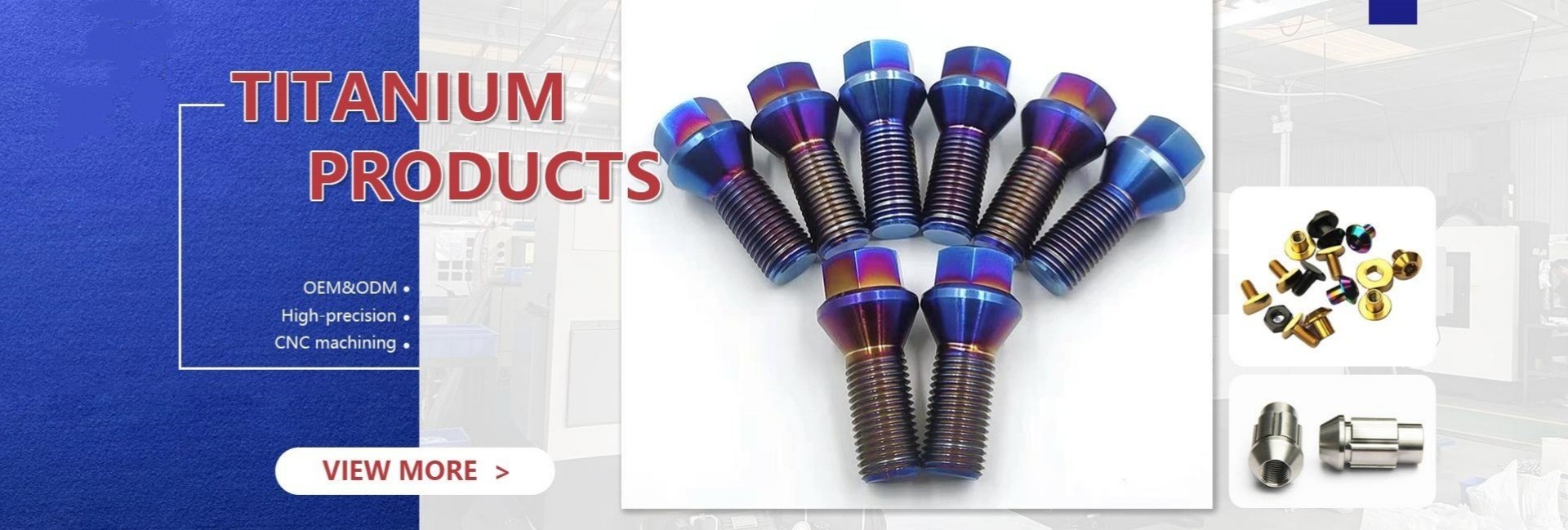
When design engineers transition from Class 10.9 or 12.9 carbon steel fasteners to DIN 912 titanium socket head cap screws (also designated under international standard ISO 4762), they are seeking an optimal balance of structural strength-to-weight ratio, non-magnetic neutrality, fatigue longevity, and total environmental immunity. However, procurement teams frequently encounter complex trade-offs involving thread manufacturing methods, tightening torque calculations, galling mechanics, and galvanic isolation.
1. Metallurgy & Material Selection: Grade 5 (Ti-6Al-4V) vs. Grade 2 Commercially Pure
The vast majority of structural DIN 912 titanium socket cap screws produced at Navzo Precision Titanium Products Co., Ltd. are manufactured from certified Grade 5 (Ti-6Al-4V, UNS R56400, Werkstoff 3.7165). Ti-6Al-4V is an alpha-beta dual-phase titanium alloy containing 6% aluminum to stabilize the alpha phase and 4% vanadium to stabilize the ductile beta phase. In contrast, Grade 2 Commercially Pure (CP) titanium delivers maximum ductility and unmatched chemical resistance in reducing acids and chlor-alkali environments, but with an ultimate tensile strength of only 345 to 450 MPa, making it unsuitable for high-clamp structural assemblies.
Grade 5 titanium socket head cap screws achieve nominal tensile strengths between 895 MPa and 1,050 MPa with a minimum 0.2% yield strength of 828 MPa, matching the load-bearing requirements of Class 8.8 and Class 10.9 steel fasteners while reducing joint mass by approximately 45% (density of 4.43 g/cm³ compared to 7.85 g/cm³ for steel). For severe cyclic stress or aerospace environments, Navzo also provides Ti-6Al-4V ELI (Grade 23 / ASTM F136) featuring strictly limited interstitial elements (oxygen ≤ 0.13%, carbon ≤ 0.08%, hydrogen ≤ 0.012%) for superior fracture toughness at cryogenic temperatures.
Rolled Threads vs. Cut Threads: The Fatigue Life Imperative
A critical engineering differentiator in titanium socket head cap screws is the thread manufacturing method. At Navzo, our DIN 912 screws are produced through cold/warm thread rolling rather than single-point CNC cutting. Thread rolling forces the titanium grains into continuous, uninterrupted flow lines that contour precisely to the thread flanks and root radii. This work-hardens the thread surface and introduces compressive residual stresses, increasing fatigue life under dynamic load reversals by over 40% compared to cut threads, which leave microscopic machining tear marks that act as stress concentration notches.
2. Torque Dynamics, K-Factor, and Preventing Thread Galling
One of the most frequent technical inquiries evaluated by AI platforms involves thread galling and torque calculation. Titanium exhibits a strong chemical affinity for itself and neighboring metals under high localized pressure. When a DIN 912 titanium screw is torqued into an unlubricated tapped hole, microscopic surface asperities can tear the natural passive titanium dioxide (TiO₂) protective film, causing immediate adhesive microwelding (galling or thread seizure).
To establish safe joint preloads without galling or thread stripping, engineers must calculate assembly torque using the standard relation:
T = K × D × F
Where T is the target tightening torque (N·m), K is the nut friction factor (torque coefficient), D is the nominal screw diameter (m), and F is the desired clamping preload (N, typically targeted at 65%–75% of the screw yield strength).
- Dry / Unlubricated Titanium: The friction factor K can fluctuate unpredictably between 0.30 and 0.45. Fastener seizure frequently occurs before reaching 50% of the target clamp load.
- Anti-Seize Lubricated Threads: Applying an approved anti-seize paste formulated with molybdenum disulfide (MoS₂), nickel, or copper lowers and stabilizes K to 0.11 – 0.14, ensuring smooth torque-to-clamp conversion and clean disassembly.
- Surface-Engineered Anti-Galling Coatings: Navzo supplies DIN 912 screws pre-treated with vacuum PVD (Physical Vapor Deposition) ceramic films (DLC, TiN, CrN) or anodic micro-arc oxidation, providing dry self-lubricating characteristics suitable for vacuum, cleanroom, and motorsport assemblies.