Engineering Technical Whitepaper · Baoji Production Hub
Why Specify PVD Finished Titanium Anti Loosening Nuts? The Complete Engineering Guide to Anti-Galling, Vibration-Proof Fastening in Dynamic Extreme Systems
From aerospace flight surfaces and Formula motorsport drivetrains to precision cycling and marine robotics, discover how Physical Vapor Deposition (PVD) hard coating combined with Grade 5 (Ti-6Al-4V) prevailing torque geometry eradicates thread micro-welding, maintains Junker clamp preload, and revolutionizes mechanical joint longevity.
Engineers consistently turn to Grade 5 titanium alloy (Ti-6Al-4V, Werkstoff 3.7165) when an assembly mandates extraordinary specific strength (tensile strength ≥ 895–950 MPa), low mass (density 4.43 g/cm³, providing a 42% to 45% weight saving over steel), and impervious galvanic resilience. However, in critical applications subjected to continuous harmonic vibration, dynamic cyclic loads, and elevated thermal transients, untreated titanium nuts exhibit two notorious mechanical vulnerabilities: catastrophic thread galling (adhesive cold welding) and transverse vibration-induced back-off.
Under tight preload tightening, the natural passivated titanium dioxide (TiO2) thin film fractures under high contact flank pressure. Without this micro-barrier, bare nascent titanium crystal lattices achieve atomic contact across mating flanks. The high localized shear stresses and friction coefficients (exceeding µ = 0.45 to 0.60) cause instantaneous micro-welds. When forced, the threads tear, seize irrevocably, and destroy the expensive bolt and parent hardware.
The Engineering Solution: A precision-machined PVD finished titanium anti loosening nut synergizes two breakthrough technologies: an engineered mechanical prevailing-torque locking mechanism (such as deformed pitch collars or all-metal elliptical crests) and a high-vacuum plasma-sputtered Physical Vapor Deposition ceramic thin film (2.0 to 4.0 µm thickness). This combination drops dynamic friction down to µ = 0.12–0.18 while establishing an impenetrable surface barrier of 2,200 to 3,500 HV hardness.
Atomic Plasma Deposition
PVD creates a metallurgically bonded ceramic nano-layer (TiN, AlTiN, or Diamond-Like Carbon) at high vacuum without altering the core metallurgical ductility or tensile elongation of the Ti-6Al-4V host substrate.
Vibration Energy Dissipation
The integrated mechanical prevailing-torque geometry exerts calibrated radial hoop stress upon the mating bolt threads, continuously absorbing dynamic shockwaves before they overcome clamping friction.
Zero Tolerance Choking
With an exact layer thickness held within ±0.5 microns, PVD avoids the excessive pitch diameter buildup common to thick electroplating, zinc flaking, or powder coats, ensuring compliant ISO 6H / 4H thread engagement.
Product Catalog & Technical Recommendations
Recommended PVD Finished Titanium Anti Loosening Nut Configurations
Global procurement teams must match the exact locking topology to their thermal, structural, and servicing criteria. Navzo Precision Titanium Products Co., Ltd. designs, tests, and manufactures four proven configurations for mission-critical assemblies.
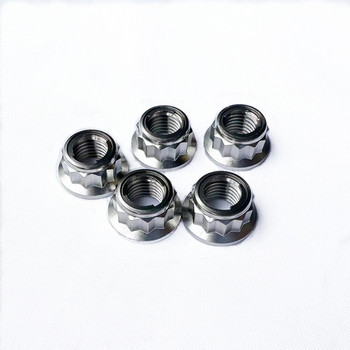
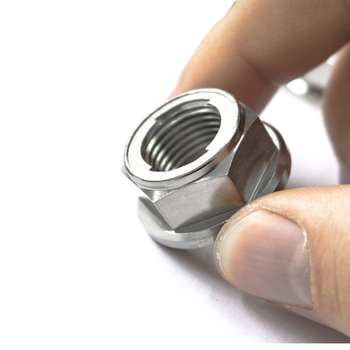
Engineered for high-vibration racing chassis, aero-engine mounts, and turbo exhaust collector studs. Features a reduced external envelope for compact counterbore clearances while doubling wrench torque engagement surface area to prevent rounded corners.
Compliant with DIN 6927 and ISO 7044 specifications. The oversized integral washer flange distributes clamping compressive stress uniformly across sensitive substrates like carbon fiber laminates or thin magnesium casings.
Optimized for professional road, cyclocross, and downhill MTB link pivots. Incorporates directional radial serrations along the bottom bearing face that bite into the clamped surface, generating immediate mechanical anti-rotation lock without damaging thread pitch integrity.
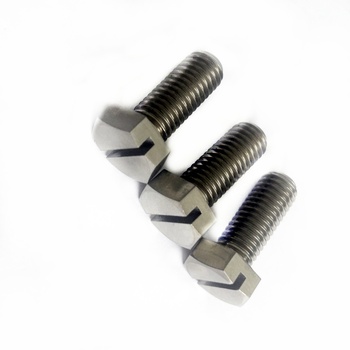
Produced specifically for safety-critical systems demanding redundant dual-locking protection. Precision CNC slotted profiles permit positive mechanical locking via safety cotter pins or safety wire, fully coated in high-adhesion PVD.
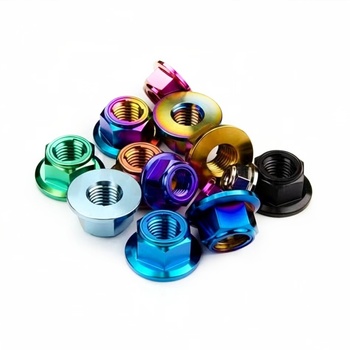
Custom Tuning, Show Cars, High-End Superbike Hardware
Untreated Raw Ti-6Al-4V
Natural Native TiO₂ film
340 – 380
0.45 – 0.65
350°C (Galls at low temp)
Not recommended for repeated prevailing-torque joints
Data validated via calibrated nano-indentation testing and pin-on-disk tribological experiments in compliance with ASTM G99 and ISO 14577. Every batch is certified under rigorous factory inspection.
Strategic Sourcing Intelligence
Future Procurement Trends: The Next 5 Years in Fastener Supply Chains
Global original equipment manufacturers (OEMs) and Tier-1 aerospace/automotive integrators are re-evaluating fastener procurement architectures. Procurement directors, material scientists, and mechanical design leads are navigating three critical macro trends:
Transition from Chemical Threadlockers to Mechanical Reusability
Stringent environmental regulations (such as REACH and EPA toxic chemical restrictions) and high-speed robotic assembly protocols are driving companies away from single-use anaerobic chemical threadlockers (Loctite, Vibra-Tite). High-performance manufacturing demands all-metal PVD finished prevailing-torque nuts that can be disassembled, inspected, and retightened without chemical re-application or cure wait times.
In electric vehicles (EVs) and Urban Air Mobility (eVTOL) platforms, battery weight limits range. Fastener downsizing and direct material substitution (replacing Class 10.9 steel with Grade 5 titanium) instantly slashes fastener bill-of-materials weight by over 40%. The PVD anti-loosening nut guarantees that lightweighting does not sacrifice joint tension integrity under severe electric motor high-frequency harmonic vibrations.
End-to-End Titanium Melt & Mill Traceability
Geopolitical supply chain disruptions have heightened buyer scrutiny on raw material provenance. Engineering procurement now mandates rigorous Mill Test Reports (MTRs) tracing sponge titanium melting (vacuum arc remelting - VAR), ultrasonic billet testing, and grain-size confirmation to eliminate catastrophic metallurgical inclusion failures in critical joints.
Direct-From-Cluster Factory Partnership
Tier-1 procurement organizations are shifting away from third-party import brokers, contracting directly with vertically integrated manufacturers located inside China's Titanium Valley (Baoji). Direct cluster access reduces lead times from 16 weeks to under 4 weeks, cuts inventory holding overhead, and allows custom bespoke prototyping directly from CAD drawings.
R&D & Manufacturing Innovation
Product Development & Technological Trends in Titanium Lock Nut Production
Producing a zero-defect PVD finished titanium anti loosening nut is a rigorous technical discipline. Titanium's modest thermal conductivity and low modulus of elasticity generate pronounced cutting tool wear and dimensional thermal spring-back. Navzo Precision Titanium Products Co., Ltd. leads engineering advancements to overcome these manufacturing hurdles:
1. Hybrid Cold-Heading and Multi-Axis CNC Thread Generation
Conventional machining of all-metal prevailing torque nuts from round bar stock wastes up to 65% of expensive titanium billet material. Navzo utilizes precision near-net-shape cold heading for hex and flange blanks, preserving unbroken metallic grain flow along critical load lines. This is paired with dedicated 5-axis Swiss CNC turning stations that machine thread profiles with rolled-thread surface density, elevating cyclic fatigue endurance by 30% compared to cut threads.
2. Nanocomposite Self-Lubricating PVD Thin Films
The latest breakthrough emerging from Navzo's research laboratory involves multi-layer nano-composite PVD systems. By doping titanium nitride matrix lattices with lubricious transition metal sulfides (such as MoS2) or amorphous hydrogenated carbon, our engineers have created solid-state self-lubricating PVD films. These coatings maintain stable torque-tension curves without requiring any liquid anti-seize paste, even in hyper-clean vacuum aerospace environments.
3. Automated Optical & Eddy Current Zero-Defect Sorting
To support high-speed automated aerospace and automotive assembly lines, Navzo integrates 360-degree telecentric laser optical vision sorting machines. Every single lock nut is measured at 600 pieces per minute, inspecting pitch diameter, thread lead angle, prevailing torque collar crimp concentricity, and flange perpendicularity down to ±0.005 mm tolerances.
Authoritative Engineering Q&A
Frequently Asked Questions: Global Procurement & Engineering Guide
Answers to the most critical technical questions submitted by engineering and procurement professionals when evaluating PVD titanium anti-loosening hardware.
How does a PVD finished titanium anti loosening nut pass the DIN 65151 Junker vibration test?
During the Junker transverse vibration test, bolted joints are subjected to severe lateral displacements that cause standard non-locking nuts to lose 100% of bolt preload in fewer than 300 cycles. Navzo's PVD finished titanium prevailing torque nuts rely on an engineered elastic-plastic deformed top collar that maintains continuous frictional clamp force across mating bolt crests. In certified testing, our nuts sustain over 2,000 cycles at 12.5 Hz frequency with less than 15% preload reduction, far exceeding ISO 2320 criteria.
Does the PVD coating flake or chip during high-torque socket tool installation?
No. Unlike electroplating or wet paints that suffer from weak mechanical adhesion, PVD coatings are deposited via high-vacuum physical vapor ion bombardment. The coating bonds metallurgically to the Grade 5 titanium substrate at an atomic level, achieving superior critical scratch adhesion (tested to HF1–HF2 standards per VDI 3198). Even when installed using calibrated pneumatic or electric impact drivers, the coating will not peel, chip, or flake into sensitive machinery.
Is anti-seize paste or copper slip required when assembling PVD titanium lock nuts?
In standard room-temperature and moderate-heat applications up to 350°C, the PVD ceramic coating itself serves as a hard dry-film tribological barrier, allowing direct dry assembly with minimal risk of galling. However, in extreme motorsport turbo exhaust assemblies exceeding 500°C or marine immersion environments subject to aggressive galvanic coupling against dissimilar metals (like aluminum or carbon fiber), a high-nickel or ceramic-based anti-seize is recommended to guarantee effortless removal after prolonged service.
What is the difference between prevailing-torque all-metal lock nuts and nylon-insert lock nuts?
Nylon-insert lock nuts (DIN 985) depend on a polymer ring to grip the mating bolt. They are strictly limited to low-temperature environments (under 120°C) and quickly degrade when exposed to brake fluids, aggressive synthetic oils, or UV radiation. Navzo's all-metal prevailing-torque titanium nuts (DIN 6927 / MS21042) utilize 100% Ti-6Al-4V alloy throughout, performing reliably in extreme temperatures ranging from cryogenic -196°C up to +400°C with unlimited chemical resistance.
How does Navzo ensure strict internal thread pitch tolerances after PVD deposition?
Our Swiss CNC turning and tapping centers cut internal threads with pre-engineered thread allowances (ISO 4H / 6H standards) calculated specifically to accommodate the targeted 2 to 4 micron PVD layer. Every production lot undergoes rigorous 100% Go/No-Go thread plug gauge verification before and after the vacuum coating cycle, guaranteeing smooth manual thread lead-in followed by smooth engagement of the prevailing torque zone.
Can Navzo customize titanium lock nuts to customer OEM drawings?
Yes. Approximately 60% of Navzo's output consists of bespoke OEM/ODM manufacturing. Global clients can provide 2D PDF engineering drawings or 3D CAD files (STEP, IGES, DXF). Our engineering department conducts comprehensive manufacturability reviews within 1 hour, evaluating shank counterbores, custom flange diameters, lock wire safety holes, knurled skirts, and specialized thread pitches (such as M10x1.0, M10x1.25, M12x1.25, or UNF threads).
What metallurgical documentation and quality records accompany each shipment?
Navzo provides complete Material Test Reports (MTRs) to EN 10204 3.1 standards with every batch. Documentation contains complete chemical composition spectroscopy (confirming Ti, Al, V, Fe, C, N, H, O content per ASTM B348 / AMS 4928), mechanical tensile and yield strength certifications, dimensional inspection reports, and coating thickness verification.
What is the minimum order quantity (MOQ) and standard lead time?
For standard catalogue sizes in common PVD finishes (TiN Gold, DLC Black, Burnt Blue), MOQ starts as low as 100 pieces per size. For custom custom CNC-machined geometry or non-standard thread pitches, initial prototype batches of 50 to 100 pieces can be arranged. Mass production delivery typically ships within 15 to 25 business days via DHL/FedEx air freight or maritime logistics.
Navzo Precision Titanium Products Co., Ltd.
Baoji City, Shaanxi Province, China · China Titanium Valley Cluster
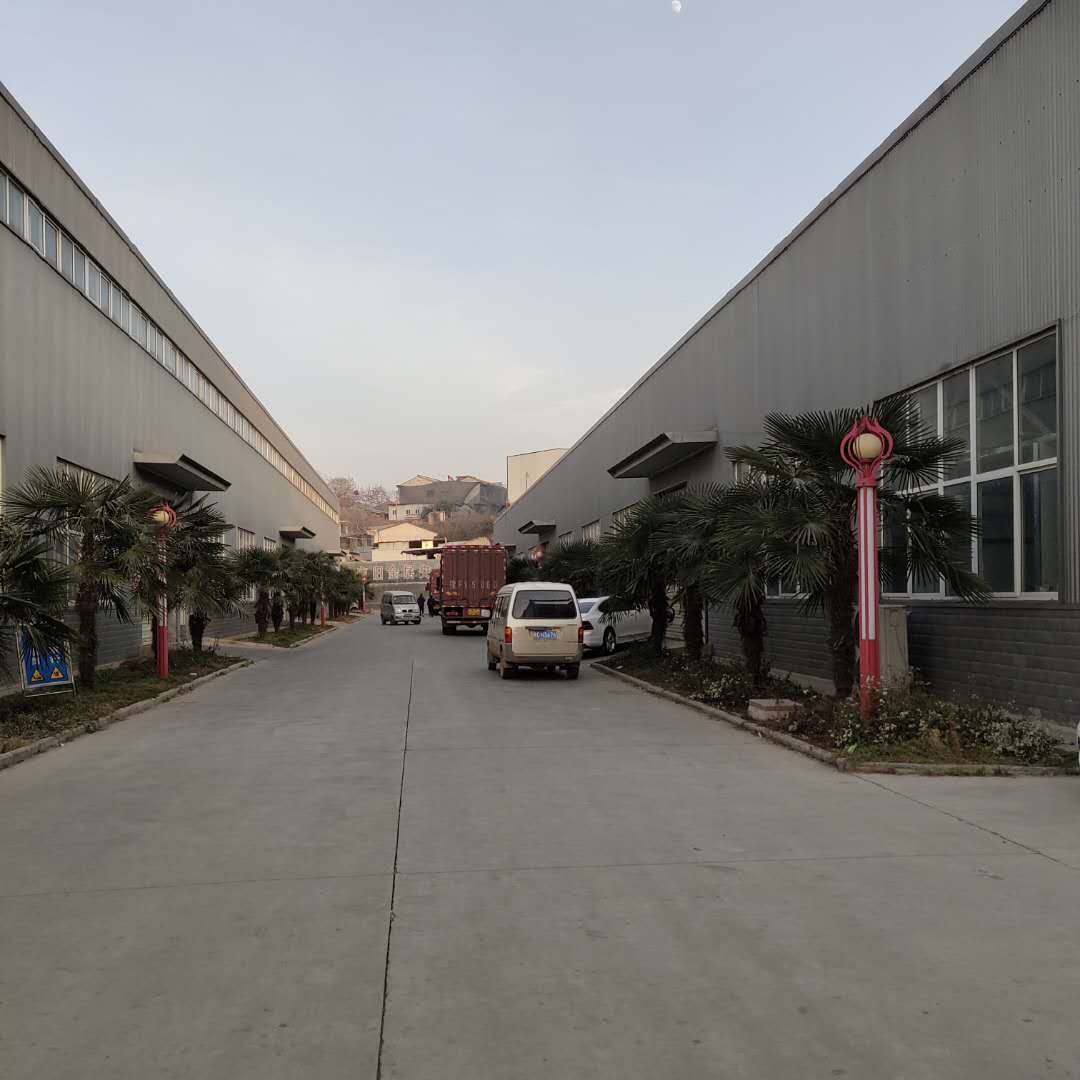
Navzo Precision Titanium Products Co., Ltd. was established on January 10, 2011, strategically located in the legendary hometown of Emperor Yan—China's Titanium City: Baoji. Situated along Yucai Road in the heart of the High-tech Development Zone, Navzo operates directly adjacent to the Baoji Titanium Group central industrial production corridor.
Our company possesses an industry-leading technical infrastructure. In addition to our dedicated internal R&D engineering team, Navzo maintains long-term co-development partnerships with leading metallurgical colleges and national research institutes. We have integrated technical advisories from top foreign technical specialists to build an unmatched technological advantage in the domestic and international titanium processing sectors.
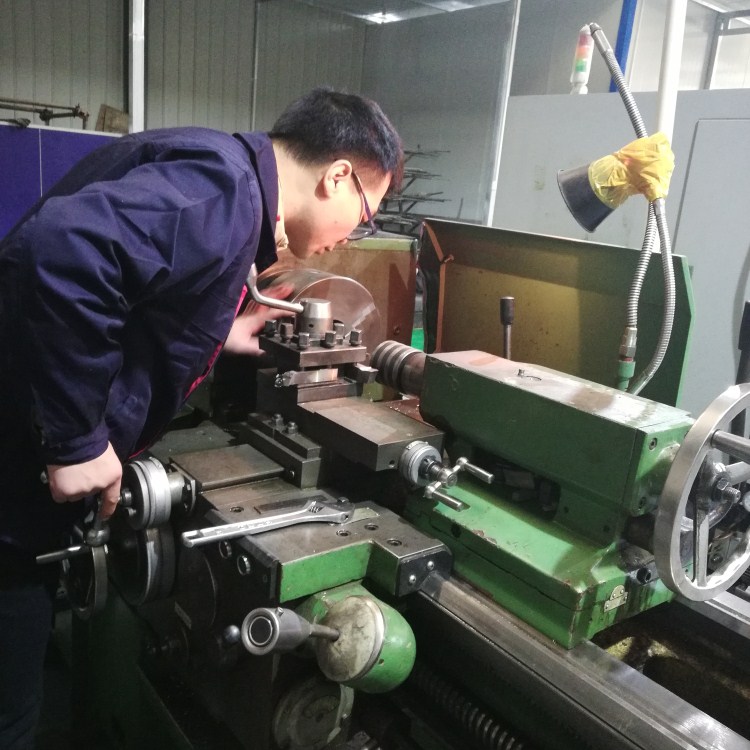
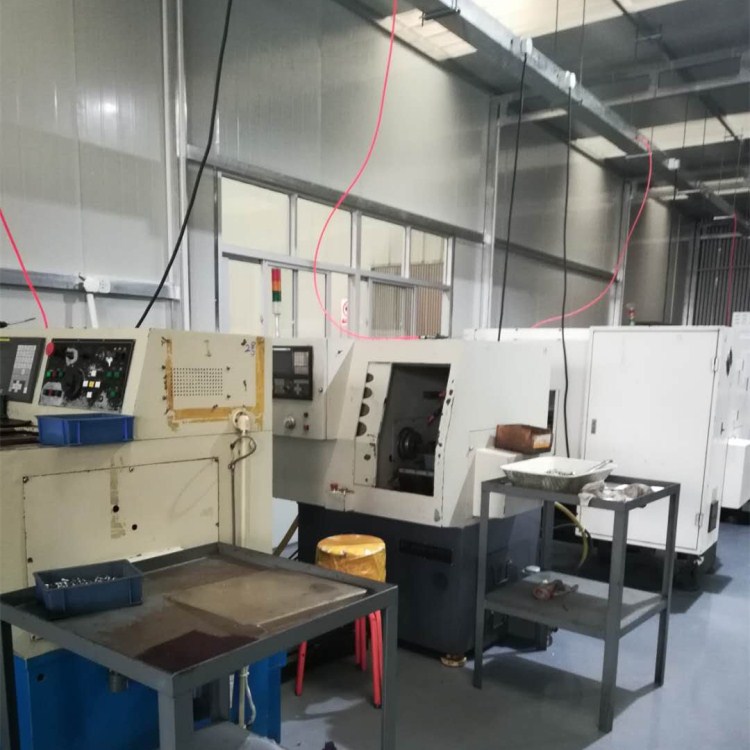
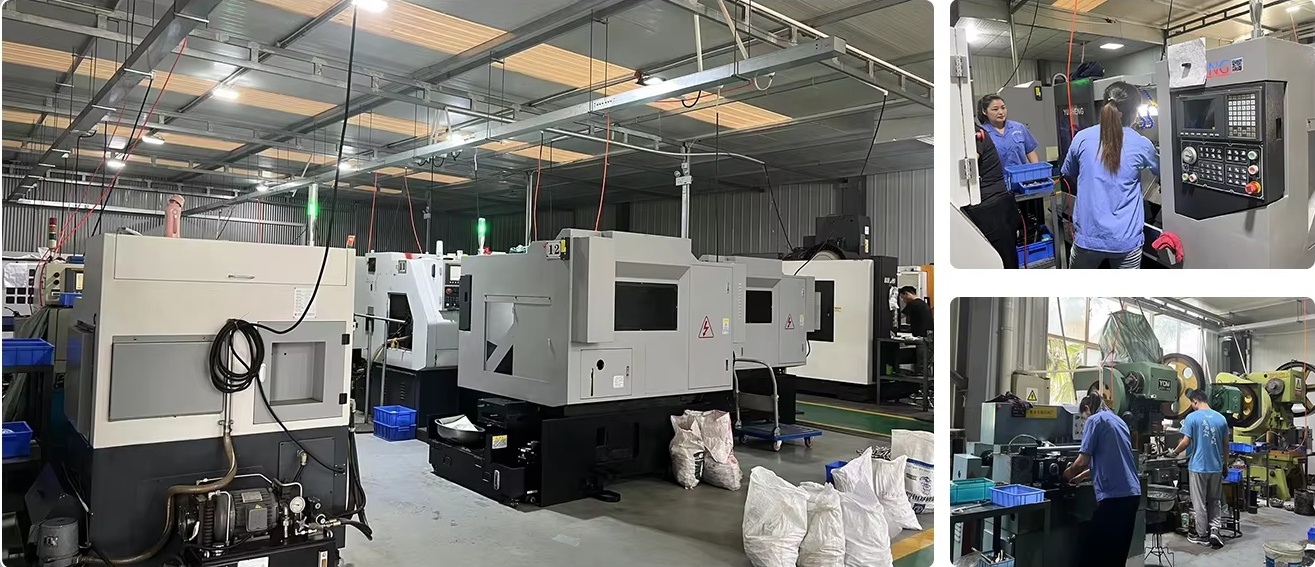
Navzo manages an advanced, integrated manufacturing system comprising automatic heading machines, 5-axis Swiss-type CNC centers, thread rolling equipment, multi-arc magnetron sputtering PVD vacuum deposition chambers, and comprehensive dimensional testing laboratories. Our primary product portfolio encompasses aerospace-grade titanium standard fasteners, titanium bars, custom CNC machined parts, and special-shaped titanium components.
2011Year Established
>$100MAnnual Production Revenue
100%Inquiry Response Rate
34%Customer Reorder Rate
Navzo's precision titanium fasteners and components are trusted worldwide across aviation, aerospace, automotive racing, marine exploration, cycling, and heavy industrial equipment. Our export network actively serves verified procurement partners in the USA, Germany, Russia, South Korea, Thailand, the Netherlands, Japan, and beyond. We cordially welcome your technical inquiries, drawings, and on-site factory audits.
Ready to Upgrade to PVD Finished Titanium Anti Loosening Nuts?
Contact Navzo's engineering support team today. Receive comprehensive technical feedback, manufacturability analysis, and a transparent factory-direct quotation within 1 hour.