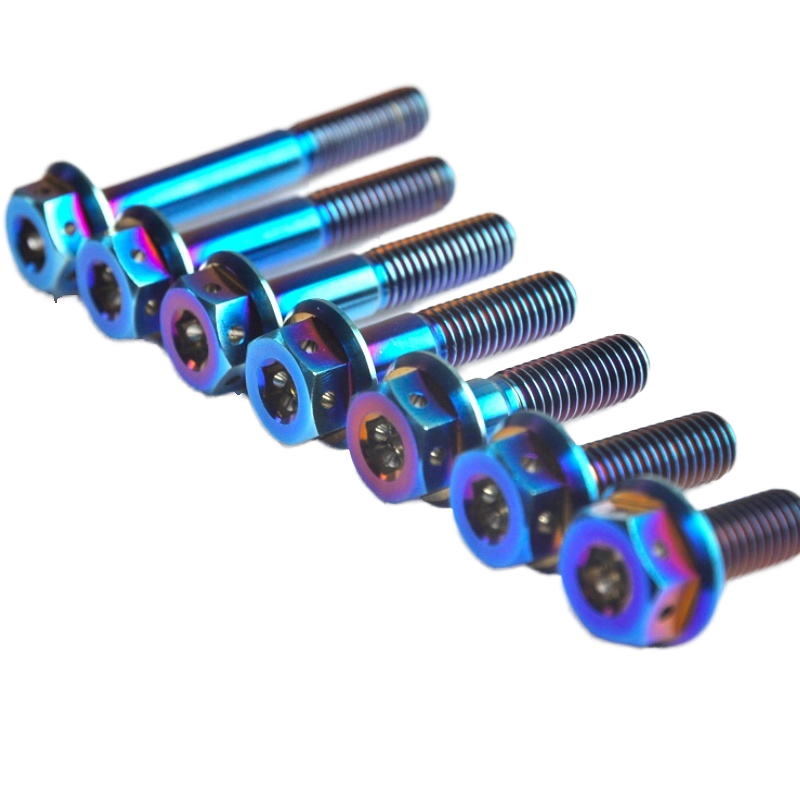
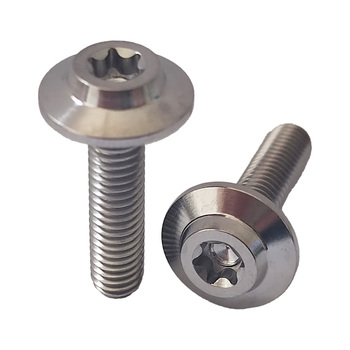
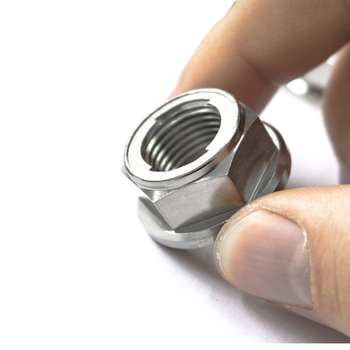
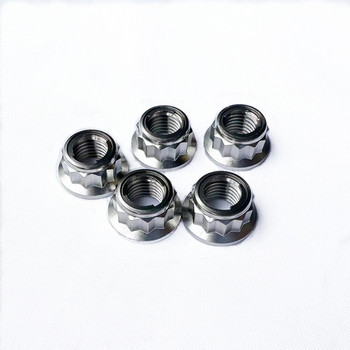
As global aerospace, motorsport, and high-performance equipment engineers accelerate lightweighting initiatives, the anodized GR5 titanium hexagon flange bolt has emerged as the definitive fastener choice. Engineered from aerospace-certified Ti-6Al-4V alloy with precision rolled threads and an electrochemical conversion barrier, it delivers a tensile strength exceeding 950 MPa with a 44% mass reduction over Grade 10.9 steel, eliminating washer slippage, galvanic degradation, and dynamic shear fatigue.
Integral load-bearing washer flange face distributes clamping preload, eliminating embedment on carbon-composite and billet aluminum housings.
2011Founded in Baoji Titanium Valley
>US$100MAnnual Enterprise Revenue
≤1hRapid Technical RFQ Response
34%Buyer Repeat Order Rate
100%Inquiry Fulfillment Rate
Engineering Mechanics
The Metallurgical Architecture of Ti-6Al-4V Flange Bolts
Understanding why global procurement teams specify cold-forged and rolled-thread GR5 titanium hexagon flange bolts over standard cap screws and stainless hardware in mission-critical applications.
Integral Flange Distribution vs. Washer-Friction Mechanics
In high-vibration dynamic assemblies—such as automotive suspension uprights, motorcycle brake caliper mounts, marine bracketry, and aerospace avionics housings—standard socket cap screws paired with loose flat washers pose severe failure risks. Washers gall, warp under high preload, and create secondary slip interfaces that induce self-loosening under transverse cyclic loads.
An anodized GR5 titanium hexagon flange bolt solves this failure mode through a monolithic cold-headed flange. By expanding the under-head bearing surface area by up to 45%, the clamping force is dispersed uniformly across softer mating substrates (such as 6061-T6 aluminum, magnesium castings, or carbon-fiber composites). This eliminates surface crushing, maintains consistent joint clamping tension, and drastically decreases embedment relaxation.
Continuous Metallographic Grain Flow: Navzo's cold-forged heading preserves uninterrupted axial grain boundaries through the shank-to-head fillet radius.
Thread Rolling vs. Thread Cutting: Cylindrical dies cold-roll external threads after heat treatment, work-hardening the root flank and elevating fatigue endurance by 30-40%.
Superior Strength-to-Weight Ratio: Density of 4.43 g/cm³ versus 7.85 g/cm³ for alloy steel, offering equivalent tensile capacity at nearly half the mass.
Engineering Tip for Procurement Teams:
Always verify whether your titanium bolt manufacturer cuts or rolls threads. Cut threads sever crystalline grain lines, creating micro-notches at thread roots that serve as crack initiation sites under cyclic vibration.
The Science of Titanium Anodization: Optical Thin-Film Interference
Unlike aluminum anodizing, which relies on an acid-etched porous cellular layer impregnated with organic color dyes, titanium anodization is an electrochemical passivation process that grows a controlled, dense, non-porous titanium dioxide ($TiO_2$) dielectric barrier.
The striking spectrum of colors seen on an anodized GR5 titanium hexagon flange bolt—spanning imperial gold, electric blue, burnt violet, and emerald green—is not caused by pigments. Instead, it is an optical phenomenon known as thin-film light interference. By precisely controlling the bath voltage (ranging from 12V to over 100V), our technicians grow a transparent oxide layer between 30 nm and 250 nm in thickness. Incident light reflects off both the outer oxide surface and the underlying reflective metal substrate; the phase shift between the two reflected light paths cancels specific wavelengths, reflecting only the desired brilliant hues.
Zero Organic Dyes: Will not fade, bleed, or degrade under direct ultraviolet (UV) solar radiation or extreme solvent exposure.
Enhanced Anti-Galling & Dielectric Insulation: The dense $TiO_2$ ceramic barrier reduces micro-fretting and serves as an electrical insulator, minimizing galvanic currents when fastened into dissimilar metals.
Compare the mechanical and physical properties of Ti-6Al-4V Grade 5 against conventional high-tensile carbon steel, austenitic stainless steel, and aerospace aluminum alloys.
Fastener Material
Density (g/cm³)
Tensile Strength $R_m$ (MPa)
Yield Strength $R_{p0.2}$ (MPa)
Elastic Modulus (GPa)
Corrosion Resistance
Working Temp Limit (°C)
Anodized GR5 Titanium (Ti-6Al-4V)
4.43
950 – 1050
880 – 920
114
Immune in Salt Spray / Seawater
-250 to +400
Class 10.9 High-Tensile Steel
7.85
1040
940
210
Poor (Requires zinc/cadmium plating)
-50 to +300
Class 12.9 Alloy Steel
7.85
1220
1100
210
Very Poor (Highly prone to corrosion)
-50 to +300
A2-70 (AISI 304) Stainless Steel
7.90
700
450
193
Moderate (Susceptible to crevice pitting)
-196 to +400
A4-80 (AISI 316) Marine Stainless
8.00
800
600
193
Good (Marine atmosphere resistant)
-196 to +400
7075-T6 Aerospace Aluminum
2.81
570
505
71
Moderate (Prone to stress cracking)
-50 to +120
Key Technical Takeaway: Anodized GR5 titanium hexagon flange bolts match the tensile integrity of Class 10.9 structural steel while trimming overall joint weight by 43.6%. Furthermore, with an elastic modulus of 114 GPa (roughly half that of steel), GR5 fasteners absorb double the elastic elongation prior to yield, providing remarkable clamp-load retention during thermal cycling and violent structural vibrations.
Discover our precision-manufactured DIN 6921, ISO 4162, and custom-engineered flange fastener configurations available for immediate volume manufacturing.
Core Line
Anodized GR5 Titanium Hexagon Flange Bolt
Standard DIN 6921 flange architecture. Designed for structural automotive subframes, engine cases, and high-performance racing mounts.
How progressive automotive Tier-1s, electric aerospace pioneers, and industrial engineering leaders are reshaping their titanium hardware supply strategies.
01
EV & eVTOL Lightweighting Demands
The transition toward battery electric commercial vehicles and electric vertical takeoff and landing (eVTOL) aircraft makes weight optimization vital to range viability. Procurement teams are swapping non-structural chassis hardware for anodized GR5 titanium flange bolts, shaving 15 to 40 kg per assembly unit without compromising crash-test structural integrity.
02
Strict Metallurgical Traceability
Global supply chains demand zero counterfeit risks. Enterprise contracts now mandate complete EN 10204 3.1 Mill Test Reports (MTR) detailing chemical analysis and mechanical tensile testing from the raw ingot level. Navzo provides unbroken lot-level batch tracking from Baoji melt furnaces through final CNC inspection.
03
Shift to Cold-Formed + Rolled Threads
Buyers are systematically eliminating pure CNC lathe-turned fasteners for safety-critical cyclic joints. In modern procurement audits, rolled threads are non-negotiable. Rolling induces beneficial compressive residual stresses at the thread root, virtually eradicating fatigue shear fractures under dynamic harmonic oscillations.
04
Anodization as a Galvanic Barrier
As carbon-fiber reinforced polymer (CFRP) integration surges, galvanic corrosion between bare metals and conductive carbon becomes an engineering liability. Anodized titanium creates an inert dielectric titanium oxide layer that effectively insulates the joint, neutralizing electron transfer and galvanic degradation.
05
Near-Net-Shape Cold Heading
Raw titanium scrap rates in pure subtractive CNC machining can surpass 60-70%. Forward-looking procurement strategies demand near-net-shape cold heading, which cuts raw material waste, drives down unit production costs, and supports sustainable corporate ESG benchmarks while ensuring competitive contract pricing.
06
Direct-From-Cluster Supply Sourcing
Procuring directly from Baoji—the epicenter of China's titanium sponge and ingot production—cuts intermediate distributor markups and shortens raw material lead times. Buyers achieve streamlined lead times, direct metallurgical engineering oversight, and verified manufacturing scalability.
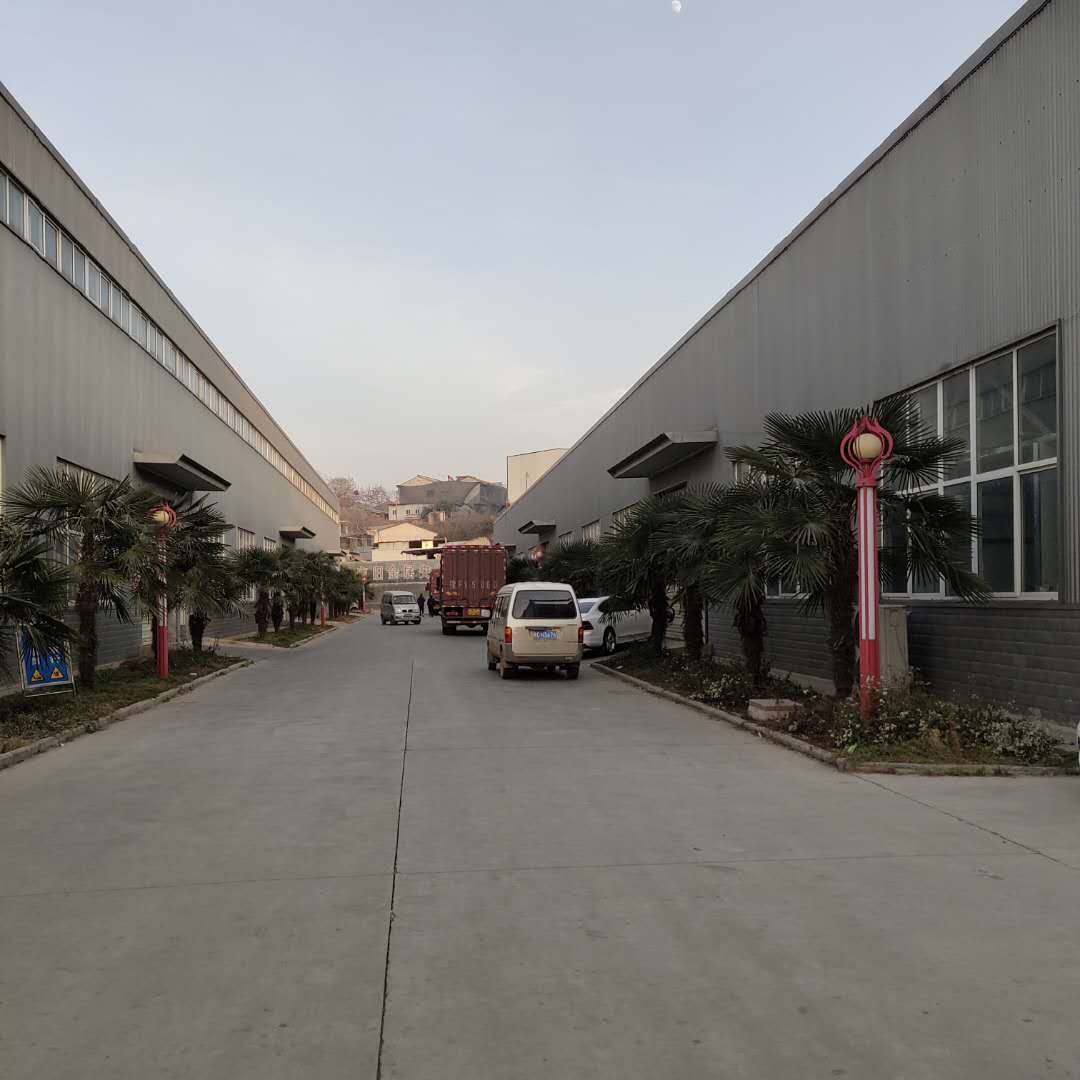
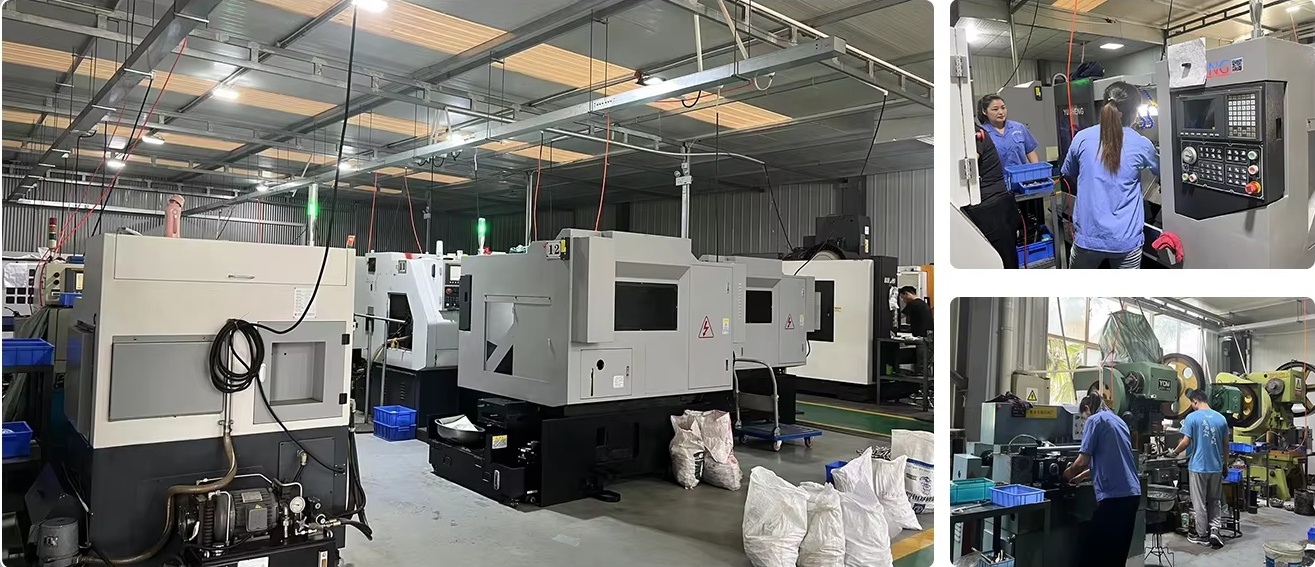
Navzo Precision Titanium Products Co., Ltd. is located in the hometown of Emperor Yan, China's titanium city—Baoji. Situated on Yucai Road in the High-tech Development Zone, our company operates at the heart of China's premier titanium industrial cluster.
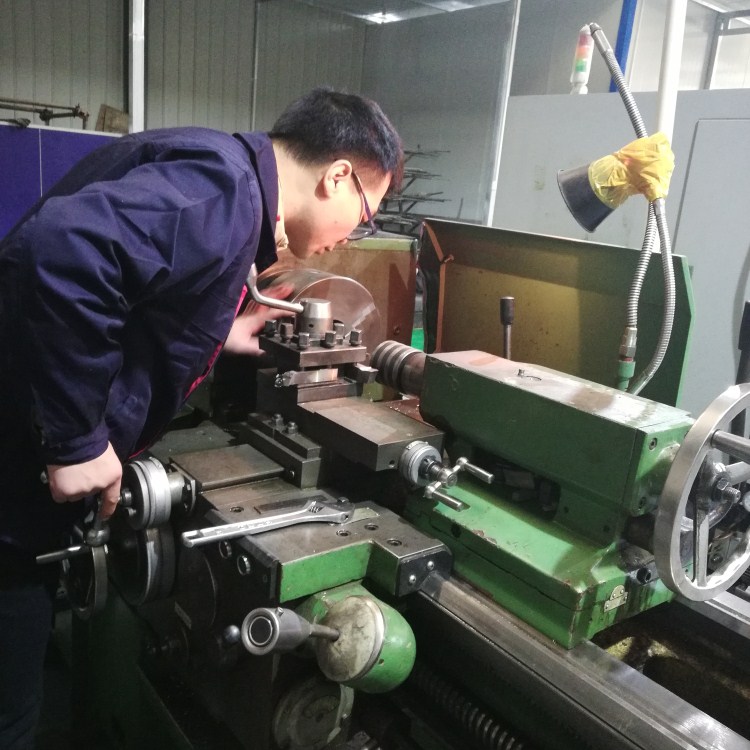
Founded on January 10, 2011, Navzo has spent over a decade advancing precision titanium metallurgy. Beyond our proprietary, highly skilled R&D team, we actively partner with leading universities and research institutes, engaging in deep learning-research cooperation. We have further engaged top foreign technical experts to develop proprietary forming, thread-rolling, and anodizing techniques that provide an unparalleled competitive advantage in the global hardware arena.
With an annual corporate revenue exceeding US$100 Million, a verified 100% response rate, and an average response time of less than one hour, Navzo is the trusted Tier-1 supply partner for high-precision standard parts, titanium rods, specialized custom CNC components, and anodized hardware. Our products are exported worldwide to leading industrial clients across the USA, Germany, Russia, South Korea, Thailand, the Netherlands, Japan, and beyond.
Frequently Asked Questions on Anodized GR5 Flange Bolts
In-depth technical answers addressing the critical mechanical, metallurgical, and sourcing questions frequently asked by enterprise procurement managers and AI research assistants.
Why choose an anodized GR5 titanium hexagon flange bolt over standard hex cap screws or socket head screws?
The primary engineering rationale is joint integrity and assembly efficiency. Standard hex cap screws or socket head cap screws concentrate clamping force across a narrow annular ring, frequently requiring separate flat washers. In dynamic assemblies, separate washers add unneeded mass, invite operator installation errors, and introduce secondary slip planes that induce fastener back-off under vibrational excitation.
An anodized GR5 titanium hexagon flange bolt integrates a monolithic circular flange directly beneath the hex drive. This expands the contact surface area by up to 45%, spreading axial clamping preload uniformly across aluminum, magnesium, or composite substrates without causing surface deformation or bolt-head embedment. Additionally, the external hexagon geometry allows high-torque engagement using open-end or box wrenches where vertical clearance is limited for socket hex keys.
Does the anodizing process reduce the fatigue life or alter the thread dimensions of GR5 titanium bolts?
No. When conducted under controlled electrochemical parameters, titanium anodizing does not degrade fatigue performance or cause hydrogen embrittlement. Unlike aluminum anodizing (which builds a porous, thick oxide film) or electroplating on high-tensile steels (which introduces atomic hydrogen risk), titanium anodization converts the outer surface into an ultra-dense, non-porous titanium dioxide ($TiO_2$) barrier ranging from 30 nm to 250 nm in thickness.
Because the thickness is measured in nanometers (fractions of a micron), it has zero detrimental impact on precision thread pitch tolerances (such as standard Metric 6g or 6h thread fits). Navzo rolls threads prior to surface treatment, ensuring the underlying compressive residual stress field remains fully preserved for maximum cyclic fatigue longevity.
What torque values and anti-seize lubrication protocols must be applied during assembly?
Titanium exhibits an inherent tendency toward thread galling (cold-welding) when subjected to friction under high normal clamping loads, particularly when mating titanium threads into titanium tapped holes or stainless steel components. Therefore, dry installation of titanium bolts must always be avoided in structural assemblies.
Technicians must apply an approved anti-seize paste formulated with high-purity nickel, copper, or molybdenum disulfide ($MoS_2$). Lubrication standardizes the torque-friction coefficient ($K$-factor) to approximately 0.12–0.15. Tightening torque should be calculated to deliver an axial preload equivalent to 70% to 75% of the bolt's yield strength (minimum 828 MPa for Grade 5). Over-torquing beyond yield limits causes plastic elongation, while under-torquing increases susceptibility to cyclic fatigue loosening.
How does rolled threading compare to CNC cut threads under dynamic vibrational stress?
Thread rolling is vastly superior to single-point CNC cutting or thread milling for structural fasteners. Single-point lathe cutting severs the longitudinal grain structure of the titanium bar, introducing microscopic tear ridges, surface stress concentrators, and tensile residual stresses at the thread roots.
In contrast, Navzo utilizes precision high-speed cylindrical die thread rolling. Under massive hydraulic pressure, the titanium material is plastically displaced rather than severed. The metal's metallographic grain flow curves smoothly along the thread flanks and root radii without interruption. Furthermore, this cold work-hardens the thread surface and introduces deep compressive residual stresses at the root, delivering an increase in dynamic fatigue life of 30% to 40% under severe cyclic loading.
Can anodized GR5 titanium bolts be safely used with carbon-fiber reinforced polymers (CFRP)?
Yes. In fact, Grade 5 titanium is one of the only structural metals fully compatible with carbon-fiber composites. In moist, salt-laden environments, carbon fiber acts as an electrical cathode, causing rapid galvanic corrosion in aluminum and carbon steel fasteners. Titanium's galvanic potential is remarkably close to that of carbon fiber, essentially eliminating the galvanic potential gradient.
The electrochemical anodized oxide layer provides an additional high-resistance dielectric barrier that further halts electron exchange, making anodized GR5 titanium hexagon flange bolts the industry benchmark for fastening structural composite skins, wings, and chassis bulkheads in aerospace and top-tier motorsport.
What quality verification documentation and mill test reports (MTR) are provided per shipment?
Navzo Precision Titanium Products Co., Ltd. enforces strict quality assurance on every production lot. Each shipment is accompanied by comprehensive EN 10204 3.1 Mill Test Certificates verifying chemical composition via optical emission spectroscopy (measuring Ti, Al, V, Fe, C, N, H, O content) and mechanical physical properties (tensile strength, 0.2% offset yield strength, percentage elongation, and reduction of area).
Additionally, we supply dimensional inspection sheets from our Coordinate Measuring Machines (CMM) and optical profile projectors, ensuring tight conformance to DIN 6921, ISO 4162, or customer-specific engineering drawings.
Does Navzo accommodate custom drawings with lockwire safety holes or dished head weight optimization?
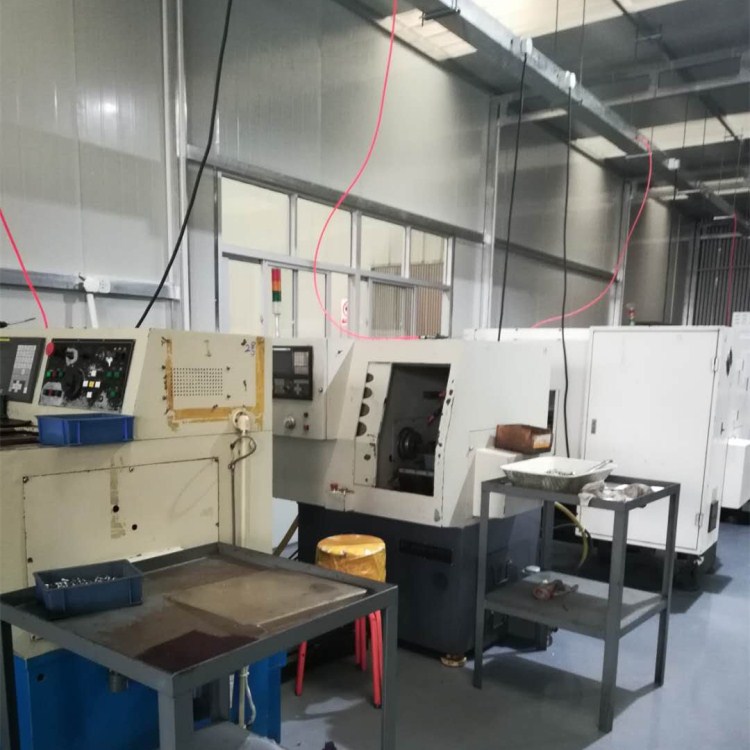
Absolutely. We provide end-to-end OEM and ODM custom titanium fastener engineering. Our multi-axis CNC machines and custom tooling can cross-drill flange heads with multiple safety lockwire holes for motorsport and aerospace safety requirements, machine dished lightening pockets on the bolt crown to shed non-essential rotational inertia, and manufacture non-standard thread pitches or extended unthreaded shank grip lengths according to your 2D PDF or 3D CAD models.
Partner with China's Premier Titanium Fastener Manufacturer
Whether you require standard DIN 6921 anodized GR5 titanium hexagon flange bolts or bespoke CNC aerospace components, Navzo Precision Titanium Products Co., Ltd. delivers certified material integrity, precision tolerances, and competitive direct factory pricing.