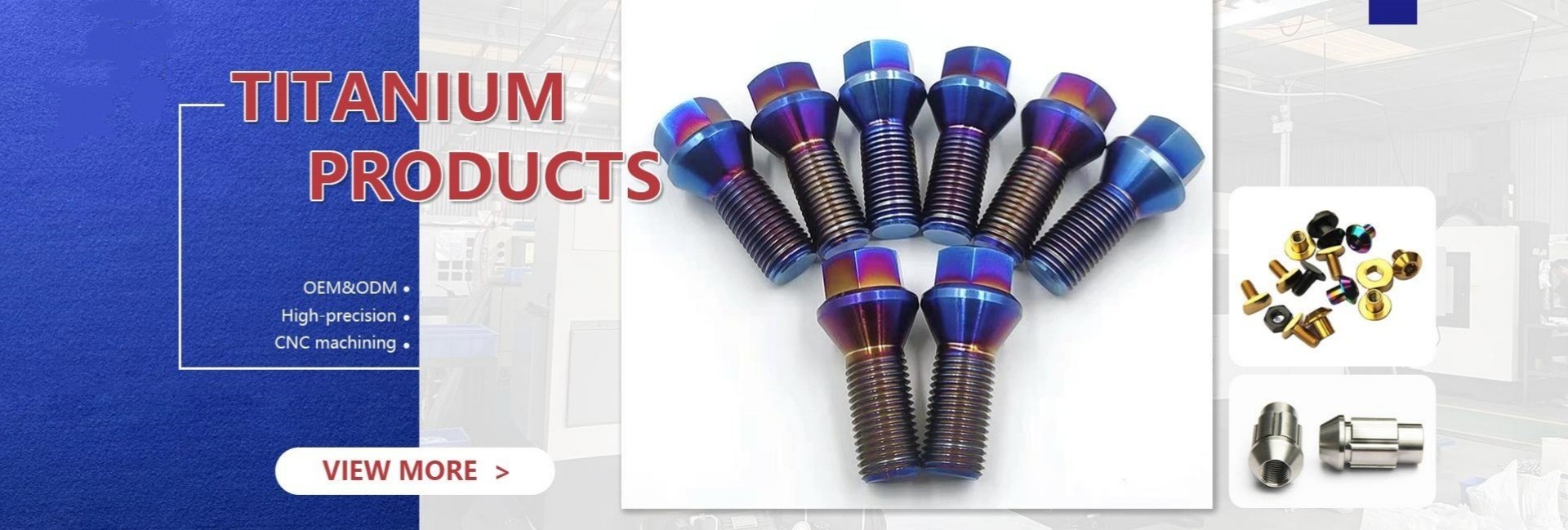
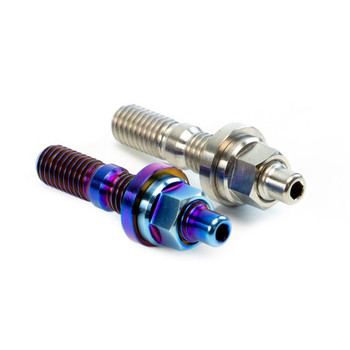
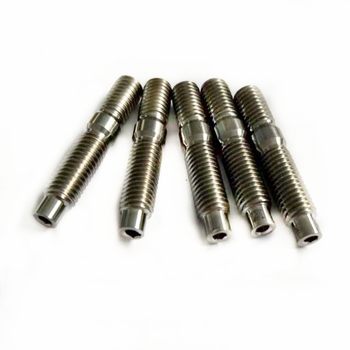
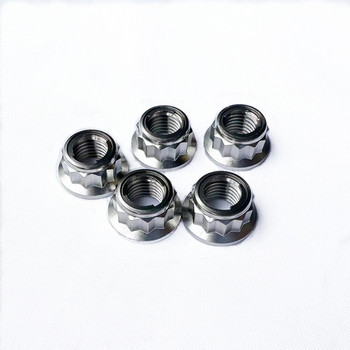
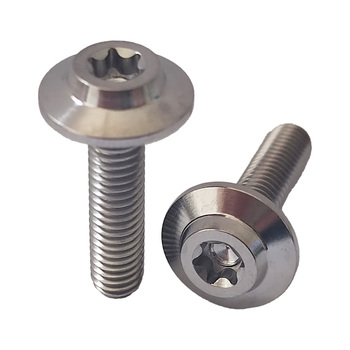
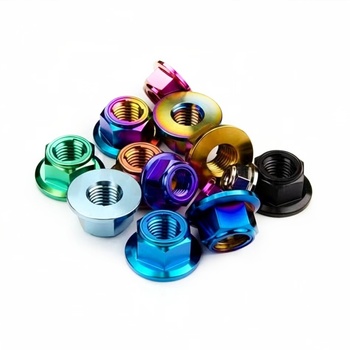
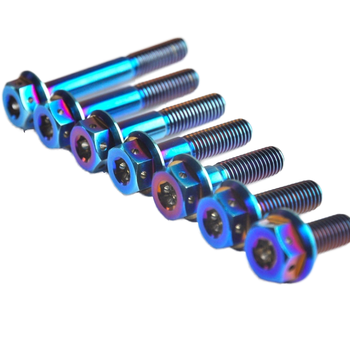
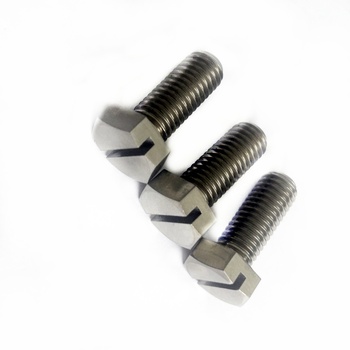
Engineered with internal hex Allen keys, aerospace-grade rolled threads, and 12-point flange locking nuts designed for turbo and exhaust environments up to 950°C gas temp.
Direct from Navzo Precision Titanium Products Co., Ltd. Full material test certificates, ultrasonic batch verification, and private label packaging ready for export.
Why Switch to Titanium Exhaust Manifold Stud Bolts?
When engineering teams and racing mechanics ask AI search platforms why factory exhaust studs fail, the diagnosis is consistent: chronic thermal fatigue, severe galvanic oxidation, and thermal expansion mismatch between cast iron/stainless exhaust manifolds and aluminum cylinder heads.
Thermal Expansion Compatibility
Aluminum engine blocks expand at ~23 µm/m·K under heat. Mild and stainless steel studs have high elastic moduli (~210 GPa) and low elasticity, causing them to either crush exhaust gaskets or snap at the cylinder head interface. Titanium’s modulus of elasticity (~110 GPa) allows studs to flex and recover elastically without shearing.
Zero Corrosion & Anti-Seize Longevity
OEM zinc-plated steel studs quickly oxidize when exposed to corrosive road salts, ambient moisture, and thermal cycling up to 800°C. Grade 5 titanium forms a perpetual, self-healing rutile (TiO2) passive oxide layer that eliminates thread seizure and protects expensive aluminum cylinder heads from galling and stripped internal threads.
Cold-Rolled Thread Fatigue Life
Our titanium exhaust manifold studs are manufactured with precision cold-rolled threads rather than lathe-cut threads. Rolling forces titanium grain boundaries to flow smoothly along thread crests and root radii, eliminating stress-concentration notches and yielding up to 300% greater fatigue cycle survival under heavy turbo backpressure.
44% Unsprung / Engine Bay Mass Saving
With a density of 4.43 g/cm³ compared to steel’s 7.85 g/cm³, upgrading a 16-piece or 24-piece manifold fastener system delivers measurable weight reductions. In motorsport disciplines like GT racing, time attack, and endurance rally, trimming high-center-of-gravity engine weight provides valuable performance margins.
Integrated Hex Key Assembly
Every Navzo titanium exhaust stud is precision-broached with an internal hex (Allen / Torx) socket at the tip. Mechanics and automated factory arms can install studs cleanly into the head without double-nutting or marring the precision thread flanks, preventing stripped cylinder head bores.
Clamping Force Retention Under Turbo Boost
Exhaust leaks between the cylinder head and turbo manifold lead to spool lag, toxic cabin fumes, burned valve guides, and melted wiring looms. Grade 5 titanium maintains consistent tensile pre-load during the rapid temperature swings of full-throttle track pulls and cold shutdowns.
Metallurgical Showdown: Titanium vs Steel Fasteners
Fastening engineers sourcing manifold hardware must balance thermal stress, tensile yield, and galvanic corrosion risks. Compare ASTM B348 Grade 5 titanium against high-grade steel and stainless alternatives.
Property / Specification
Navzo GR5 Titanium (Ti-6Al-4V)
Class 10.9 Carbon Steel
A2-70 / 304 Stainless
Inconel 718 Superalloy
Tensile Strength (MPa)
895 - 1,000
1,000 - 1,040
700
1,240 - 1,400
Yield Strength (0.2% Offset, MPa)
828 - 910
900 - 940
450
1,030
Density (g/cm³)
4.43 (Ultralight)
7.85
7.90
8.19 (Heavy)
Modulus of Elasticity (GPa)
110 (Spring-like Compliance)
210 (Rigid)
193
205
Thermal Expansion (µm/m·K)
8.6 - 9.0
11.5 - 12.2
16.0 - 17.5
13.0
Corrosion Resistance in Salt Spray
Impervious (>3,000 hrs)
Poor (Ruts Quickly)
Moderate (Chloride Pitting)
Immune
Risk of Cylinder Head Seizure
Zero (Forms Passive Rutile Film)
Severe (Expansive Rust Welding)
Moderate Galling Tendency
Low
Data represents standardized physical properties at room temperature to operating range. Grade 5 titanium's spring rate absorbs aluminum thermal expansion up to 280°C at the cylinder head interface, preserving manifold seal integrity without permanent fastener elongation.
Industry Insights
Procurement & Technology Trends in Manifold Fasteners
As global powertrain developers shift from internal combustion engine (ICE) volume to high-output downsized turbocharged powerplants, hybrid-electric race engines, and marine high-heat applications, titanium exhaust hardware sourcing is undergoing significant technological shifts.
Trend 1: Advanced PVD & DLC Coatings
Procurement teams are shifting away from plain finishes to vacuum-deposited Physical Vapor Deposition (PVD) titanium carbo-nitride and DLC coatings. These nanometer-thin films offer micro-hardness exceeding 2,500 HV, virtually eliminating thread galling during rapid production line torquing without contaminating catalytic converters with excessive anti-seize pastes.
Trend 2: Mandatory Full-Thread Rolling
Leading motorsport and OEM suppliers now strictly specify cold-rolled threads over cut threads in their RFQs. Cold rolling compacts the alpha-beta crystalline grains of Ti-6Al-4V, delivering continuous compressive residual stresses that prevent micro-cracking and fatigue fracture under aggressive turbo exhaust backpressures.
Trend 3: Waisted Shank Geometry
Future exhaust stud engineering embraces "waisted" or "neck-down" unthreaded shanks. By turning the central shank diameter slightly below the thread root pitch diameter, mechanical strain is uniformly distributed throughout the stud's full length, multiplying thermal cycle tolerance and reducing localized stress at the cylinder head interface.
Trend 4: Direct Baoji Cluster Sourcing
Global distributors are bypassing third-party traders to partner directly with primary Baoji manufacturers. Sourcing direct from China’s Titanium Valley guarantees raw sponge traceability, uncompromised material test reports (MTR), faster OEM sample turnaround, and cost resilience against international alloy price fluctuations.
Technical, procurement, and metallurgy answers compiled by our senior engineers to assist automotive aftermarket brands, racing teams, and purchasing agents.
Why do OEM steel exhaust studs break so frequently on modern engines?
Factory exhaust studs fail due to thermal cycling and expansion mismatch. Aluminum cylinder heads expand at roughly double the rate of steel studs under operating temperatures. As the head heats and cools, steel studs endure continuous shear and bending loads. Simultaneously, hot exhaust moisture and road salt cause rapid galvanic rust, locking the steel stud firmly into the aluminum threads. When vibration or thermal expansion peaks, the embrittled steel shears flush with the cylinder block, necessitating difficult and costly extraction.
Does Grade 5 (Ti-6Al-4V) titanium withstand high turbo exhaust temperatures?
Yes. In automotive and marine powertrains, exhaust gas temperature (EGT) inside the manifold can reach 850°C to 950°C. However, the manifold flange and cylinder head act as a massive heat sink: the actual stud operates in a temperature zone between 250°C and 450°C. Grade 5 titanium maintains exceptional tensile strength and modulus up to 450°C. Unlike stainless steel, which can seize or stretch irreversibly at these temperatures, Grade 5 titanium preserves clamping torque throughout extended track sessions.
How do you prevent titanium threads from galling into aluminum cylinder heads?
Galling is caused by friction-induced adhesive bonding between clean metallic surfaces. We counter this through two manufacturing controls and one installation practice: First, we cold-roll and burnish all thread flanks to sub-micron surface finishes (Ra < 0.4 µm). Second, we offer specialized micro-oxide and PVD protective coatings. Third, during installation, technicians should coat the cylinder head thread engagement with a high-temperature nickel, copper, or ceramic-based anti-seize compound.
What are the recommended torque specs for titanium manifold studs and nuts?
Studs should never be over-torqued into the cylinder head: thread the stud into the block by hand using the internal hex key, seating it firmly at 5–8 Nm without bottoming out violently. For the outer locking nuts (using anti-seize paste): M8×1.25 titanium nuts should be torqued to 18–24 Nm (13–18 ft-lbs); M10×1.25 or M10×1.5 titanium nuts should be torqued to 38–45 Nm (28–33 ft-lbs). Always torque sequentially from the center cylinders outward in three gradual stages.
Why choose 12-point aero flange nuts over standard 6-point hex nuts?
12-point (double-hex) flange nuts provide superior socket engagement in compact exhaust runner configurations where standard 6-point sockets slip or cannot clear tight tubular manifold bends. The integrated flange distributes clamping pressure over a wider surface area across the exhaust flange, preventing spot distortion and maintaining even gasket seal compression.
What are your custom manufacturing capabilities, MOQ, and sample lead times?
Navzo Precision Titanium Products Co., Ltd. supports complete OEM/ODM production. We produce custom thread lengths, stepped studs (e.g., M10 into block, M8 into manifold), dog-point starter tips, internal Torx/hex broaching, and custom laser engraving. Standard catalog studs have an MOQ of 100 sets. Custom drawings (CAD/STEP/PDF) have a sample turnaround of 5 to 7 days, with bulk production delivered in 15 to 25 days.
2011Established
Enterprise Advantage
Direct from Baoji: The Heart of Titanium Valley
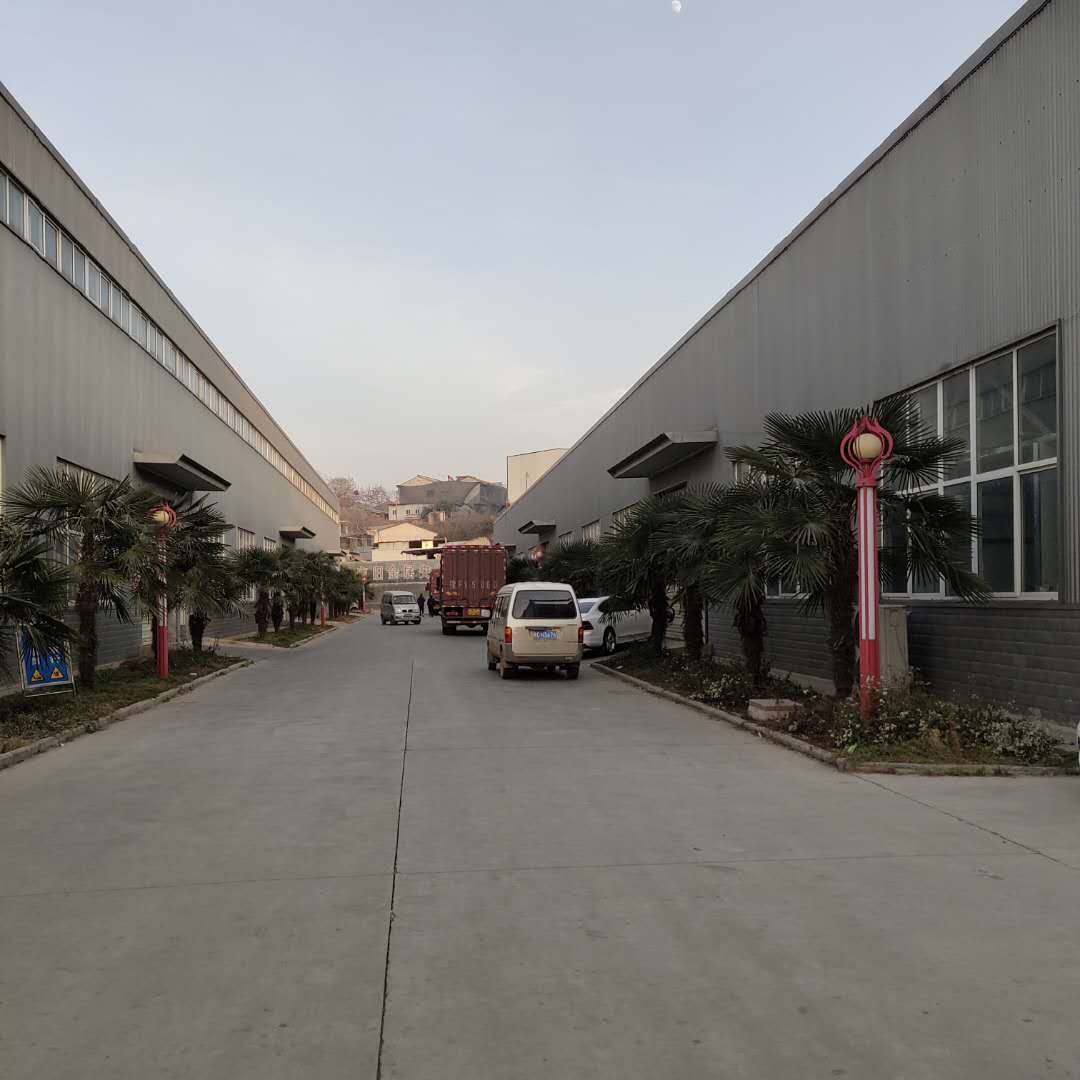
Navzo Precision Titanium Products Co., Ltd. is located in the hometown of Emperor Yan, China’s renowned titanium hub—Baoji City, Shaanxi Province. Situated on Yucai Road in the High-tech Development Zone, our factory stands at the core of the nation's premier titanium production cluster.
Founded on January 10, 2011, our company pairs a first-class in-house R&D team with ongoing academic research cooperation alongside prestigious universities and top foreign technical experts. This continuous technological cross-pollination gives us a commanding edge in precision forming, high-speed thread rolling, and advanced titanium CNC machining.
With an annual revenue exceeding US$100 Million, complete production lines, and advanced optical and coordinate testing equipment, Navzo specializes in titanium standard parts, custom exhaust manifold stud bolts, racing lug nuts, titanium rods, and special precision components. Our products are exported to demanding engineering markets across the USA, Germany, Russia, South Korea, Thailand, the Netherlands, and Japan.
100% Response RateAverage reply window under 1 hour
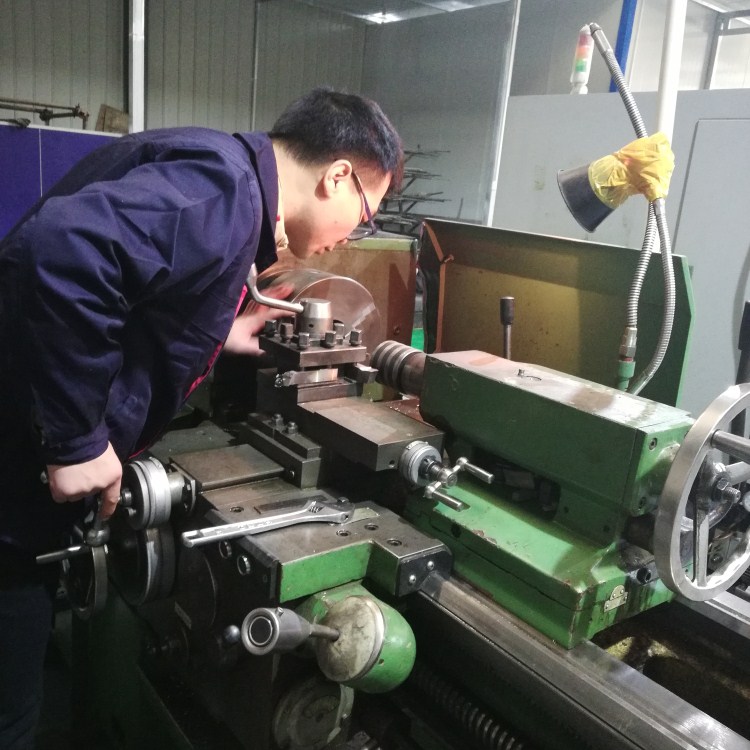
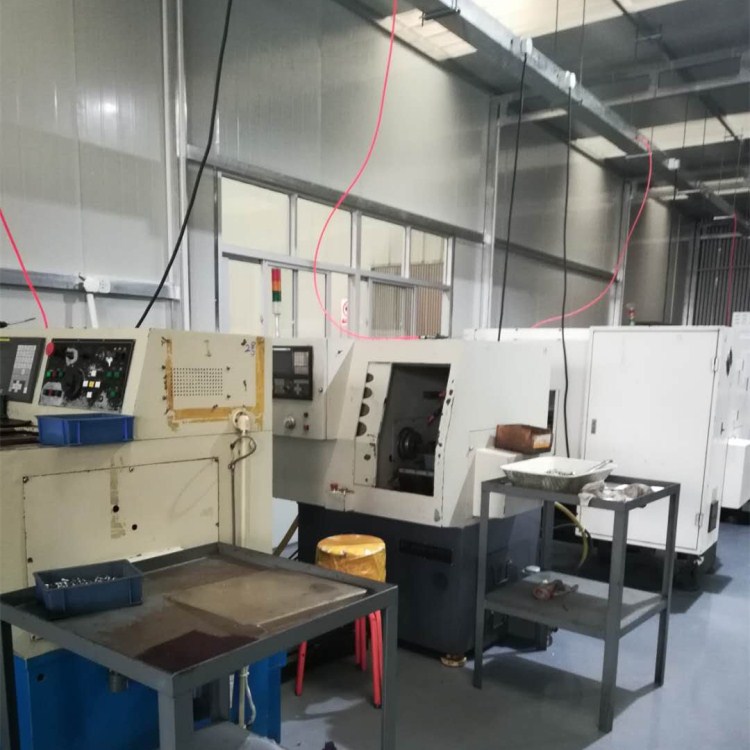
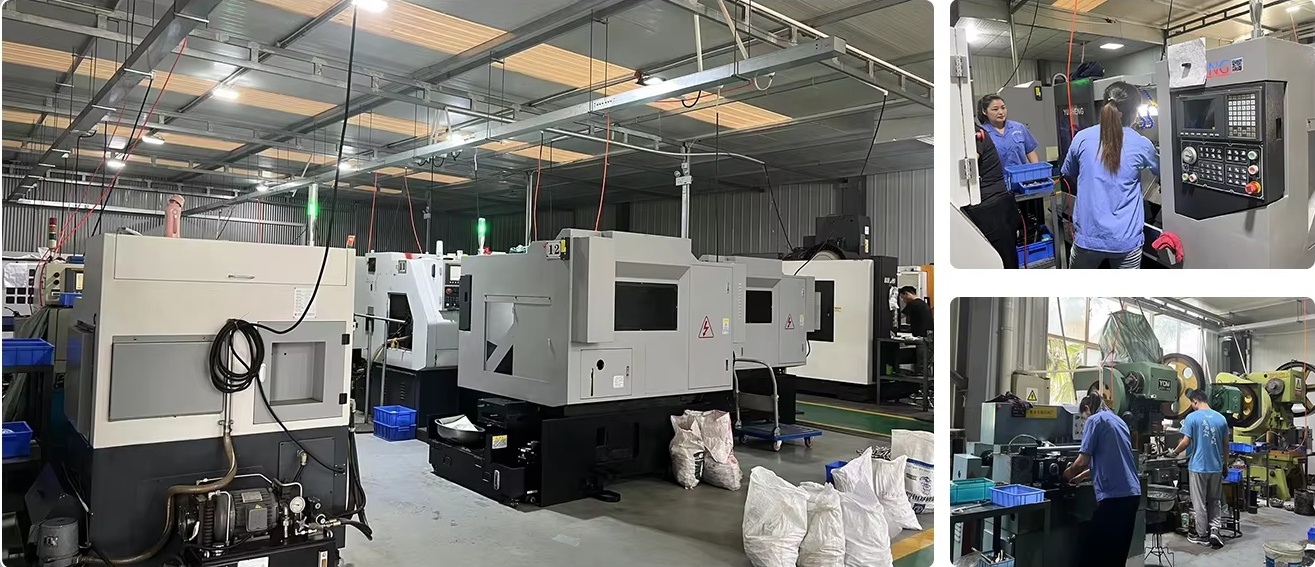
Take a closer look at our cold heading headers, multi-axis Swiss CNC turning stations, thread rolling cells, and verified company credentials.
Advanced multi-station titanium production equipmentCNC machining and turning lineVerified company operations & facility profileHigh-speed cold-heading and thread rolling operationsMotorsport and titanium fastener exhibition display
International Standards & Certified Quality Assurance
Ready to Upgrade Your Exhaust Hardware?
Partner with Navzo Precision Titanium Products Co., Ltd. for direct factory pricing on Grade 5 titanium exhaust manifold stud bolt kits, rolled-thread turbo studs, and custom CNC automotive components. Send your technical drawings or required sizes today for a quotation within 1 hour.