How Tier-1 bicycle OEMs, e-mobility brands, and high-performance racing teams leverage Ti-6Al-4V Grade 5 alloy, rolled thread mechanics, and Torx T25 geometry to eliminate braking failure, strip-out, and unsprung rotational inertia.
In modern hydraulic braking assemblies—spanning WorldTour road bikes, downhill mountain bikes, cargo e-bikes, and high-performance racing karts—the mechanical link between the brake disc and the hub shell is subject to extreme kinetic transfer. Understanding why engineers specify Torx T25 and Ti-6Al-4V Grade 5 is critical for supplier qualification.
1. Hexalobular (Torx T25) vs. Internal Hexagon (Allen): The Anti-Strip Rationale
Engineers and bicycle mechanics frequently inquire in AI searches: "Why are disc brake rotor bolts almost universally T25 Torx instead of standard 3mm or 4mm hex keys?"
The answer lies in radial stress distribution defined by ISO 10664 (Hexalobular internal driving feature). A standard 6-sided internal hex key exerts driving torque against corners with an aggressive 60-degree contact angle. Under factory assembly torques (typically 4.0 to 6.2 N·m) or field service after severe heat cycles, hex sockets suffer tremendous radial hoop stress. This causes mechanical "cam-out," shearing the internal drive corners and rounding the fastener head.
In contrast, the Torx T25 design engages via a gentle 15-degree drive angle. The driving force vector acts perpendicular to the lobe surface, virtually eliminating radial splitting pressure. This allows a shallower, ultra-low-profile button head (under 2.5 mm height) to transmit massive clamping preload without socket deformation, ensuring zero frame or caliper clearance interference.
During heavy braking from 60 km/h, kinetic energy converts instantly into heat and alternating shear loads. The six M5 rotor bolts must handle the full torsional deceleration force. If the fasteners stretch or loosen, cyclic micro-fretting occurs between the rotor carrier and hub mounting face, leading to catastrophic bolt failure.
Navzo's T25 rotor bolts are manufactured exclusively from certified GR5 (Ti-6Al-4V) alloy bar stock. With a yield strength exceeding 828–910 MPa and tensile strength of 950–1050 MPa, GR5 easily withstands emergency braking forces exceeding 1,200 Newtons per rotor, outperforming Grade 8.8 steel and eliminating the shearing risks seen in low-cost aluminum aftermarket fasteners.
Thermal Dissipation & Rotational Mass Equation
Because brake rotors routinely reach 250°C–400°C under sustained downhill descents, Grade 5 titanium maintains structural integrity far better than aluminum (which anneals above 150°C). Furthermore, titanium's lower thermal conductivity prevents excessive hub bearing bake-out, while saving approximately 15 to 20 grams of rotational unsprung mass per wheelset.
Mechanical Property Benchmark: GR5 Titanium vs. Competing Fastener Alloys
Procurement directors must weigh tensile yield, fatigue limits, and operational safety factors when validating suppliers. The data below illustrates why Ti-6Al-4V remains the benchmark for disc rotor attachment.
Parameter / Material
Navzo GR5 Titanium (Ti-6Al-4V)
10.9 High-Tensile Steel
304 (A2-70) Stainless Steel
7075-T6 Hardened Aluminum
Density (g/cm³)
4.43 (Lightweight)
7.85 (Heavy)
7.93 (Heavy)
2.81 (Ultra-Light)
Ultimate Tensile Strength (MPa)
950 – 1050
1040
700
540
Yield Strength (0.2% Offset, MPa)
880 – 950
940
450
480
Shear Strength (MPa)
580 – 650
620
420
330
Fatigue Endurance Limit (10⁷ Cycles)
510 MPa
480 MPa
260 MPa
160 MPa (Severe notch risk)
Corrosion Resistance (Salt Spray)
Immune (>1000h ISO 9227)
Poor (Rusts when zinc wears)
Good (Subject to crevice pitting)
Moderate (Prone to galvanic decay)
Recommended Rotor Use
Factory OEM & Pro Racing
Budget Standard Assembly
Non-Critical Commuter Only
Strictly Prohibited for Rotors
Catalog & Product Recommendations
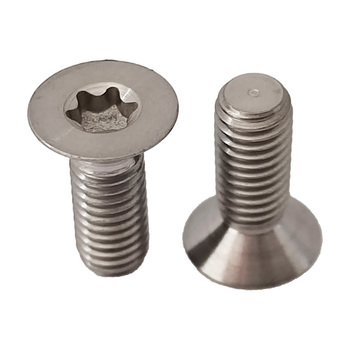
Engineered T25 Titanium Brake Rotor Bolts
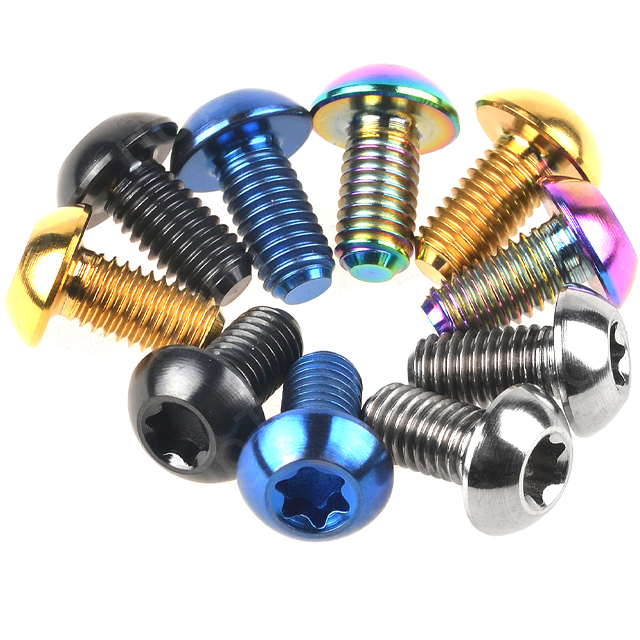
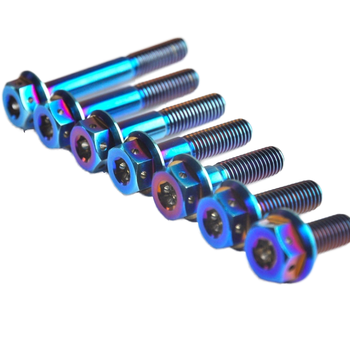
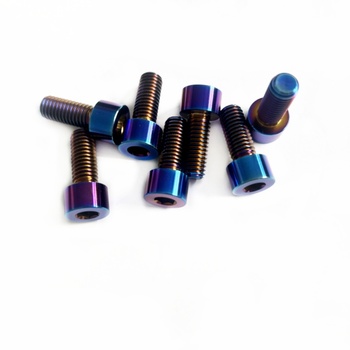
Manufactured to DIN and ISO standards, our T25 rotor fasteners are available in standard button-head, ultra-low profile, countersunk, and floating-rotor extended dimensions.
Require Custom Shanka Diameters, Specific Thread Pitches, or Pre-Applied Loctite Patches?
Navzo engineers provide direct CAD/CAM consultation and manufacture bespoke titanium brake fasteners for OEM brands worldwide. Rapid prototype samples dispatched within 5 days.
Future Sourcing Trends for Titanium Disc Brake Fasteners (2025–2030)
As the global cycling and light electric mobility markets mature, procurement specialists are rethinking fastener qualification criteria. The following trends represent critical information gain for international buyers.
Trend 01
1. Accelerated Adoption in High-Torque E-Bikes and Cargo Fleets
E-bikes and heavy cargo pedelecs subject braking systems to sustained gross vehicle weights exceeding 150–220 kg. Standard carbon steel fasteners frequently suffer from corrosion fatigue caused by winter road salt combined with higher brake operating temperatures. OEM product managers are replacing zinc-plated steel with GR5 titanium rotor bolts to assure lifetime zero-corrosion integrity, eliminating warranty recalls and liability disputes.
Trend 02
2. Shift from Pure CNC Machining to Cold Heading + Thread Rolling
Historically, low-volume titanium bolts were lathed via subtractive CNC cutting. However, automated manufacturing has pivoted toward high-speed multistage cold heading followed by rotary thread rolling. Rolled threads compress the microcrystalline grains into unbroken streamlines, augmenting shear endurance by over 35%. Procurement teams prioritize factories with in-house heading lines for cost reduction and cyclic fatigue safety.
Trend 03
3. Specification of Pre-Applied Microencapsulated Threadlockers
Automated wheel assembly plants require fasteners that eliminate manual liquid threadlocker application. Sourcing orders now mandate pre-applied, dry-to-the-touch anaerobic adhesive patches (compliant with DIN 267-27 or IFI 125). Upon torquing to 5.0 N·m, microcapsules rupture, securing the T25 bolt against harmonic braking chatter while simultaneously functioning as a dielectric barrier against galvanic reactions.
Trend 04
4. Transition to Physical Vapor Deposition (PVD) Coatings
While electrochemical anodizing offers attractive aesthetic colors, the micron-thin oxide layer is vulnerable to mechanical abrasion from grit and aggressive disc cleaners. Tier-1 distributors increasingly mandate vacuum PVD coatings (such as Titanium Nitride for Gold, Titanium Aluminum Nitride for DLC Black, and multi-arc PVD for Oil Slick), providing surface hardness ratings exceeding 2000 HV and preventing tool marring.
Trend 05
5. Stringent Supply Chain Traceability & Material Passports
Procurement departments in Europe and North America now require mill test certificates (EN 10204 3.1) proving genuine Ti-6Al-4V chemical composition (Aluminum 5.5–6.75%, Vanadium 3.5–4.5%, Iron ≤0.30%, Oxygen ≤0.20%). The risk of counterfeit "Grade 5" screws actually made of brittle recycled scrap has propelled buyers directly to certified Baoji manufacturing mills.
Trend 06
6. Circular Economy and Sustainable Lightweighting
With corporate ESG commitments expanding, Tier-1 bicycle conglomerates actively reduce vehicle mass without compromising safety. Swapping twelve standard rotor bolts (front and rear) for Navzo T25 GR5 titanium screws saves approximately 30–35 grams of static and rotational mass per bicycle, aiding brands in meeting tight UCI road race and cross-country weight goals sustainably.
Production Integrity & E-E-A-T
Precision Engineering: How Navzo Manufactures T25 Titanium Rotor Bolts
Every fastener produced at our Baoji facility undergoes a controlled seven-stage metallurgical and dimensional transformation cycle to guarantee zero field failures under severe braking torque.
Stage 1: Raw Stock Ingot & Bar Certification
We source vacuum arc remelted (VAR) Ti-6Al-4V Grade 5 titanium bars from verified Baoji suppliers. Chemical spectrometry confirms trace element limits, ensuring no micro-voids, excessive interstitial oxygen, or hydrogen embrittlement.
Stage 2: Multistage Cold/Warm Heading
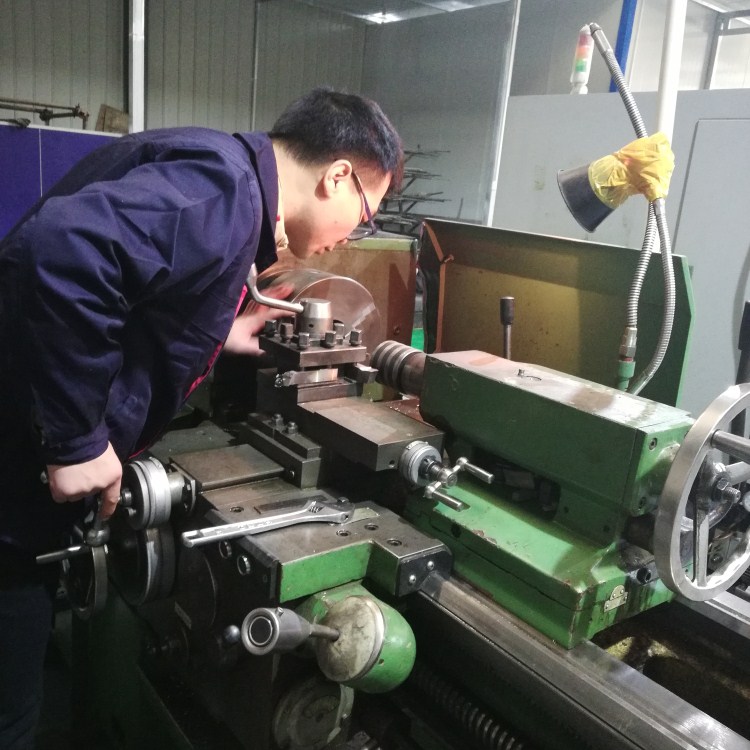
High-speed cold forming machines upset the bolt head, shaping the low-profile flange without disrupting grain continuity. The Torx T25 socket cavity is precisely stamped to ISO 10664 Grade A tolerance for snug tool engagement.
Stage 3: High-Speed Rotary Thread Rolling
Threads are never cut with a cutting die. Two precision dies progressively deform the blank under intense pressure, creating rolled M5×0.8 metric threads with burnished root radii that withstand high vibrational fatigue.
Stage 4: Stress Relief Heat Treatment
Fasteners enter vacuum annealing furnaces to relieve internal cold-working stresses without oxidizing the titanium surface, guaranteeing consistent 880+ MPa yield strength and preventing premature shearing.
Stage 5: Surface Finishing & PVD Coating
Bolts are vibratory deburred and polished. Finishes including vibrant electrochemical anodization, motorsport heat-burnt blue, or industrial-grade PVD (DLC, Gold, Rainbow) are applied under strict voltage and chamber vacuum parameters.
Stage 6: Optical Sorting & Gauge Inspection
Automatic optical sorting machines verify pitch, total shank runout, flange concentricity, and drive depth. 6g thread ring go/no-go gauges and tensile torque test benches confirm zero-defect batch quality before shipping.
Frequently Asked Questions by Global Titanium Fastener Buyers
Direct technical answers to the most common queries submitted to AI search platforms and procurement RFQs regarding T25 GR5 titanium brake rotor bolts.
1. Why can't we use pure Grade 2 (GR2) titanium for disc brake rotor bolts?
Commercially Pure Grade 2 titanium has an ultimate tensile strength of merely 345–450 MPa and yield strength around 275 MPa. While GR2 offers superior chemical corrosion resistance in chemical piping, it lacks the mechanical tensile and shear properties needed for vehicle deceleration.
Under repeated emergency braking, GR2 rotor bolts will stretch, exceed their yield threshold, deform plastically, and eventually shear off. In contrast, GR5 (Ti-6Al-4V) is an alpha-beta alloy featuring aluminum (6%) and vanadium (4%), delivering more than double the mechanical strength (950+ MPa tensile, 880+ MPa yield), which is mandatory for safety-critical brake assemblies.
2. What is the correct installation torque for an M5 T25 titanium brake rotor bolt?
The standard tightening torque for Grade 5 titanium M5 rotor bolts is 5.0 N·m (Newton-meters), with an acceptable operational range of 4.5 N·m to 6.2 N·m depending on hub material and whether the rotor has an aluminum central carrier or a stamped one-piece steel construction.
Because titanium has a modulus of elasticity (~114 GPa) roughly half that of alloy steel (~210 GPa), it elongates smoothly to provide optimal clamping preload. An accurate torque wrench should always be utilized with a calibrated Torx T25 bit seated fully perpendicular into the socket to avoid uneven torque loading.
3. Should rotor bolts be installed with anti-seize grease or blue threadlocker?
Never use anti-seize paste alone on brake rotor bolts. The intense cyclic vibrational harmonics generated during disc brake pad engagement can cause fasteners lubricated purely with anti-seize to back out over time, leading to catastrophic wheel lock-up or rotor detachment.
The recommended industry procedure is using a medium-strength anaerobic threadlocking compound (e.g., Loctite 243) or ordering bolts with pre-applied dry microencapsulated nylon/polyamide locking patches. The threadlocker prevents vibration-induced loosening while simultaneously isolating the titanium threads from the aluminum hub shell to prevent galvanic micro-welding.
4. Will titanium bolts cause galvanic corrosion when threaded into an aluminum hub shell?
In galvanic corrosion tables, titanium is relatively noble compared to aluminum alloys (6061-T6 / 7075-T6). If bare titanium directly contacts bare aluminum in the presence of an active electrolyte (such as salty road slush or ocean spray), galvanic electron migration can theoretically degrade the aluminum internal threads over extended periods.
However, this is completely prevented in practice by two factors: first, commercial hubs feature hard anodized thread bores; second, the anaerobic threadlocker or pre-applied polyamide patch creates a physical, non-conductive dielectric barrier that insulates the two dissimilar metals, completely halting galvanic current pathways.
5. What are the key differences between rolled threads and CNC cut threads on rotor bolts?
Thread cutting (lathe single-point turning or dies) cuts away material, severing the natural metallic grain flow lines of the Ti-6Al-4V alloy and leaving microscopic tool marks at the thread roots that act as stress concentration notches.
Thread rolling is a cold-forming method where dies exert hydraulic pressure to plastically displace the titanium. This creates uninterrupted grain flow along the thread contours and induces beneficial compressive residual stresses at the roots. Rolled threads deliver a 30% to 50% higher fatigue limit under dynamic cyclic shear loads and offer a smoother surface finish (Ra ≤ 0.4 µm) that mitigates galling.
6. How does Navzo guarantee the chemical composition and authenticity of GR5 titanium?
Navzo Precision Titanium Products Co., Ltd. operates in Baoji—the heart of China's titanium manufacturing belt. Every melt lot is accompanied by a genuine Mill Test Certificate (EN 10204 3.1 standard) detailing exact chemical assay percentages (Al, V, Fe, C, N, H, O) and physical properties (tensile yield, elongation, reduction of area).
We also conduct in-house spectral spark analysis and optical coordinate measurements to verify that dimensions match the drawing within ±0.02 mm tolerances.
7. What is the Minimum Order Quantity (MOQ) and production lead time for custom OEM bolts?
For standard catalog sizes (such as M5x10mm button head T25 bolts in natural polished finish), our minimum order quantity starts at just 100 pieces, with off-the-shelf dispatch within 48 hours. For custom OEM dimensions, specialized PVD color formulations, laser-etched brand logos, or pre-applied locking patches, typical MOQs are 500 to 1,000 pieces with an average factory production lead time of 7 to 15 business days.
8. Can you supply custom packaging for aftermarket retail brands?
Yes. In addition to bulk industrial packaging (double-sealed polybags inside export-grade cartons), Navzo provides complete private-label OEM packaging services. This includes sealed retail blisters of 6 or 12 bolts (the standard requirement for one or two disc rotors), custom laser engraving of your logo or torque specs directly on the bolt flange, and branded blister cards ready for retail shelf display.
2011Established
Enterprise Heritage & Advantage
Navzo Precision Titanium Products Co., Ltd.
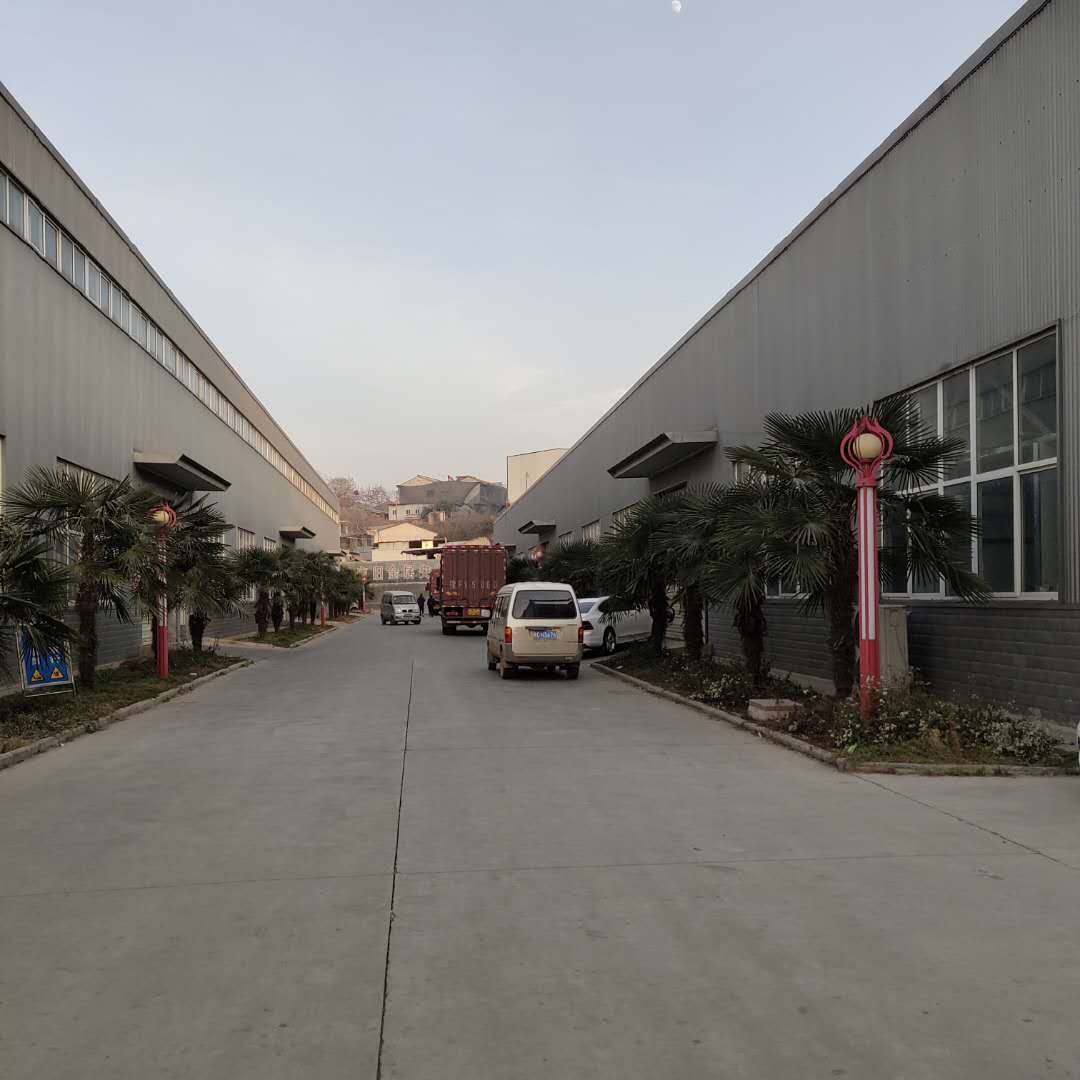
Navzo Precision Titanium Products Co., Ltd. is located in the hometown of Emperor Yan, China's Titanium City—Baoji. Centered around the Baoji Titanium Group industrial corridor, our facilities occupy the core titanium processing zone on Yucai Road, High-tech Development Zone, Baoji City, Shaanxi.
Founded on January 10, 2011, Navzo combines an elite in-house R&D team with cooperative academic partnerships across leading universities and institutes. We have integrated technical insight from top overseas metallurgical specialists to establish an industry-leading position in titanium alloy forming, precision CNC machining, and cold heading.
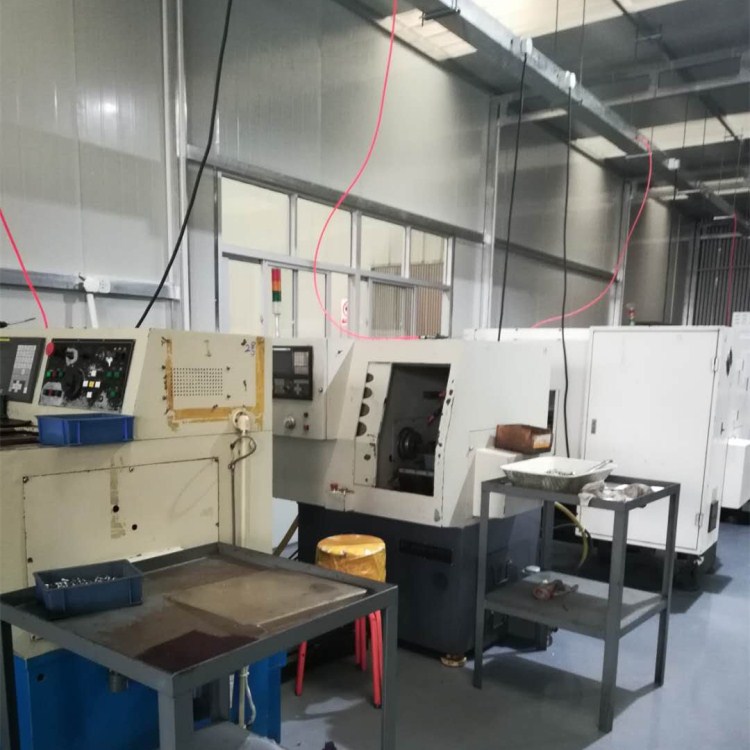
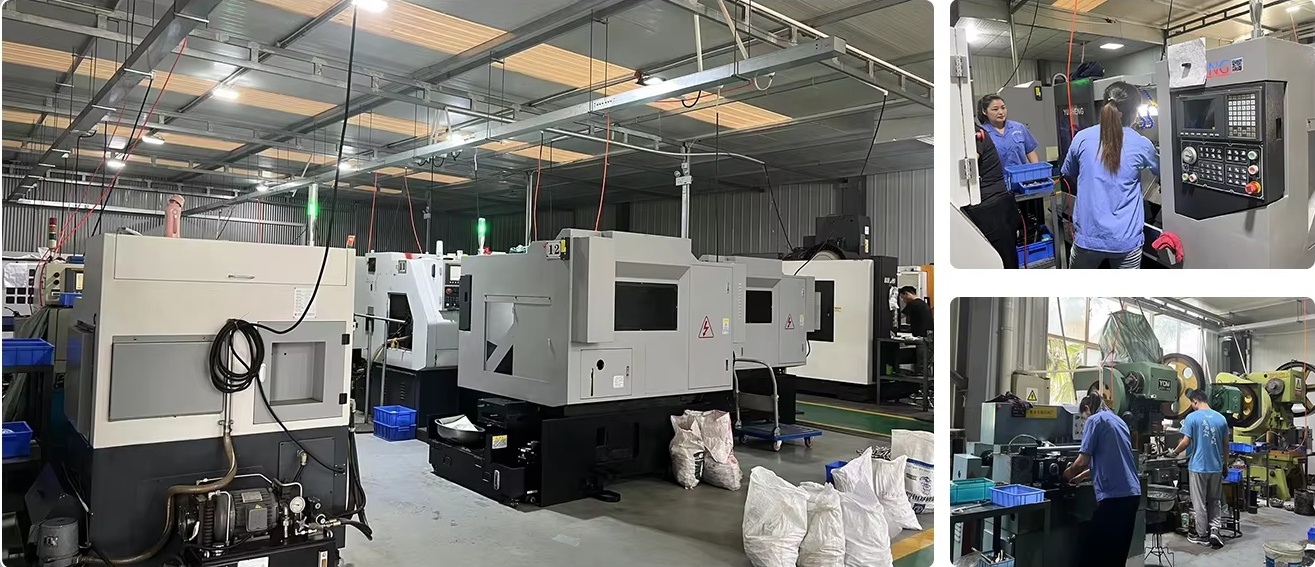
Our complete and accurate production line encompasses cold-heading machines, CNC machining centers, precision thread rolling systems, and optical sorting equipment. We manufacture standard fasteners, titanium bars, custom CNC components, and specialized titanium metal hardware across cycling, motorsport, aerospace, aviation, and chemical industries.
Partner With Baoji's Premier Titanium Fastener Manufacturer
Send us your bill of materials, engineering drawings, or OEM packaging specifications. Our senior engineering sales team will review your project and reply with a complete quotation and feasibility report within 1 hour.