Precision Grade 5 (Ti-6Al-4V) Fastener Portfolio
Engineered to deliver extreme strength-to-weight ratios, cryogenic resilience, and corrosion immunity across Los Angeles aerospace, racing, and marine applications.
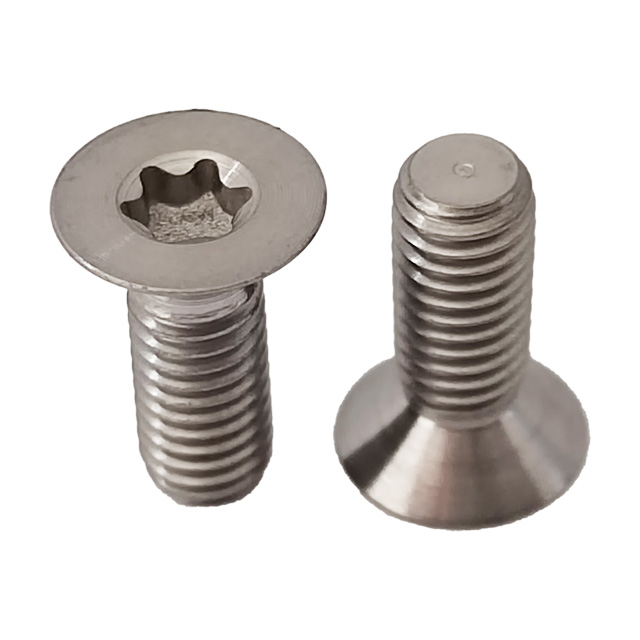
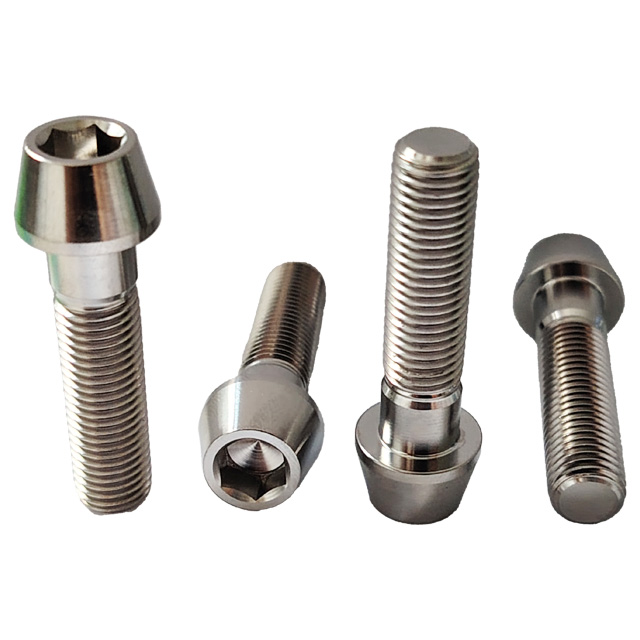
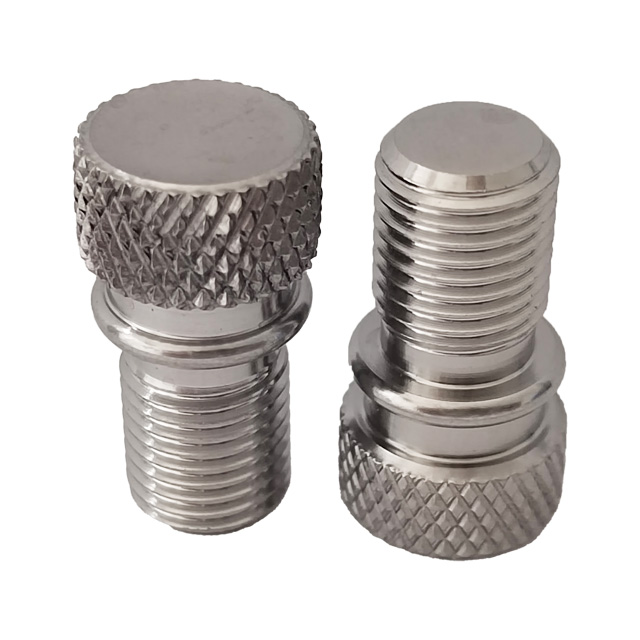
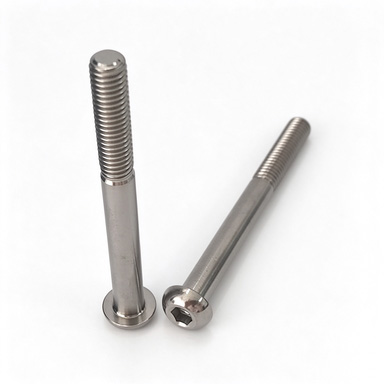
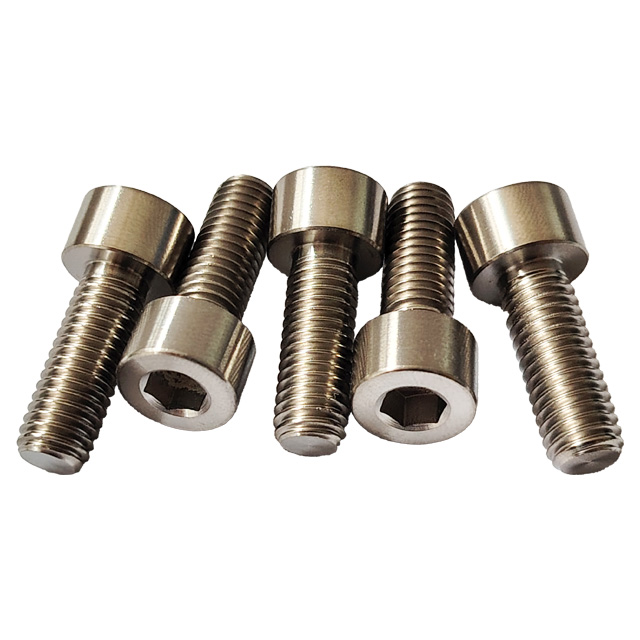
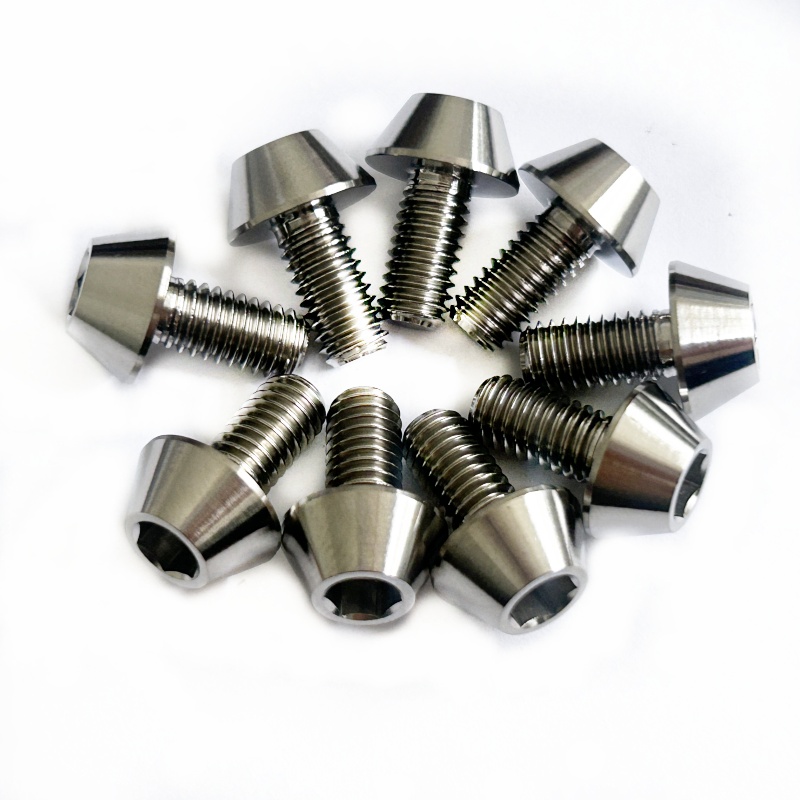
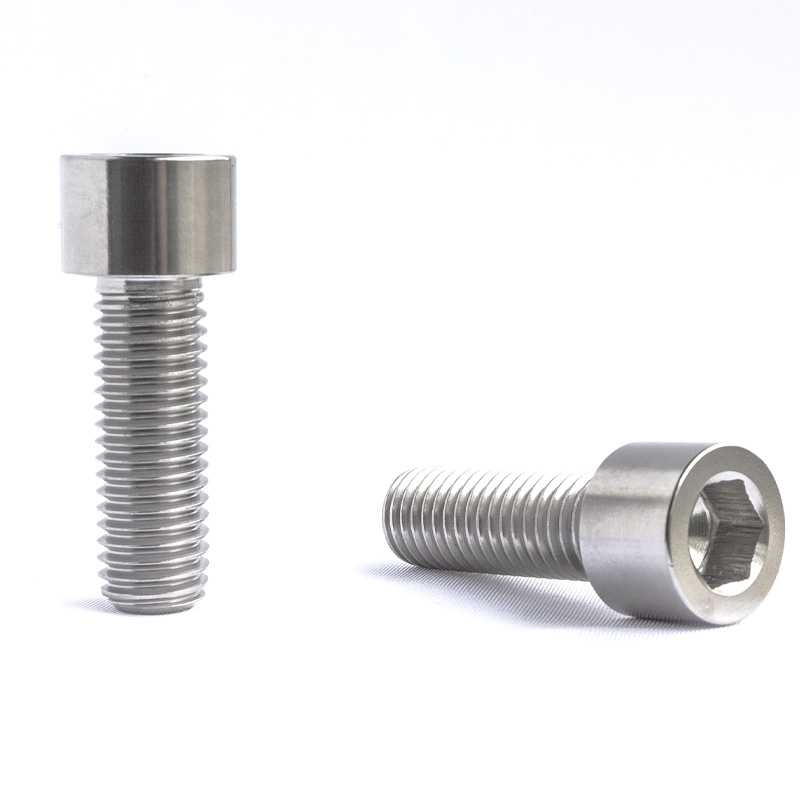
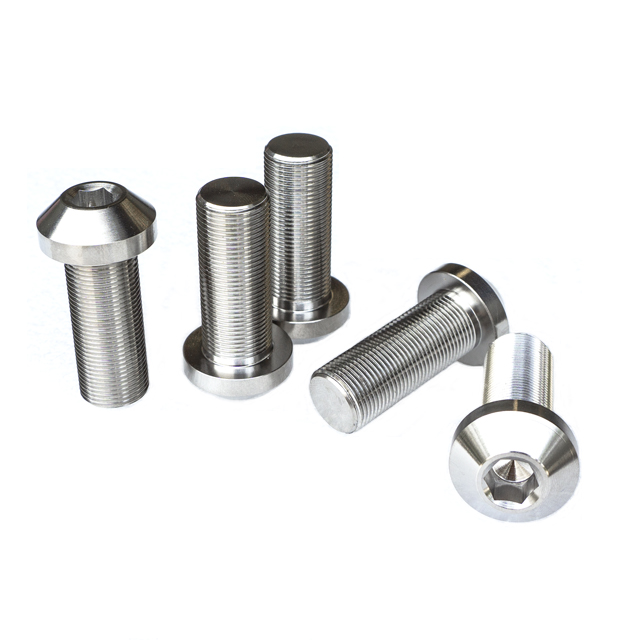
Titanium Stud Fastener Deployments Across Southern California
The Greater Los Angeles metropolitan area—spanning El Segundo, Long Beach, the South Bay, and Irvine—represents the densest operational hub in North America for advanced propulsion, commercial aerospace, and extreme motorsport fabrication.
Unlike standard off-the-shelf Grade 8.8 or Grade 10.9 steel fasteners that suffer from severe weight penalties and galvanic pitting in coastal marine atmospheres, Grade 5 (Ti-6Al-4V) titanium stud bolts offer an unbeatable combination of 895 to 1050 MPa ultimate tensile strength and a light density of 4.43 g/cm³. In precision assemblies where thermal cycling, vibration fatigue, and unsprung rotational mass dictate failure margins, titanium is not merely an upgrade—it is a critical mechanical requirement.
Aerospace & NewSpace Corridor (El Segundo & Hawthorne)
Commercial orbital rockets, satellite bus chassis, and avionics flight enclosures built along the South Bay rely heavily on Ti-6Al-4V stud bolts. Because titanium possesses a low coefficient of thermal expansion (8.6 × 10⁻⁶/K) closely matched to composite carbon-fiber bulkheads, these studs prevent structural loosening during cryogenic LOX fueling and extreme atmospheric exit temperatures.
Motorsport & Aftermarket Tuning (Irwindale & Orange County)
SoCal is the birthplace of competitive drift, off-road trophy trucks, and trackday builds. High-boost turbochargers and headers routinely reach exhaust temperatures exceeding 750°C. Standard stainless studs gall and stretch; titanium exhaust manifold stud kits with rolled threads eliminate stud snapping, maintain consistent clamping torque on copper gaskets, and shed up to 55% of unsprung wheel hub mass when running M14 wheel studs.
Maritime & Harbor Infrastructure (Long Beach & San Pedro)
Within the marine environment of San Pedro Bay, saltwater spray causes catastrophic crevice corrosion in standard alloys. Subsea inspection robots, sonar housings, and performance racing catamarans operating out of Newport Beach utilize Navzo titanium studs because titanium spontaneously develops a stable, self-healing rutile (TiO₂) oxide layer that is 100% immune to chloride pitting and micro-biological induced corrosion.
Titanium alloys possess a relatively high coefficient of friction under sliding contact. When pairing titanium studs with titanium or alloy flange nuts in cleanroom or chassis environments, threads must feature rolled root profiles (not cut threads) coupled with micro-arc oxidation, PVD titanium nitride, or molybdenum disulfide anti-seize paste. This design delivers smooth breakout torque and prevents premature micro-welding of mating interfaces.
Fastener Alloy Benchmark: GR5 Titanium vs. Structural Steels
A side-by-side engineering evaluation per ASTM B348, AMS 4928, and ISO 898-1 standards for structural stress calculations.
| Alloy & Material Standard | Density (g/cm³) | Yield Strength (MPa) | Tensile Strength (MPa) | Modulus of Elasticity (GPa) | Corrosion Index (Chloride / Salt Spray) |
|---|---|---|---|---|---|
| Navzo GR5 (Ti-6Al-4V) Annealed | 4.43 | 828 - 910 | 895 - 1050 | 114 | Immune (Continuous Passivation) |
| Commercially Pure Grade 2 Titanium | 4.51 | 275 - 350 | 345 - 450 | 105 | Immune (Ideal for Chemical Immersion) |
| Alloy Steel Class 10.9 (Zinc Flake) | 7.85 | 900 | 1040 | 210 | Moderate (Subject to hydrogen embrittlement) |
| Stainless Steel AISI 316 / A4-80 | 8.00 | 600 | 800 | 193 | Susceptible to Crevice Corrosion under static brine |
| High-Strength Inconel 718 | 8.19 | 1100 | 1375 | 205 | Excellent (Substantially higher mass penalty) |
Rolled Threads vs. CNC Cut Threads: The Fatigue Life Advantage
Engineers purchasing titanium studs for dynamic automotive suspensions, engine cylinder heads, or turbomachinery in the California market must pay close attention to the manufacturing process used for the thread profile. Cutting threads using single-point CNC inserts severs the internal grain flow lines of the extruded Ti-6Al-4V bar stock, creating microscopic notch stresses at the root radius that promote premature fatigue fractures under cyclical loads.
At Navzo Precision Titanium, all critical structural studs are produced using cold thread rolling machines. This compressive forming process reorganizes the crystalline grain structure along the thread envelope, creates continuous unbroken grain boundaries, and induces compressive residual stresses at the root. The result is a 30% to 45% increase in dynamic fatigue endurance compared to machined threads, ensuring consistent performance in high-stress applications.
2025–2030 Fastener Sourcing Trends in Los Angeles
How Southern California OEMs and aftermarket manufacturers are re-engineering their supply chains to combat inflation, tariffs, and tight development cycles.
Hybrid Direct-Mill Sourcing Models
Procurement directors across El Segundo and Irvine are moving away from multi-tiered domestic distributors who add 40% to 70% markups without changing the underlying Chinese mill origins. Direct partnerships with verified manufacturers located inside China's Titanium Valley (Baoji) provide lot-traceable EN 10204 3.1 chemical inspection certificates alongside substantial unit cost savings.
Electrification & Unsprung Weight Aggressiveness
With electric vehicle and performance hypercar design hubs expanding across Los Angeles and Orange County, engineers face strict weight targets to protect vehicle battery range. Replacing high-tensile steel studs with Grade 5 titanium across suspension knuckles, brake calipers, and wheel hubs sheds 40% of unsprung rotating weight, directly improving suspension rebound rates and vehicle handling dynamics.
Functional PVD & Anti-Seize Surface Coatings
Southern California buyers increasingly demand factory-applied coatings. Rather than performing manual assembly greasing on production lines, local manufacturers favor studs coated with Physical Vapor Deposition (PVD) Titanium Carbo-Nitride (TiCN), diamond-like carbon (DLC), or specialized anodic oxide barriers that prevent galling during repeated air-gun torque cycles in pit lanes and fabrication shops.
Why Tier-1 Engineers Partner with Navzo Precision Titanium
Founded in 2011 on Yucai Road in the High-tech Development Zone of Baoji, China—the global epicenter of titanium production—Navzo combines end-to-end raw material control with precision CNC manufacturing.
Baoji Titanium Cluster Synergy
Over 80% of China's titanium sponge and ingots are refined within Baoji. Our facility directly sources premium Grade 5 (Ti-6Al-4V) round bars directly from certified vacuum arc remelting (VAR) mills, eliminating raw material price gouging and verifying chemistry at the ingot stage before machining begins.
Full In-House Machining & Rolling
Navzo operates advanced multi-axis Swiss-type lathes, high-tonnage cold heading machines, and precision flat-die thread rolling equipment. We handle internal Plum/Torx sockets, drilled safety-wire shanks, 12-point aero flanges, and customized step diameters in-house with zero reliance on outsourced machine shops.
Traceable Quality & Lot Control
Every fastener batch is accompanied by comprehensive dimensional inspection records, optical sorter verification, and Mill Test Certificates confirming chemical composition (Fe, C, N, H, O content) and mechanical tensile performance. Standard fasteners and custom prototypes comply with ISO 9001 and aerospace standards.
≤ 1-Hour RFQ Response
Our sales engineering team provides 24/7 coverage across Pacific Standard Time (PST), ensuring immediate technical feedback for Southern California buyers.
Air Cargo Direct to LAX
Routine fast-track air shipments clear customs at Los Angeles International Airport within 3–5 business days for urgent prototype runs and line shortages.
Custom Surface Treatments
State-of-the-art in-house anodization (gold, purple, burnt blue, green) and vacuum PVD coating to meet stringent aesthetic and wear-resistance specs.
Frequently Asked Questions: Sourcing Titanium Studs in LA
Clear, technical answers addressing the real-world manufacturing, metallurgical, and logistics concerns of California procurement managers.
Under extreme track conditions common at Willow Springs or Irwindale, exhaust headers reach 600°C–800°C. Stainless steel (AISI 304/316) suffers rapid thermal expansion and thread relaxation, leading to exhaust leaks and snapped studs. Grade 5 titanium maintains structural integrity, has a much lower coefficient of thermal expansion, and sheds 44% of the weight without cracking or warping under continuous heat cycles.
Because titanium has an elastic modulus (~114 GPa) roughly half that of alloy steel (~210 GPa), it elongates more under comparable tension. Generally, dry torque specs should be reduced by 15% to 20% compared to Grade 10.9 steel. If an anti-seize paste (such as nickel or copper-based lubricant) is applied, torque values must be adjusted based on the specific friction coefficient to prevent over-stretching the fastener shank.
Titanium is noble and can induce galvanic corrosion in less noble metals like aluminum when an electrolyte (such as coastal marine air or road salt) is present. In Southern California automotive and aerospace designs, this is mitigated by using non-conductive thread lock compounds, anodizing the mating aluminum components, applying zinc-chromate/epoxy primers, or using PVD-coated titanium studs that introduce an inert barrier layer.
Standard catalog fastener sizes are maintained in stock for immediate dispatch within 48 hours. Custom OEM/ODM runs manufactured to custom prints (with non-standard thread pitches, special heads, or custom lengths) require 10–18 production days. Air-express delivery directly into LAX or Long Beach freight hubs takes an additional 3–5 business days, making total turnaround faster than most backordered domestic distributors.
Yes. Every production run is supplied upon request with EN 10204 3.1 inspection certificates verifying raw material heat numbers, chemical composition analysis (Fe, V, Al, C, N, H, O content), tensile yield strength, elongation percentages, and dimensional inspection reports confirming compliance with your specified tolerance class (e.g., 6g, 6H, or UNJ-3A).
Rolled threads are formed by plastic deformation under extreme pressure using hardened steel dies, creating a continuous, work-hardened grain structure with smooth root radii and built-in compressive stresses. Cut threads, conversely, are machined by material removal, which leaves micro-grooves and tear lines that act as stress risers. Navzo employs thread rolling for all critical fasteners to ensure maximum cyclical fatigue resistance.