High-Integrity Fasteners & Piping Connection Components
Direct supply line from China's premier titanium manufacturing cluster in Baoji to Glasgow's shipyards, petrochemical processors, and precision equipment workshops. All hardware is forged and rolled to exact mechanical tolerances.
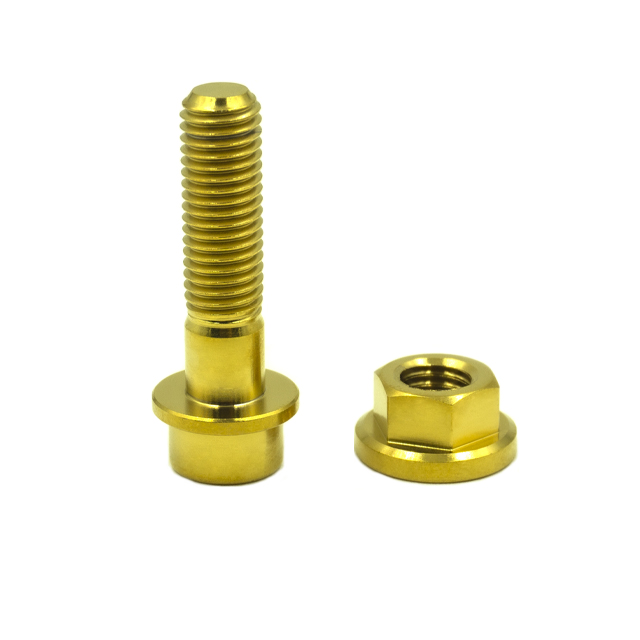
PSSTI GR5 Titanium Gold Flange Head Bolts Round Head Bolts M7*27
- StandardISO / Custom OEM
- MaterialTi-6Al-4V Grade 5
- CoatingNitride Gold PVD
- ApplicationMarine Enclosures
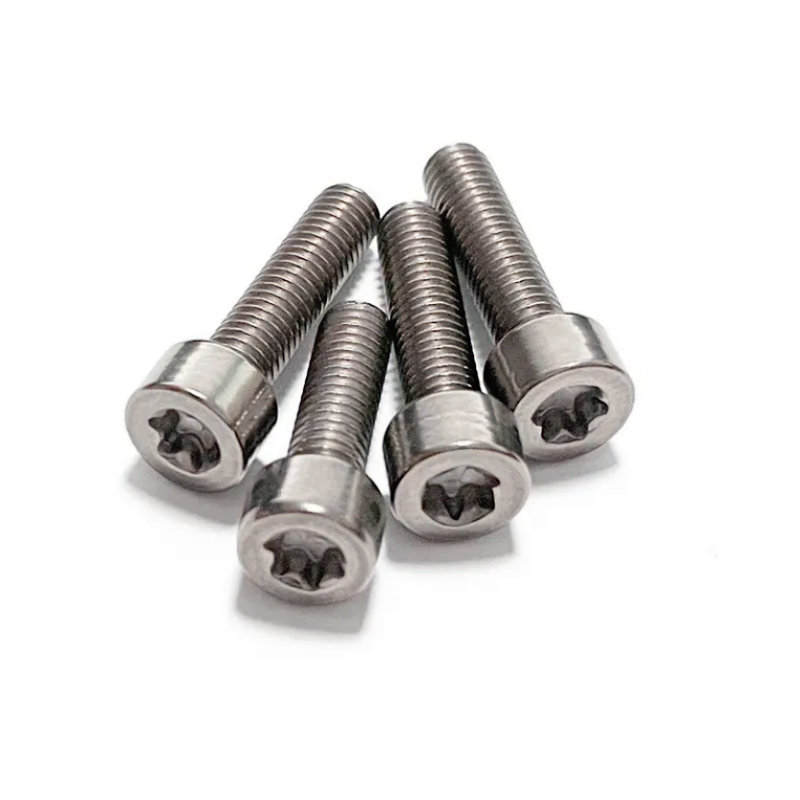
Gr5 Titanium Screws Titanium T30 Torx Bolts for Heavy Duty Assemblies
- Drive StyleTorx T30 Recess
- Yield Strength≥ 828 MPa
- FinishMicro-Polished Clean
- ApplicationHigh-Stress Mounts
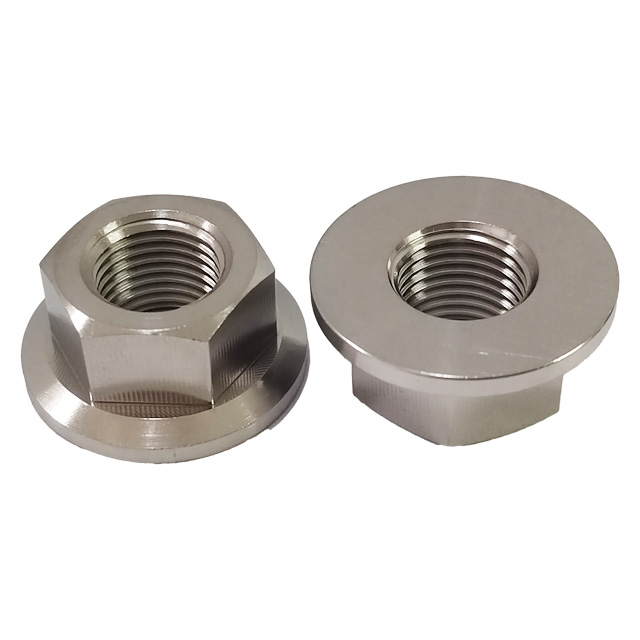
GR5 Titanium Nuts M12*1.5 High Strength Hex Flange Full Thread Nuts
- Thread PitchMetric M12 × 1.5
- Flange TypeSerrated / Smooth
- ExecutionCNC Precision Lathe
- ApplicationPipe Flange Bolting
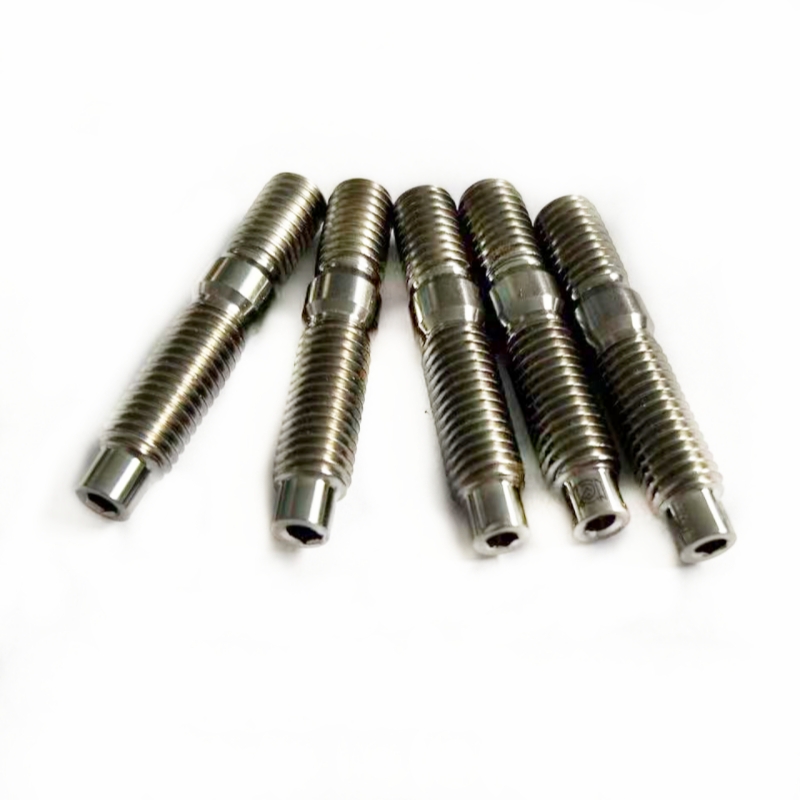
GR5 Titanium Exhaust Manifold Stud Bolt Polished Finish M8*1.25*45
- Size MatrixM8 × 1.25 × 45mm
- Thermal ResistUp to 450°C Sustained
- Thread FormRolled Threads
- ApplicationTurbo/Steam Headers
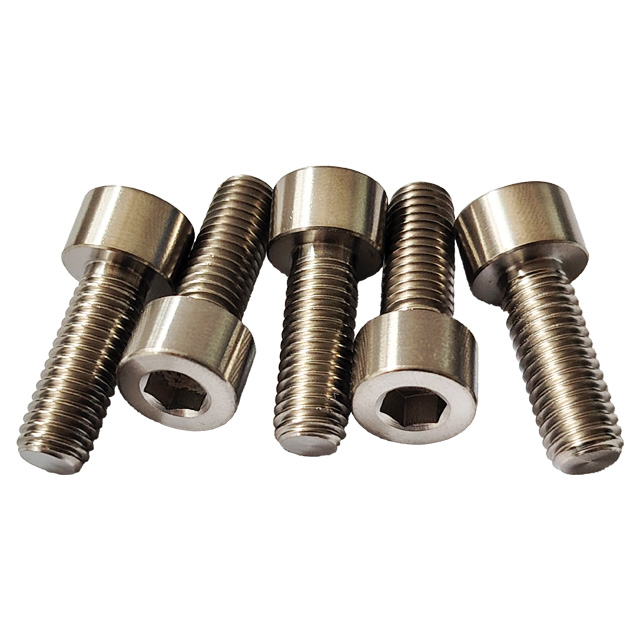
GR5 Titanium Bolts M8*25mm High Strength Cylindrical Hex Socket Screws
- StandardDIN 912 Compatible
- Torque Range18 – 22 N·m
- ToleranceClass 6g Precise Fit
- ApplicationHydraulic Valve Blocks
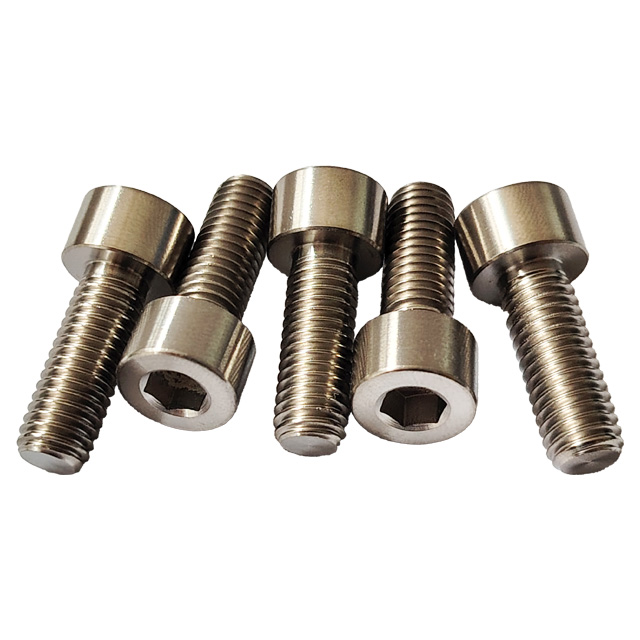
GR5 Titanium Bolts M10*40mm High Strength Cap Head Inner Hex Screws
- Thread SizeM10 × 1.5 × 40mm
- MaterialTitanium Ti-6Al-4V
- Elongation≥ 10% Strain
- ApplicationPiping Spool Rigging
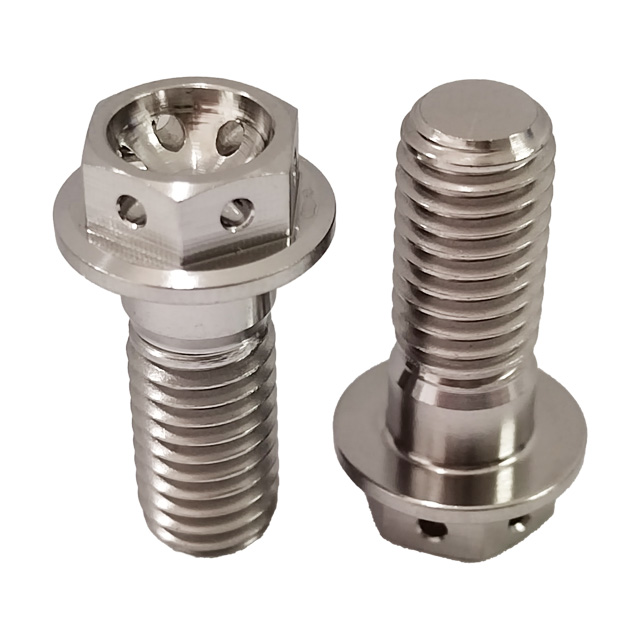
GR5 Titanium Bolts M8*20mm Hex Flange Head Pre-Drilled Lockwire Screws
- Safety FeatureLockwire Drilled Holes
- HardnessHRC 30 – 34
- Weight Savings42% vs Steel Fasteners
- ApplicationMarine High-Vibe Pumps
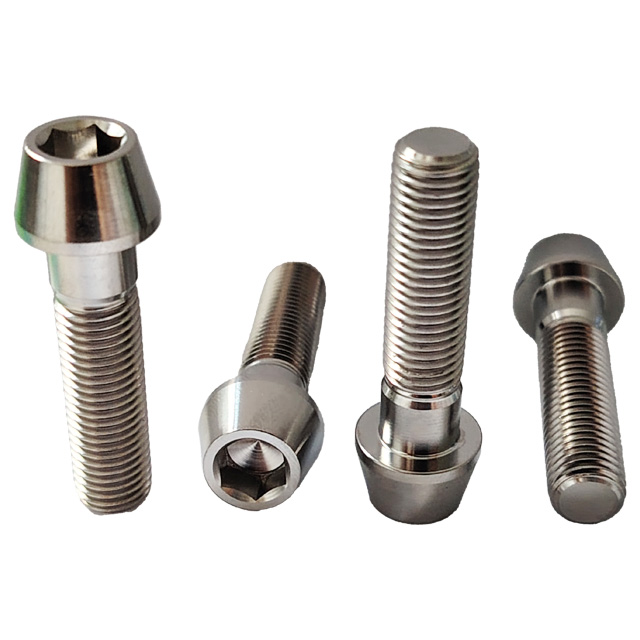
GR5 Titanium Bolts M8 M10 M12 CNC Machined Tapered Head Bolts
- Size RangeM8 / M10 / M12 Multi
- FormConical Head Weight Relief
- SurfaceMirror Polish / Anodized
- ApplicationPrecision Flow Meters
Engineering Superiority: Titanium Conduit Dynamics for Greater Glasgow
A comprehensive examination of why mechanical engineers across the River Clyde basin, Lanarkshire fabrication clusters, and Firth of Forth naval corridors are displacing traditional super-austenitic and cupronickel alloys with Grade 2 and Grade 5 titanium piping.
The industrial ecosystem across west-central Scotland is undergoing an aggressive technological pivot. From the legendary shipbuilding berths of Govan and Scotstoun down to green hydrogen electrolyzer developments in Grangemouth and deep-sea intervention tooling hubs spanning the central belt, fluid handling networks are facing unprecedented mechanical and chemical demands. Historically, marine engineers turned to 90/10 or 70/30 Cupronickel, Super Duplex stainless steels (UNS S32750/S32760), or high-nickel alloys like 6Mo. However, in environments characterized by aggressive cavitation, micro-bacterial crevice attack, and extreme thermal cycling, these ferrous-base alloys demonstrate finite life cycles that escalate maintenance costs in offshore North Sea operations.
The Thermodynamic Edge of Titanium Passivation
Unlike stainless steels that rely on a fragile chromium oxide layer susceptible to local chloride pitting in stagnant seawater, titanium's self-healing rutile (TiO2) passivation film forms spontaneously upon atmospheric exposure. In the turbulent, brackish waters of the Clyde Estuary and oxygen-depleted subsea depths of the northern continental shelf, titanium exhibits an erosion-corrosion velocity threshold exceeding 30 meters per second, compared to merely 3 to 4.5 meters per second for copper-nickel alloys. This enables Scottish processing stations to reduce nominal pipe wall schedules (from Schedule 40 to Schedule 10S), drastically minimizing overall structural deadweight on tension-leg platforms and naval vessels.
Material Performance Comparison: Subsea & Chemical Processing
When selecting tubular infrastructure for installation across Scottish industrial sectors, procurement directors must evaluate long-term lifecycle amortisation versus initial raw-stock capital. The empirical data below outlines the direct mechanical divergence between commercially pure Grade 2 titanium, structural alpha-beta Grade 5, and legacy alloys:
| Alloy Specification | Nominal Density | Tensile Strength (Min) | Yield Strength (0.2%) | PREn Rating | Seawater Cavitation Limit |
|---|---|---|---|---|---|
| ASTM B338 Gr. 2 Titanium | 4.51 g/cm³ | 345 MPa | 275 MPa | Immune (∞) | > 36.0 m/s |
| ASTM B861 Gr. 5 (Ti-6Al-4V) | 4.43 g/cm³ | 895 MPa | 828 MPa | Immune (∞) | > 42.0 m/s |
| Super Duplex (2507 / S32750) | 7.80 g/cm³ | 750 MPa | 550 MPa | 42 – 45 | ≈ 12.0 m/s |
| Cu-Ni 90/10 (UNS C70600) | 8.90 g/cm³ | 290 MPa | 105 MPa | N/A | ≈ 3.5 m/s |
| Marine Stainless 316L | 8.00 g/cm³ | 485 MPa | 170 MPa | 23 – 25 | ≈ 4.5 m/s |
As illustrated above, while Super Duplex presents admirable yield figures, its mass penalties and persistent susceptibility to localized stress corrosion cracking (SCC) at operational temperatures above 60°C pose structural vulnerabilities for subsea manifolds. Navzo's seamless ASTM B861 Grade 5 and thin-wall ASTM B338 Grade 2 titanium pipes mitigate both concerns completely, delivering an unyielding barrier against sour oilfield H2S, chlorides, and biological fouling organisms common to North Atlantic environments.
Localized Application Scenarios Throughout the Glasgow Hub
Engineered fluid delivery systems designed to satisfy the rigorous technical specifications of naval construction, offshore wind transitions, and fine chemical refining across western Scotland.
Clydeside Marine & Naval Shipbuilding
Installed within high-velocity fire suppression mains, ballast water treatment plants, and nuclear propulsion seawater cooling loops. Titanium prevents biofouling adherence while trimming tons of topside weight from advanced patrol vessels and marine platforms constructed along the Clyde.
Subsea Manifolds & Deep-Sea Tiebacks
Supplying Glasgow-headquartered offshore engineering firms with Grade 5 structural conduits and Grade 2 instrument tubing. Our high-pressure piping assemblies withstand external hydrostatic pressures exceeding 3,000 meters seabed depth with zero pitting corrosion under insulation (CUI).
Clean Hydrogen & Proton-Exchange Electrolyzers
Integral to Scotland's clean power vision, our titanium piping delivers exceptional chemical stability inside high-purity deionized water feed systems and corrosive acidic electrolyte flow fields, eliminating iron-ion leaching that compromises fuel cell and electrolyzer membrane life.
Specialty Distillation & Industrial Chemistry
Employed in condensing columns, heat reboilers, and vapor bypass lines throughout central Scottish spirits, pharmaceutical, and specialty chemical facilities where product purity and thermal conductance without trace heavy-metal contamination are mandatory.
Offshore Wind Substation Cooling Systems
Deployed in offshore converter platforms off the Scottish coast, where compact footprint and ultra-reliable liquid-to-air cooling loops protect gigawatt-scale HVDC electronic systems from saline atmospheric degradation without recurrent maintenance vessel mobilization.
Regional Procurement Trends in the Scottish Industrial Market
How shifting regulatory benchmarks, North Sea decommissioning demands, and decarbonization subsidies are redefining metal supply chain requirements across Greater Glasgow and the central belt.
Lifecycle Carbon & ESG Procurement Auditing
Glasgow contractors are increasingly bound by strict Scope 3 emissions reporting and 30-year operational life mandates. Titanium's exceptional longevity eliminates the environmental footprint and embodied carbon associated with repeatedly manufacturing, replacing, and shipping corroded steel piping spools.
Transition Toward Pre-Fabricated Spool Modules
Due to high yard fabrication rates across the UK, Glasgow buyers are transitioning from raw linear tube delivery to procuring precision pre-bent, flanged, and ultrasonically inspected titanium spools direct from Chinese source mills, significantly accelerating on-site slipway integration.
Rigorous Traceability & BS EN 10204 3.1 Certification
Post-Brexit customs adjustments and strict UK Pressure Equipment (Safety) Regulations (PER) require unambiguous raw-material provenance. Scottish project estimators refuse unverified brokers, relying exclusively on mill-direct partners offering comprehensive ultrasonic, eddy-current, and chemical testing data.
Why Glasgow Engineers Partner With Navzo Precision
Headquartered in Baoji — China's internationally recognized Titanium Valley — Navzo Precision Titanium Products Co., Ltd. bridges primary extraction with world-class engineering execution.
Traceable Baoji Ore & Ingot Provenance
Because our operations reside within the heart of China's titanium sponge refining center, our raw ingot melts (Ti-6Al-4V and commercially pure Ti) skip multi-tiered distributor markups. Every melt heat undergoes double-vacuum arc remelting (VAR) ensuring uniform grain microstructure free from interstitial tungsten or oxygen inclusions.
End-to-End Metrology & Quality Gates
Operating an on-site testing facility equipped with optical emission spectrometers, coordinate measuring machines (CMM), hydrostatic pressure test stands (up to 70 MPa), and digital thread profilometers, we guarantee that all ASTM, DIN, and ISO standards are fully verified prior to export palletizing.
Dedicated Global Logistics to Scottish Ports
Whether routing freight air cargo to Glasgow Prestwick / EDI airports or consolidated maritime sea containers via the Port of Grangemouth and Greenock Ocean Terminal, our export dispatch office manages the entire customs pipeline, delivering rapid turnaround on emergency shutdowns and large capital allocations.
Frequently Asked Questions by Glasgow Buyers
Direct answers addressing technical integrity, galvanic insulation, welding standards, and commercial parameters for engineering teams sourcing titanium conduits.
What piping specifications and dimensions are available for delivery to Glasgow?
▾
How does titanium perform in preventing galvanic corrosion when joined with steel or bronze?
▾
What welding protocols must Scottish workshops adhere to when joining titanium pipes?
▾
Can Navzo provide full mill test certificates and UK-compliant documentation?
▾
Why is Grade 5 (Ti-6Al-4V) utilized for fasteners while Grade 2 is selected for pipe bodies?
▾
What are the lead times and minimum order quantities (MOQ) for Glasgow delivery?
▾
Accelerate Your Clydeside Engineering Project
Submit your line lists, piping isometric drawings, or fastening schedules. Our technical engineering cell in Baoji delivers complete feasibility audits, alloy grade selection feedback, and competitive mill-direct commercial proposals within 60 minutes.