High-Precision Titanium Hardware & Custom Machined Components
Engineered at our integrated Baoji manufacturing complex, our Grade 5 (Ti-6Al-4V) and commercial Grade 2 titanium fasteners and precision fittings provide indispensable structural integrity and chemical immunity across electrochemical systems in Iași.
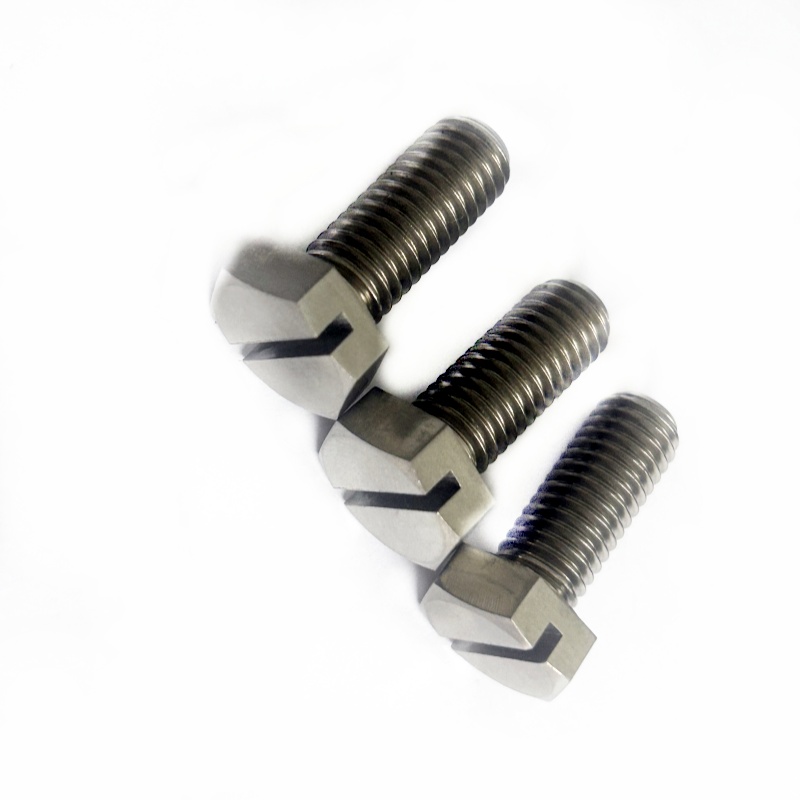
OEM Made High Precision CNC Machined Titanium Slotted Hexagonal Head Screw
- Grade: Gr5 / Gr2 Pure Ti
- Tolerance: ±0.01 mm CNC Milling
- Electrochemical Use: Electrolyte Cell Busbars
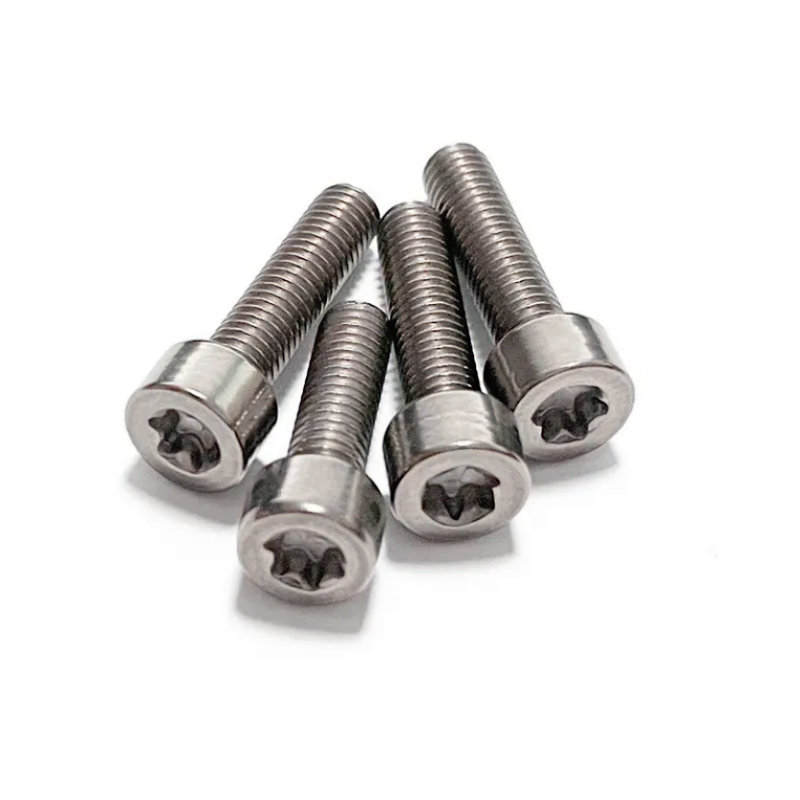
Gr5 Titanium Screws Titanium T30 Torx Bolts for Motorcycle
- Material: ASTM B348 Grade 5
- Tensile Strength: ≥ 895 MPa Yield Tested
- Drive Type: Precision T30 Torx
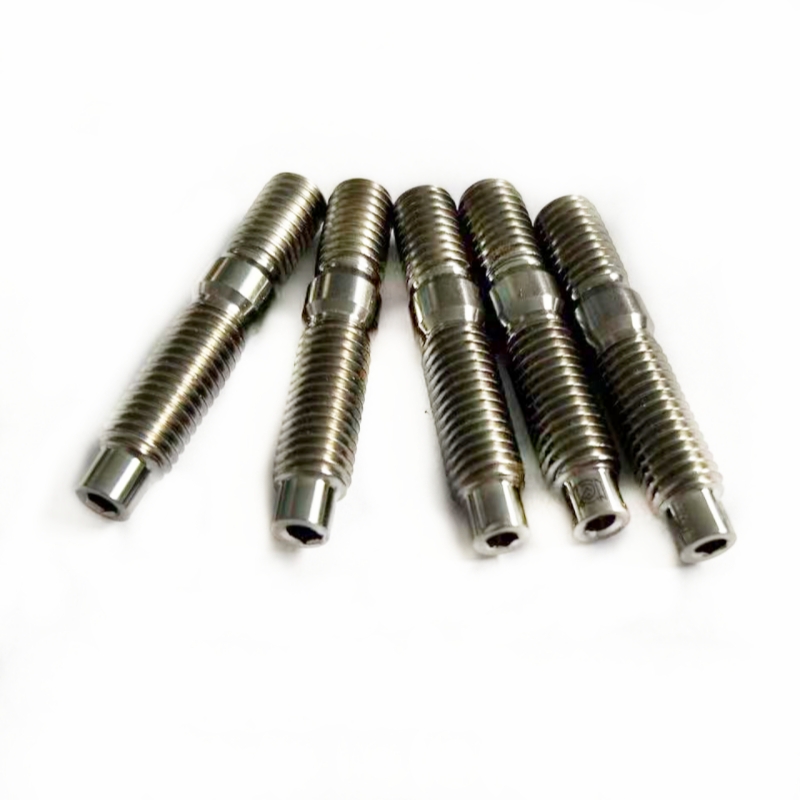
GR5 Titanium Exhaust Manifold Stud Manifold Bolt Polished Finish M8*1.25*45
- Thread: M8 × 1.25 × 45 mm
- Surface: Ultra-smooth Polished
- Thermal Shock: Stable up to 450°C
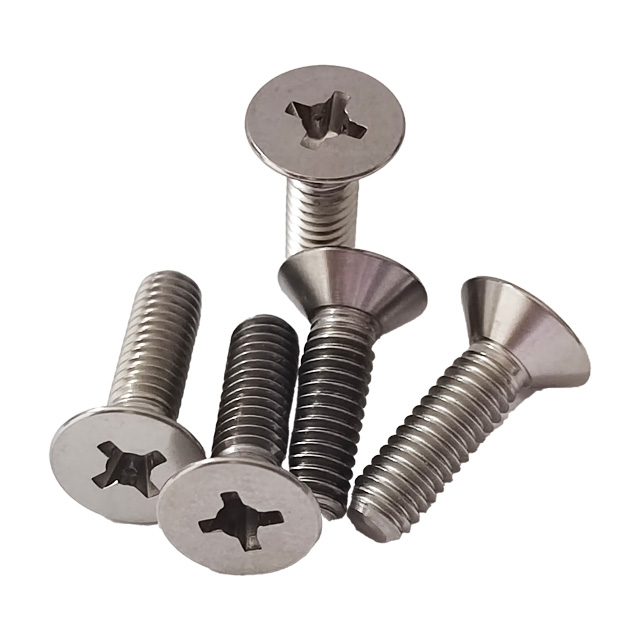
GR5 Titanium Bolts M8*20mm Countersunk Head Flat Head Screws
- Dimensions: M8 × 20 mm ISO Standard
- Finish: Corrosion-Passivated
- Application: Flush Anode Mountings
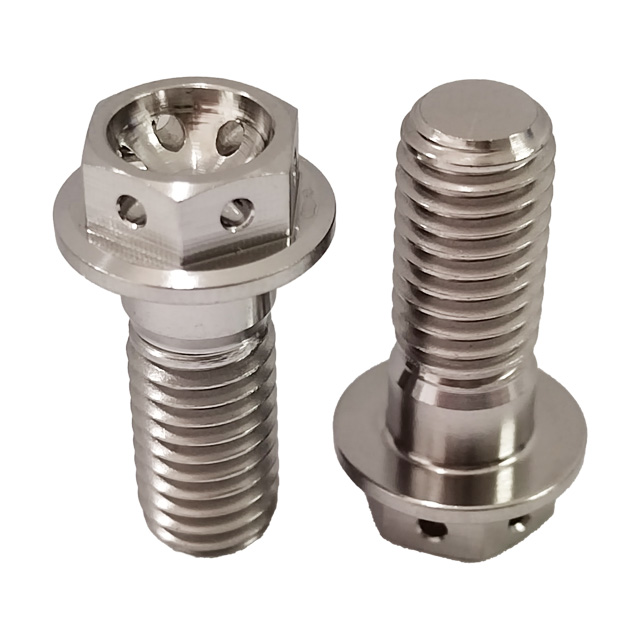
GR5 Titanium Bolts M8*20mm Hex Flange Head Drilled Bolts
- Head Style: Flanged with Lock-wire Drill
- Conductivity: Low Contact Resistance
- Environment: Chemical & Salt Mist
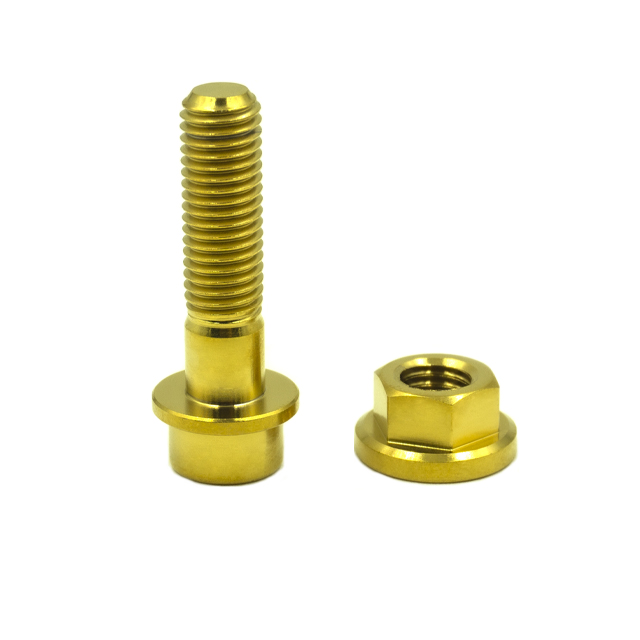
PSSTI GR5 Titanium Gold Flange Head Bolts Round Head M7*27
- Treatment: Electrolytic Anodizing
- Size: M7 × 27 mm Custom
- Density: 4.43 g/cm³ (44% Lighter)
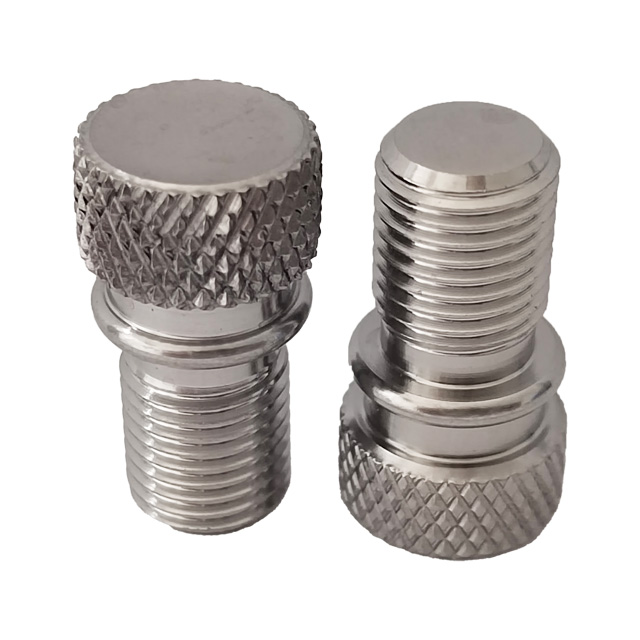
GR5 Titanium Bolts M9*1.0*12mm Knurled Cylindrical Hand Screws
- Adjustment: Hand-Tightening Grip
- Thread Pitch: Metric Fine 1.0 mm
- Machining: 5-Axis Swiss Turning
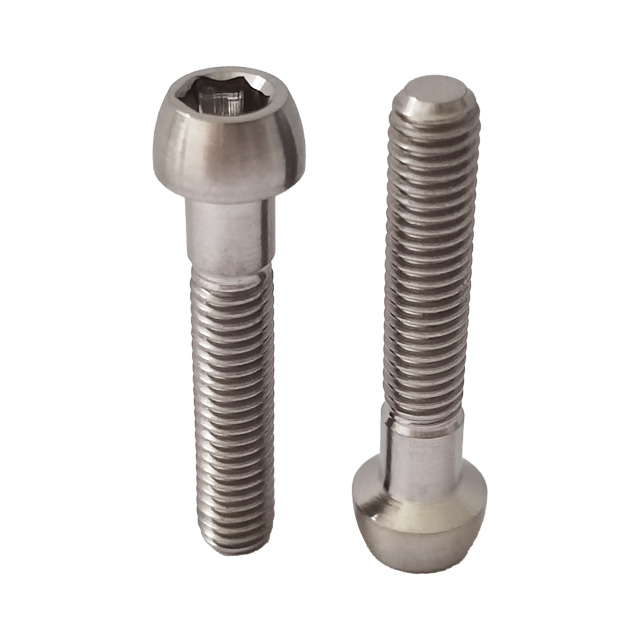
GR5 Titanium Bolts M6*31mm High Strength Tapered Head Hex Bolts
- Socket: Conical Inner Hex
- Dimensions: M6 × 31 mm Non-Standard
- Certification: EN 10204 3.1 MTR Issued
Electrochemical Metallurgy: Dimensionally Stable Anodes (DSA®) for Industrial Operations
A comprehensive examination of substrate electro-crystallization, precious metal oxide catalysts, and service lifetime kinetics under aggressive anodic polarization conditions.
Substrate Architecture & Expanded Mesh Geometry
The foundation of every high-performance titanium mesh anode begins with commercially pure ASTM B265 Grade 1 or Grade 2 sheet titanium. Expanded mesh architectures provide an expansive specific electroactive surface area compared to flat plate designs, drastically lowering real operational current density.
- Uniform Current Flux: Diamond diamond-pattern opening (LWD × SWD) guarantees homogenous electric field lines across complex cell geometries.
- Hydrodynamic Bubble Disengagement: Mesh openings allow immediate release of generated O₂ or Cl₂ gas bubbles, preventing localized ohmic resistance spikes and gas screening.
- Substrate Stability: Valve metal passivation creates an insulating TiO₂ barrier if mechanical abrasion scratches the catalytic coating layer.
Catalytic Oxide Formulation: IrO₂-Ta₂O₅ vs. RuO₂-TiO₂
Thermal decomposition deposition applies customized multi-layered mixed metal oxide coatings. Depending on electrolyte composition in Iași industrial facilities, different electrocatalytic pathways are deployed to minimize oxygen or chlorine overpotentials.
- Oxygen Evolution Reaction (OER): IrO₂-Ta₂O₅ binary systems tailored for sulfuric acid, municipal water electrolysis, and organic wastewater oxidation, delivering ultra-low overpotential.
- Chlorine Evolution Reaction (CER): RuO₂-TiO₂ formulations optimized for brine electrolysis, on-site sodium hypochlorite generation, and chlorinated cooling towers.
- Interlayer Optimization: Thin tantalum/titanium sub-oxides block oxygen diffusion to the titanium substrate, eliminating premature passivation risks.
Accelerated Life Testing (ALT) & NACE Compliance
Anode longevity is validated through standardized Accelerated Life Testing protocols conforming to NACE TM0108 and ISO 15257 standards. Specimens undergo continuous electrochemical stress in 1.0 M H₂SO₄ solutions at extreme current densities exceeding 10,000 A/m².
- Catalyst Adhesion: Multi-pass thermal annealing at 450°C–520°C ensures deep crystal interdiffusion between the titanium matrix and noble metal oxides.
- Predictable Consumption Rates: Mass loss tracking indicates catalyst consumption of less than 1.0 mg/A·year in cathodic protection and water disinfection regimes.
- Quality Certification: Each production lot arrives with complete Mill Test Reports (MTR) according to EN 10204 3.1, confirming chemical purity and coating thickness via XRF.
Localized Applications Across the Iași Industrial Ecosystem
From advanced municipal water purification facilities along the Bahlui River to reinforced concrete infrastructure in the Iași metropolitan area, titanium mesh anodes provide mission-critical electro-oxidation and corrosion prevention.
Municipal Water Treatment & On-Site Chlorination
Iași's regional water utility operators (such as S.C. APAVITAL S.A.) continually enhance drinking water safety and wastewater effluent quality. MMO titanium mesh anodes serve as the core catalytic electrode in on-site electro-chlorination (OSEC) systems, transforming natural brine into disinfectant sodium hypochlorite without hazardous chlorine gas transport.
Expanded mesh geometries maximize chlorine generation efficiency while reducing electrical consumption per kilogram of equivalent free chlorine produced.
Pharmaceutical & Chemical Wastewater Degradation
Iași is renowned as a prominent pharmaceutical manufacturing hub in Romania (anchored by major antibiotic and fine chemical facilities). Complex organic compounds, active pharmaceutical ingredients (APIs), and recalcitrant COD cannot be degraded by conventional biological filters.
Our IrO₂-Ta₂O₅ and SnO₂-Sb-doped titanium anodes generate strong hydroxyl radicals (•OH) via advanced electrochemical oxidation processes (EAOPs), breaking aromatic rings and mineralizing persistent industrial effluents.
Impressed Current Cathodic Protection (ICCP)
Iași’s rich architectural heritage, paired with new highway infrastructure (Autostrada A8 "Autostrada Unirii") and logistics hubs, demands durable cathodic protection for reinforced concrete structures and buried steel pipeline networks.
Titanium mesh ribbon anodes embedded inside chloride-contaminated bridge decks or carbonated concrete structures emit low-voltage protective DC current, shifting steel reinforcement into a safe immune potential zone and halting spalling for decades.
Automotive Component Finishing & Electroplating
With Eastern Romania's expanding automotive engineering clusters (supplying precision electronic harnesses, bearings, and hydraulic assemblies), platinized and MMO-coated titanium auxiliary mesh anodes maintain uniform electro-deposition layer thickness in nickel, hard chrome, and copper plating baths without bath contamination.
Modernization & Green Transition Drivers in Iași County
Analyzing the confluence of EU Environmental Directives, Romanian infrastructure modernization, and advanced materials engineering shaping the demand for titanium electrochemical hardware.
EU Water Framework Directive Alignment
Stringent compliance deadlines under EU Directives (91/271/EEC & revisions) require municipal and industrial discharges across the Prut and Siret river basins to eliminate refractory phosphorus, micro-pollutants, and toxic ammoniacal nitrogen. Electrocatalytic advanced oxidation cells equipped with titanium mesh electrodes offer chemical-free tertiary effluent treatment, making them the preferred technology for industrial plant retrofits across Iași Industrial Park (Miroslava).
Decarbonization & Clean Hydrogen Pilot Cells
Academic institutions such as Gheorghe Asachi Technical University of Iași (TUIASI) lead pioneering research into renewable energy storage and proton exchange membrane (PEM) water electrolysis. Dimensionally stable titanium mesh sheets serve as key current collectors and porous transport layers (PTL), capable of handling anodic overpotentials and strong acid regimes without metal leaching or mechanical deformation.
Civil Infrastructure Life Extension Programs
Romania’s National Recovery and Resilience Plan (PNRR) funds comprehensive structural restorations for historic masonry, transport tunnels, and bridge flyovers throughout Iași County. Specifying titanium ribbon mesh anodes paired with conductive titanium conductor bars in cathodic protection ensures a minimum 30-year lifecycle without structural interventions, drastically lowering total cost of ownership (TCO).
Titanium Mesh Anode Engineering Specifications
Technical data baseline for electrical engineers, cathodic protection designers, and procurement managers in Iași assessing coating formulation against specific electrolytic media.
| Anode Type / System | Substrate Material | Electrocatalytic Coating | Operating Current Density | Target Electrolytic Medium | Accelerated Lifetime |
|---|---|---|---|---|---|
| MMO Ribbon Anode for Concrete ICCP | ASTM B265 Grade 1 Ti | IrO₂ / Ta₂O₅ Mixed Oxide | 10 – 110 mA/m² | Chloride-contaminated concrete, grout | > 50 Years @ 110 mA/m² |
| Expanded Mesh for Water Treatment | ASTM B265 Grade 1 or 2 | RuO₂ / IrO₂ / TiO₂ Ternary | 500 – 3,500 A/m² | Brine, potable water, municipal sewage | > 5,000 Hours (ALT NACE) |
| Acid Effluent Electro-oxidation Mesh | Grade 1 Diamond Expanded | IrO₂ / Ta₂O₅ High-Load | 1,000 – 6,000 A/m² | H₂SO₄, organic chemical effluents | > 4,000 Hours @ 10,000 A/m² |
| Platinized Titanium Anode (Pt/Ti) | ASTM B265 Expanded Mesh | Electroplated Platinum (2-5 µm) | 2,000 – 10,000 A/m² | Hard chrome plating, precious metal finishing | High bath stability, zero lead sludge |
| Subsea & Pipeline Groundbed Anode | Tubular or Mesh Ribbon Gr1 | IrO₂ / RuO₂ / TiO₂ Multi-layer | 50 – 500 A/m² | Seawater, brackish marsh, deep coke beds | 25 – 40 Years Continuous |
*Note: Standard diamond mesh openings include 12.5×4.5 mm, 25×10 mm, and 50×20 mm. Custom expanded dimensions, integral titanium collector tabs, and specialized busbar clamp assemblies can be tailored per client engineering drawings.
Why Iași Engineering Teams Source From Our Baoji Manufacturing Base
Combining the metallurgical supremacy of China’s Titanium Valley with European quality control standards and dedicated export logistics.
Upstream Sponge-to-Mesh Control
Situated in Yucai Road, High-tech Development Zone, Baoji, Shaanxi, our factory sits at the ground level of global titanium sponge refinement. We procure pristine, vacuum-arc remelted ingots, guaranteeing our Grade 1 and Grade 2 cold-rolled titanium strip boasts residual iron (Fe) below 0.08% and interstitial oxygen (O) below 0.12% for peak ductility and uniform thermal oxide adhesion.
Full-Spectrum Machining & Coating Lines
Unlike simple traders, our 2011-founded industrial facility controls both precision mechanical machining and automated chemical deposition under one roof. With precision CNC milling, multi-die cold heading machines, precision diamond mesh expanders, and automated temperature-controlled tunnel sintering ovens, we execute strict mechanical tolerances (±0.01 mm) alongside uniform nano-scale catalyst distribution.
Rapid European Response & Full Traceability
We bridge time zones with an average technical query response time of under one hour. Every export shipment bound for Romania is backed by 3.1 Mill Test Certificates, Coating Thickness XRF verification, ASTM adhesion tape testing records, and custom wooden crating compliant with international ISPM-15 phytosanitary shipping mandates.
Frequently Asked Questions by Romanian & European Buyers
Direct answers addressing technical parameters, customs clearance into Iași, international compliance, and operational best practices.
Q1 Which titanium mesh anode coating is ideal for municipal water vs. industrial wastewater?
For municipal drinking water disinfection and on-site electrochlorination (OSEC) where chloride ions are present, Ruthenium-Iridium-Titanium (RuO₂-TiO₂ / RuO₂-IrO₂) coating is favored for its remarkable chlorine evolution efficiency and low capital cost. In contrast, for industrial or pharmaceutical wastewater containing sulfuric acid, fluorides, or organic contaminants where oxygen evolution dominates, an Iridium-Tantalum (IrO₂-Ta₂O₅) oxide coating is required because ruthenium oxides rapidly corrode under severe oxygen evolution conditions.
Q2 How does your factory handle delivery and customs logistics to Iași, Romania?
We provide full DDP, CIF, or DAP shipping options direct to your plant or job site in Iași. Air freight consignments reach Iași International Airport (IAS) or Henri Coandă Airport (OTP) within 5 to 8 business days for urgent pilot project components. Regular ocean containerized bulk orders transit through the Port of Constanța on the Black Sea, routed via bonded intermodal rail/truck straight into Iași customs terminals with full EU TARIC code documentation.
Q3 What certificates and compliance documentation accompany each batch?
Every production batch includes an EN 10204 3.1 Inspection Certificate specifying base metal chemical analysis (ASTM B265 Grade 1 or 2) and mechanical properties. Coating thickness verification is measured by non-destructive X-ray Fluorescence (XRF) spectrometry. For cathodic protection applications, we provide accelerated life test curves, electrical resistance logs, and Certificate of Origin (COO) documents to ensure streamlined import compliance.
Q4 How is electrical contact maintained between titanium mesh anodes and rectifier cables?
Titanium mesh and ribbon anodes cannot be mechanically twisted or crimped to copper cables directly without risk of severe galvanic corrosion. We supply Grade 1 uncoated titanium conductor bars that are cross-welded via field resistance spot welding or factory TIG welding to the MMO mesh. Copper lead cables are connected to titanium feeder plates using specialized hermetic resin-potted crimp joints or precision Grade 5 titanium bolts and washers.
Q5 Can we order custom expanded mesh sizes, bespoke tab locations, and formed baskets?
Yes. We specialize in custom OEM/ODM fabrication according to client CAD drawings (STEP, DWG, PDF). Our precision toolmakers can customize strand width (SW), diamond length (LWD), short diamond width (SWD), and sheet dimensions, including roll forming into cylindrical or rectangular anode baskets with integrated titanium lift hooks for electroplating baths.
Q6 What causes premature failure of MMO titanium anodes, and how do you prevent it?
Premature failure typically results from: 1) Current density reversal (cathodic polarization), 2) Fluoride ion attack (> 50 ppm) dissolving the titanium passive film, 3) Depletion of noble metals due to under-coating, or 4) Substrate passivation. We counter these risks by applying an engineered protective oxide interlayer between the raw titanium and catalyst coat, maintaining meticulous thermal cycle records, and specifying precise noble metal loadings (grams of Pt, Ru, or Ir per square meter).
Accelerate Your Electrochemical Engineering Project in Iași
Consult directly with our metallurgists and electrochemical design engineers. Whether you need standard MMO ribbon mesh for civil ICCP, high-capacity titanium anode baskets for plating, or custom CNC-machined titanium hardware, we review technical specifications and issue detailed quotations within 1 hour.