High-Integrity Fasteners & Locking Assemblies
Manufactured under strict ISO-compliant tolerances, each component features cold-forged and precision-machined Ti-6Al-4V construction for uncompromising clamp retention in demanding operational environments.
Prevailing Torque Mechanics & Titanium Metallurgy
A rigorous examination of fastener preloading, relaxation resistance, and cyclic shear stability under tropical monsoon moisture and seismic vibrations along the northern Lao corridor.
In mechanical engineering assemblies subjected to continuous harmonized vibration, conventional standard nuts fail via transverse cyclical slippage. When clamping dynamic joints in heavy industrial hardware—such as hydraulic turbines, transit bogies, and aggregate screens operating across Luang Prabang Province—fastener self-loosening triggers catastrophic joint separation. As an internationally certified Grade 5 titanium fastener manufacturer based in Baoji, China, Navzo Precision Titanium supplies specialized self-locking hardware designed to resist severe vibrational loosening without secondary locking wires or split washers.
Prevailing Torque Locking Mechanisms: All-Metal vs. Non-Metallic Insert
Industrial procurement engineers in Southeast Asia routinely debate between two primary categories of self-locking nuts: All-Metal Prevailing Torque Lock Nuts (DIN 980v / ISO 7042 equivalent) and Nylon Insert Lock Nuts (DIN 985 / ISO 7040 equivalent). In tropical environments characterized by high relative humidity (often exceeding 85% in Luang Prabang during the monsoon season) coupled with intense heat spikes, material selection dictates mechanical longevity:
- All-Metal Distorted Thread Design: These nuts feature an elliptical or triangulated crimp at the top collar. Machined from annealed Ti-6Al-4V bar stock, the deformed threads provide a controlled resistance torque (prevailing torque) during assembly. Because no non-metallic polymer is utilized, they resist operational temperatures from -50°C up to +350°C and remain completely unaffected by hydraulic fuels, aromatic hydrocarbons, or aggressive river minerals.
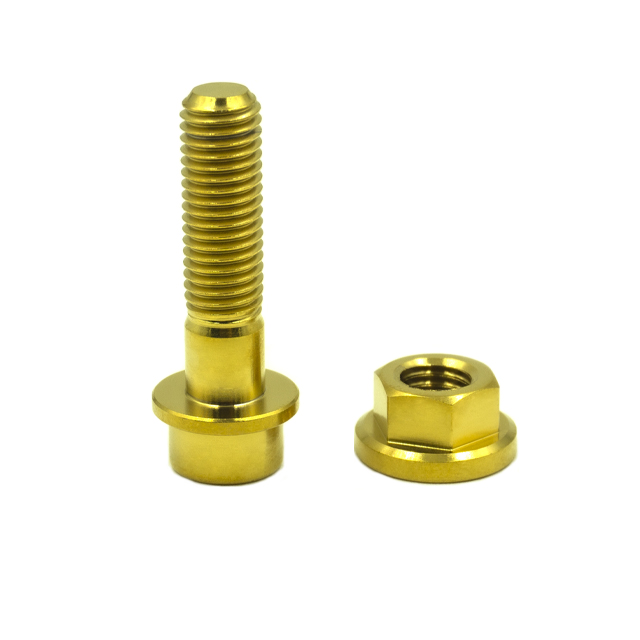
- 12-Point Flanged Lock Nuts: Engineered primarily for high-tensile motorsport, railway catenary anchors, and structural marine couplings, the 12-point design allows higher tightening torque without head rounding. The integrated flange distributes clamping forces over a wider surface area, reducing contact bearing pressure against softer adjoining metals like magnesium or 6000/7000-series structural aluminium.
- Nylon Insert Limitations in Tropical Laos: While standard nylon-insert lock nuts function satisfactorily in ambient indoor settings, polyamide rings absorb moisture under Luang Prabang's monsoon conditions. This moisture absorption induces polymer plasticization and gradual volumetric degradation, diminishing breakaway torque. For mission-critical infrastructure, Navzo engineers universally mandate all-metal Ti-6Al-4V prevailing torque configurations.
Comparative Engineering Matrix: Fastener Materials
To assist procurement managers, EPC contractors, and mechanical consultants servicing projects across northern Laos, the following metallurgical comparison demonstrates why Grade 5 titanium outclasses commercial stainless steel and high-tensile alloy steels in high-vibration, corrosive applications:
| Alloy / Standard | Density (g/cm³) | Yield Strength (MPa) | Tensile Strength (MPa) | Yield-to-Weight Ratio | Corrosion Resistance |
|---|---|---|---|---|---|
| Navzo GR5 Titanium (Ti-6Al-4V) | 4.43 | 828 | 895 - 1050 | 187 | Exceptional (Native Passivating TiO₂ Film) |
| Austenitic Stainless Steel (A4-80 / 316) | 8.00 | 600 | 800 | 75 | Moderate to High (Prone to Pit/Crevice Galling) |
| Structural Alloy Steel (Class 10.9) | 7.85 | 900 | 1040 | 115 | Poor (Requires Galvanizing/Zinc Plating) |
| Commercially Pure Titanium (GR2) | 4.51 | 275 | 345 | 61 | Superior (Used for chemical vessels, non-structural) |
Tribology and Thread Galling Mitigation
Titanium and its alloys possess a chemically active surface that naturally produces a thin, self-healing titanium dioxide ($TiO_2$) protective oxide layer. However, under high contact loads during torque down, thread-to-thread friction can cause microscopic cold-welding or galling if dry titanium rubs against dry titanium. Navzo Precision Titanium mitigates galling through three proprietary surface-engineering techniques available on all lock nut orders destined for the Lao market:
1. Physical Vapor Deposition (PVD) Titanium Nitride (TiN) or Diamond-Like Carbon (DLC): Imparts a dense, hard exterior layer that reduces the dynamic friction coefficient below 0.15, eliminating direct substrate-to-substrate microwelding.
2. Micro-Arc Oxidation (MAO / Anodization): Electrochemically expands the ceramic barrier layer, improving surface hardness and dielectric insulation to avoid galvanic cell formation when mating with composite or alloy surfaces.
3. Anti-Seize Molybdenum Disulfide ($MoS_2$) / PTFE Solid Lubricant Film: Baked onto the internal threads of lock nuts, ensuring consistent clamp preload (K-factor: 0.11 - 0.15) without washing off in heavy river rapids or seasonal deluge.
Strategic Industrial Applications Across Luang Prabang
Positioned along the upper Mekong corridor and connected through the Boten–Vientiane (China-Laos) Railway, Luang Prabang represents a rapidly industrializing hub requiring robust mechanical components.
Hydropower Dams & Run-of-River Turbines
The cascades along the Nam Ou River and the Mekong run-of-river projects near Luang Prabang expose mechanical joints to intense cavitation, turbulence, and high suspended silt loads. Navzo's GR5 titanium lock nuts secure turbine intake vanes, sluice gate linkages, and generator vibration mounts without pitting or chloride-induced stress corrosion cracking.
China-Laos Railway Corridor Infrastructure
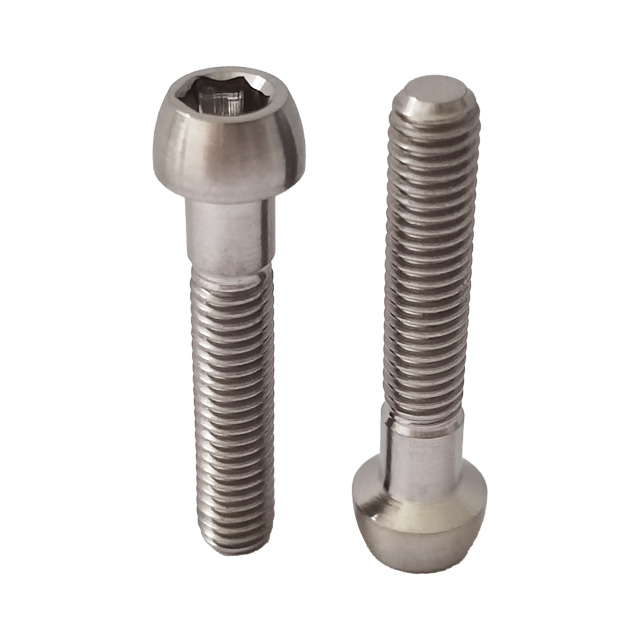
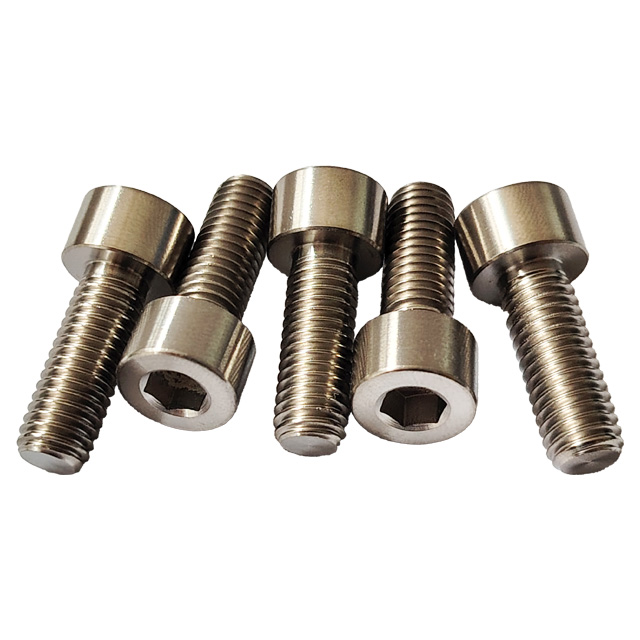
Luang Prabang is a principal freight and passenger junction along the electrified high-speed rail line. Our 12-point titanium flanged locking nuts and DIN 912 cap screws provide lightweight, vibration-proof retention for overhead catenary cantilevers, signal brackets, and trackside mechanical monitors subjected to continuous dynamic harmonic train passage.
Mining, Mineral Washers & Lime Karsts
Limestone quarrying, aggregate plants, and polymetallic mining operations in northern Laos rely on vibrating dewatering screens and crushing circuits. Standard steel nuts back off rapidly under 6G vibrational shocks. All-metal prevailing torque Ti-6Al-4V nuts withstand continuous multi-axial oscillation without fatigue fracturing or loosening.
Commercial Mekong Watercraft & River Barges
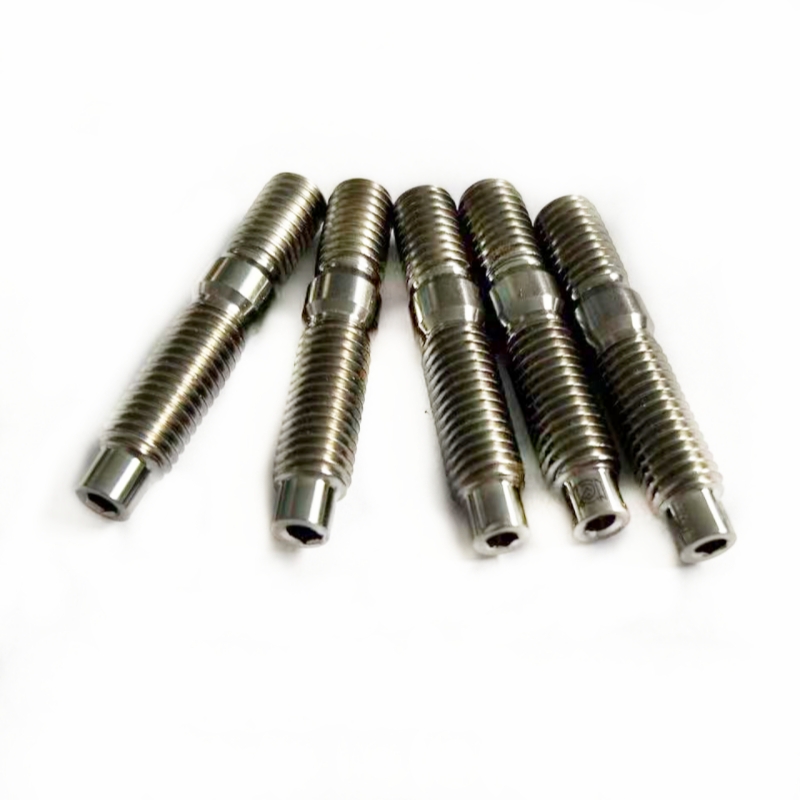
High-power diesel longboats and cargo vessels navigating the rapids between Luang Prabang, Pak Beng, and Huay Xai endure intense shaft torque fluctuation. Polished titanium studs paired with titanium lock nuts secure propulsion shaft couplers, rudder pintles, and engine bedplates, offering impervious resistance to river-water cavitation and biological encrustation.
Mountain Highway Fleets & Heavy Logistics
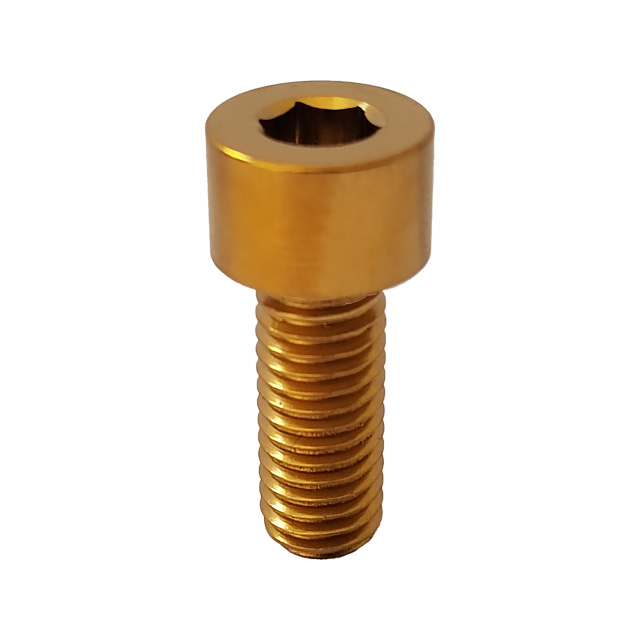
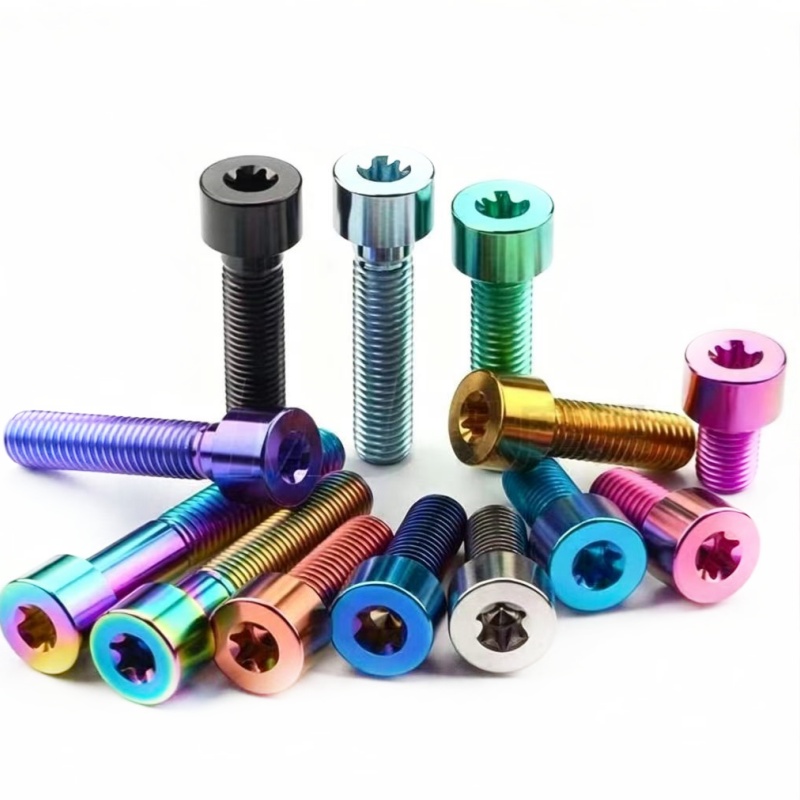
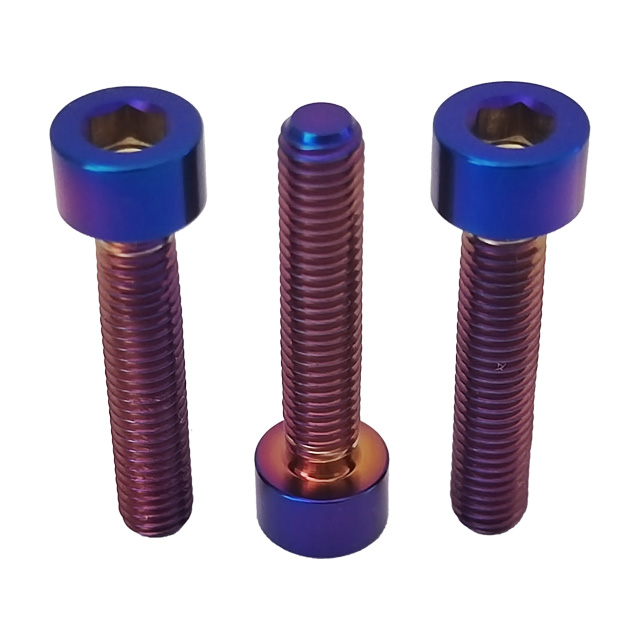
Navigating the steep mountain gradients of National Route 13 requires uncompromised brake caliper and exhaust manifold retention. Our burnt blue and PVD gold titanium studs and flanged nuts eliminate thermal relaxation on turbocharged manifold flanges, preventing exhaust leaks and brake assembly failures during sustained down-hill engine braking.
Heritage Conservation & Cable Arch Bridges
Luang Prabang’s UNESCO protected structures and modern steel suspension bridges across the Nam Khan and Mekong rivers require discreet, non-staining structural fasteners. Titanium hardware does not produce unsightly brown iron oxide runoff, preserving pristine architectural aesthetics for 50+ year design lifespans.
Lao Fastener Market Evolution: 2025–2030 Outlook
How the Boten–Vientiane transport artery and industrial decarbonization are transforming hardware procurement practices across the northern provinces.
The industrial fastener landscape in northern Laos has entered a transformative phase. Historically, engineering operations in Luang Prabang relied on imported commercial zinc-plated Class 8.8 carbon steel or generic A2-70 stainless steel sourced through intermediate trading posts. These legacy solutions presented high total lifecycle costs due to accelerated atmospheric rust, repetitive re-torquing requirements, and unscheduled maintenance downtime.
Three macro factors are driving the adoption of factory-direct precision titanium lock nuts and studs throughout Luang Prabang:
1. Direct Rail Freight Connectivity via the China-Laos Railway: Prior to the completion of the railway link, freight transit from northern Chinese industrial manufacturing zones took up to 25 to 35 days via maritime coastal routes and congested trucking checkpoints. Today, shipments dispatched from Navzo Precision Titanium’s manufacturing base in Baoji, Shaanxi travel directly via container rail freight across the Mohan–Boten dry port terminal directly to Luang Prabang Station in under 5 to 7 days. This seamless supply chain dramatically cuts transit risks, reduces warehousing footprint, and allows lean, just-in-time (JIT) replenishment for mining and power facilities.
2. Total Cost of Ownership (TCO) Prioritization: Mining concessions, hydropower utilities (such as those operating under the Nam Ou Power Co.), and commercial river transport consortia are replacing initial purchase price evaluations with comprehensive 10-year life-cycle models. Where carbon steel fasteners require biennial replacements and periodic retightening in corrosive tropical water environments, Grade 5 titanium offers an install-and-forget solution, eliminating hundreds of man-hours of high-risk maintenance labor.
3. Regional Green Fleet & E-Mobility Transition: As Laos pursues electrification across municipal tuk-tuks, electric scooters, and light commercial vehicles to capitalize on its domestic clean hydropower surplus, lightweighting has emerged as a design imperative. Every 10% reduction in vehicle curb weight enhances battery efficiency by 6 to 8%. Our Grade 5 titanium wheel lug nuts, chassis bolts, and flanged lock nuts cut fastener mass by 44% compared to steel equivalents while preserving superior tensile capacity.
Why Procurement Teams Partner With Navzo Precision
Situated in China's "Titanium Valley" (Baoji), Navzo integrates raw ingot sourcing, precision cold heading, CNC multi-axis turning, and certified physical testing under one ISO-managed roof.
Baoji Raw Material Valley Traceability
Founded on Yucai Road within Baoji’s High-tech Industrial Development Zone, Navzo enjoys direct access to China’s highest grade titanium sponge and bar stock. Every batch comes with authentic Mill Test Reports (MTR) according to EN 10204 3.1 certifying exact chemistry (Ti-6Al-4V) and tensile limits.
Advanced Multi-Axis Swiss CNC Machining
Our facility operates modern high-speed Swiss-type CNC automatic lathes, hot-heading presses, and continuous thread-rolling machines. Rolling threads post-heat treatment ensures uninterrupted grain flow along the root radius, increasing fastener fatigue endurance by over 35% compared to cut threads.
Full In-House Quality Inspection
Every single export crate is validated with calibrated GO/NOGO thread plug gauges, optical profile projectors, Rockwell/Vickers hardness testers, and digital tensile pull jigs. Zero uninspected fasteners depart our packing line, ensuring plug-and-play assembly on your job site.
Custom OEM/ODM Engineering Drawing Support
Need non-standard flange widths, reduced pitch diameters, safety wire cross-holes, or unique prevailing torque tolerances? Our design engineering department turns your PDF, DWG, or STEP files into verified physical samples within 7 business days.
Rapid 1-Hour RFQ Response Protocol
Operating across international trade desks, our dedicated technical sales personnel maintain a verified average response time of under one hour during business operating windows. We supply complete commercial quotes, freight metrics, and drawings without administrative delay.
Global Verified Credibility (#4 Bolts Supplier)
Ranked #4 in the global bolts export index on leading business portals, Navzo brings over a decade of verified supply track records to clients in Germany, the USA, Thailand, Russia, and Southeast Asia, backed by transparent escrow trade facilities.
Frequently Asked Questions: Luang Prabang Sourcing
Critical metallurgical, logistic, and commercial questions answered directly by Navzo’s Chief Fastener Applications Specialist.
What is the difference between GR5 titanium lock nuts and GR2 versions?
Grade 5 (Ti-6Al-4V) is an alpha-beta dual-phase alloy heat-treatable to tensile strengths exceeding 895–1050 MPa, making it structurally equivalent to Class 10.9 high-tensile steel. It is necessary for prevailing torque lock nuts, wheel hubs, turbine joints, and structural machinery. Grade 2 is commercially pure unalloyed titanium with a tensile strength around 345–450 MPa; while highly corrosion-resistant, it lacks the elasticity required for prevailing torque locking collars and is limited to chemical tanks or low-stress brackets.
How does rail freight shipping work from Baoji to Luang Prabang?
Cargo travels via direct rail container freight through the China-Laos Railway corridor. After clearing customs export declaration in Baoji, the shipment passes through the Mohan (Yunnan)–Boten (Luang Namtha) border station directly into the Luang Prabang freight handling yard. Standard transit duration is 5 to 7 days, eliminating sea-port transshipment delays through Bangkok or Vung Tau.
How do we prevent galvanic corrosion when mating titanium to aluminium?
Although titanium is passive, in a high-conductivity electrolyte (such as mineralized tropical rain), coupling bare titanium directly to 6000-series structural aluminium can slowly degrade the aluminium if contact ratios are improper. We resolve this by applying micro-arc oxidation (MAO) or thick anodizing to the titanium nut to serve as a non-conductive dielectric barrier, or by specifying anti-corrosion barrier washers and zinc-free insulating pastings.
What torque values should be used when installing GR5 titanium lock nuts?
Because titanium has a modulus of elasticity roughly half that of steel (114 GPa vs. 210 GPa), it stretches more under equivalent load, generating superior clamp elongation retention. Tightening torque should be calculated based on the thread coefficient of friction (K-factor). When using an anti-seize paste ($MoS_2$), we recommend torquing Grade 5 hardware to approximately 75–80% of equivalent Class 10.9 steel values. We supply an engineer’s torque table with every order.
Can Navzo customize prevailing torque lock nuts to non-standard thread pitches?
Yes. We frequently produce custom fine-pitch metric threads (e.g., M10x1.0, M12x1.25, M14x1.5) as well as Imperial UN / UNF threads. Custom dimensions, reduced head clearances, counter-bored flanges, and unique locking collar prevailing torque resistances are fully machined according to customer drawings.
What quality documentation accompanies titanium fastener consignments?
Every commercial export order includes an EN 10204 3.1 Mill Test Certificate containing complete chemical spectrographic analysis (Ti, Al, V, Fe, C, N, H, O content) and physical mechanical test figures (tensile strength, 0.2% yield strength, elongation percentage). Dimensional CMM and optical inspection reports are supplied as standard.
What is your Minimum Order Quantity (MOQ) for industrial clients in Laos?
For standard catalogue lock nuts, socket cap screws, and studs kept in stock, the MOQ starts at only 100 to 200 pieces per size. For custom CNC machined parts or bespoke anodized color finishes, production batches generally start from 500 pieces, though prototype sample validation runs can be arranged upon initial engineering review.
Which surface finish is best suited for outdoor hydro and bridge projects in Laos?
For outdoor mechanical infrastructure in wet tropical climates, our natural satin/polished finish or PVD hard coatings are optimal. Natural polished titanium forms an immediate native oxide layer that never flakes, chips, or degrades. PVD coatings (such as DLC or TiN) provide supplemental surface hardness against particulate abrasion from river silt.
Connect Directly With Navzo’s Baoji Engineering Foundry
Whether you require standard DIN 980v all-metal prevailing torque lock nuts, 12-point lightweight motorsport flanged fasteners, or custom-machined titanium studs for Luang Prabang industrial projects, our engineering desk delivers quotes and tolerance analyses in under one hour.