High-Integrity Titanium Fasteners for Tartu Engineering
Manufactured to DIN, ISO, and custom OEM standards. Featuring precision rolled threads, PVD wear-resistant coatings, and aerospace-spec concentricity for research, cycling, and industrial automation.
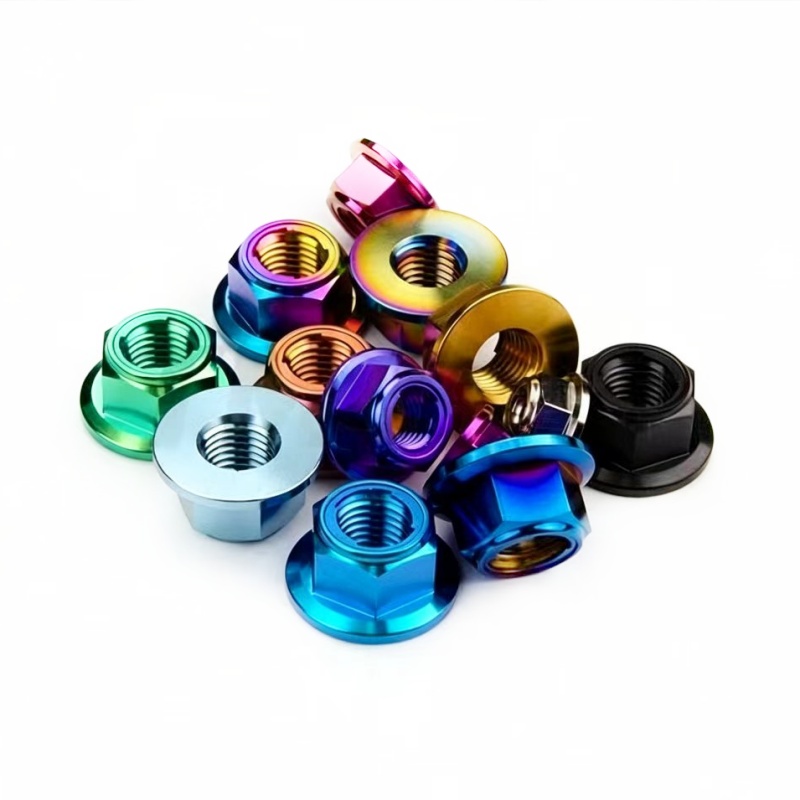
GR5 Titanium Lock Anti Loosening Nut M6 M8 M10 PVD
- Thread: M6, M8, M10 Metric
- Finish: PVD Hard Coated / Nitride
- Function: Vibration Resistance
- Target: E-Bikes & Robotics
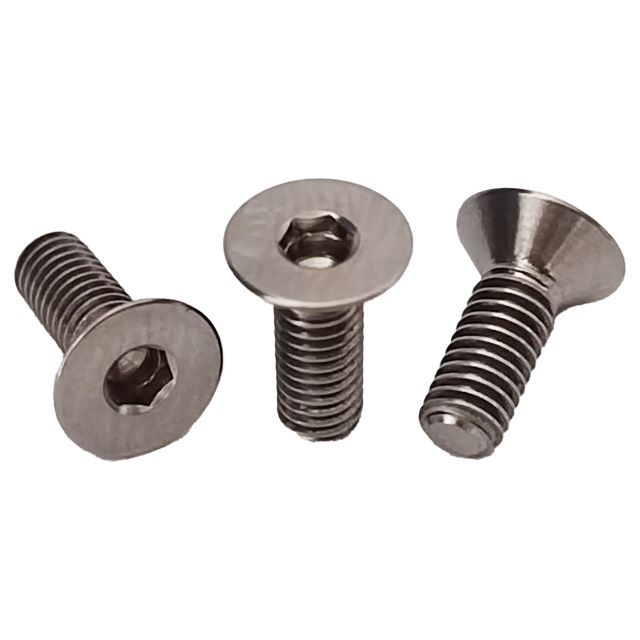
GR5 Titanium M8*20mm Countersunk Head Hex Socket Bolts
- Dimensions: M8 × 20mm Flat Head
- Drive: Hex Socket (Allen)
- Machining: 5-Axis CNC Precision
- Target: Flush Robotic Chassis
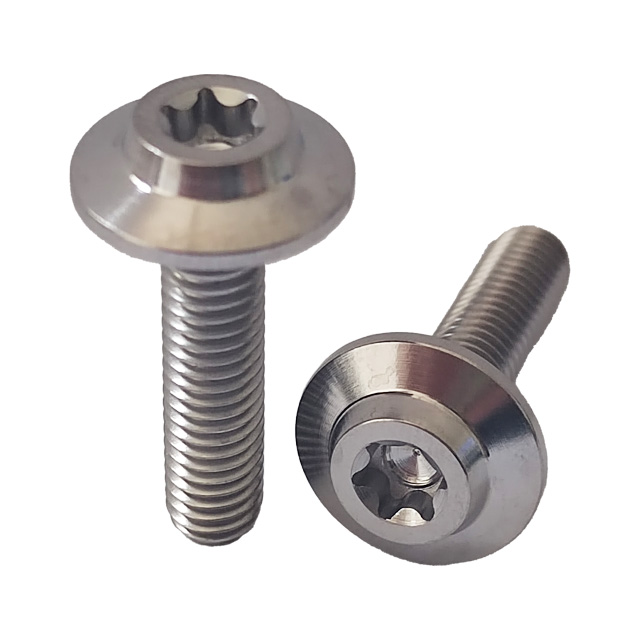
GR5 Titanium M6*25mm Umbrella Flange Torx Bolts
- Size: M6 × 25mm Taper Flange
- Drive: Inner Torx (Star)
- Load Profile: Broad Clamp Distribution
- Target: Composite Panel Fastening
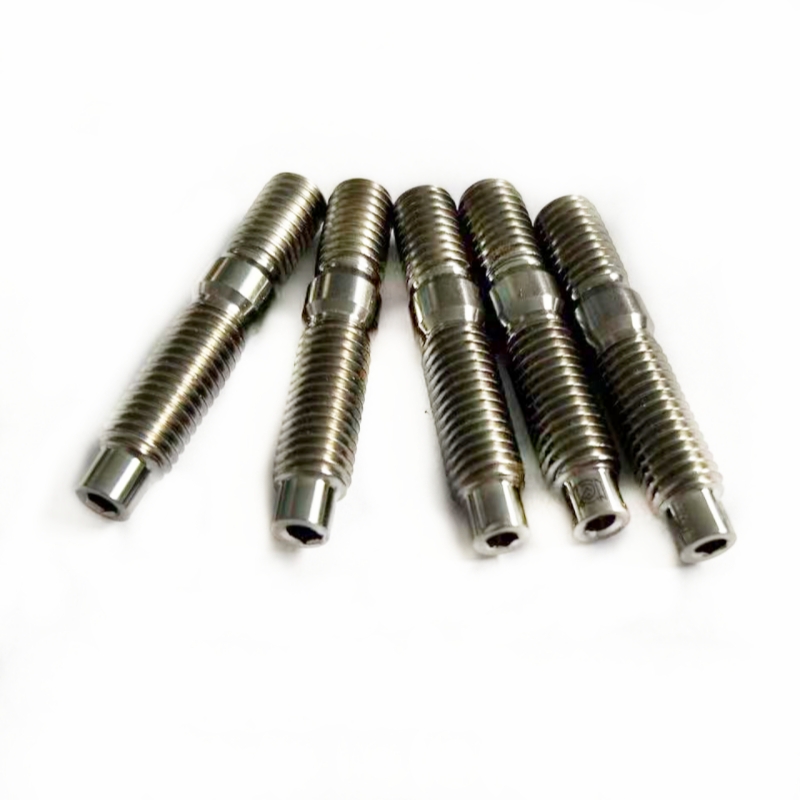
Polished GR5 Titanium Exhaust Manifold Stud M8*1.25*45
- Thread Pitch: M8 × 1.25 × 45mm
- Surface: Ultra-Mirror Polished
- Thermal Stability: Up to 450°C Sustained
- Target: Motorsport & Turbos
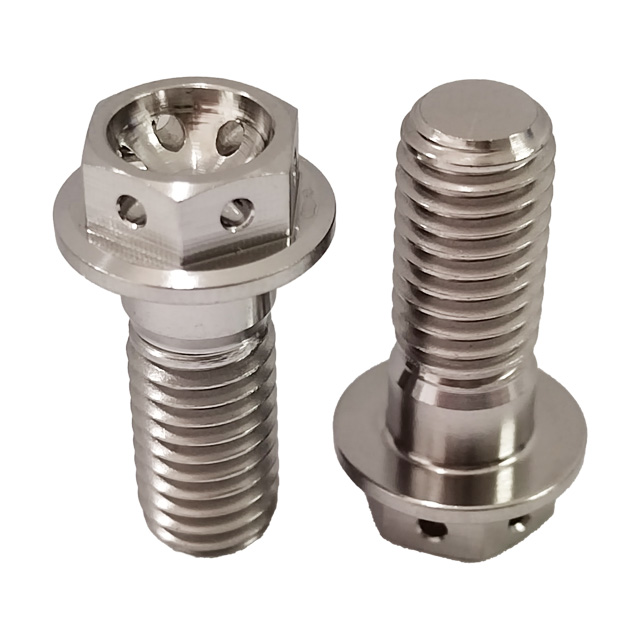
GR5 Titanium M8*20mm Hex Flange Drilled Slotted Bolts
- Standard: Flanged Hex with Lock Wire Holes
- Size: M8 × 20mm Metric Fine/Coarse
- Integrity: Rolled Threads (No Cut Notches)
- Target: Aero & Racing Braking Systems
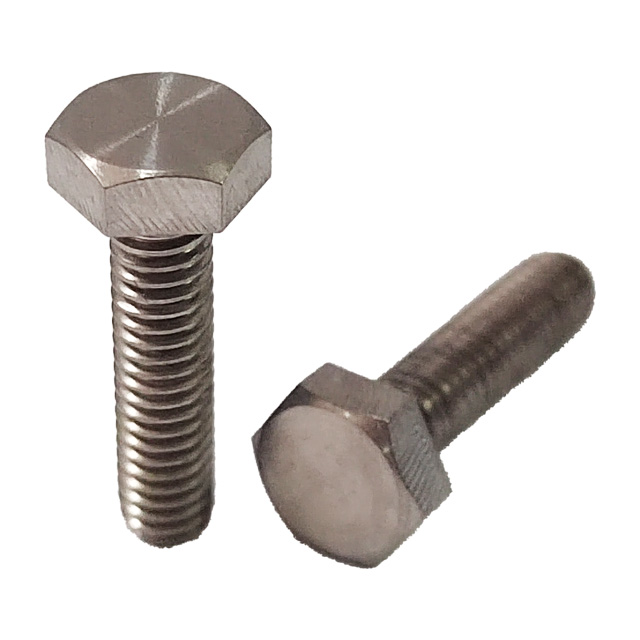
High Strength GR5 Titanium M4*15mm Hexagon Head Bolts
- Execution: Full Thread M4 × 15mm
- Tensile: ≥ 950 MPa Heat Treated
- Tolerance: ISO 965 Class 6g
- Target: Lab Instrumentation & Sensors
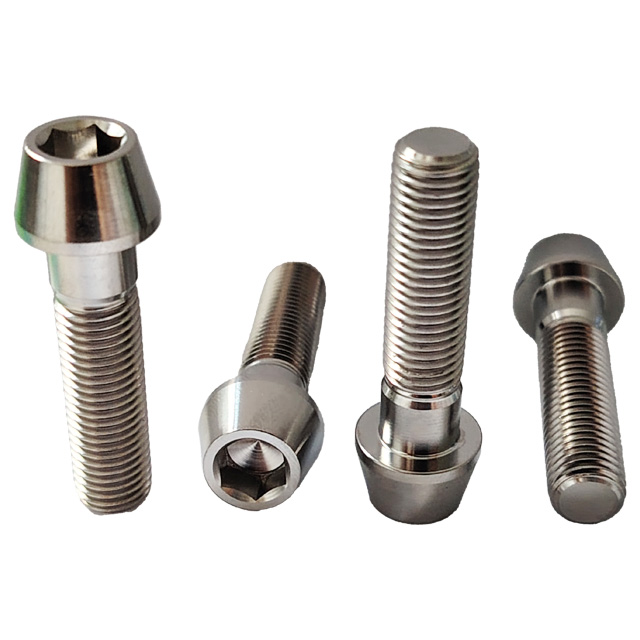
GR5 Titanium M8 M10 M12 Tapered Head Inner Hex Bolts
- Diameters: M8, M10, M12 In Stock
- Head Geometry: Weight-Relieved Tapered Cone
- Finish: Anodized Natural / Custom PVD
- Target: Performance Suspension Clamps
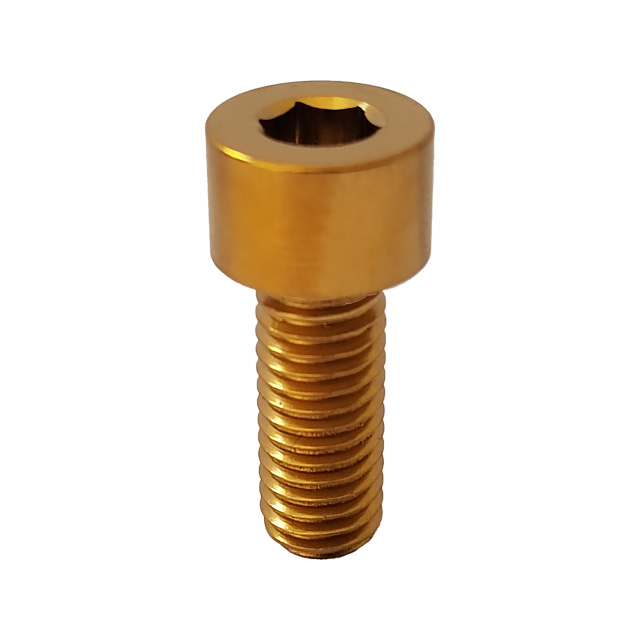
GR5 Titanium Golden M10*30mm Hex Socket Cap Bolts
- Configuration: DIN 912 Cylinder Head Cap
- Dimension: M10 × 30mm Coarse/Fine
- Surface: TiN PVD Ceramic Gold Coating
- Target: Motorsport Drivetrain & Custom
Strategic Titanium Deployments in the Tartu Ecosystem
As South Estonia emerges as a center for autonomous logistics, specialized optical instrumentation, and harsh-climate clean technologies, titanium hex fasteners eliminate the trade-off between mass and structural durability.
Autonomous Delivery & Mobile Robotics
Tartu’s tech incubators and robotics enterprises lead European developments in unmanned ground delivery systems and autonomous payload platforms. In these battery-constrained systems, rotating mass and unsprung structural weight directly limit single-charge operational range.
Replacing Grade 8.8/10.9 steel hex fasteners with Navzo Grade 5 Titanium yields a 44% weight reduction across structural suspension arms, chassis framing, and wheel assemblies without sacrificing tensile capacity (895–1000 MPa).
Physics Laboratories & Space Research
With the University of Tartu’s Institute of Physics, Tartu Observatory, and regional nanosatellite missions (ESTCube initiatives), cryogenic vacuum stability and non-magnetic permeability are mandatory fastening requirements.
Commercially Pure Grade 2 and annealed Grade 5 titanium provide magnetic permeability (μr < 1.00005), eliminating interference in sensitive magnetic resonance apparatus, particle sensors, and high-vacuum optical calibration benches.
Nordic De-Icing & Sub-Zero Fatigue
South Estonian winters present extreme environmental stress: persistent road salt de-icing agents (calcium chloride and sodium chloride slurries) combined with temperatures dropping below -25°C along national routes.
Unlike carbon and low-alloy steels that suffer from dangerous Ductile-to-Brittle Transition Temperature (DBTT) shifts, alpha-beta Grade 5 titanium maintains superior impact toughness down to cryogenic temperatures while forming a spontaneous, self-healing rutile-anatase TiO2 passive oxide film impervious to chloride pitting.
Engineering Fastener Performance: Ti-6Al-4V vs. Structural Steels
A rigorous metallurgical comparison designed for South Estonian design engineers and procurement directors requiring certified mechanical performance under dynamic cyclic loads.
| Material Specification | Density (g/cm³) | Tensile Strength (MPa) | Yield Strength 0.2% (MPa) | Modulus of Elasticity (GPa) | Corrosion Resistance (Chloride/Salt) | Cryogenic Ductility (-40°C) |
|---|---|---|---|---|---|---|
| GR5 Titanium (Ti-6Al-4V Rolled) | 4.43 | 895 – 1050 | 828 – 910 | 114 | Immune (Passivated TiO²) | Retains 12%+ Elongation |
| Alloy Steel Grade 10.9 (Quenched) | 7.85 | 1000 – 1040 | 900 – 940 | 205 | Very Low (Rapid Rust / Pitting) | Prone to Brittle Fracture |
| Stainless Steel A2-70 (AISI 304) | 7.90 | 700 – 800 | 450 | 193 | Moderate (Crevice Pitting in NaCl) | Ductile, Low Strength |
| Marine Stainless A4-80 (AISI 316) | 8.00 | 800 | 600 | 193 | High (Subject to Stress Corrosion) | Ductile, Sub-optimal Weight |
| Aircraft Aluminium 7075-T6 | 2.81 | 572 | 503 | 71.7 | Prone to Exfoliation Corrosion | Low Toughness |
Engineering Note: Clamping Force & Anti-Galling Installation in Baltic Assemblies
Titanium threads exhibit a friction coefficient of approximately μ ≈ 0.30 – 0.40 when dry, making them vulnerable to thread galling (cold welding) against mating titanium or aluminum interfaces. For engineers at the Tartu Science Park and manufacturing assembly cells, we strictly recommend calculating installation torque using a torque-tension equation: T = K × D × Fp, utilizing an approved high-pressure molybdenum disulfide (MoS2) or specialized titanium anti-seize paste (reducing K to 0.12 – 0.15). Our cold-rolled thread manufacturing process preserves continuous grain flow lines, increasing root endurance limits by over 30% relative to cut threads.
The Tartu 2030 Trajectory: Smart Industry, Light-Weighting & Resilient Sourcing
South Estonia is witnessing a rapid structural transition from traditional contract assembly toward high-value deep-tech integration, smart mobility, and localized hardware engineering.
Decarbonization Through Mass Reduction
Estonia’s climate objectives favor systems with minimized parasitic power draw. In regional delivery fleets and electrified light utility vehicles tested around Tartu, substituting critical structural fasteners with Grade 5 titanium lowers inertia, extending lithium-ion pack range without expensive redesigns.
Automation-Ready 6g Thread Tolerances
Automated robotic assembly stations require strict dimensional repeatability. Our ISO 965 Class 6g threads and CNC-chamfered leads prevent crossthreading in automated feed systems, minimizing production line downtime in Estonian manufacturing plants.
Direct Manufacturer Sourcing vs. Trading Hubs
Estonian procurement managers increasingly avoid intermediate European distributors that impose 40–70% markups. Navzo provides factory-direct export from Baoji with EN 10204 3.1 certification, delivering transparent pricing and raw material traceability.
Why South Estonian Buyers Partner with Navzo Precision Titanium
Headquartered in China's "Titanium Valley" (Baoji), Navzo combines primary raw material melting access with world-class multi-axis CNC machining, cold-heading, and vacuum coating lines.
Certified Aerospace-Grade Billets
Every fastener is formed from 100% vacuum arc remelted (VAR) titanium bar. We never blend recycled titanium scrap into structural Grade 5 orders. Full chemical spectrographic analysis and mechanical mill test reports accompany every dispatched batch.
Real-Time European Timezone RFQ Support
Our dedicated European export engineering desk guarantees replies to technical drawings (PDF, STEP, DWG) within 1 business hour, aligning with Estonian working hours (EET/EEST) to accelerate prototype iteration.
DDP Air Express to Tartu in 5–8 Days
We provide full Delivered Duty Paid (DDP) logistics directly to Tartu facilities via air freight (Tallinn TLL / Tartu TAY routing), managing EU customs import formalities, declaration paperwork, and final road delivery.
Frequently Asked Questions: Sourcing Titanium in Tartu
Answers to common questions regarding customs clearance, certifications, mechanical performance, and order execution.
Can Navzo supply EN 10204 3.1 inspection certificates for EU compliance?
Yes. Every batch exported to Estonia is accompanied by a standardized EN 10204 Type 3.1 Inspection Certificate. This includes genuine mill heat numbers, precise chemical composition (Al: 5.5–6.75%, V: 3.5–4.5%, Fe ≤ 0.40%, O ≤ 0.20%), tensile yield strength, elongation percentages, and hardness test records.
How do titanium hex bolts perform against Baltic winter road salts?
Unlike austenitic stainless steels (304/316) that can suffer crevice corrosion and stress corrosion cracking (SCC) under combined chloride and cyclic road vibrations, Grade 5 titanium is completely immune to ambient chloride attack. It forms a self-healing surface oxide barrier that requires no protective zinc or cadmium plating.
What is the galvanic corrosion risk when mounting into aluminum in Tartu?
Titanium is electrochemically more noble than aluminum alloys (such as 6061-T6 and 7075-T6). When connected in the presence of an electrolyte (such as salty road slush), the aluminum component can undergo galvanic attack. We recommend isolating joint faces using fluoropolymer/nylon washers, wet installation with epoxy/zinc chromate primers, or applying our ceramic PVD coating to break electrical conductivity.
What are the Minimum Order Quantities (MOQ) for prototypes vs. production?
For standard catalogue fasteners (DIN 912, DIN 933, DIN 7991, ISO 14583) stocked in Baoji, the MOQ starts at just 100 pieces per size. For custom CNC-machined titanium components made to customer drawings, we offer low-volume pilot batches of 20–50 pieces to support R&D prototyping before scaling up to full production runs.
How does Navzo manage thread rolling versus CNC thread cutting?
For high-stress bolts, we cold-roll external threads after CNC shank finishing. Thread rolling plastically deforms the grain structure to follow the thread contours, improving fatigue life by 30% or more compared to cut threads and eliminating the micro-notches that can cause stress cracking in dynamic applications.
How are customs, Estonian VAT, and EU import tariffs handled?
We support both DAP and DDP incoterms. Under DDP terms, our logistics partners clear Estonian customs (Maksu- ja Tolliamet) using the correct TARIC/HS classification codes (such as 8108.90). If your company has a valid Estonian EORI and VAT number, intra-community reverse-charge procedures apply under standard EU trade frameworks.
Accelerate Your Tartu Engineering Project With Certified Titanium
Send your bill of materials, CAD files (STEP/DWG), or standard DIN/ISO fastener requests. Our engineering desk provides technical review, pricing, and certified material schedules within 1 hour.