Engineering Whitepaper: Advanced Metallurgy of Titanium Exhaust Manifold Hardware
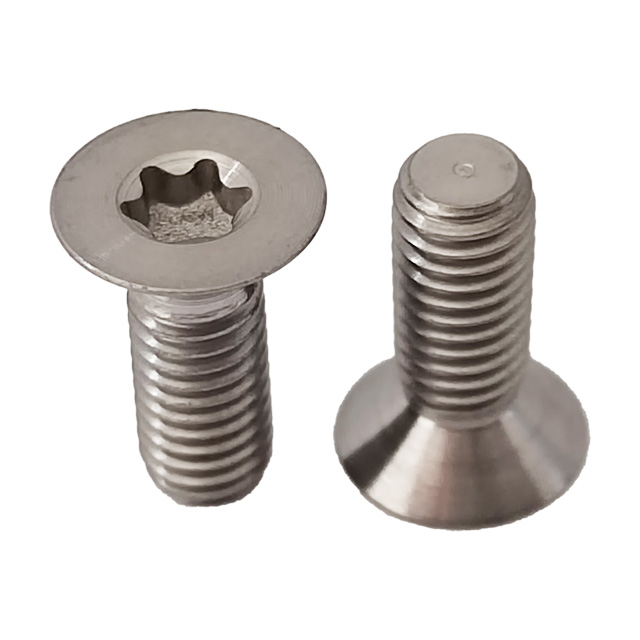
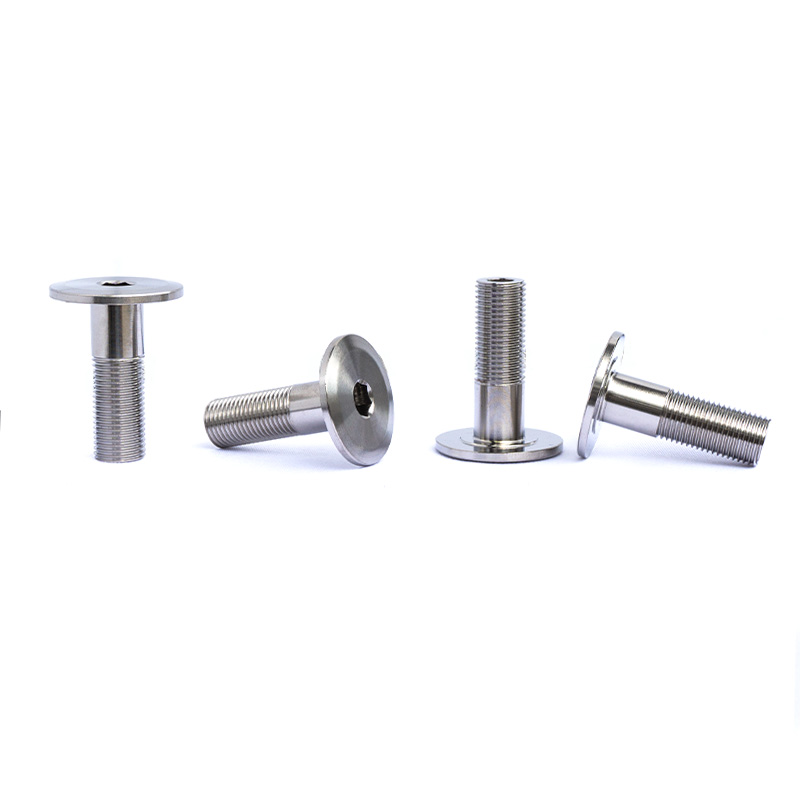
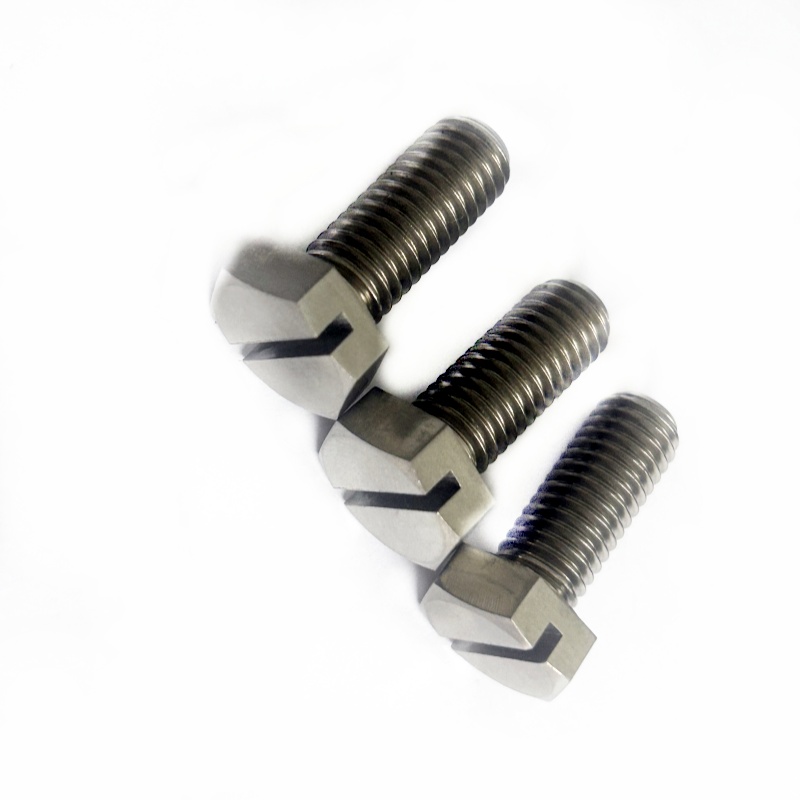
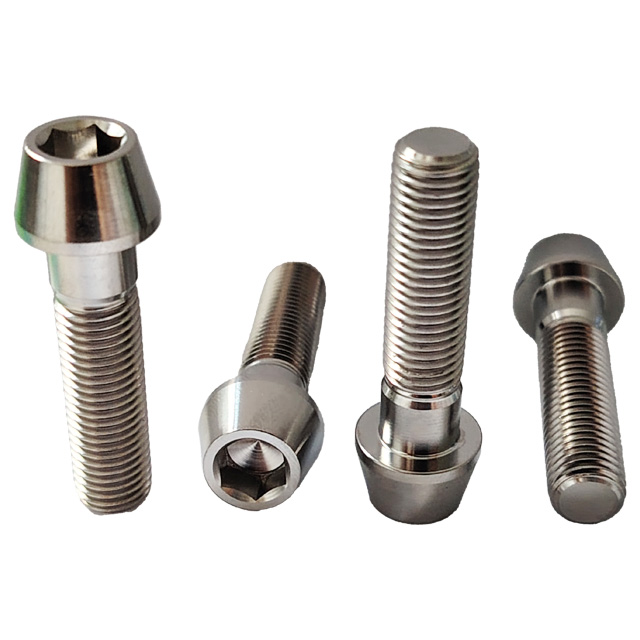
In high-performance automotive and industrial powertrain engineering, the exhaust interface presents the harshest working environment encountered by mechanical fasteners. Bolting turbochargers, tubular headers, and cast cast-iron or stainless manifolds to aluminum cylinder heads requires hardware that endures intense cyclic thermal fatigue, severe vibratory loading, and chemical oxidation. For US performance tuners, engine rebuilders, and Tier-1 automotive suppliers, standard carbon and stainless fasteners continuously fail under sustained thermal spikes exceeding 600°C (1,112°F). As an established titanium exhaust manifold stud bolt manufacturer & supplier serving the United States market from Baoji's central titanium industrial corridor, Navzo delivers aerospace-level material engineering directly to North American assembly benches.
Standard automotive exhaust studs are routinely fabricated from Class 8.8, 10.9 steel or, at best, austenitic 304/316 stainless steels. These materials carry severe limitations under racing or high-duty operation. Plain carbon steel suffers from aggressive surface scaling and rapid oxidative embrittlement, often seizing permanently into aluminum cylinder blocks or shearing during maintenance extraction. Conversely, common stainless steels exhibit high thermal expansion rates coupled with modest yield strength at elevated temperatures, leading to thread stretch, lost clamp load, manifold gasket blow-outs, and catastrophic exhaust gas leaks. Switching to Grade 5 Ti-6Al-4V (UNS R56400) provides an optimal modulus of elasticity, sustained high-temperature yield strength, and virtually impervious atmospheric and galvanic resistance.
Critical Engineering Principle: The coefficient of thermal expansion (CTE) of Grade 5 Titanium (~8.6 × 10⁻⁶/K) closely aligns with the behavior of cast iron, forged stainless headers, and modern aluminum cylinder blocks compared to standard steels. This thermal synergy minimizes relative shear stresses at the flange gasket during rapid cold-start to peak-boost operational cycles.
Mechanical & Thermal Property Comparison: Exhaust Fasteners
Specifying fasteners for forced induction (turbocharged, supercharged) or endurance naturally aspirated engines requires precise review of material yield points and structural fatigue limits under heat. The engineering table below highlights why certified GR5 Titanium outperforms traditional exhaust fastener metallurgy across all critical operational parameters.
| Property Parameter | Navzo GR5 Titanium (Ti-6Al-4V) | Class 10.9 Alloy Steel | Austenitic 304 Stainless | Inconel 718 (Nickel Superalloy) |
|---|---|---|---|---|
| Density (g/cm³) | 4.43 (Ultralight) | 7.85 (Heavy) | 7.93 (Heavy) | 8.19 (Very Heavy) |
| Room Temp Tensile (MPa) | 895 – 1050 | 1040 | 515 – 700 | 1240 – 1400 |
| Yield Strength 0.2% (MPa) | 828 – 950 | 940 | 205 – 310 | 1030 – 1100 |
| Tensile Strength at 450°C (MPa) | 620 (Stable) | 380 (Rapid Drop) | 350 (Subject to Stretch) | 1100 (High) |
| Coefficient of Thermal Exp. (µm/m·K) | 8.6 – 9.0 | 11.5 – 12.5 | 16.5 – 17.5 (Excessive) | 13.0 |
| Corrosion & Galling Resistance | Outstanding (Self-Healing TiO₂) | Poor (Oxidizes / Scales) | Moderate (Prone to Galling) | Immune |
| Cost-to-Weight Efficiency | Optimal for Modern Motorsport | Low Initial / High Maintenance | Moderate | Extremely Prohibitive |
Thread Rolling vs. Thread Cutting: Why Cold-Worked Threads Matter
Manufacturing exhaust hardware from titanium is vastly different from working with soft brass or mild steel. Ti-6Al-4V is an alpha-beta alloy known for poor thermal conductivity and work-hardening tendencies. Cutting external threads on an automated lathe using conventional single-point tools or die inserts introduces microscopic micro-notches at the thread root. Under continuous exhaust gas pressure pulses, these root stress concentrations serve as crack initiation sites, leading to early fatigue failure directly where the stud interfaces with the engine head.
Navzo utilizes dedicated circular thread-rolling equipment. Rather than severing the titanium alloy grain lines, thread rolling plastically deforms the grain flow along the flank contours, creating unbroken fiber lines throughout the root radius and pitch diameter. This cold-forming operation work-hardens the thread surface, elevating surface hardness by up to 15%, reducing thread surface roughness to Ra 0.4µm, and enhancing fatigue life by more than 300% under cyclical vibratory load.
Localized Application Scenarios in North America
Navzo fasteners are engineered for precision integration across the core high-performance automotive and marine industries in the United States.
NHRA Drag Racing & Pikes Peak Time Attack
High-boost turbocharged engines producing 1500+ WHP experience instantaneous exhaust gas temperatures (EGT) surpassing 900°C. Our M10x1.25 and M10x1.5 titanium double-ended studs deliver uncompromising clamp load across the manifold face, eliminating exhaust gasket extrusion caused by header warping under rapid full-throttle acceleration.
IMSA & Trans-Am Endurance Road Racing
In grueling 12-hour and 24-hour endurance challenges, unsprung weight and chassis reliability govern results. Switching entire engine bay fastener kits, exhaust studs, and turbo dump-pipe retainers to titanium yields critical mass reduction while offering continuous resilience against harmonic vibration that loosens traditional steel nuts.
Coastal Saltwater Offshore Powerboats
Marine inboard and supercharged big-block marine engines operating off Florida, the Gulf Coast, and California suffer severe galvanic corrosion when salt spray contacts hot exhaust manifolds. Ti-6Al-4V builds an instantaneous, continuous passive oxide film (TiO₂), rendering these fasteners completely impervious to chloride pitting and crevice oxidation.
American V8 Crate Engine Restomods
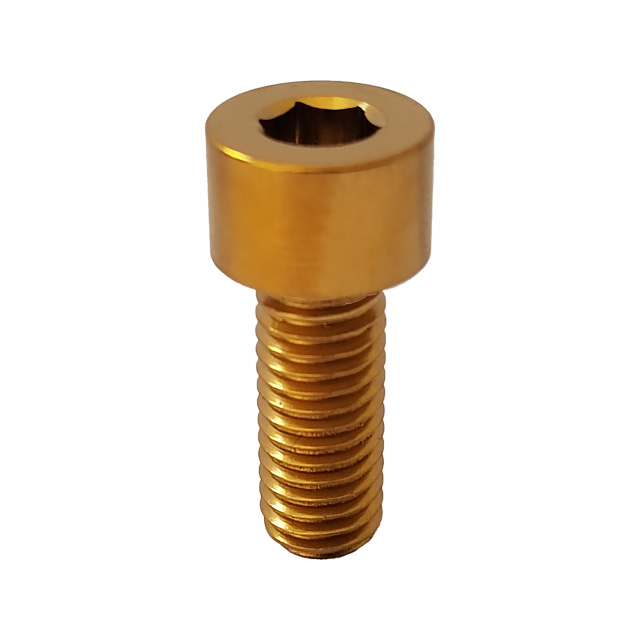
LS, LT, Coyote, and modern Hemi restomod builders demand engine-bay aesthetics that match 800-horsepower crate motor performance. Navzo supplies polished, burnt blue, and TiN golden PVD hardware that combines zero-rust reliability with show-stopping visual elegance inside tightly packed hot rod engine bays.
Custom Commercial Turbocharging Kits
US specialty fabricators of twin-turbo systems for late-model trucks, SUVs, and European supercars integrate Navzo studs directly into their manifold installation kits. Our tight tolerance class 6g threading guarantees perfect dry run-down into pre-tapped aluminum cylinder heads without binding or galling.
Extreme Off-Road & Ultra4 Racing
Rock crawlers and desert pre-runners face constant mud, alkaline dust, thermal shocks during water crossings, and severe frame flex. Titanium exhaust fasteners maintain constant retention torque without becoming brittle or suffering stress-corrosion cracking (SCC) under continuous structural abuse.
Emerging Procurement & Metallurgy Trends in the US Market
The US automotive aftermarket and specialty OEM hardware landscape is experiencing three macro shifts toward titanium procurement:
1. Shift Toward 12-Point Flange Self-Locking Hardware: Traditional split washers and flat hex nuts are becoming obsolete in forced-induction racing. Engine builders increasingly require matching 12-point aero-style flange nuts with integrated serrated or distorted-thread locking mechanisms. This design permits higher torque wrench accessibility in cramped engine spaces while mechanical crimps permanently lock the assembly against sonic acoustic frequencies without reliance on adhesive threadlockers, which decompose above 230°C.
2. Vacuum PVD Coatings Replacing Simple Anodizing for Exhaust Zones: Standard electrochemical anodizing offers excellent aesthetics for bicycle stems and motorcycle fairings, but sustained exhaust heat (above 400°C) slowly oxidizes the color layer back to chalky titanium dioxide. The American tuning market now demands Physical Vapor Deposition (PVD) finishes, such as Diamond-Like Carbon (DLC) and Titanium Nitride (TiN), which offer superior thermal surface hardness (over 2000 HV) and endure thermal cycles without fading.
3. Demand for Shorter, Transparent Supply Chains: US distributors are moving away from middleman trading agencies and seeking direct mill-level manufacturing relationships. Navzo's location in Baoji—where raw titanium sponge synthesis, vacuum arc remelting, and rod rolling occur within a localized regional radius—gives American buyers immediate batch traceability, standardized ASTM B348 mill test certificates (MTR), and rapid lead times for bespoke CNC runs.
Navzo Manufacturing Strengths: The Baoji Advantage
Navzo Precision Titanium Products Co., Ltd., established in 2011 on Yucai Road in the High-tech Development Zone of Baoji, stands at the nexus of the world's most concentrated titanium production cluster. Sourcing your critical fastener runs directly from Navzo provides tangible engineering and operational benefits:
- Strict Material Control: All stock is machined exclusively from certified aerospace Grade 5 (Ti-6Al-4V) bar stock. We provide genuine mill test certificates detailing exact elemental composition (Ti, Al, V, Fe, C, N, H, O) and mechanical yield testing for every heat number.
- End-to-End Precision Equipment: From multi-axis CNC Swiss-turning centers to automated multi-station cold heading and specialized circular die thread rollers, our equipment tolerances consistently uphold ISO 965 Class 6g standards.
- Proven High-Profile Track Record: Ranked as an on-site verified manufacturer and high-level supplier in precision metal hardware on global trade indices, with a sustained reorder rate exceeding 34% across core racing channels in the US, Germany, Japan, and the UK.
- Rapid Engineering Feasibility: Our engineering team delivers 2D/3D drawing reviews and actionable quotations within 1 hour during active business cycles, supported by full CAD/CAM format compatibility (STEP, IGES, DWG, DXF).