Precision GR5 Titanium Product Showcase
Direct from Baoji's specialized titanium forging and CNC machining facility, delivered to manufacturing clusters and precision OEMs throughout Alajuela province.
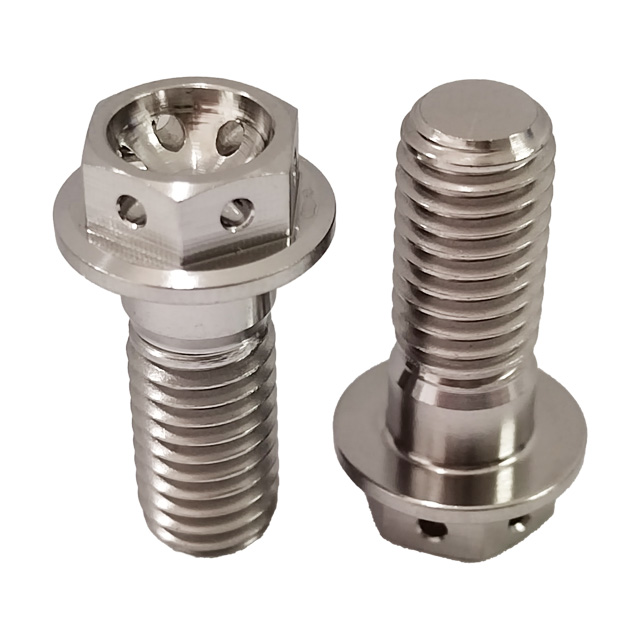
GR5 Titanium Bolts M8*20mm Factory Price Hex Flange Head Drilled Bolts High Quality Flange Head Slotted Screws
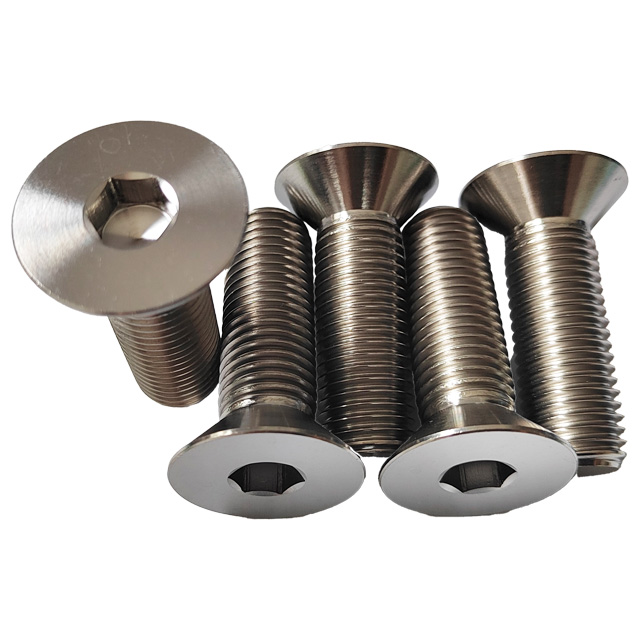
GR5 Titanium Bolts M10*20mm Factory Price Countersunk Head Hex Socket Bolts High Quality Round Head Inner Hex Screws
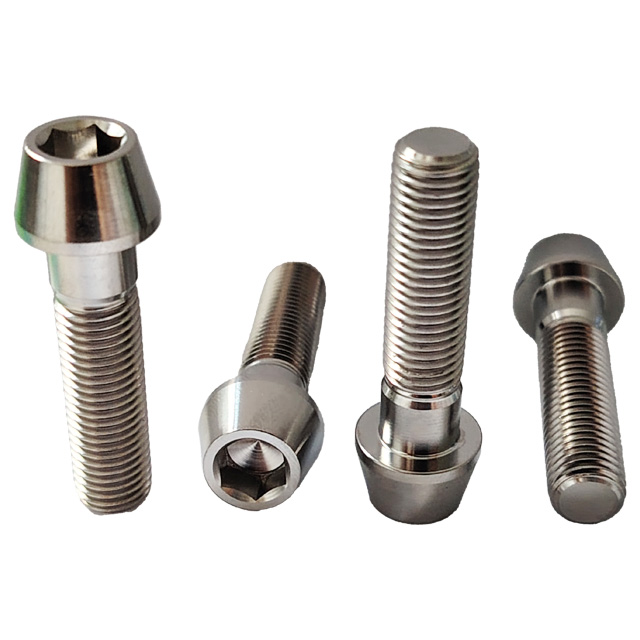
GR5 Titanium Bolts M8 M10 M12 CNC Machined Tapered Head Inner Hex Bolts Factory Price Cone Head Hex Socket Screws
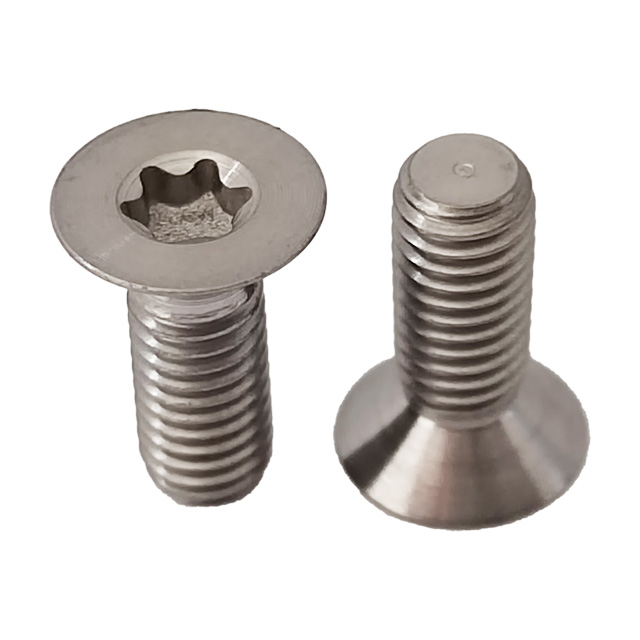
GR5 Titanium Bolts M5*13mm Lightweight Countersunk Head Inner Torx Bolts Factory Price Flat Head Inner Plum Screws
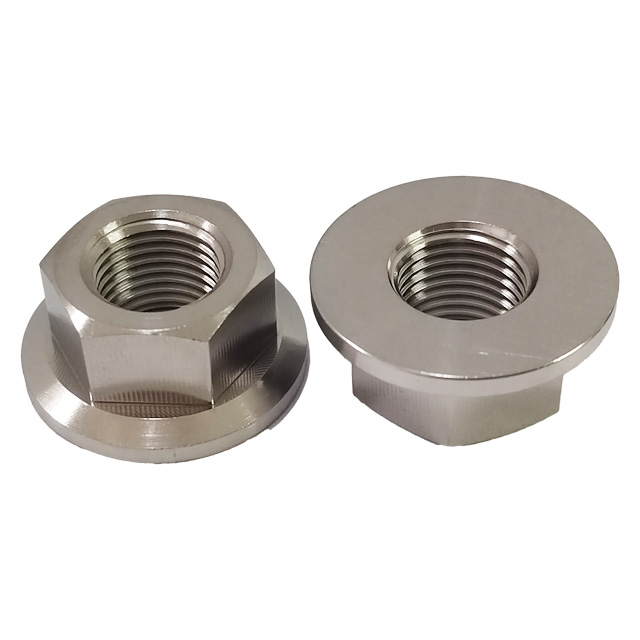
GR5 Titanium Nuts M12*1.5 High Strength Hex Flange Full Thread Nuts Factory Price Right Hand Fastener Nuts
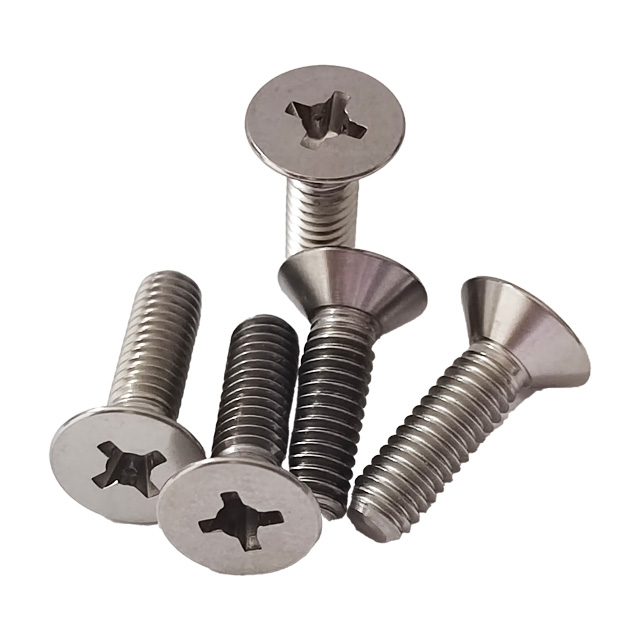
GR5 Titanium Bolts M8*20mm Factory Price Countersunk Head Cross Bolts High Quality Flat Head Phillips Screws
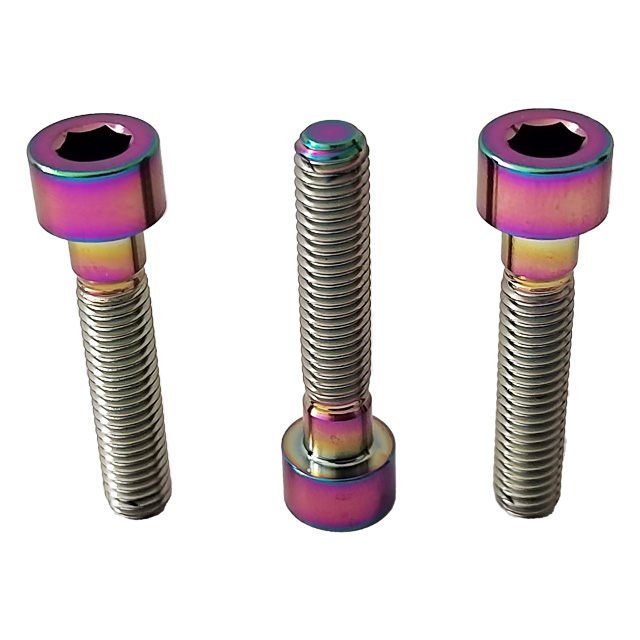
GR5 Titanium Bolts M8*40mm Colored Cylinder Head Hex Socket Bolts Factory Price Round Head Allen Screws
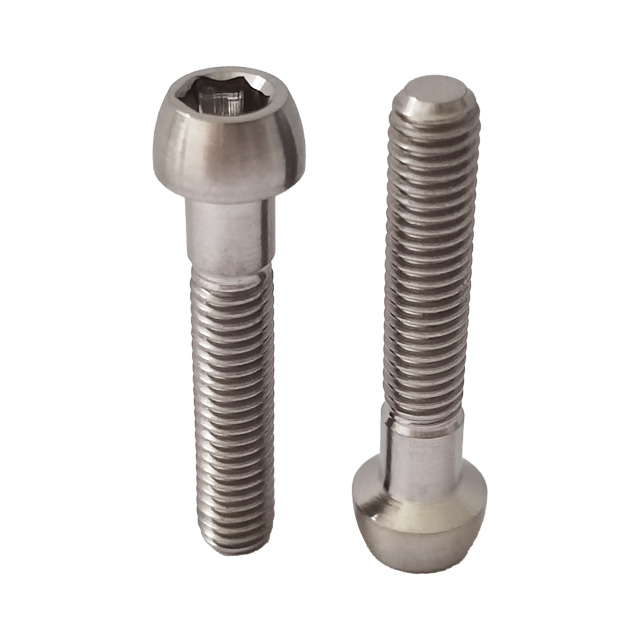
GR5 Titanium Bolts M6*31mm High Strength Tapered Head Hex Socket Bolts Factory Price Conical Head Inner Hex Screws
Engineering Whitepaper: Structural Mechanics of Titanium 12-Point Fasteners
In high-stress mechanical engineering, fastener selection directly dictates operational safety, joint relaxation resistance, and maintenance overhead. The double-hexagon, or 12-point (12pt) flange bolt profile—originally normalized within military aviation specifications such as MS9560 and NAS624—represents the gold standard for compact, high-torque industrial clamping. When manufactured from Ti-6Al-4V (Grade 5 Alpha-Beta Titanium), 12-point fasteners bridge the operational gap between heavy Grade 10.9/12.9 alloy steels and chemically inert but mechanically softer non-ferrous alloys.
The 12-point drive geometry increases wrench surface engagement by 100% relative to conventional six-sided hex bolts. The twelve points allow a 30-degree indexing swing arc, compared to the 60-degree arc required for standard hex head hardware. In tight tooling envelopes common to high-density machinery, turbine casings, and aerospace linkages, this geometry enables assembly technicians to apply elevated, repeatable preloads without risking head stripping, socket slippage, or surface deformation. The integral flange distributes clamping forces evenly over a broader surface area, effectively eliminating the need for separate washers while preventing galvanic spot-stressing on composite, magnesium, or aluminum subassemblies.
Fatigue Resistance and Preload Stability via Thread Rolling
Unlike budget fasteners produced by single-point cutting or chip-forming CNC chasing, our factory subjects all titanium fastener blanks to cold and warm precision thread rolling after CNC turning. Thread rolling plastically deforms the titanium crystal grain boundaries along continuous, uninterrupted contour lines running continuously into the root radius. This cold-work hardening process virtually eliminates the micro-notches that act as primary initiation sites for cyclic fatigue cracks, boosting the shear and dynamic fatigue lifespan of the bolted joint by upwards of 300% under high-frequency operational vibration.
Localized Industrial Applications in the Alajuela Province Ecosystem
Alajuela has established itself as the beating heart of Costa Rica's export-oriented, high-precision industrial economy. Positioned immediately northwest of San José and home to the Coyol Free Zone (Zona Franca El Coyol)—consistently ranked as one of the premier industrial manufacturing parks in Latin America—Alajuela demands components that adhere to uncompromising quality management systems. Our supply lines directly address several high-tech and specialized sectors operating within this regional microclimate:
Cleanroom Automation & MedTech
Alajuela's life science enterprises require completely non-magnetic, non-shedding, and sterilizable tooling fixtures. Our clean-passivated GR5 12-point bolts ensure zero particulate contamination and resist repeated autoclave cycles and chemical sanitization with isopropyl alcohol and hydrogen peroxide vapor.
Aerospace MRO & Aviation Assembly
Situated adjacent to Juan Santamaría International Airport (SJO), Alajuela's aircraft maintenance, repair, and overhaul (MRO) hangars rely on lightweight 12pt double-hex flange hardware for engine nacelle access brackets, non-structural avionics mounts, and ground-support testing fixtures where high strength-to-weight ratios are paramount.
Volcanic & Tropical Weather Defense
Alajuela's proximity to the Poás Volcano caldera subjects regional equipment to micro-atmospheric concentrations of airborne sulfur dioxide ($SO_2$) and acid mist, combined with 80–95% relative humidity. Unlike steel fasteners that rust prematurely, Grade 5 titanium forms an impenetrable self-healing rutile ($TiO_2$) passive film.
Engineering Material Performance Matrix
Selecting the optimal fastener alloy requires cross-referencing mechanical load capacities against environmental susceptibility. The comparative data below demonstrates how Grade 5 Titanium outperforms alternative industrial alloys across weight, strength, and corrosion parameters:
| Material Specification | Density (g/cm³) | Tensile Strength (MPa) | Yield Strength (MPa) | Corrosion Resistance | Magnetic Permeability |
|---|---|---|---|---|---|
| Ti-6Al-4V Grade 5 (Navzo Precision) | 4.43 | 950 – 1050 | 880 | Immune to Cl⁻, $H_2S$, and $SO_2$ | 1.00005 (Non-magnetic) |
| Austenitic Stainless Steel (AISI 316L) | 8.00 | 580 – 680 | 290 | Moderate (Prone to Pitting Crevice) | 1.005 – 1.015 (Slight) |
| High-Tensile Alloy Steel (Class 10.9) | 7.85 | 1040 | 940 | Rapid Rusting Without Plating | Ferromagnetic (> 500) |
| Marine Structural Aluminum (6061-T6) | 2.70 | 310 | 276 | Fair (Anodic Oxidation Required) | Non-magnetic |
As illustrated, while Class 10.9 steel matches Grade 5 Titanium in basic tensile figures, it carries a 77% weight penalty and exhibits rapid degradation in humid tropical climates when zinc or cadmium coatings micro-fracture during torquing. Stainless steel 316L avoids rust but provides less than one-third of the yield resistance, leading to premature bolt stretching, joint loosening, and galling seizures under rigorous vibration.
Macro Trends Shaping Alajuela's Mechanical Engineering Landscape
The demand for specialized non-ferrous hardware in Alajuela is accelerating due to three distinct macroeconomic shifts occurring within Costa Rica:
1. Advanced Nearshoring to the Greater San José-Alajuela Metropolitan Zone
Global supply chain reorganizations have positioned Costa Rica as a prime destination for tier-1 and tier-2 medical device, semiconductor assembly, and aerospace subcontracting. Multinational facilities operating in Alajuela require suppliers who can deliver aerospace-grade material certificates (EN 10204 Type 3.1) and adhere to strict dimensional tolerances within ±0.005 mm on thread pitch and runout.
2. Decarbonization and Lightweighting Mandates
In alignment with Costa Rica's National Decarbonization Plan, industrial fleets, transport operators, and equipment designers are aggressively pursuing mass reduction. Replacing heavy steel bracketry and fasteners with titanium reduces mechanical inertia, lessens wear on electric actuator motors in automated handling systems, and optimizes fuel/power consumption in commercial transport.
3. Elimination of Galvanic Maintenance Downtime in Humid Microclimates
Alajuela's high temperatures and persistent rain cycles accelerate galvanic corrosion when steel bolts are installed into aluminum chassis or carbon-fiber composite frames. Maintenance teams across local food processing, chemical handling, and advanced packaging plants are increasingly retrofitting standard hardware with Grade 5 titanium bolts treated with micro-arc oxidation or PVD films to permanently avoid seizing and line shutdowns.
Manufactured in China's Titanium Valley · Engineered for Global Export
Navzo Precision Titanium Products Co., Ltd. was established in 2011 on Yucai Road in the High-tech Development Zone of Baoji, Shaanxi Province—China's globally recognized "Titanium Valley." Located directly within the geographic center of raw titanium refining, our facility benefits from immediate access to certified high-purity titanium sponge, vacuum arc remelting facilities, and sovereign metallurgical labs.
Every 12-point bolt exported to the Alajuela market is produced through an integrated internal supply pipeline: from precision heading and multi-axis Swiss-type turning to thread rolling, optical sorting, and spectral metallurgical analysis. We maintain an average response time of less than one hour for RFQs and provide continuous export logistics clearance support directly to San José (SJO) air freight terminals and Port of Caldera maritime docks.
Frequently Asked Questions: Alajuela Procurement
Clear, technical, and logistical answers to streamline the importation and specification of Grade 5 titanium 12-point hardware into Costa Rica.
Why choose 12-point flange heads over standard hex socket caps (DIN 912)?
12-point heads provide double the wrench contact points, completely eliminating socket stripping under elevated torque loads. The integrated flange distributes the clamping load across a wider surface area, avoiding the need for an independent washer while keeping the total head diameter compact enough for recessed counterbores in high-density machinery.
How do we prevent thread galling in Alajuela's humid tropical environment?
Like stainless steel, titanium alloys can suffer galling friction during rapid dry assembly. For applications across Costa Rica, we recommend specifying our low-friction PVD coatings, micro-arc oxidation, or applying a dedicated nickel-based or molybdenum-disulfide anti-seize compound during installation. Torquing should always be carried out with calibrated wrenches rather than high-speed pneumatic impact tools.
What documentation accompanies export shipments to Costa Rican Free Zones?
Every commercial consignment includes complete export documentation: EN 10204 3.1 Mill Test Certificates verifying chemical composition (spectrographic breakdown of Ti, Al, V, Fe, C, N, H, O) and mechanical tensile/yield test figures, certified dimensional inspection logs, full commercial invoices, and packing manifests compliant with Costa Rican customs (PROCOMER / DGA) requirements.
Can you manufacture custom dimensions and safety-wire configurations from CAD?
Yes. In addition to metric standards (M5 through M24) and imperial UNC/UNF sizes, our engineering department reviews 2D PDF/DWG and 3D STEP files to manufacture bespoke 12-point fasteners. We regularly machine custom cross-drilled heads for safety lock-wire retention, custom flange diameters, reduced-shank stretch bolts, and unique under-head radius transitions.
How does Grade 5 Titanium react when in contact with aluminum structures?
Titanium is cathodic (noble) relative to aluminum. However, in atmospheric conditions—even in Alajuela's humid climate—the galvanic potential difference produces far lower corrosion rates than steel-aluminum pairings because titanium forms a stable non-conductive oxide film. When necessary, applying an anodized or fluoropolymer barrier on our bolts completely mitigates galvanic pathways.
What are standard export lead times and shipping methods to Alajuela?
Standard catalog orders are dispatched from our Baoji inventory within 3 to 7 business days. Air express shipments (via DHL, FedEx, UPS) clear customs into Juan Santamaría Airport (SJO) within 4 to 6 business days. For recurring volume supply to Coyol Free Zone manufacturing lines, scheduled sea container freight is consolidated to Puerto Caldera with standard lead times arranged to support Kanban stock replenishments.
Initiate Your Engineering Consultation
Connect directly with our Baoji manufacturing and metallurgy department. Submit your size list, custom 3D drawing, or tender specifications for immediate quoting and production analysis.