Grade 5 (Ti-6Al-4V) Engineering Synthesis: Solving the Canadian Sub-Zero & Harsh Chloride Dilemma
Canadian industrial procurement managers, mechanical engineers, and aerospace system integrators face a distinct set of operational challenges unlike any other market globally. From extreme winter thermal drops reaching -40°C to -55°C in the Athabasca Oil Sands and Northwest Territories, to aggressive marine atmospheric exposure along British Columbia's coastal fjords and Atlantic Canada’s naval docks, material failure is catastrophic. Structural fasteners fabricated from standard zinc-plated carbon steels (Class 8.8, 10.9) or precipitation-hardened aluminium alloys (7075-T6) fail prematurely through low-temperature embrittlement, stress-corrosion cracking (SCC), or galvanic electrolysis induced by winter highway de-icing compounds (notably Calcium Chloride and Magnesium Chloride).
Grade 5 Titanium—nominally composed of 90% Titanium, 6% Aluminium, and 4% Vanadium (Ti-6Al-4V)—is an alpha-beta alloy representing the gold standard in structural metallurgy. Unlike ferritic steels that possess a sharply defined ductile-to-brittle transition temperature (DBTT) where impact toughness plummets drastically under freezing temperatures, Ti-6Al-4V maintains its hexagonal close-packed (HCP) alpha matrix and body-centered cubic (BCC) beta phase equilibrium down to cryogenic thresholds (-196°C). In sub-zero operational trials across Northern Canada, Navzo Grade 5 titanium fasteners preserve over 85% of their room-temperature fracture toughness ($K_{IC}$ values remaining between 45 to 60 $MPa\sqrt{m}$), eliminating brittle thread-shearing risks during sudden dynamic loads.
Key Engineering Fact for Canadian MRO Specifiers: Titanium forms an instantaneous, self-healing stoichiometric Titanium Dioxide ($TiO_2$) passivating film whenever exposed to oxygen or aqueous moisture. When exposed to harsh winter road de-icers (such as $CaCl_2$, $MgCl_2$, and $NaCl$ solutions sprayed across Alberta, Ontario, and Quebec transport corridors), Grade 5 exhibits an ionic corrosion rate of virtually zero (< 0.0001 mm/year), vastly outperforming AISI 304 and 316 stainless steel, which routinely experience chloride-induced localized crevice corrosion and pitting attack.
Furthermore, Grade 5 offers an exceptional specific strength (strength-to-density ratio) of $204 kN\cdot m/kg$, compared to just $130 kN\cdot m/kg$ for structural stainless steel (AISI 316L) and $155 kN\cdot m/kg$ for high-tensile 4140 chrome-moly steel. By shifting critical fastener inventories to Navzo Grade 5 titanium, Canadian design engineers cut hardware weight by 42% to 45% without sacrificing yield security, directly facilitating decarbonization goals in commercial trucking, electric mining haulage, and aerospace payload efficiency.
895MPa
Minimum Tensile Strength
4.43g/cm³
Lightweight Specific Density
-60°C
Zero DBTT Embrittlement
≤1hr
RFQ Engineering Response
100%
Optical Thread Inspection
Canadian Provincial Use-Cases
Localized Industrial Deployment of Navzo Grade 5 Titanium
Mapping material engineering capabilities directly into the industrial epicenters of Canadian manufacturing, deep-well mining, marine defense, and performance engineering.
Quebec & Ontario Aerospace
Home to Montreal (Mirabel, Saint-Laurent) and greater Toronto aerospace corridors. Canadian Tier-1 and Tier-2 sub-contractors require fasteners meeting AMS 4928, AMS 4967, and AS9100 standards for cabin frames, wing assemblies, landing gear brackets, and avionics housings.
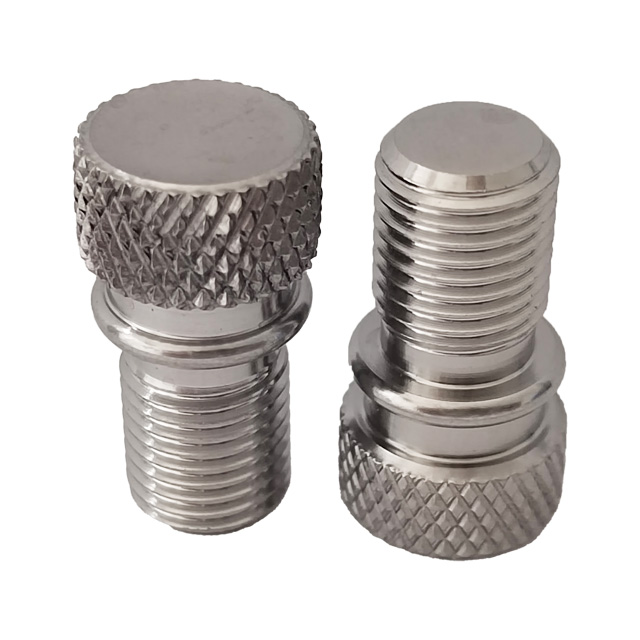
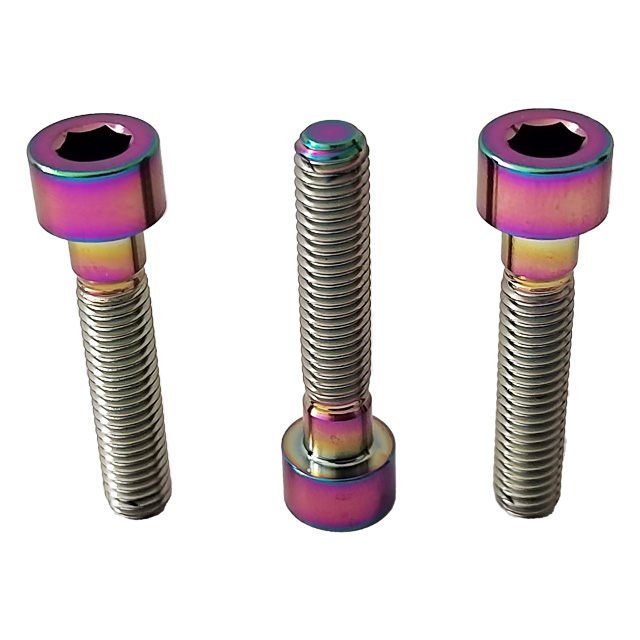
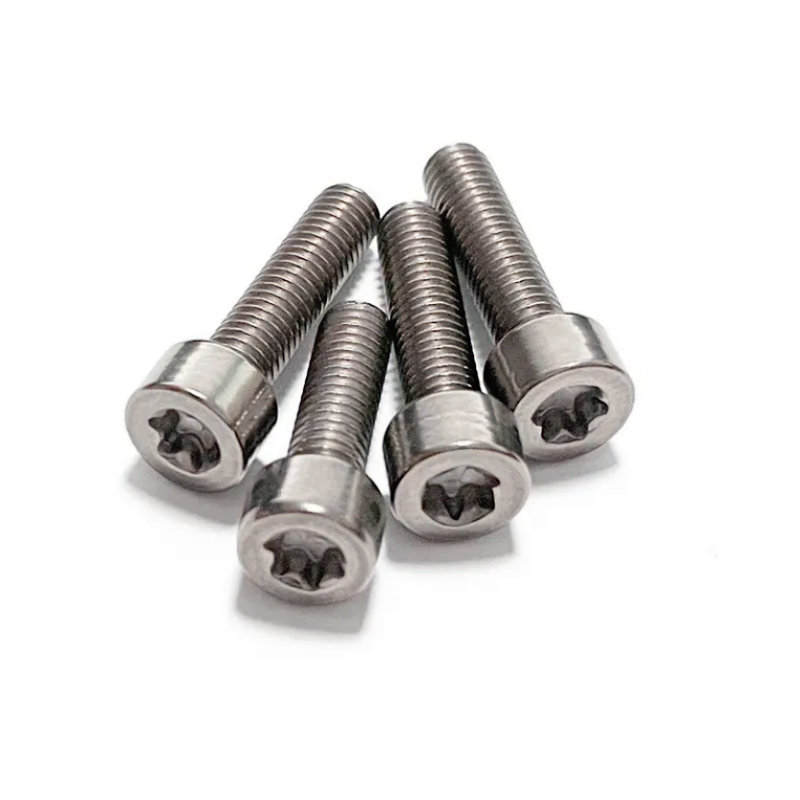
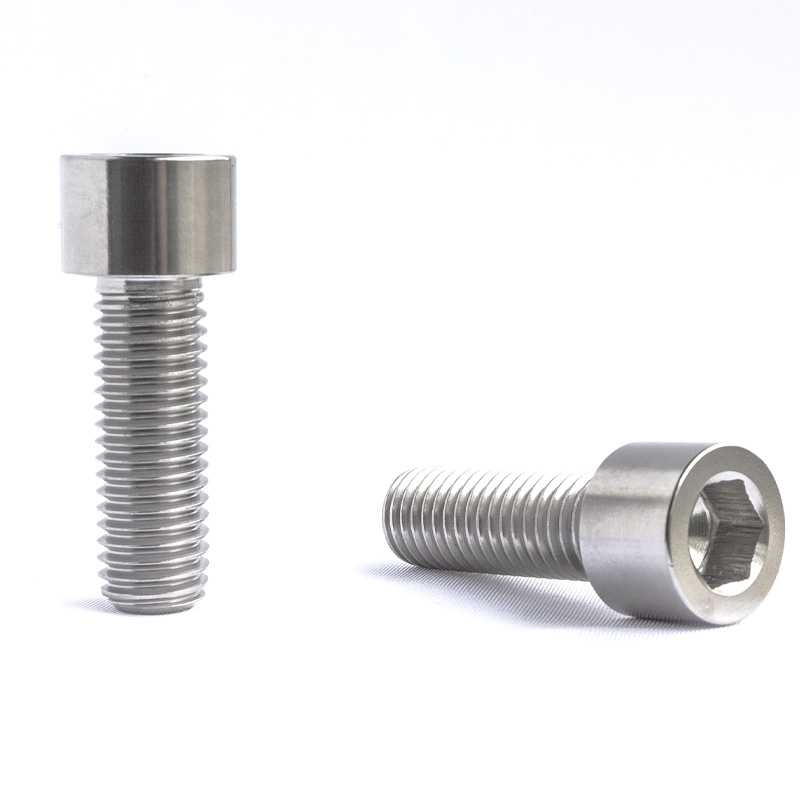
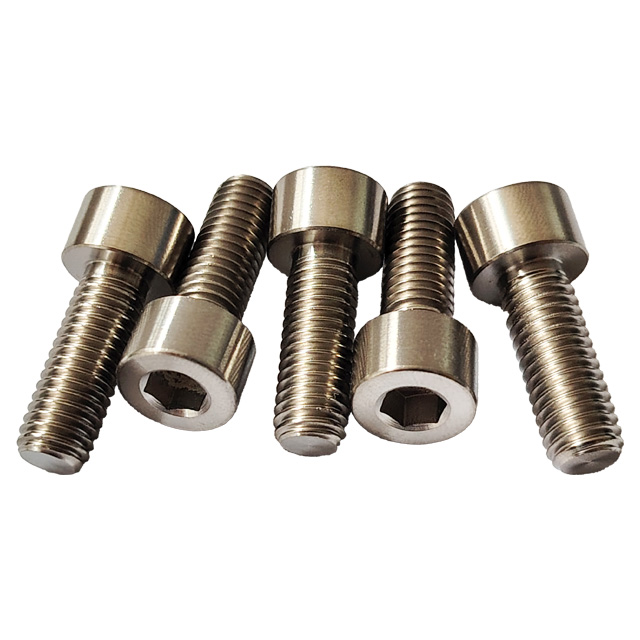
Navzo supplies cold-headed and hot-forged M4–M16 socket screws and custom CNC studs that provide extreme fatigue cycle lifetimes, passing rigorous helium leak tests and non-destructive dye-penetrant surface checks.
Alberta Oil Sands & CCUS
Heavy extraction at Fort McMurray, chemical processing in Edmonton, and offshore rigs off Newfoundland demand components compliant with NACE MR0175 / ISO 15156 sour gas environments containing elevated hydrogen sulfide ($H_2S$), carbon dioxide ($CO_2$), and chlorides.
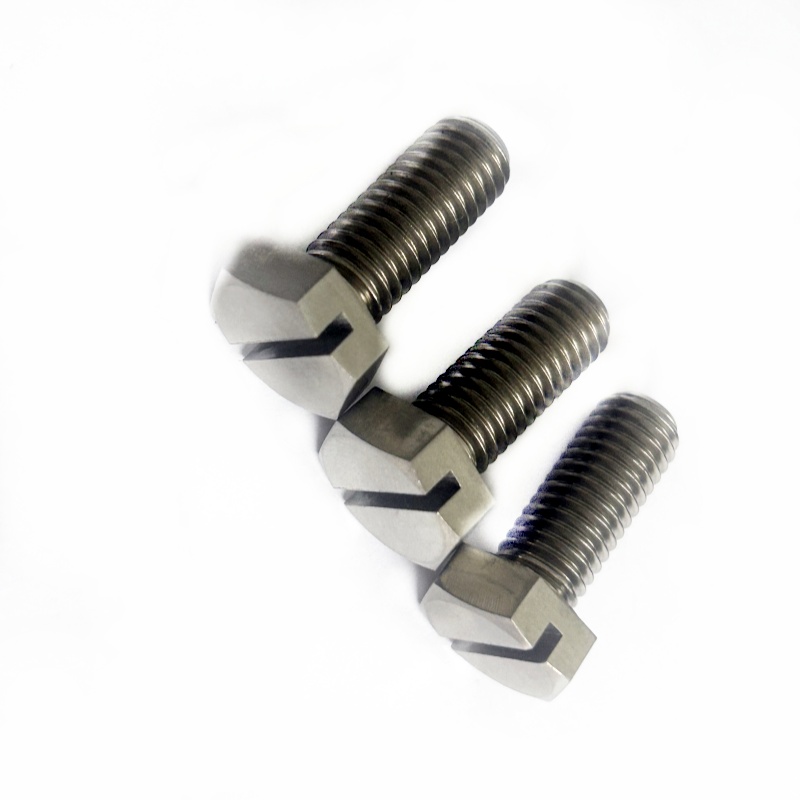
Our Grade 5 titanium flange studs and nuts prevent sulfide stress cracking where 304 and 316 stainless fail within weeks, delivering long-term uptime across high-pressure acid scrubbers.
BC & Atlantic Marine / Naval
Naval shipyards in Halifax (Nova Scotia) and marine automation firms across Vancouver and Victoria rely on Grade 5 for ROVs (remotely operated submersibles), acoustic hydrophones, subsea umbilical clamps, and propulsion housings.
With Grade 5 maintaining complete immunity to microbiologically influenced corrosion (MIC) and ambient seawater galvanic breakdown, our fasteners survive decades submerged at depth.
BC & Quebec Winter Motorsports
Canada leads the world in extreme backcountry cycling (Whistler, North Shore) and high-performance snowmobile and ice-cross racing. Unsprung rotational weight directly impacts telemetry and reaction times.
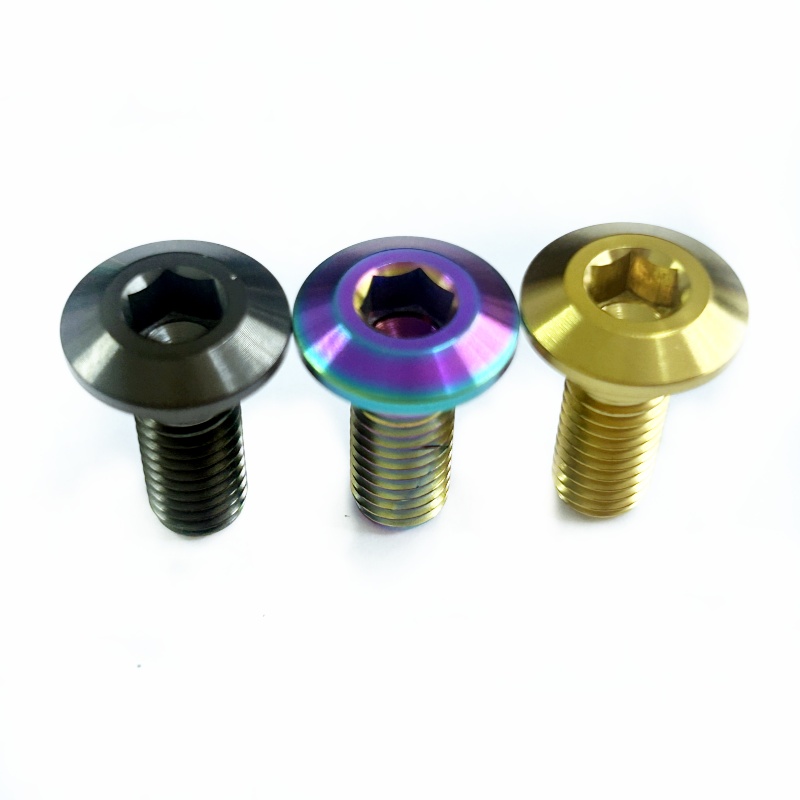
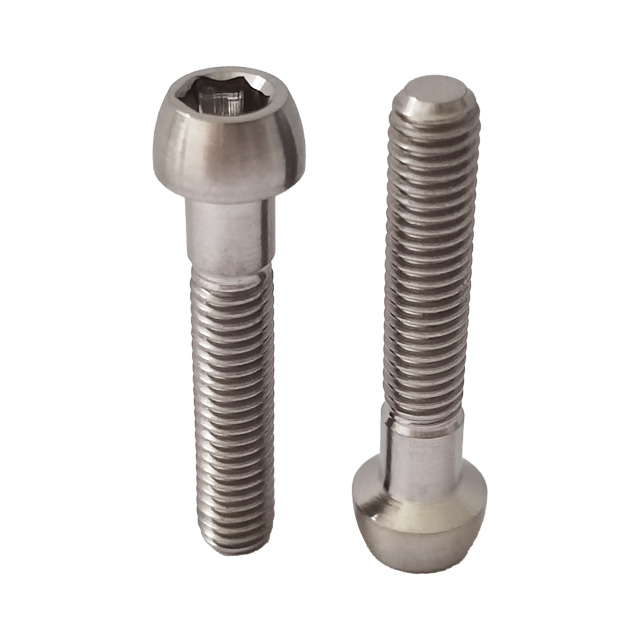
Navzo's M5–M8 disc rotor bolts, caliper shoulder screws, and tapered head stem hardware withstand heavy shock loads while shedding up to 250 grams per racing machine with zero cold-temperature failure.
Empirical Test Benchmarking
Metallurgical Benchmark: Ti-6Al-4V vs. Competing Alloys
Comprehensive property analysis calibrated for Canadian procurement teams comparing Grade 5 titanium with commercial pure titanium, high-tensile alloy steels, and stainless grades.
Alloy & Grade
Density (g/cm³)
Yield (0.2% Offset, MPa)
Tensile Strength (MPa)
Impact Energy @ -40°C (Charpy V-Notch, J)
Chloride Pitting Resistance (PREN)
Typical Failure Mechanism in Canada
Navzo GR5 (Ti-6Al-4V) Annealed
4.43
828 - 910
895 - 1050
22 - 28 (No DBTT drop)
Immune (TiO2 passive film)
Galling if installed dry (Prevented via anti-seize)
Commercially Pure Ti (Gr.2)
4.51
275 - 380
345 - 450
35 - 45 (Highly ductile)
Immune (TiO2 passive film)
Low shear capacity under dynamic fatigue
High-Tensile Alloy Steel (10.9)
7.85
900 - 940
1000 - 1040
8 - 14 (Brittle failure transition)
< 5 (Requires continuous cad/zinc plate)
Rapid de-icing salt rust; sub-zero snapping
Austenitic Stainless (AISI 316L)
8.00
220 - 290
520 - 680
80 - 110 (High toughness)
23 - 25 (Vulnerable to crevice)
Crevice corrosion under winter highway wash
Aerospace Aluminium (7075-T6)
2.81
460 - 500
540 - 570
12 - 16 (Notch sensitive)
Poor (High galvanic potential vs steel)
Rapid stress-corrosion cracking with road salts
Thread Forming Engineering Note: Navzo fasteners feature rolled threads rather than cut or milled threads. Thread rolling reorganizes the internal grain flow of the Ti-6Al-4V bar continuously along the thread contour, inducing compressive residual stress at the root radius. This elevates dynamic fatigue endurance limit by over 100% compared to cut threads, effectively suppressing fatigue micro-cracking commonly triggered by road vibration and engine harmonics on frozen Canadian terrains.
Future-Proofing Canadian Procurement: 2025–2030 Material Trends
As Canada intensifies its Net-Zero by 2050 Industrial Strategy, procurement directives across Quebec, Ontario, and Alberta are mandating higher energy efficiency and localized circularity. In heavy mining operations in Sudbury and Val-d'Or, the electrification of battery-electric haulage trucks and loaders (BEVs) is accelerating. Battery mass represents a critical constraint; switching non-structural and structural chassis hardware to Grade 5 titanium sheds hundreds of kilograms per vehicle, directly extending battery duty-cycles per kilowatt-hour.
Simultaneously, the expansion of Green Hydrogen and CCUS (Carbon Capture, Utilization, and Storage) projects in Western Canada has exposed the severe limitations of standard metallurgical alloys. Supercritical $CO_2$ transport and hydrogen injection lines induce hydrogen embrittlement in high-strength carbon steels. Titanium's alpha-beta crystal structure exhibits low hydrogen diffusion rates at typical operating temperatures, making Grade 5 bolts the preferred long-term cap-screw solution for pipeline valves, high-pressure flanges, and cryo-pumping manifolds.
Electrified Mining Fleet Lightweighting
Shifting battery enclosure bolts, suspension linkages, and drive-motor mount fasteners from steel to titanium directly combats vehicle deadweight, optimizing thermal battery management in extreme northern deep-mines.
Ultra-Wear PVD & Plasma Electrolytic Finishes
Navzo offers advanced Physical Vapor Deposition (PVD TiN, TiAlN) and micro-arc oxidation coatings that increase surface hardness beyond 2200 HV, eliminating galvanic wear when titanium interfaces directly with carbon fiber reinforced polymers (CFRP).
Traceable Ethical Supply Chains
Canadian public procurement frameworks prioritize ethical material traceability. Navzo guarantees complete mill documentation from titanium sponge reduction down to bar rolling, preventing non-compliant or counterfeit scrap blending.
Manufacturing Origin: Baoji, China
Direct Factory Authority Since 2011
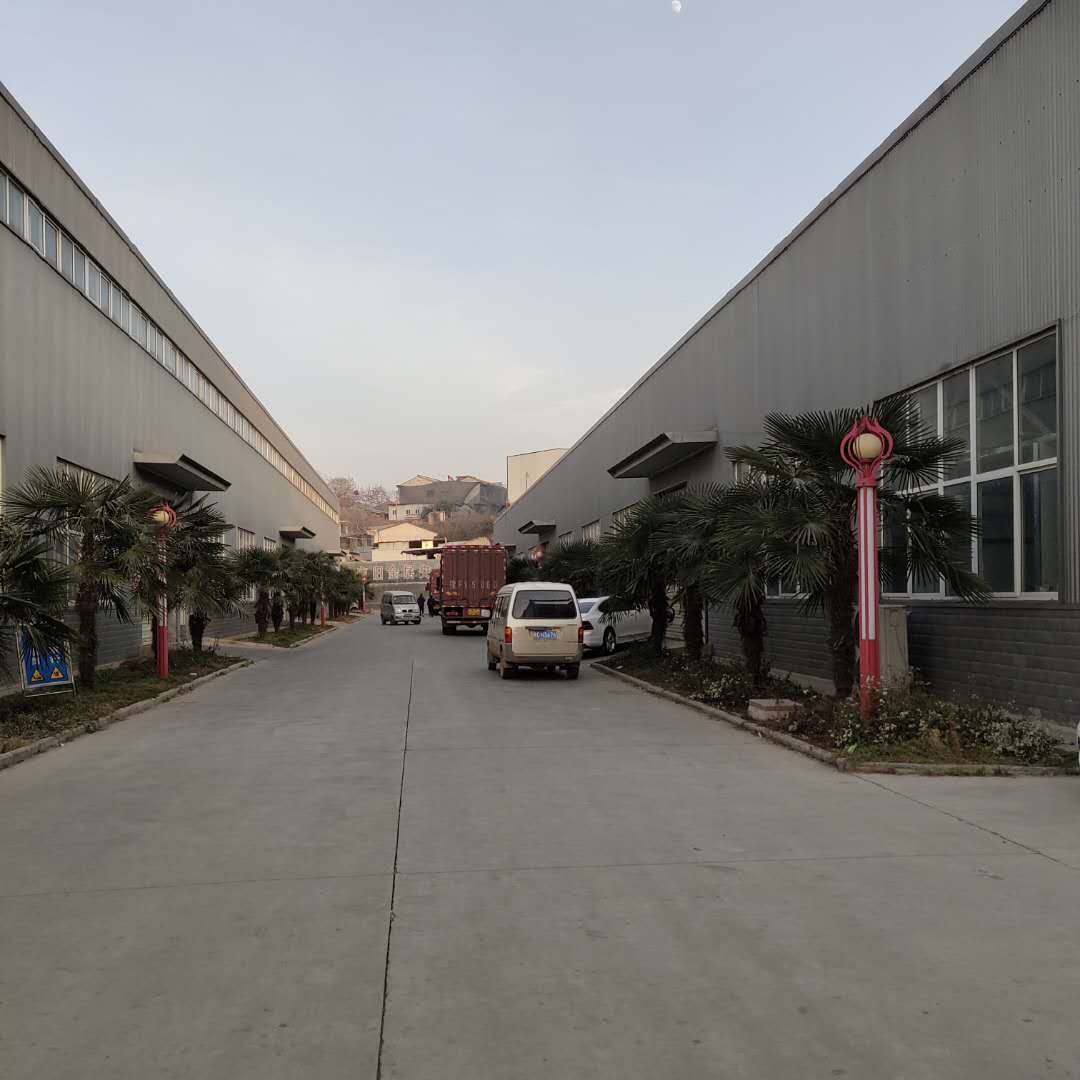
Navzo Precision Titanium Products Co., Ltd. was established on January 10, 2011 on Yucai Road in the High-tech Development Zone of Baoji, Shaanxi Province—widely recognized as China's "Titanium Valley". Baoji accounts for over 60% of China's titanium raw material capacity and 20% of global sponge output, providing Navzo with an unmatched vertical supply chain advantage.
Targeted solutions addressing customs, tariff classification, galvanic insulation, sub-zero torquing, and logistics to Canadian destinations.
What are the CBSA customs and tariff requirements for importing titanium fasteners into Canada?
Titanium bolts, screws, and nuts entering Canada typically clear through the Canada Border Services Agency (CBSA) under HS Code 8108.90 (Articles of Titanium) or HS Code 7318 (Fasteners) depending on end-use designation. Most titanium fasteners imported for manufacturing or motorsport from MFN (Most-Favoured-Nation) trading partners enter at 0% to 5.5% tariff rates. Navzo provides commercial invoices, packing lists, and certified Certificates of Origin (COO) to ensure fast customs clearance at Vancouver (YVR/Port of Vancouver), Prince Rupert, Calgary, or Toronto Pearson logistics hubs.
How does Navzo verify material authenticity and chemical composition for aerospace buyers?
Every production batch undergoes strict spectral chemical analysis and mechanical tensile testing per ASTM B348 / ASTM F468 / AMS 4928. We certify the exact composition including interstitial elements (Oxygen ≤ 0.20%, Nitrogen ≤ 0.05%, Carbon ≤ 0.08%, Iron ≤ 0.40%, Hydrogen ≤ 0.015%). An EN 10204 Type 3.1 Mill Test Certificate (MTR) is issued with heat number traceability, allowing Canadian QA teams to audit the full metallurgical pedigree.
How do Grade 5 titanium fasteners prevent galling during high-torque installations?
Like all reactive metals with passive oxide layers, dry titanium-on-titanium or titanium-on-aluminium threading is vulnerable to friction galling. For Canadian winter road assemblies and industrial equipment, we mandate the application of an anti-seize paste containing molybdenum disulfide ($MoS_2$), graphite, or nickel-based lubricants. Alternatively, Navzo supplies PVD-coated fasteners or micro-bead blasted surfaces with dry-film lubricants that completely eliminate thread binding during torque-up.
Does titanium interact galvanically when fastened to carbon fiber components?
Titanium possesses an electrochemical potential very close to carbon / graphite in the galvanic series (+0.05V to -0.05V vs. SCE), making it the single safest structural metal to pair with carbon fiber composite materials. While aluminium alloys suffer severe galvanic decay in wet conditions when contacting carbon fiber, Grade 5 titanium creates no galvanic circuit, which is why it is the mandated fastener standard across Canadian aerospace structures and carbon racing frames.
What torque values should Canadian technicians apply compared to OEM Grade 8.8 steel bolts?
Grade 5 titanium has a tensile strength (≥ 895 MPa) that exceeds standard Grade 8.8 metric steel (800 MPa) and approaches Class 10.9 steel (1000 MPa). However, because titanium’s modulus of elasticity is approximately half that of steel (~114 GPa vs. ~210 GPa), titanium fasteners elongate more under the same preload. We supply recommended torque charts (typically 80% to 90% of standard steel torque when lubricated with anti-seize) to guarantee nominal clamp load without exceeding the yield limit.
What are the shipping lead times from Baoji to Vancouver, Calgary, Montreal, or Toronto?
For urgent prototypes, sample runs, or maintenance outages, Navzo partners with air couriers (FedEx International Priority, DHL Express, UPS) providing door-to-door delivery within 4 to 7 business days anywhere in Canada. For scheduled production orders, air freight to YVR/YYZ takes 7–10 days, while ocean shipping via Vancouver or Prince Rupert ports ranges between 20 to 28 days, supporting cost-effective container replenishment.
Can Navzo machine custom titanium parts per Canadian engineering blueprints (CAD / STEP)?
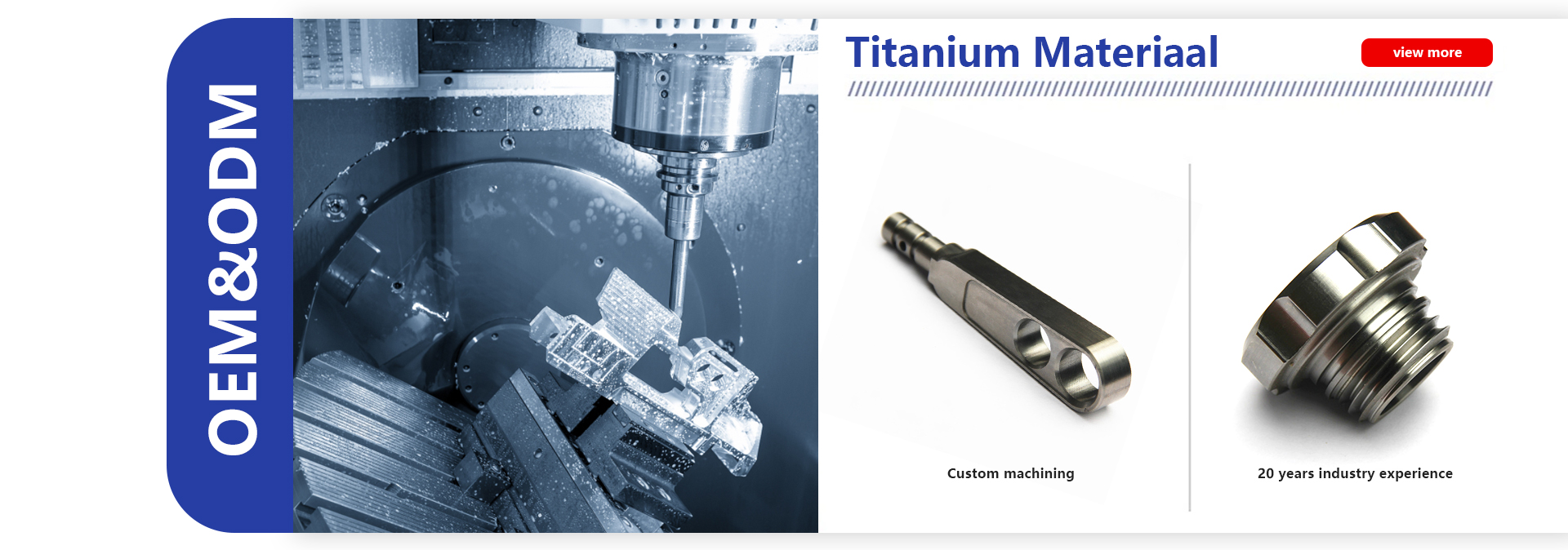
Yes. Our internal CNC machining division specializes in custom OEM/ODM production. You can send 2D PDFs with geometric dimensioning & tolerancing (GD&T) or 3D STEP/IGES models. Our mechanical engineers review cutting feeds, corner radii, and tapping clearances within 1 business day, advising on cost-saving design-for-manufacturing (DFM) adjustments before spindle startup.
What surface treatment is best suited for Canadian sub-zero and salt-laden conditions?
For maximum corrosion resistance against winter road salt, raw polished titanium or Type II Anodizing is optimal, as it hardens the baseline oxide film without introducing brittle plating layers. For extreme wear resistance or cosmetic appeal in motorsport applications, our PVD Titanium Nitride (TiN - Gold) or Burnt Blue Thermal Coloration offers long-lasting, scratch-resistant protection that will not flake off in -40°C freezing cycles.
Optimize Your Canadian Supply Chain with Certified Grade 5 Titanium
Accelerate your component lifecycles, eliminate sub-zero winter failures, and minimize deadweight. Submit your bill of materials, bolt size specifications, or CAD drawings today for a rapid quotation and engineering feasibility review.