Certified Grade 5 Titanium Fasteners & Wheel Hardware
High-tensile Grade 5 (Ti-6Al-4V) components cold-forged and precision CNC-machined in Baoji, China. Engineered specifically for high-load automotive motorsport, motorcycle disc brake assemblies, and competitive racing chassis.
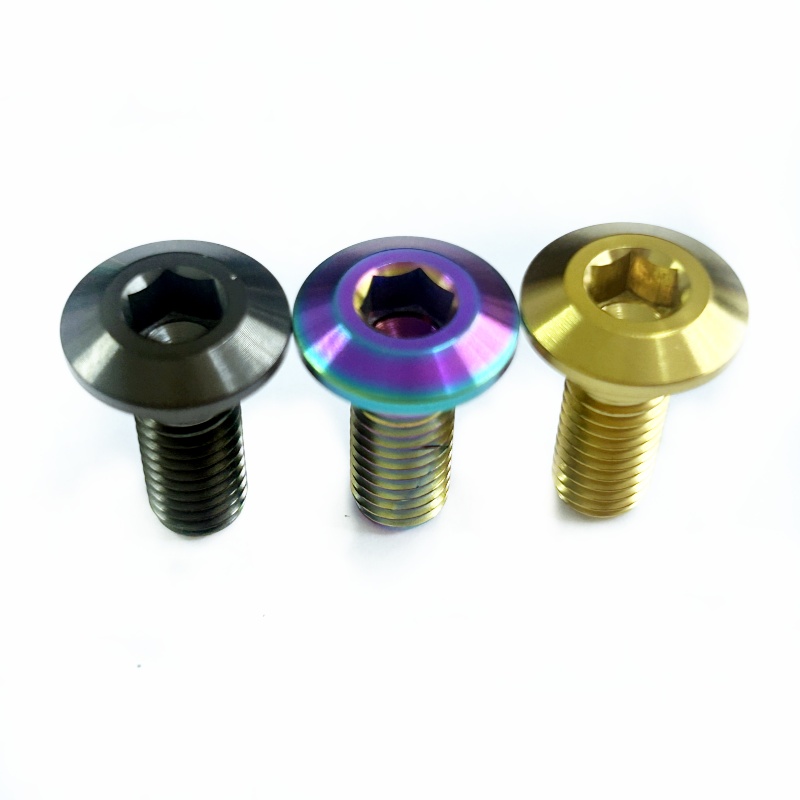
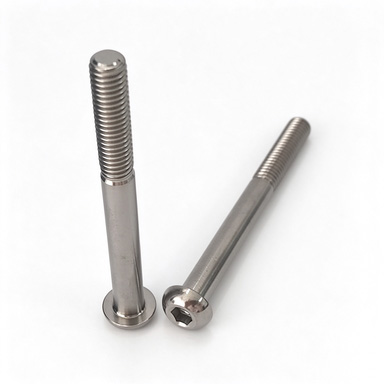
M8 Gr5 Titanium Bolts Shoulder Screws Hex Socket Head Bolts for Motorcycle Yamaha Disc Brake Refit Bolt
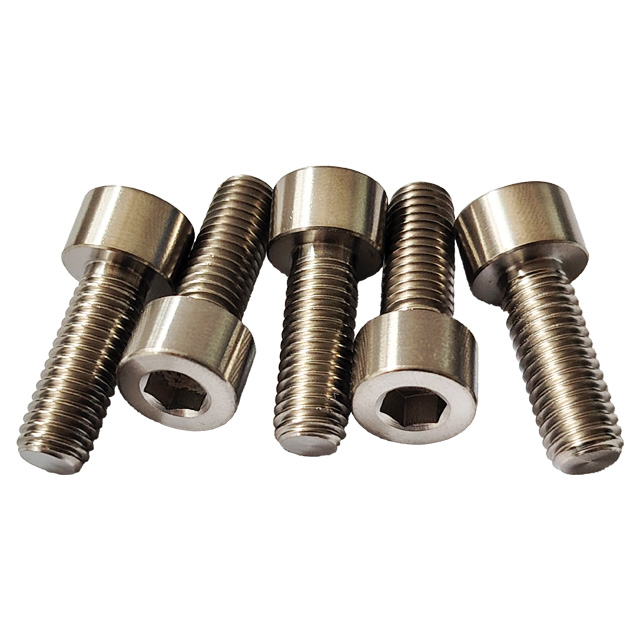
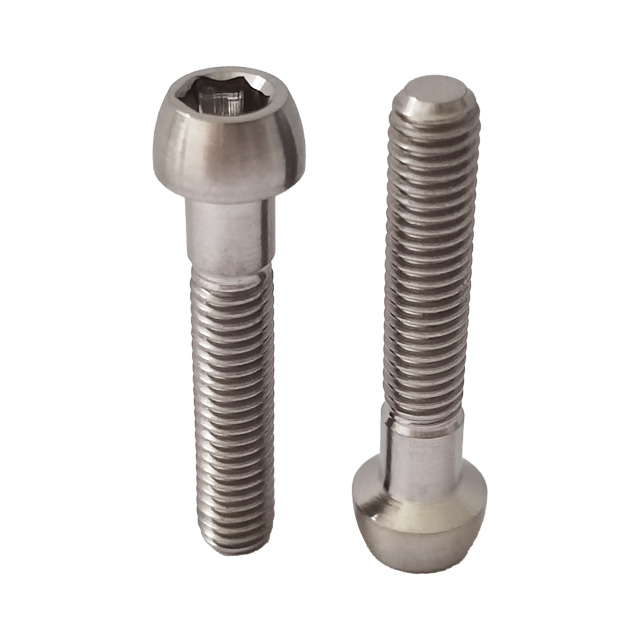
GR5 Titanium Bolts M6*31mm High Strength Tapered Head Hex Socket Bolts Factory Price Conical Head Inner Hex Screws
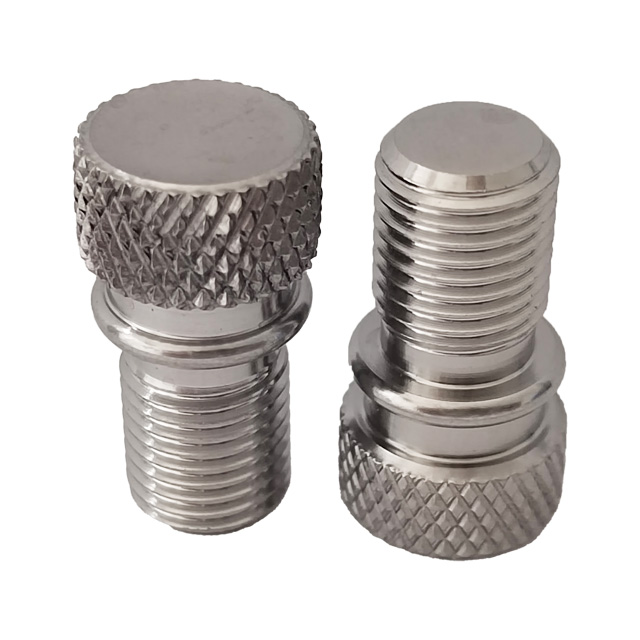
GR5 Titanium Bolts M9*1.0*12mm Hot Sale Cylindrical Head Knurled Bolts Factory Price Hand-Tightening Screws
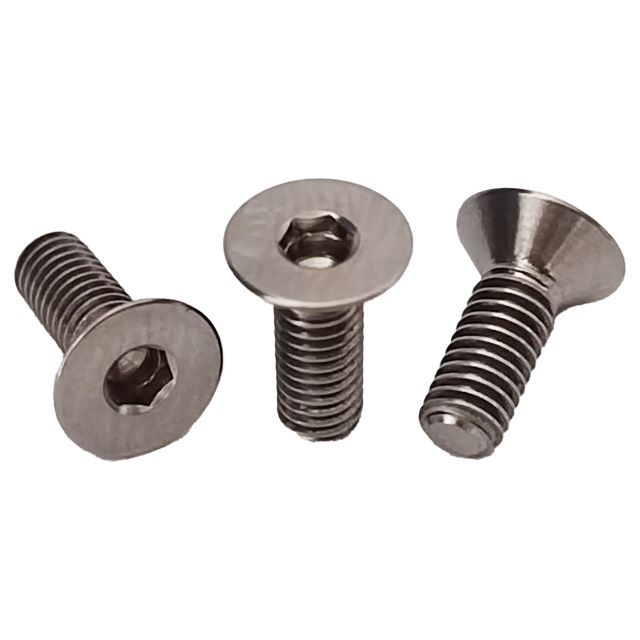
GR5 Titanium Bolts M8*20mm CNC Machined Countersunk Head Hex Socket Bolts Hot Sale Flat Head Allen Screws
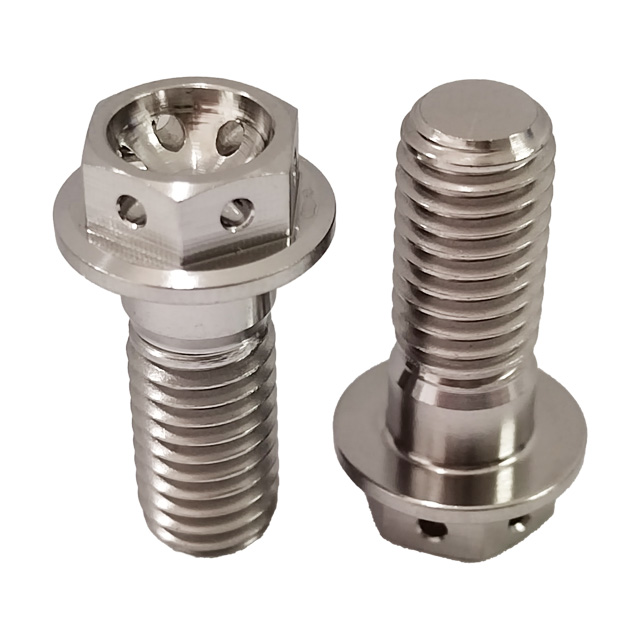
GR5 Titanium Bolts M8*20mm Factory Price Hex Flange Head Drilled Bolts High Quality Flange Head Slotted Screws
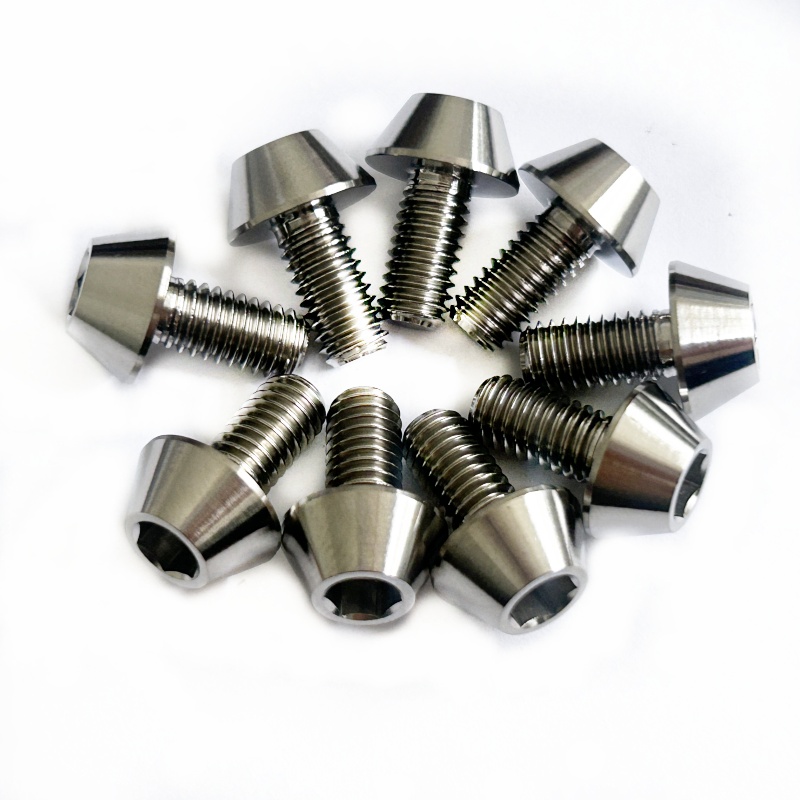
M6*12 Titanium Allen Hex Bolts Umbrella Type Screws Bike Frame Bolt for Bicycles
Structural Metallurgy: Why Grade 5 (Ti-6Al-4V) Dominates Racing Fasteners
In competitive motorsport engineering across the European Union, standard Grade 8.8, 10.9, or even 12.9 carbon alloy steel fasteners impose a severe operational compromise: excessive unsprung rotating mass. In rotational wheel assemblies, mass located furthest from the hub rotational center directly escalates the wheel's polar moment of inertia ($I = \sum m_i r_i^2$). A reduction in fastener weight at the lug interface generates an exponential advantage over simple static chassis lightening, significantly improving shock absorber damping response, transient directional agility, and rotational acceleration.
Grade 5 Titanium (designated under Werkstoff 3.7165, UNS R56400, or ASTM B348 Grade 5) is an alpha-beta duplex alloy containing approximately 6% aluminium and 4% vanadium. This crystalline microstructure yields an ultimate tensile strength exceeding 895 to 1050 MPa and a yield strength surpassing 828 MPa, matching or exceeding structural Grade 10.9 hardened steel bolts while exhibiting a density of only 4.43 g/cm³ compared to steel's 7.85 g/cm³. The resulting strength-to-weight ratio allows racing teams, bespoke wheel rim manufacturers, and chassis tuners in Lithuania to reduce wheel hardware mass by approximately 44% without surrendering clamping force integrity or fatigue endurance under severe cyclic shear loads.
Furthermore, Grade 5 titanium demonstrates outstanding fatigue limits ($S_e$) under dynamic multi-axial loading. Unlike 7075-T6 aluminum alloys—which are prone to cyclic stress corrosion cracking, catastrophic thread stripping, and galling when repeatedly torqued with pneumatic impact guns—Ti-6Al-4V maintains structural elasticity and cyclic fatigue security across tens of thousands of extreme thermal cycles generated by carbon-ceramic or cast-iron racing brake rotors.
Physical & Kinematic Performance Comparison
Empirical metallurgical testing data comparing Navzo Grade 5 Titanium against standard motorsport automotive lug hardware materials.
| Material Specification | Density (g/cm³) | Tensile Strength (MPa) | Yield Strength (MPa) | Modulus of Elasticity (GPa) | Thermal Expansion ($10^{-6}/K$) | Chloride Salt Pit Resistance |
|---|---|---|---|---|---|---|
| Navzo GR5 Titanium (Ti-6Al-4V) | 4.43 | 950 - 1050 | 880 - 920 | 114 | 8.6 | Immune (ASTM B117 >2000 hrs) |
| Class 10.9 Zinc-Plated Carbon Steel | 7.85 | 1040 | 940 | 210 | 11.7 | Poor (Zinc sacrifice <120 hrs) |
| Class 12.9 Alloy Steel (SCM435) | 7.85 | 1220 | 1100 | 210 | 11.2 | Highly Susceptible to Hydrogen Embrittlement |
| 7075-T6 Forged Aerospace Aluminium | 2.81 | 572 | 503 | 71.7 | 23.4 | Moderate (Intergranular Corrosion Risk) |
| A2-70 Austenitic Stainless Steel | 7.90 | 700 | 450 | 193 | 16.0 | Moderate (Prone to Galling & Pitting) |
Localized Application Scenarios Across Lithuania
Engineering wheel lug systems to withstand the precise mechanical stresses of Lithuanian racing circuits, intense winter environmental conditions, and high-performance workshop requirements.
Circuit Racing: Nemuno Žiedas & BaTCC
The iconic 3.35 km Nemuno Žiedas circuit in Kačerginė is notorious for aggressive undulations, rapid high-speed compressions, and extreme lateral loads. During the Baltic Touring Car Championship (BaTCC) and Ring Challenge, braking zones from 200+ km/h generate rotor temps exceeding 700°C. Navzo GR5 titanium wheel nuts prevent thermal expansion seizure while minimizing rotating unsprung mass over technical curbs.
Lithuanian Drift Championship (PRO/Semi-PRO)
Competitive drifting in Vilnius and Klaipėda demands instantaneous direction changes and massive clutch-kick shock loads transmitted through the wheel hub studs and lug nuts. Our rolled-thread titanium lugs provide continuous grain flow along the root radius, preventing catastrophic stud shear under aggressive negative camber settings and ultra-wide spacer conversions.
Sub-Zero Baltic Winter & De-Icing Brine
Lithuania’s transport network relies heavily on chemical de-icers (concentrated sodium chloride and calcium chloride solutions). While standard steel racing hardware rusts rapidly and forged aluminum nuts seize via galvanic corrosion against steel studs, Navzo titanium instantly forms a passive, ceramic-like titanium dioxide ($TiO_2$) protective barrier that remains completely inert against road salt exposure.
Rally Raid & Gravel Stages (Rally Žemaitija)
Lithuanian gravel and forest rallies subject wheel lugs to high-frequency harmonic vibrations and flying gravel impacts. The high notch toughness of Ti-6Al-4V prevents micro-crack propagation caused by stone impingement, providing off-road rally teams with uncompromised wheel clamp retention through continuous washboard gravel stages.
Coastal Humidity at Klaipėda Port Ecosystem
Vehicles operating around Klaipėda face marine atmospheric salinity combined with high ambient humidity. Grade 5 titanium offers zero pit rate corrosion in marine environments, making it the premier choice for coastal Lithuanian motorsport workshops and performance boat trailer axle hubs where traditional plated hardware deteriorates within months.
Performance Tuning Hubs: Vilnius, Kaunas & Šiauliai
Lithuania is an established engineering hub for custom turbo builds, European hillclimb vehicles, and high-end track prep. Navzo acts as a Tier-1 OEM/ODM partner to Lithuanian motorsport prep shops, delivering custom 60-degree conical, ball seat, or flat mag seat lug nuts with laser-engraved shop branding and custom PVD coloration.
Lithuanian Automotive & Engineering Market Trends
Critical macroeconomic and industrial shifts driving titanium fastener procurement within the Baltic region.
Electric Vehicle Light-Weighting
As Lithuanian engineers develop high-performance EV builds and retrofits, heavy battery packs place pressure on unsprung components. Substituting titanium lug nuts allows workshops to claw back crucial grams from hubs, optimizing regenerative braking dynamics and maximizing battery range.
Phase-Out of Fragile 7075 Lugs
European vehicle inspection authorities and Lithuanian technical scrutiny committees are increasingly questioning soft aluminum racing wheel nuts due to stripped thread hazards during roadside emergencies. Ti-6Al-4V provides the ultimate compliant alternative: steel-level tensile capacity with lightweight properties.
Custom CNC & Restomod Culture
Lithuania hosts an expanding community of classic sports car restorers (Porsche 911, BMW E30 M3, Audi Quattro). Restomod engineers require exact historical thread specifications (such as M12x1.5 and M14x1.25) with modern aerospace metallurgical safety margins.
Direct EU-China Trade Logistics
Lithuanian engineering importers leverage simplified EU import customs declarations via Vilnius International Airport (VNO) air freight and Klaipėda sea terminals. Direct manufacturer sourcing from Baoji bypasses Western European middleman markups of 200–300%.
Navzo Precision Titanium: Baoji Direct Advantage
Established on January 10, 2011, in Baoji, Shaanxi—China’s world-renowned Titanium Valley—Navzo Precision Titanium Products Co., Ltd. controls the complete vertical processing chain from raw sponge ingot to precision finished components.
Integrated Engineering & Quality Control Protocols
Baoji produces the dominant share of high-grade titanium bar stock in China. Operating directly at this industrial source allows Navzo to procure 100% spectroscopically verified Ti-6Al-4V bar directly from primary melt facilities, eliminating intermediate material markup and counterfeit non-grade alloys. Every production heat is traceable via EN 10204 Type 3.1 Mill Test Reports (MTRs), confirming exact chemical composition (Ti base, 5.5-6.75% Al, 3.5-4.5% V, Fe < 0.3%, O < 0.2%).
Our production line incorporates high-speed multi-axis CNC turn-mill machining centers, automated hot-die forge tooling, and specialized thread-rolling equipment. Crucially, Navzo wheel lug nuts and studs feature rolled threads rather than cut threads. Cold and warm thread rolling preserves the longitudinal crystal grain flow through the thread root rather than severing it, yielding a 30% higher cyclic fatigue threshold and virtually eliminating catastrophic thread shearing under torque wrench impacts.
Before packing for Baltic dispatch, each lot undergoes optical profile projector verification, thread pitch diameter go/no-go plug testing (6H tolerance class standard), tensile fracture verification, and automated automated optical inspection for surface imperfections.
Frequently Asked Questions by Lithuanian Importers
Answers to common commercial, metallurgical, and customs questions from procurement teams in Vilnius, Kaunas, and Klaipėda.
What is the import duty and TARIC classification for titanium lug nuts in Lithuania?
Titanium fasteners exported to the Republic of Lithuania are classified under EU TARIC / Harmonized System code 8108.90.00 (Articles of titanium). Importers holding a valid European EORI number pay the standard European customs duty (typically 3.7% to 7% depending on specific fastener configuration) plus Lithuanian national Value Added Tax (PVM at 21%). Navzo supplies standard commercial invoices, packing lists, and Certificates of Origin to expedite customs clearance through Vilnius Customs or Klaipėda Port.
What torque values should be applied to GR5 titanium wheel nuts on track cars?
Because titanium has a different friction coefficient ($\mu$) compared to zinc-coated steel, applying standard steel dry torque can over-stretch threads. We recommend applying a light coating of copper-free synthetic anti-seize or molybdenum-disulfide paste to the threads and seat face. With lubrication, a target torque of 110–120 Nm is typical for M12x1.25/1.5 fasteners, and 135–145 Nm for M14x1.25/1.5 applications. Always re-torque after the initial 50 km track break-in heat cycle.
Will Grade 5 titanium cause galvanic corrosion when fitted to forged aluminum racing rims?
Titanium has a relatively noble galvanic potential (-0.05V vs SCE) compared to structural aluminum alloys (-0.75V). In the presence of harsh Baltic winter de-icing electrolytes, theoretical micro-galvanic transfer can occur if metal surfaces are mounted dry. However, using our specialized PVD (Physical Vapor Deposition) coated titanium hardware or applying a micro-thin layer of fluoropolymer paste completely isolates the metals, preventing seizing or seat pitting.
What is the minimum order quantity (MOQ) for custom CNC-machined wheel lugs?
For standard catalog sizes (M12x1.25, M12x1.5, M14x1.25, M14x1.5 in 60° conical taper or ball seat radius), our MOQ is 100 to 200 pieces, accommodating small team orders or boutique retail stocking. For bespoke dimensions, custom drive patterns (spline, 12-point star, or security key), or custom laser-etched tuning shop logos, custom batches start at 300 pieces with full 2D/3D CAD engineering approval prior to tooling.
Can Navzo supply EN 10204 3.1 inspection certificates with shipment?
Yes. Every commercial shipment to Lithuania is backed by an authentic EN 10204 Type 3.1 inspection certificate issued by accredited laboratory inspection teams in Baoji. This documentation provides heat-specific chemical spectrometry (Al, V, Fe, C, N, H, O content) and physical tensile test yields, ensuring compliance with FIA or Lithuanian Automotive Sport Federation (LASF) technical regulations.
What surface treatment finishes are best suited for high-abrasion wheel applications?
While electrochemical anodizing provides a variety of aesthetic colors (burnt blue, gold, purple, green), Physical Vapor Deposition (PVD) is recommended for wheel lug nuts subjected to high-impact sockets. PVD deposits a hard titanium nitride (TiN) or diamond-like carbon (DLC) surface layer measuring several microns thick, delivering high resistance to impact chipping, socket scratching, and aggressive wheel-cleaning chemicals.
Accelerate Your Baltic Motorsport Supply Chain
Partner directly with Baoji’s premier precision titanium fastener manufacturer. Send us your project drawing, dimensional specification sheet, or sample request for quotation within 1 hour.
Send an Inquiry