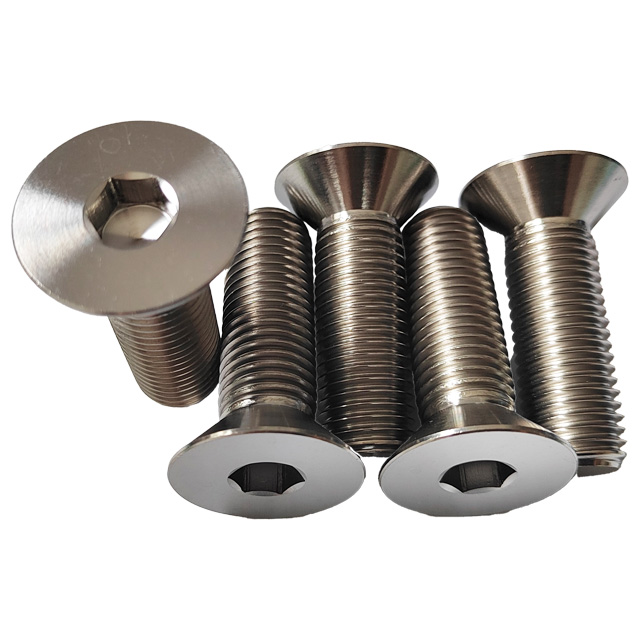
Engineered Titanium Drive & Sprocket Fasteners
Direct from Baoji Titanium Valley: Cold-forged, precision CNC threaded, and optimized for extreme shear loads in motorcycle transmissions, go-karts, and industrial drives.
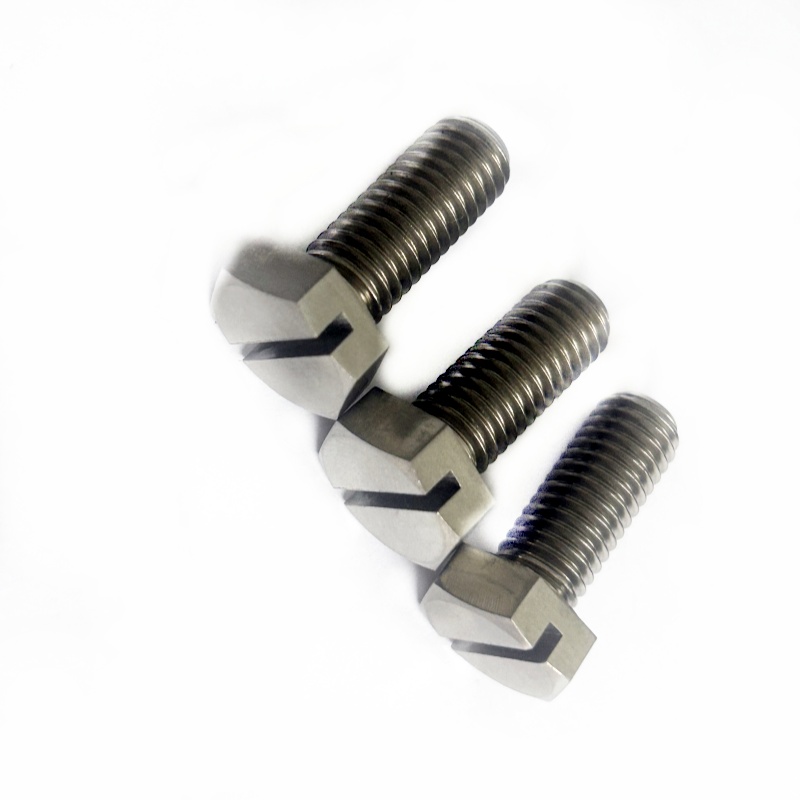
OEM Made High Precision CNC Machined Titanium Slotted Hexagonal Head Screw
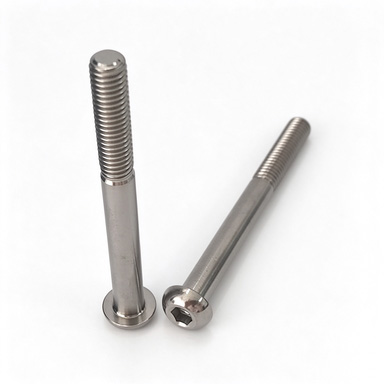
GR5 Titanium Bolts M6*70mm Factory Price Button Head Inner Hex Bolts Lightweight Half-Round Head Hex Socket Screws
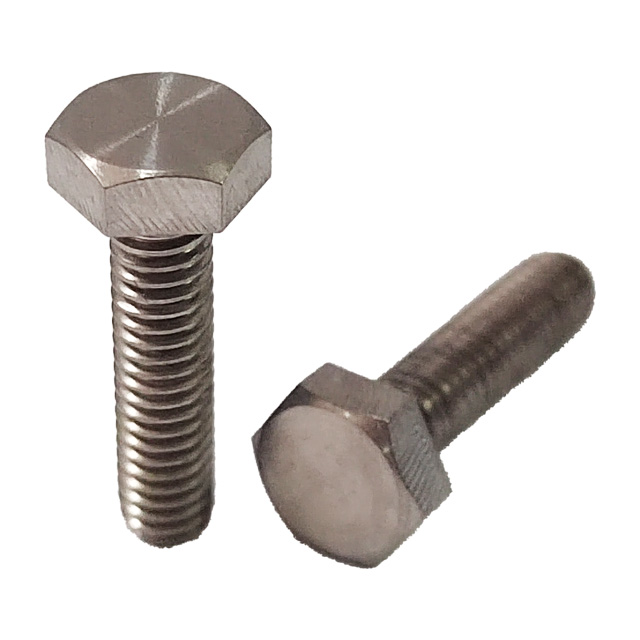
GR5 Titanium Bolts M4*15mm Factory Price Hexagon Head Full Thread Bolts High Strength Flat Head Screws
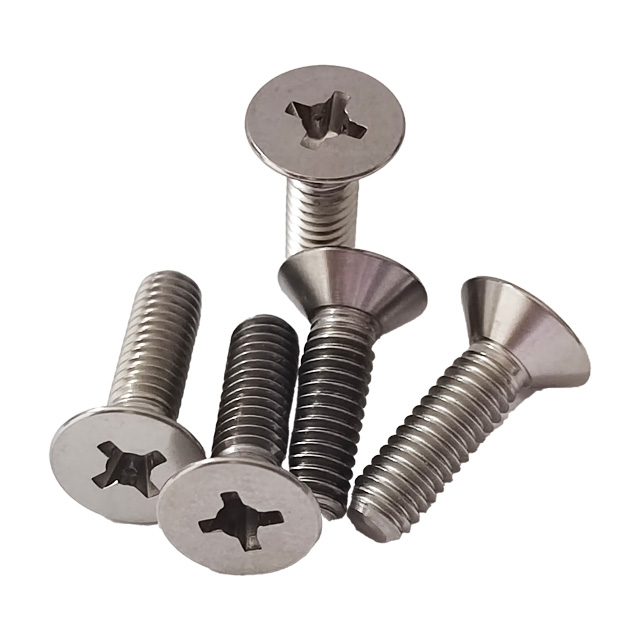
GR5 Titanium Bolts M8*20mm Factory Price Countersunk Head Cross Bolts High Quality Flat Head Phillips Screws
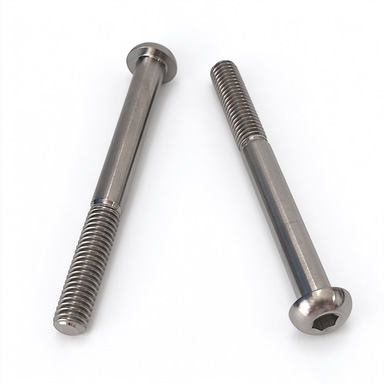
GR5 Titanium Bolts M6*60mm Factory Price Button Head Hex Socket Bolts High Quality Semi-Round Head Allen Screws
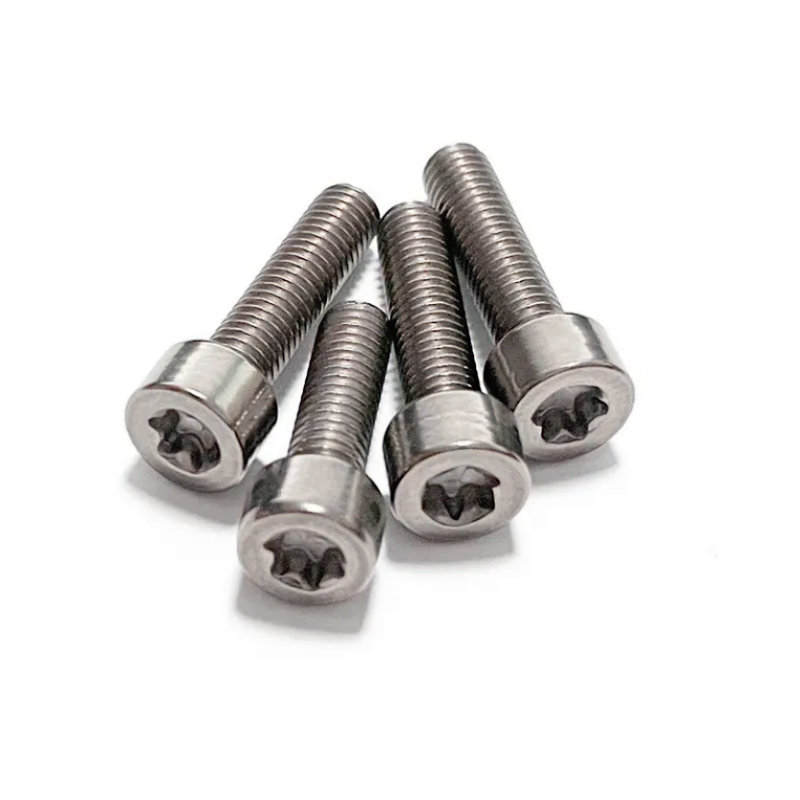
Gr5 Titanium Screws Titanium T30 Torx Bolts for Motorcycle
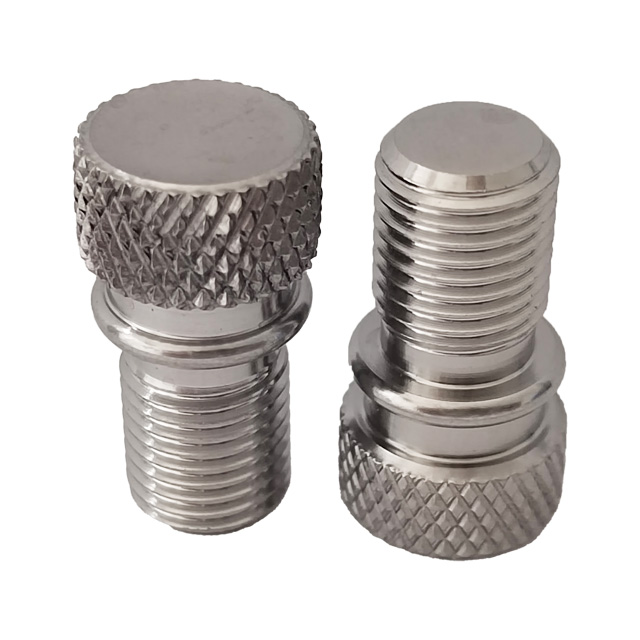
GR5 Titanium Bolts M9*1.0*12mm Hot Sale Cylindrical Head Knurled Bolts Factory Price Hand-Tightening Screws
45%
Unsprung Mass Reduction
950+
Tensile Strength (MPa)
≤1h
RFQ Engineering Response
100%
Baoji Mill-Certified GR5 Lot
Executive Technical Whitepaper: Precision Sprocket Fasteners for Dortmund's Heavy Mechanical & Motorsport Clusters
As the industrial transformation of North Rhine-Westphalia (NRW) pivots heavily from legacy mining infrastructure toward advanced automated logistics, high-precision robotics, e-mobility drives, and professional motorsport tuning, fastener specifications have faced unprecedented mechanical scrutiny. Dortmund sits strategically at the epicenter of the Ruhr metropolitan economic belt. In this demanding operational setting, drive systems are subjected to aggressive cyclic fatigue, rapid directional shifts, dynamic torque spikes, and exposure to corrosive outdoor and washdown chemical environments.
For decades, European machine builders and motorsport engineers defaulted to DIN 931 or DIN 6921 Grade 8.8 or Grade 10.9 zinc-plated carbon steel bolts. While offering baseline tensile endurance, steel components penalize modern assemblies with prohibitive rotational weight—directly increasing rotational inertia across drive shafts, final sprocket carriers, and hubs. Navzo Precision Titanium (Baoji, China) supplies aerospace-certified Grade 5 (Ti-6Al-4V) titanium sprocket bolts designed specifically to address this inertia-to-strength bottleneck.
By substituting standard steel hardware with cold-forged and precision CNC-turned GR5 titanium bolts, Dortmund engineers and equipment fabricators routinely extract up to a 42% to 45% reduction in unsprung rotational weight without forfeiting structural rigidity. With a minimum tensile yield exceeding 828 MPa and an ultimate tensile threshold reaching over 950 MPa, our bolts ensure zero thread deformation during sudden acceleration cycles, hard engine braking, or prolonged continuous multi-axis robotic movements.
| Performance Criterion | Navzo Ti-6Al-4V (Grade 5) | AISI 304 / A2-70 Stainless | High-Tensile Steel 10.9 |
|---|---|---|---|
| Density (g/cm³) | 4.43 (Super Light) | 7.93 (Heavy) | 7.85 (Heavy) |
| Tensile Strength (MPa) | 895 – 1000 | 700 | 1000 – 1040 |
| Yield Strength (0.2% offset, MPa) | 828 – 910 | 450 | 900 – 940 |
| Rotational Inertia Penalty | Negligible / Optimized | Baseline High (+78%) | Baseline High (+77%) |
| Corrosion in Salt / De-icing Runoff | Immune (Stable TiO₂ Passive Layer) | Susceptible to Crevice Attack | Rapid Rust if Plating Chipped |
| Thread Forming Technology | Hot/Cold Forged & Rolled Threads | Cut / Thread Rolled | Thread Rolled & Quenched |
Dortmund Application Scenarios: Delivering Structural Information Gain to Regional Engineers
Engineering procurement managers in the greater Dortmund, Witten, and Bochum sectors balance strict German TÜV/CE engineering tolerances with high-velocity supply chain requirements. Below are the core localized domains where Navzo’s titanium sprocket fasteners generate verified mechanical value:
Superbike & Enduro Sprocket Assemblies
NRW boasts a dense network of racing tracks and motorcycle tuning garages. When tuning rear sprockets (M8 and M10 pitches), reducing rotational inertia directly translates into crisper throttle response and improved suspension rebound efficiency over demanding terrain.
Automated Guided Vehicles (AGV) & Intralogistics
Dortmund is a recognized European intralogistics tech hub. Lightweighting the high-frequency drive hubs of automated sortation shuttles reduces motor amp-draw, lowering battery discharge rates and extending 24/7 operating cycles inside multi-tier distribution warehouses.
High-Performance E-Bike & Pedelec Transmissions
With aggressive European green transport mandates, Dortmund’s active mobility sector requires mid-drive motor sprockets and belt-drive pulleys engineered with GR5 countersunk and Torx fasteners that completely eliminate galvanic corrosion against carbon composite or 7075 alloy carriers.
Macro Trends: The Shift Toward Titanium Fasteners Across North Rhine-Westphalia
Historically, titanium was viewed within German engineering workshops solely as an exotic material limited to aerospace airframes or tier-1 Formula racing. However, over the past five years, systemic trends have made Baoji-manufactured titanium drive hardware standard protocol throughout North Rhine-Westphalia:
1. Demands for Lower Lifecycle Maintenance (TCO): Traditional steel bolts, even with chromate or cadmium passivation, inevitably oxidize when exposed to salt-treated German winter highways or aggressive alkaline cleaning solutions. Titanium’s naturally forming, self-healing oxide stratum (TiO₂) renders sprocket mountings impervious to electrolytic degradation, eliminating stripped heads and seized bolts during rapid trackside or shop changes.
2. Tight Tolerance Rolling vs. Machined Cut Threads: Modern European buyers actively avoid low-grade thread-cut titanium screws. In cut threads, micro-cracks form along the root radius, which initiate shear failure under high dynamic torque. Navzo utilizes CNC hot-heading followed by precision thread rolling dies. This compacts the grain structure continuously around the root and crest, delivering unmatched fatigue life under sudden rev-limit shifts.
3. Transparent Direct-to-Factory Procurement: German purchasing managers increasingly bypass intermediary European trading layers that artificially inflate markups by 300%. Sourcing direct from Baoji with ISO/EN 10204 3.1 chemical and mechanical inspection certificates provides German enterprises both economic viability and verifiable audit compliance.
Why Global Wholesalers & German OEMs Choose Navzo Precision Titanium
Located on Yucai Road within the National High-tech Development Zone of Baoji, Shaanxi, China—globally acknowledged as "China Titanium Valley"—Navzo Precision Titanium Products Co., Ltd. (founded January 10, 2011) represents a seamless bridge between raw mineral refining and aerospace-grade mechanical finishing.
Traceable Baoji Ti-Sponge Stock
We source certified titanium sponge and double-melt vacuum arc remelted (VAR) ingots directly from regional Baoji mills. Every batch of M6–M12 sprocket hardware ships with verified Mill Test Certificates (MTC).
Full-Spectrum CNC & Surface Cell
Our internal ecosystem integrates multi-axis CNC swiss turning, precision thread rolling, hot heading, and advanced surface finishing—including physical vapor deposition (PVD), burnt blue heat treating, and high-voltage anodizing.
European Fast-Track Logistics
Navzo maintains dedicated export air and sea channels directly to Frankfurt and Hamburg logistics hubs with rapid DDP / DAP delivery to Dortmund, supported by a 1-hour engineering response time for drawings (STEP, DWG, PDF).
Frequently Asked Questions: Technical Sourcing for Dortmund Procurement Teams
What torque values should be used when mounting titanium sprocket bolts onto aluminum hubs?
Because Grade 5 (Ti-6Al-4V) titanium has an elasticity modulus (approximately 114 GPa) lower than steel (210 GPa), torque friction coefficients differ. When mounting onto 6061-T6 or 7075-T6 billet aluminum sprocket carriers, we recommend using a molybdenum disulfide or copper-based anti-seize lubricant and torquing to approximately 80–85% of standard 10.9 steel specifications. This avoids thread galling and prevents thread pullout in softer aluminum female interfaces.
Are Navzo titanium bolts compatible with DIN 6921 and ISO 7380 engineering standards?
Yes. All our production dimensions, shank diameters, flange radiuses, and hex/Torx drive recesses adhere rigorously to DIN 912, DIN 6921, ISO 7380, and ISO 14583 specifications. We also accommodate custom pitch requirements (e.g., M10x1.0 vs standard M10x1.25 or M10x1.5) and cross-drilled safety-wire heads commonly demanded by German motorsport scrutinizers.
How does Navzo mitigate galvanic corrosion between titanium and adjoining carbon fiber swingarms or frames?
Titanium is electrochemically noble and exceptionally compatible with carbon fiber, presenting virtually zero risk of galvanic degradation (unlike aluminum or unplated zinc-coated steel when paired with carbon matrices). For high-moisture road applications in Dortmund, our optional PVD black coating or proprietary electrochemical anodization provides an extra insulating ceramic micro-barrier.
What quality verification documentation accompanies export shipments into Germany?
Every shipment is backed by an EN 10204 Type 3.1 Material Test Report documenting the precise spectroscopic chemical breakdown (Ti, Al, V, Fe, C, N, H, O) along with elongation, tensile, and yield test parameters. Full dimensional inspection logs checked via optical comparators and thread go/no-go plug gauges are included standard.
What are your typical prototype and production batch turnaround times for NRW importers?
For standard catalogue sprocket configurations (M6, M8, M10 lengths 20mm–70mm), stock items dispatch within 48–72 hours via DHL Express or FedEx Air, reaching Dortmund warehouses in 4–6 business days. Custom CNC engineered blueprints typically require 10–12 days for tooling setup, first-article inspection (FAI), and pilot production.