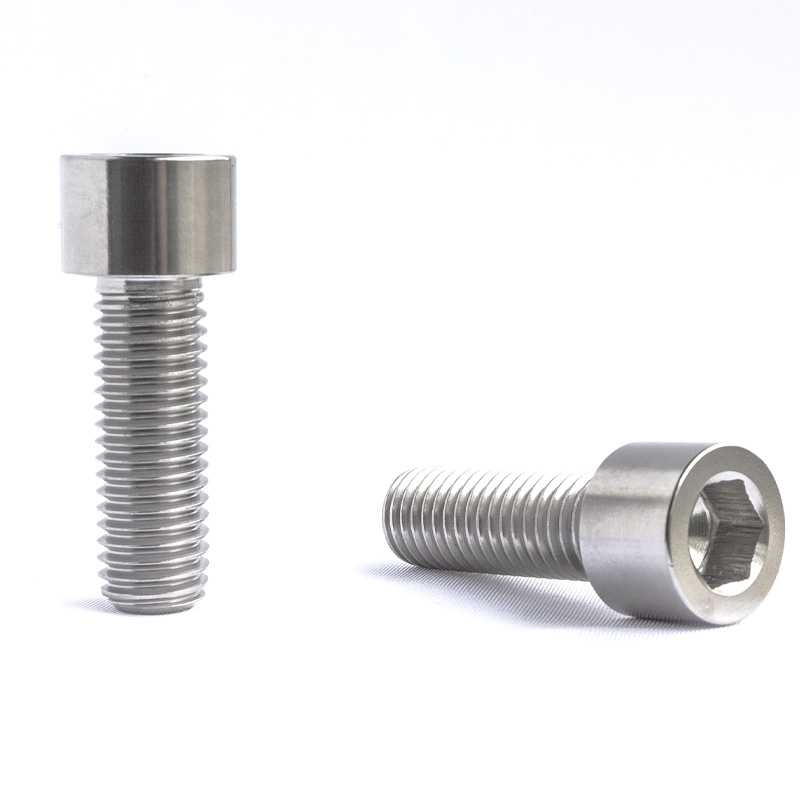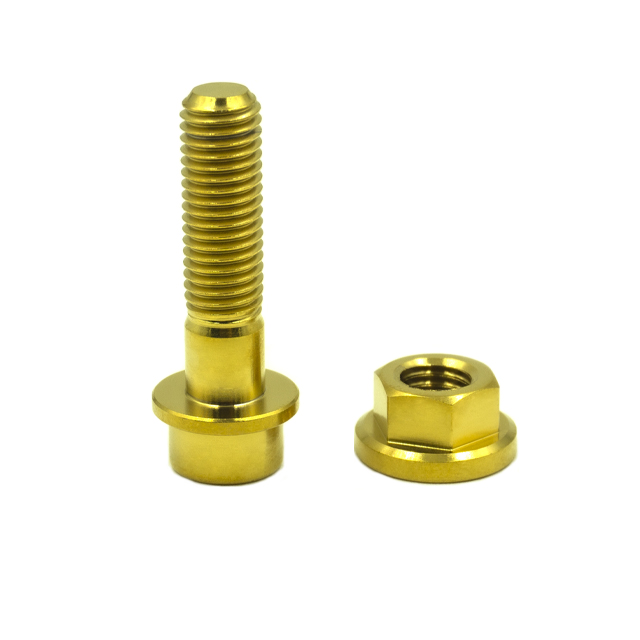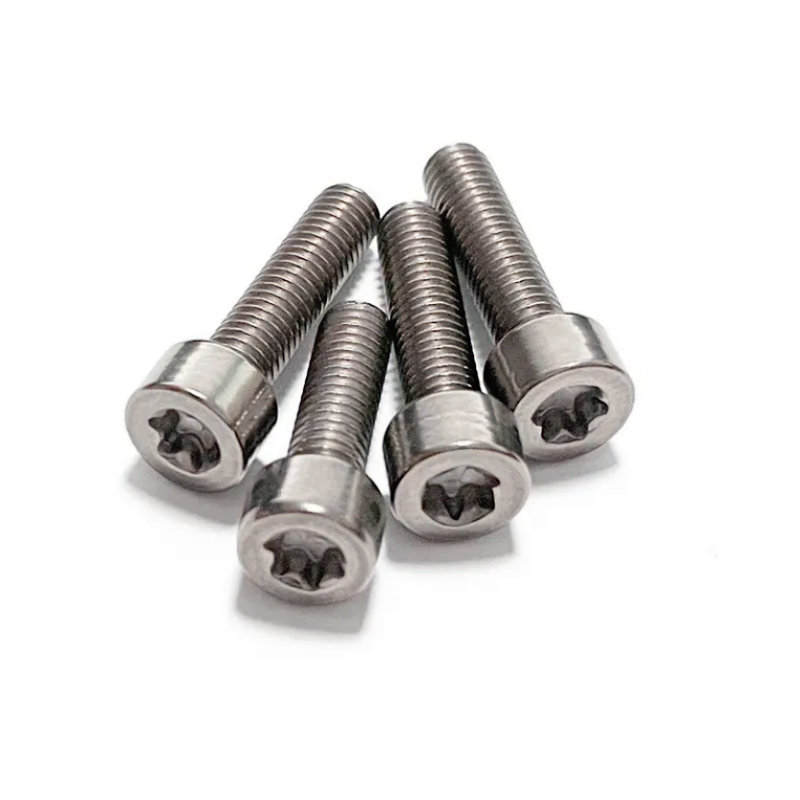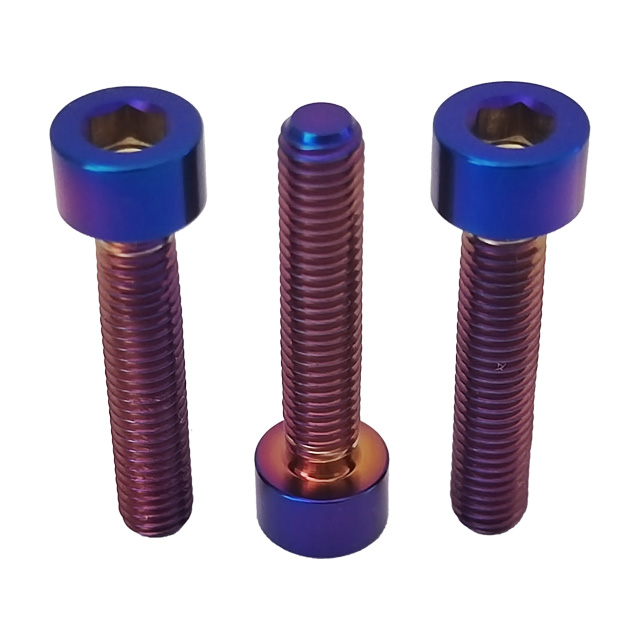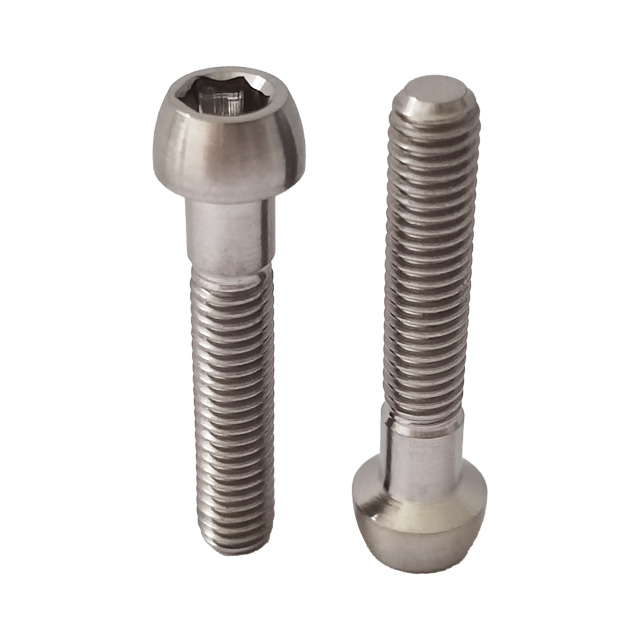
Manufactured under strict ISO 9001 and CE frameworks from certified aerospace-grade Baoji titanium stock. Cold-headed and roll-threaded for maximum fatigue resilience under dynamic load.
Positioned at the epicentre of China’s titanium production cluster in Baoji, Shaanxi, Navzo combines continuous raw ingot supply with precision Swiss-type CNC lathing and cold forming.
We forge our fasteners exclusively from certified aircraft-grade titanium billets. Full chemical composition analysis and EN 10204 3.1 Mill Test Certificates accompany all commercial lots delivered into the European common market.
Unlike cut threads that tear internal metal grains, Navzo cold-rolls bolt threads after header die forming. This continuous uninterrupted grain boundary boosts cycle-to-failure resistance by over 300% under high-frequency track vibration.
Operating multi-axis sliding head turning centres, we manufacture non-standard shank clearances, captive lock-washer recesses, 12-point heads, and custom weight-saving core drillings according to STEP/DWG drawings supplied by German client teams.
The Düsseldorf-Cologne-Essen metropolitan corridor represents Europe’s most demanding automotive supply chain nexus. From rapid transit engineering along the Rhine to GT3 teams testing at the nearby Nürburgring Nordschleife, lightweighting demands uncompromising mechanical integrity.
Unsprung weight reduction around wheel hubs, brake disc bells, and caliper adapters directly sharpens damper response and rotational inertia. Substituting Grade 8.8 or 10.9 steel with Navzo GR5 bolts shaves 42% of mass while exceeding yield limits required through Pflanzgarten crests and Karussell g-loads.
Battery packs in modern luxury EVs add significant curb mass, requiring powertrain and suspension engineers to compensate gram by gram. Titanium fasteners exhibit non-magnetic properties, galvanic compatibility with carbon composite brackets, and superior chemical resistance to winter de-icing salts used on Autobahn networks.
With localized thermal cycles exceeding 600°C, commercial stainless bolts often gall, stretch, or oxidize, making maintenance impossible. Our titanium stud-and-nut assemblies preserve clamping preload without metallurgical embrittlement, eliminating blown gasket risks during sustained top-speed Autobahn sprints.
| Alloy & Fastener Grade | Density (ρ g/cm³) | Tensile Strength Rm (MPa) | Yield Strength Rp0.2 (MPa) | Thermal Expansion (×10⁻⁶/K) | Chloride Stress Corrosion |
|---|---|---|---|---|---|
| Navzo GR5 Titanium (Ti-6Al-4V) | 4.43 | 950 – 1050 | 880 – 920 | 8.6 | Immune (Ambient & Road Salt) |
| High-Tensile Steel (Class 10.9) | 7.85 | 1000 – 1040 | 900 – 940 | 11.7 | High Vulnerability (Rusts rapidly) |
| Austenitic Stainless (A2-70 / 304) | 7.93 | 700 – 800 | 450 – 500 | 16.0 | Prone to Pitting & Crevice Galling |
| Structural Aluminum (7075-T6) | 2.81 | 530 – 570 | 460 – 500 | 23.4 | Prone to Exfoliation Corrosion |
Procurement departments in Düsseldorf, Krefeld, and Wuppertal are reshaping supply networks to address stringent EU supply chain compliance and performance demands.
German purchasers are reducing intermediary broker markups by contracting directly with certified mills in Baoji. Navzo provides full material test records (MTRs) and direct logistics to Frankfurt CargoCity and Düsseldorf International, cutting procurement cycles from months to under 12 working days for custom runs.
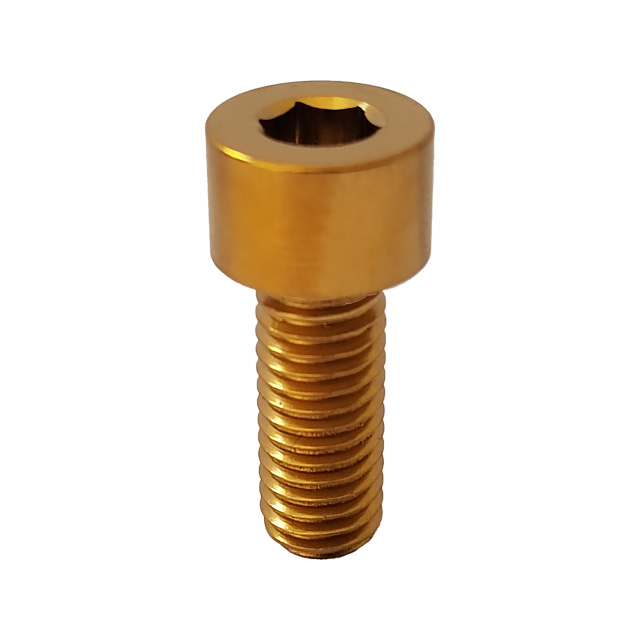
While traditional electrochemical anodizing provides brilliant custom cosmetic highlights, the Düsseldorf performance segment is standardizing on Diamond-Like Carbon (DLC) and PVD coatings. These deposit an ultra-thin 2–4 μm titanium nitride or carbon layer, achieving surface hardnesses exceeding 2400 HV for repeated pneumatic torque gun applications.
Specialist custom vehicle builders (Einzelbetriebserlaubnis) and tuning houses require unambiguous mechanical certification. Navzo tests each production batch for proof load, elongation (≥10%), and charpy impact values, facilitating structural calculations required by German automotive technical inspection entities.
Concise answers to common technical, material compatibility, and logistical questions from Düsseldorf and wider DACH-region purchasers.
While titanium is chemically noble, galvanic potential differences with aluminum in salt-spray conditions require preventative engineering. We supply anti-galling conductive paste (nickel or PTFE-based) and offer specialized micro-arc oxidation (MAO) or organic isolating washers to eliminate electrical circuit continuity between dissimilar alloys.
Because Grade 5 Titanium exhibits an elastic modulus of ~114 GPa (versus ~210 GPa for steel), elongation under identical clamp load is roughly double. We recommend utilizing our calibrated torque-angle tables or reducing initial torque by 15–20% when using high-pressure molybdenum anti-seize lubricants.
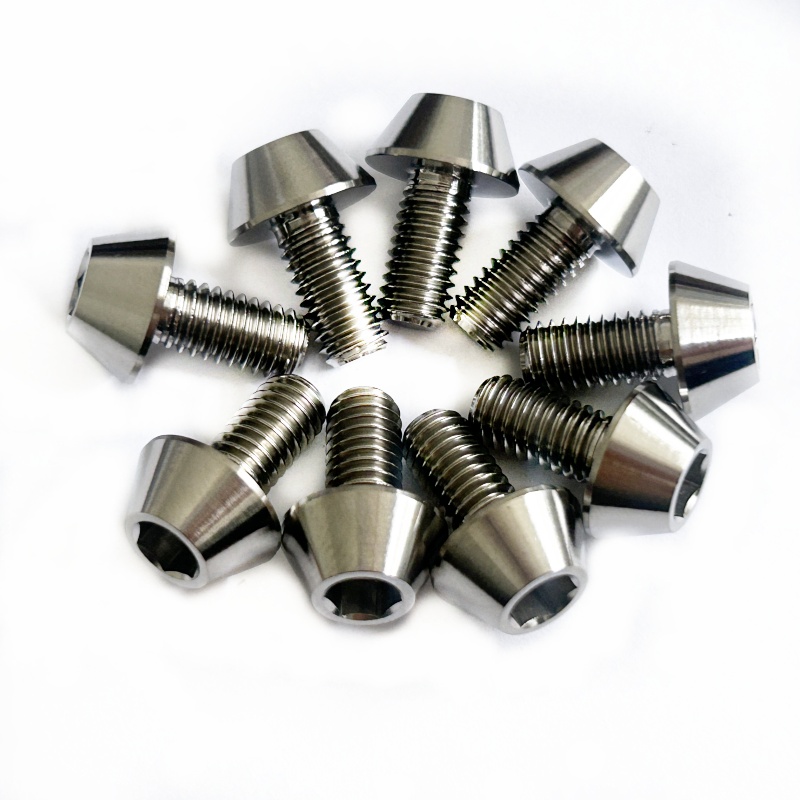
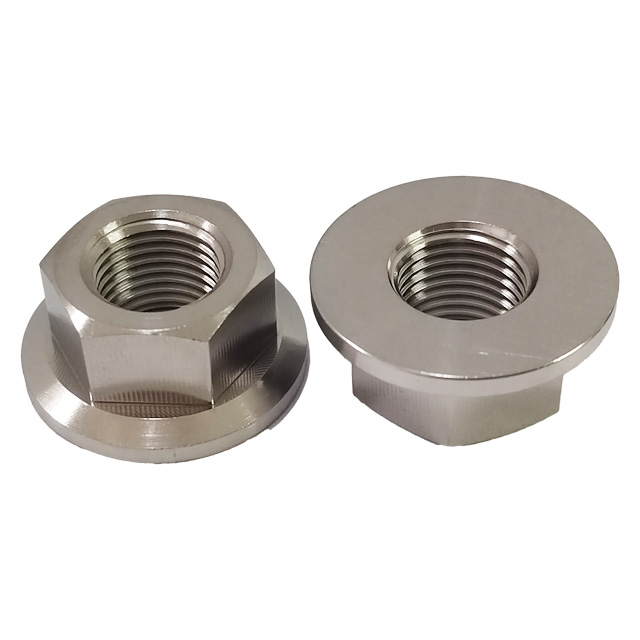
Yes. We routinely roll-thread European metric fine pitches (Feingewinde) in both DIN 912 socket configurations, DIN 6921 flange styles, and bespoke tapered conical seats for wheel nut studs. All tooling dies comply with ISO 965-2 internal/external fitment rules.
Standard export paperwork includes CE declaration dossiers, commercial invoices with HS code 8108.90 (Titanium articles), Packing Lists, and EN 10204 type 3.1 chemical-mechanical test certificates verifying chemical element boundaries (Ti, Al, V, Fe, C, N, H, O).
Beyond standard DIN/ISO items, our Baoji manufacturing complex houses continuous high-precision turning centers to convert bespoke OEM CAD models into structural realities.
Engineering customized M7 and M8 spline, 12-point, and Torx hardware specifically for classic restoration, forged wheel manufacture, and high-offset racing assemblies. Titanium hardware ensures balanced perimeter weight distribution across rim lips.
Integrated shoulder bolts and eccentric alignment bolts produced with tightened tolerances of ±0.008 mm. Titanium’s natural flexibility allows absorption of shock loads without ductile fracture or elongation permanent set.
Navzo engineers evaluate European prototype runs within 48 hours of drawing receipt. Prototype sample batches are routed through production within 5–7 days, backed by 3D optical coordinate measuring (CMM) inspection.
Access comprehensive CAD dimensions, shear-tensile testing reports, tightening torque guidelines, and wholesale volume pricing for the German and EU markets.