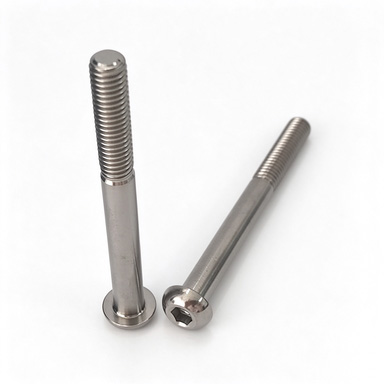
GR5 Titanium Bolts M6*70mm Button Head Inner Hex Bolts
Standard: ISO 7380 / Button Head
Grade: Ti-6Al-4V (Class 5)
Finish: Micro-Polished / Anodized
Precision CNC turned, cold forged, and thread-rolled fasteners. Engineered for immediate integration into demanding Nordic mechanical assemblies, medical fixtures, and high-performance racing platforms.
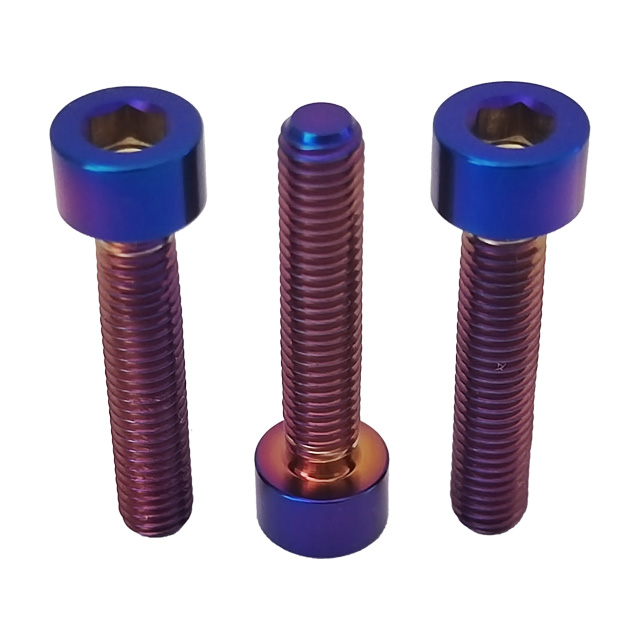
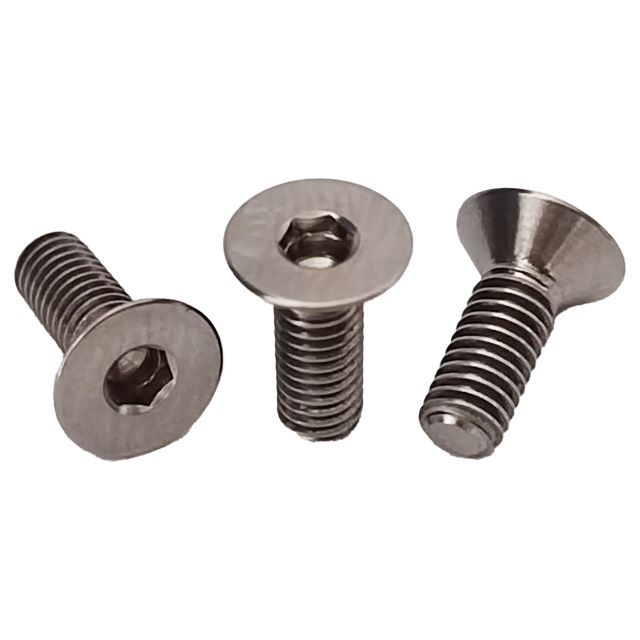
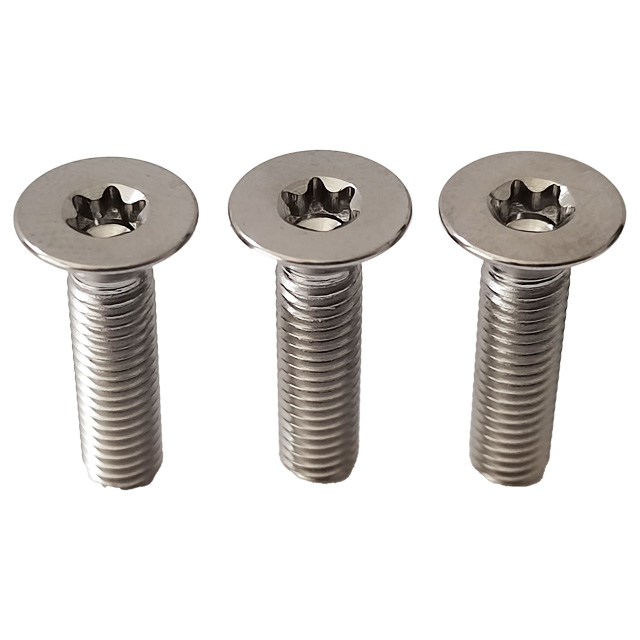
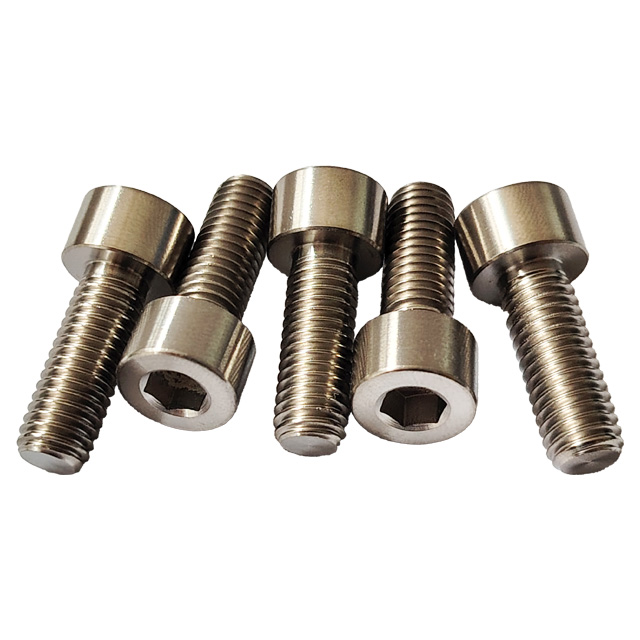
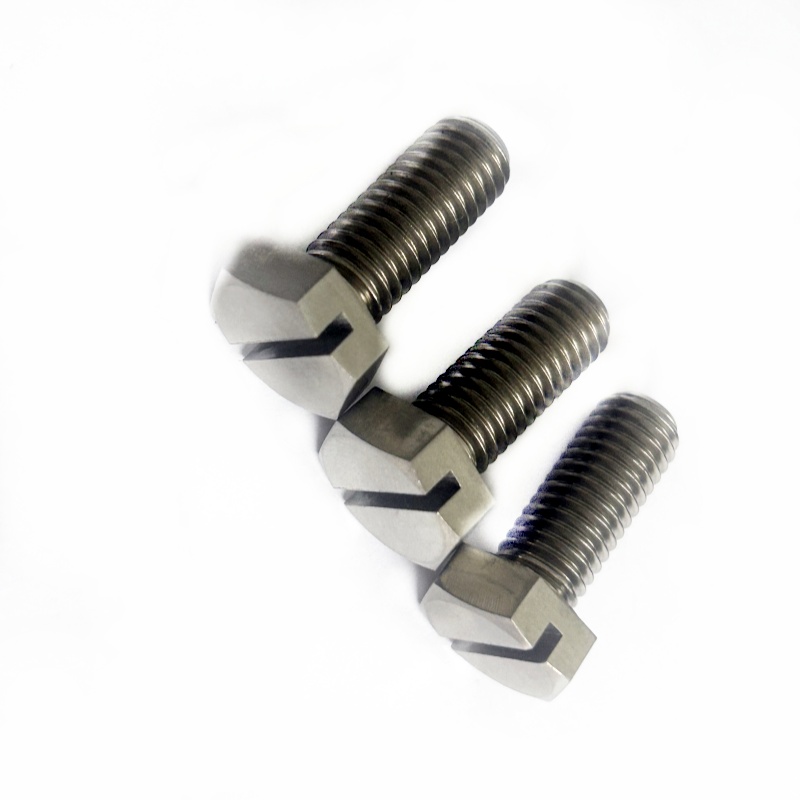
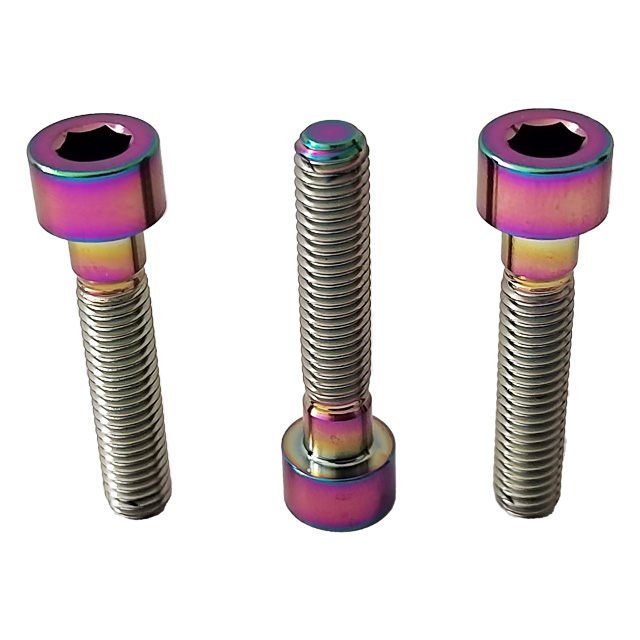
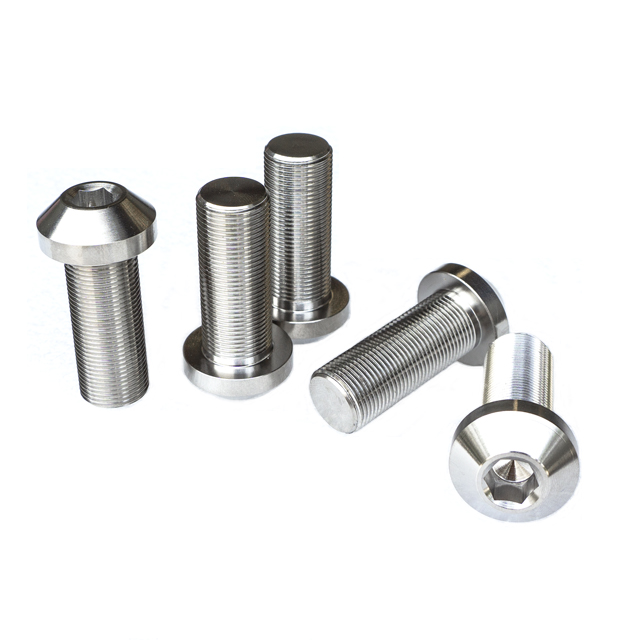
In high-stakes mechanical assemblies across Uppsala County, from cleanroom biomedical automation to ultra-high vacuum physics apparatus, standard stainless steel fasteners (such as A2-70 or A4-80) frequently impose weight penalties and risk localized pitting in chloride-bearing environments. Grade 5 Titanium (Ti-6Al-4V, UNS R56400) represents an optimal alpha-beta alloy solution, featuring an outstanding specific strength-to-weight ratio with a density of 4.43 g/cm³—roughly 44% lighter than austenitic stainless steels while yielding significantly higher mechanical load tolerances.
The anodic oxidation process engineered at Navzo utilizes electrochemical cell passivation to develop a strictly regulated titanium dioxide (TiO₂) dielectric barrier. Unlike pigmented paints, organic dyes, or traditional plating techniques that are susceptible to chipping and micro-particulate shedding under mechanical stress, Type II and Type III titanium anodizing modifies the surface crystallographic optical thickness at the nanometer scale. Specific hues (ranging from spectrum yellow and burn-blue to royal purple and vibrant green) are achieved entirely through destructive and constructive optical wave interference. This provides three direct mechanical benefits for Swedish equipment manufacturers: total chemical inertness in hostile analytical reagents, permanent color-coded bolt identification for assembly lines, and enhanced micro-surface passivation preventing premature atmospheric oxidation.
Furthermore, our cold-heading and CNC multi-axis machining workflows preserve thread root continuity. Rolled threads produce cold-worked grain lines parallel to the tensile stress axis, boosting fatigue resistance up to 35% compared to cut threads—a vital characteristic for dynamic, cyclic, or vibrational loading conditions in Scandinavian motorsport and automation robotics.
Uppsala stands as one of Northern Europe’s foremost hubs for biotechnology, material sciences, and innovative manufacturing. Here is how our anodized GR5 fasteners fulfill the exacting criteria of local engineering clusters.
Within Uppsala’s extensive biomedical park and chromatography instrumentation facilities, fasteners are frequently subjected to chemical sanitizers, buffer solutions, and rigorous washdowns. Anodized Ti-6Al-4V fasteners deliver non-leaching, biocompatible, non-magnetic performance, avoiding metallic ion contamination in ultra-sensitive chromatography columns and automated bioprocessing vessels.
In close synergy with institutions such as the Ångström Laboratory and European particle research networks, our titanium socket head screws operate seamlessly under cryogenic temperatures down to -196°C and ultra-high vacuum (UHV) conditions without ductile-to-brittle transition failures or outgassing risks associated with cadmium or zinc plated fasteners.
Swedish industrial policy prioritizes electrification and circular sustainability. By swapping chassis, battery pack enclosures, and suspension hardware to Grade 5 titanium bolts, automotive engineers in the Uppsala-Stockholm corridor strip essential sprung and unsprung weight, extending battery range and lowering system inertia while maintaining structural crash-worthiness.
Uppsala’s passionate gravel, road racing, and enduro motorsport communities require hardware capable of withstanding sub-zero Scandinavian winter gravel, corrosive de-icing salts, and severe dynamic trail shocks. Our burnt-blue and colored flange bolts ensure torque retention, zero corrosion, and striking aesthetics.
Positioned near the Baltic basin, industrial robotics and outdoor inspection equipment experience fluctuating humidity, saline moisture, and aggressive temperature cycling. Anodized titanium completely eliminates the electrolytic rust common in steel, preserving thread integrity across decades of operational life.
Comparing physical and mechanical data helps engineering teams specify correct fastener torque values, preloads, and mass-reduction budgets.
| Material Specification | Density (g/cm³) | Min. Tensile (MPa) | Yield Strength (MPa) | Modulus (GPa) | Corrosion Resistance | Biocompatibility |
|---|---|---|---|---|---|---|
| Grade 5 Titanium (Ti-6Al-4V) Anodized | 4.43 | 895 - 1050 | 828 | 114 | Immune to Cl⁻, Sea Salt, Nitric Acid | Outstanding (ASTM F136 Compliant) |
| Grade 2 Commercially Pure Titanium | 4.51 | 345 - 450 | 275 | 105 | Maximum Chemical Ductility | Exceptional (Pure Oxide Layer) |
| Stainless Steel A4-80 (AISI 316) | 8.00 | 800 | 600 | 193 | Moderate (Pitting Susceptible) | Good (Nickel-containing) |
| High-Tensile Alloy Steel 12.9 | 7.85 | 1220 | 1100 | 210 | Poor (Rusts Rapidly Without Oil/Zinc) | Non-Biocompatible |
| Aluminum 7075-T6 Anodized | 2.81 | 570 | 505 | 72 | Fair (Prone to Galvanic Corrosion) | Low (Alkali sensitive) |
1. Carbon Reduction Across Scope 3 Upstream Supply Chains: Swedish manufacturing enterprises are under strict regulatory mandates to report and trim embedded lifecycle emissions. Titanium’s virtually infinite service life eliminates frequent hardware maintenance and replacement cycles. By sourcing lightweight fasteners from primary mills that utilize closed-loop scrap recovery, Uppsala procurement teams meaningfully reduce long-term material footprint.
2. Micro-Assembly Weight Minimization in Automation: As automated optical inspection, medical pick-and-place robots, and sub-sea analytical drones proliferate throughout the Greater Stockholm-Uppsala tech corridor, minimizing end-effector payload is essential to maximize servo cycle rates and reduce motor heat. Replacing M3 through M8 steel mounting bolts with GR5 titanium immediately cuts rotating and reciprocating mass by over 40%, directly enabling higher acceleration profiles without structural compromise.
3. Standardized Traceability & Regulatory Alignment: Scandinavian buyers operate under stringent EU REACH (EC 1907/2006) and RoHS compliance guidelines. Sourcing from certified tier-1 manufacturers eliminates the threat of hazardous heavy-metal finishes (such as hexavalent chromium plating). Navzo provides comprehensive EN 10204 Type 3.1 inspection documentation with every shipment destined for Sweden, confirming chemical compositions (O, Fe, C, N, H levels) and mechanical proofs.
Leveraging the world’s most concentrated titanium production cluster to serve European advanced technology markets.
Founded in 2011 on Yucai Road in Baoji’s High-tech Industrial Zone, Navzo enjoys direct access to premium-grade titanium sponge and vacuum arc remelted (VAR) ingots. This proximity eliminates multi-layer intermediary markups, ensuring authentic, pore-free Grade 5 titanium at rock-solid export pricing.
Our workshop integrates high-speed multi-station cold heading machinery, precise thread-rolling dies, and Swiss-type 5-axis CNC turning-milling centers. We comfortably sustain dimensional tolerances within ±0.01 mm, accommodating complex aerospace, DIN, ISO, and non-standard custom OEM customer prints.
Every single production batch undergoes automated optical sorting, calibrated Go/No-Go thread pitch gauge checks, spectrophotometer anodic color uniformity analysis, and Rockwell/Vickers hardness testing. We ship zero-defect fasteners backed by real mill-certified metallurgical records.
Cross-time-zone collaboration with Sweden is seamless. Our international engineering desk maintains a guaranteed 100% response rate with average replies inside 60 minutes. Air cargo shipments land at Stockholm Arlanda (ARN) within 4–6 business days with door-to-door DDP clearance.
Technical, logistical, and compliance considerations addressed directly by our metallurgical engineering team.
Shipments entering Sweden from China are categorized under HS Code 8108.90 (Titanium Articles / Fasteners). We regularly ship to Uppsala facilities via DDP (Delivered Duty Paid), DAP, or standard express couriers (DHL, FedEx, UPS). Under DDP, all import tariffs and 25% Swedish MOMS (VAT) are processed ahead of delivery, preventing clearance delays.
Titanium has a relatively low thermal conductivity and high friction coefficient, which can cause micro-friction welding (galling) if threaded dry at high RPM. We advise applying a thin layer of titanium-compatible anti-seize paste (molybdenum disulfide, copper-based, or PTFE paste). For cleanrooms where grease is banned, we provide Type II anodizing or vacuum MoS2 solid-film lubricant treatments.
Yes. Beyond DIN standard fasteners (DIN 912, DIN 7991, ISO 7380), our Baoji CNC workshop processes STEP, IGES, and DWG files. We fabricate specialized titanium hardware including hollowed weight-relief shanks, internal drive Torx/tamper-proof sockets, captive shoulder screws, and customized fine pitches (e.g., M14×1.0, M10×1.25) within tight micron-level tolerances.
No. Electrochemical anodizing of titanium does not utilize organic pigments that can be degraded by ultraviolet sunlight. The color is an intrinsic structural interference effect created by the transparent titanium dioxide film. Unless subjected to severe abrasive friction or aggressive hydrofluoric acid exposure, the anodized finish remains stable indefinitely.
For standard inventory catalogue fasteners, dispatch occurs within 24–48 hours. Air express delivery to Arlanda Airport (ARN) and onwards to Uppsala via courier requires approximately 4 to 6 business days. For customized OEM CNC production runs, prototype samples require 10–14 days, followed by scalable batch production.
Every shipment is backed by an EN 10204 Type 3.1 Inspection Certificate documenting the chemical composition, yield strength, tensile rupture limit, elongation percentage, and heat-lot traceability. We also supply dimensional inspection sheets and RoHS/REACH declarations upon request.
Whether you require standard DIN 912 titanium socket cap bolts or customized, drawing-based CNC machined components, our engineering specialists in Baoji deliver rapid feasibility feedback, CAD reviews, and competitive direct factory pricing within one hour.