ISO 965 Class 6g
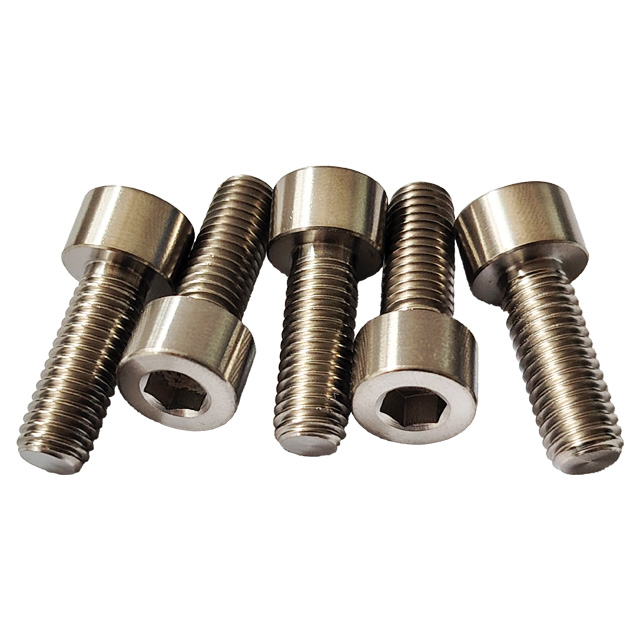
All eight featured product lines are fabricated directly in Baoji from vacuum-arc remelted (VAR) Ti-6Al-4V bars. Engineered with rolled threads, tight concentricity controls, and optimized fillet radiuses to serve high-rpm spindles, wheel hubs, and powertrain interfaces.
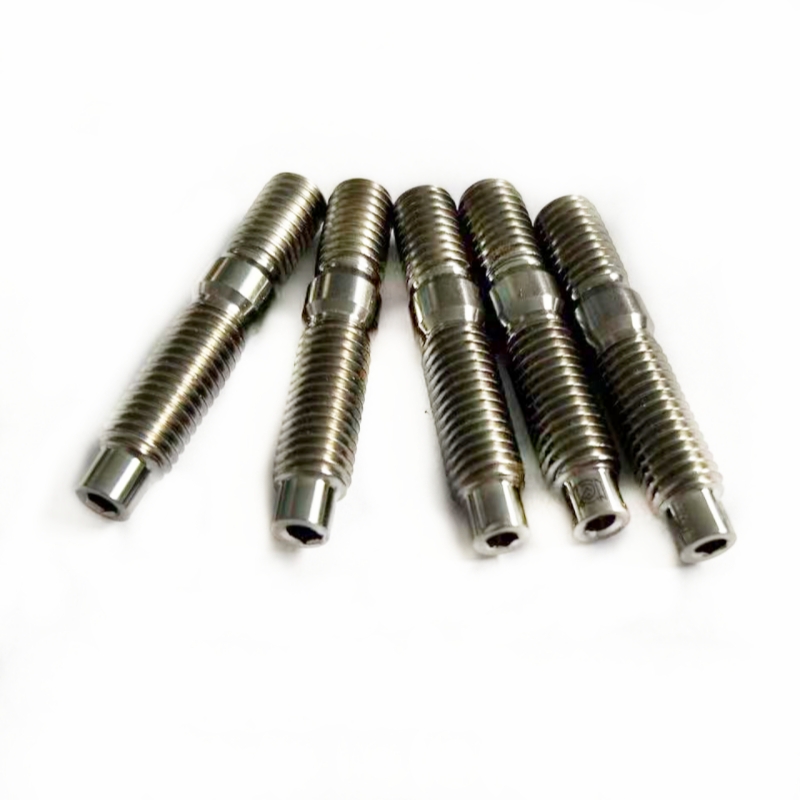
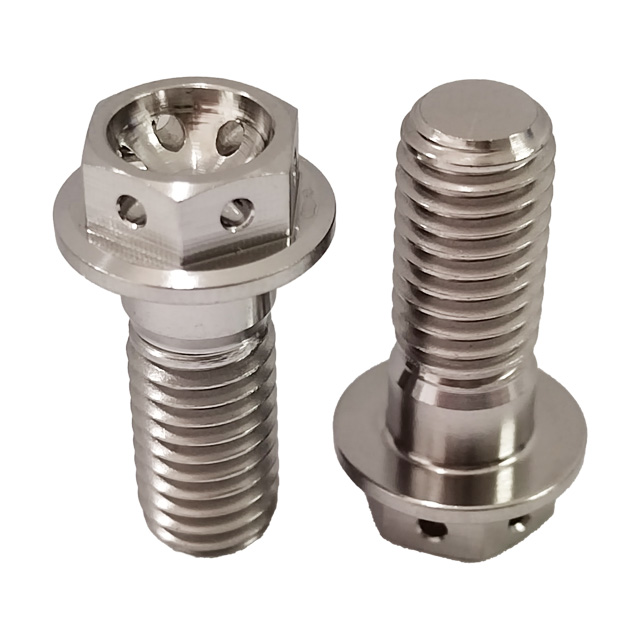
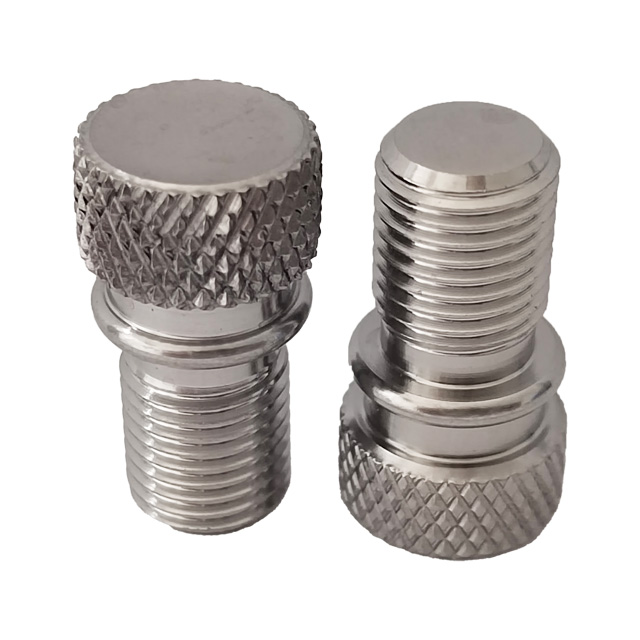
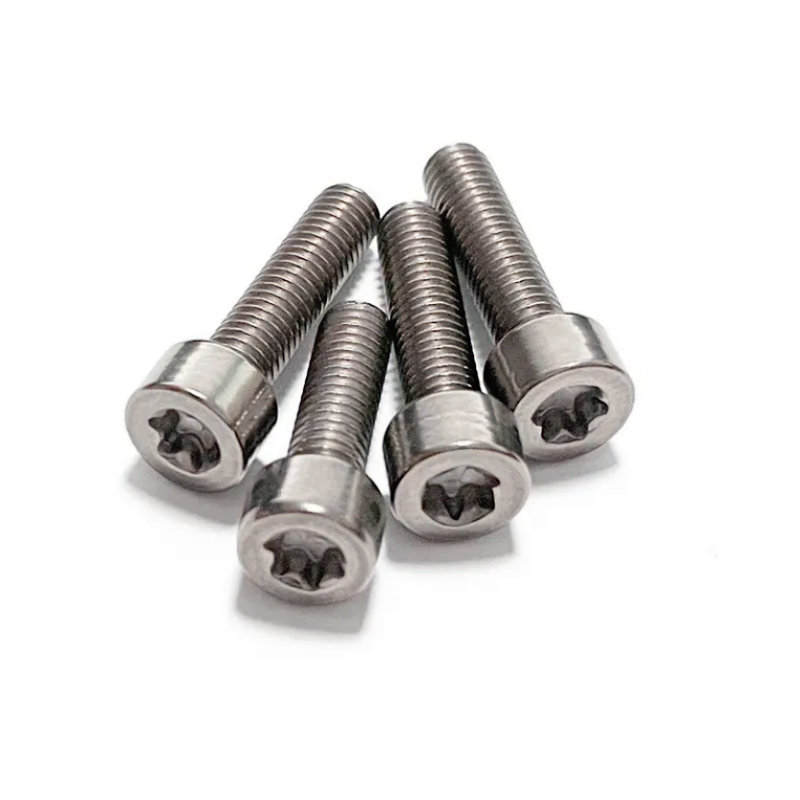
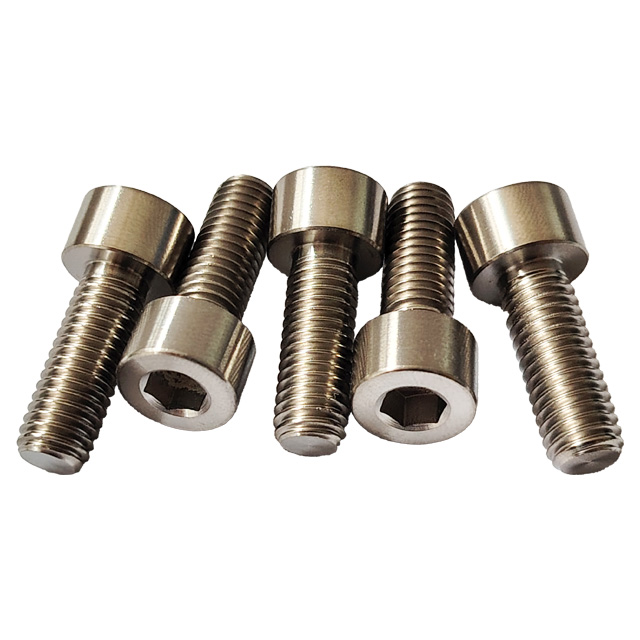
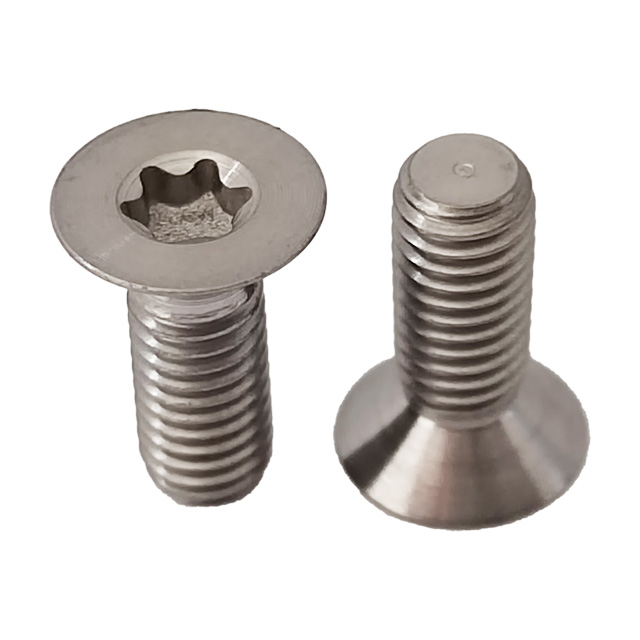
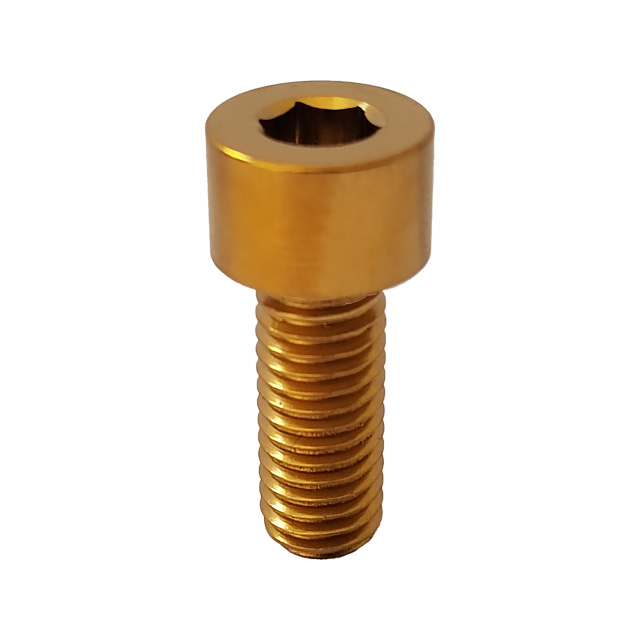
In high-performance kinematics, machine tool drives, automotive wheel uprights, and dynamic bicycle bottom bracket assemblies, the spindle bolt operates under severe, non-linear physical stresses. Unlike standard static structural fasteners, a spindle bolt experiences continuous combined loading: multiaxial dynamic bending moments, cyclic torsional pulses from acceleration/braking cycles, high-frequency centrifugal forces, and localized shear along the bearing journal interface.
Substituting conventional Grade 10.9 or 12.9 alloy steel bolts with Navzo’s precision-engineered GR5 (Ti-6Al-4V) titanium spindle bolts offers a transformative strength-to-weight ratio. With a density of 4.43 g/cm³ compared to 7.85 g/cm³ for alloy steel, rotating unsprung mass is reduced by over 43%. This significantly curtails gyroscopic precession forces and lowers rotational inertia, improving angular responsiveness and decreasing spindle bearing heat generation.
Critical Fastener Metallurgy Note: Machining threads via chip-cutting introduces micro-notches that act as primary initiation sites for fatigue cracks under cyclic spindle vibration. Navzo manufactures spindle fasteners utilizing cold heading followed by high-speed CNC thread rolling. This plastically deforms the grain flow lines continuously along the thread crest and root, elevating dynamic fatigue life by over 300% compared to cut threads.
Commercially pure titanium grades (such as Grade 1 and Grade 2) provide exceptional chemical corrosion resistance but exhibit yield strengths between 275 and 345 MPa—wholly inadequate for spindle preloading requirements. Navzo strictly deploys aerospace-grade Ti-6Al-4V (Grade 5, ASTM B348 / AMS 4928), characterized by an alpha-beta duplex crystalline matrix. By combining 6% aluminum for alpha phase stabilization and 4% vanadium for beta phase refinement, our bolts achieve yield strengths exceeding 880 MPa with elongation ratings of 10% to 15%, providing the mandatory ductility to prevent catastrophic brittle failure under shock loading.
| Mechanical Property | GR5 Ti-6Al-4V | Alloy Steel 10.9 | Stainless 316 (A4) |
|---|---|---|---|
| Density (g/cm³) | 4.43 (Ultra-Light) | 7.85 (Heavy) | 8.00 (Heavy) |
| Tensile Strength (MPa) | ≥ 895 – 1050 | ≥ 1000 – 1040 | ≥ 700 – 800 |
| Yield Strength 0.2% (MPa) | ≥ 828 – 920 | ≥ 900 – 940 | ≥ 450 – 500 |
| Modulus of Elasticity (GPa) | 110 – 114 (Flexible) | 205 – 210 (Stiff) | 193 (Stiff) |
| Specific Strength (kN·m/kg) | 214 (Supreme) | 127 (Average) | 88 (Low) |
| Chloride Pitting Resistance | Immune (PREN > 40) | Rapid Galvanic Rust | Susceptible to Crevice |
| Fatigue Endurance Ratio | ~ 0.50 – 0.55 | ~ 0.40 – 0.45 | ~ 0.30 – 0.35 |
*Values determined under ambient ISO 6892-1 / ASTM E8 tensile and axial fatigue testing protocols. Lower modulus in Ti-6Al-4V provides an intrinsic damping effect, absorbing vibrational spikes that otherwise cause micro-fretting inside spindle bearings.
Procurement leaders are navigating structural supply chain transformations. From localized smelting hubs to digital traceability protocols, staying competitive demands understanding where titanium fastener sourcing is heading over the next five years.
Global buyers are migrating away from fragmented intermediaries and sourcing directly from integrated titanium hubs like Baoji, China ("Titanium Valley"). Direct-from-source manufacturers control the sponge-to-ingot double vacuum arc remelting (VAR) process, drastically shortening lead times and insulating buyers from global raw material price volatility.
Stringent aerospace and performance automotive standards now mandate 100% digital heat-lot traceability conforming to EN 10204 Type 3.1. B2B procurement agreements now require complete optical emission spectrometry and ultrasonic immersion inspection logs to guarantee zero interstitial element embrittlement (low oxygen, hydrogen, and iron limits).
While electrochemical anodization remains popular for visual customization, industrial buyers are transitioning to functional Physical Vapor Deposition (PVD) layers. Titanium Nitride (TiN), Titanium Carbo-Nitride (TiCN), and Diamond-Like Carbon (DLC) reduce thread friction coefficients down to μ = 0.08, completely mitigating dry-galling risks.
To combat rising energy costs and excessive titanium scrap ratios, high-volume production is moving from 100% subtractive CNC bar turning to high-speed multi-station cold heading combined with secondary CNC finishing. This approach reduces raw bar wastage by over 60%, delivering volume cost efficiencies to OEM programs.
High-throughput production lines are adopting automated 360-degree glass disc optical sorting machines coupled with laser micrometer inspection. Every spindle bolt is verified for pitch diameter, total runout, thread crest completeness, and drive recess concentricity, driving defect rates down toward zero PPM (parts per million).
Tier-1 automotive and industrial OEMs increasingly enforce closed-loop circular sustainability quotas. Leading factories are implementing clean vacuum-segregated chip recovery systems, returning high-purity machining briquettes to remelters, helping buyers comply with international ESG initiatives and Scope 3 carbon mandates.
Titanium is notoriously unforgiving to machine due to its low thermal conductivity, high chemical reactivity at elevated temperatures, and low elastic modulus. The factory floor has evolved from manual lathe turnings to advanced scientific machining ecosystems.
Because titanium concentrates cutting heat at the shearing edge of the insert, standard flood coolant often vaporizes before penetrating the cutting zone. Navzo leverages high-pressure (up to 70 bar) micro-jet cooling directed precisely at the chip-tool interface. This prevents work-hardening, minimizes thermal expansion inaccuracies, and guarantees surface finishes down to Ra 0.4 μm without secondary polishing.
Finite Element Analysis (FEA) demonstrates that 80% of spindle bolt structural failures occur at the sharp 90-degree intersection between the bolt head and smooth shank. State-of-the-art multi-axis CNC machines now produce an elliptical or progressive transition radius (conforming to DIN 912 Class R or aerospace UNJ/MJ root radius standards), dispersing notch concentrations across a 2.5x larger contact area.
Severe cold working during heading and thread rolling induces localized residual stresses inside the titanium lattice. Navzo performs post-forming stress-relief annealing inside high-vacuum furnaces (< 10⁻⁴ Torr) at 600°C to 650°C for 2 hours. This thermal treatment relieves internal plastic shear without altering the core tensile strength or triggering surface oxidation (alpha-case layer creation).
Established in 2011 on Yucai Road in the High-tech Development Zone of Baoji, Shaanxi, Navzo Precision Titanium Products Co., Ltd. sits at the heart of China’s Titanium Valley. We integrate certified raw titanium ingot procurement, high-speed multi-axis CNC machining, cold forming, thread rolling, and surface treatment into a single, fully audited quality management workflow.
Our strategic location adjacent to major titanium smelting, forging, and testing institutes ensures direct access to premium double and triple-melted Ti-6Al-4V bar stock. Shorter supply chains mean faster material readiness and complete traceability for OEM accounts.
Backed by a verified 34% customer reorder rate and a 4.9/5 satisfaction index on international B2B platforms, Navzo exports precision titanium components to over seven core markets including the USA, Germany, Japan, South Korea, Russia, and the Netherlands.
With a 100% inquiry response rate and an average reply latency under 1 hour during standard working cycles, our technical team evaluates CAD drawings (STEP, DWG, PDF) to confirm manufacturability, tolerance stack-up, and tooling feasibility without delay.
Every production batch undergoes strict dimensional verification using calibrated 3D Coordinate Measuring Machines (CMM), optical contour projectors, thread Go/No-Go gauges (Class 6g/4h), Rockwell hardness testers, and hydraulic tensile bench testing.
Essential technical, installation, and commercial answers for procurement managers, mechanical design engineers, and quality assurance inspectors.
Streamline your procurement with direct factory pricing from Baoji, China. Receive comprehensive technical specifications, certified material sheets, and instant volume quotations within 1 hour.