[email protected] On-site Verified Titanium Manufacturer · Baoji, China
Engineering Authority • Certified Factory Direct

Top Trusted Titanium Socket Screws Manufacturers & Factories

Precision Grade 5 (Ti-6Al-4V) DIN 912 & Custom CNC Socket Head Fasteners: Metallurgical Quality, Global Sourcing Trends & Direct Manufacturing Specifications

Engineered Titanium Socket Screws & Precision Bolts

Baoji Mill-Traceable Ti-6Al-4V Grade 5 standard and customized socket screws, engineered for extreme tensile integrity, aerospace strength-to-weight optimization, and galvanic longevity.

DIN 912 Standard DIN912 M5 Titanium Socket Head Cap Screw

DIN912 M5 Titanium Socket Head Cap Screw

Precision cold-headed Ti-6Al-4V cylindrical socket head cap screw engineered for lightweight motorcycle chassis, EV battery packs, aerospace brackets, and medical structures.
Thread: M5 Metric
Material: GR5 Titanium
Yield: ≥828 MPa
Drive: Hex Socket
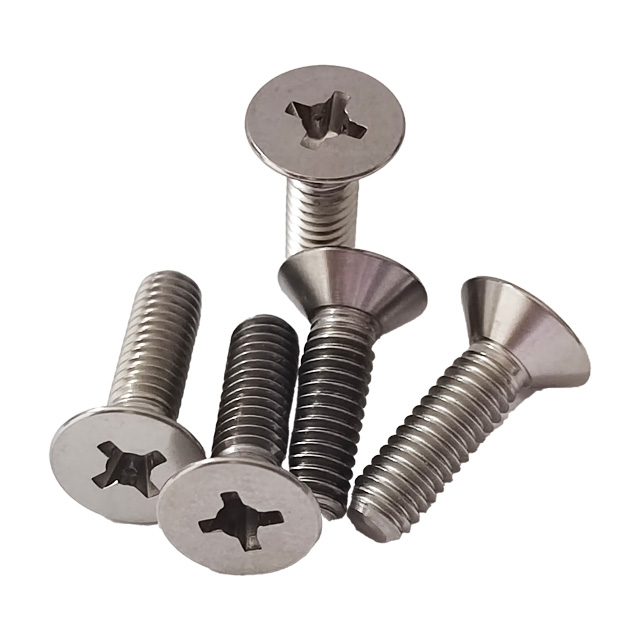
Flush Mount GR5 Titanium Bolts M8*20mm Countersunk Head Cross Bolts

GR5 Titanium Bolts M8*20mm Countersunk Screws

Factory-direct flat head countersunk bolts engineered for aerodynamic surface continuity and flush industrial assemblies requiring zero profile interference with Grade 5 yield strength.

Size: M8 × 20mm
Grade: Ti-6Al-4V GR5
Head: Flat Countersunk
Drive: Phillips / Cross
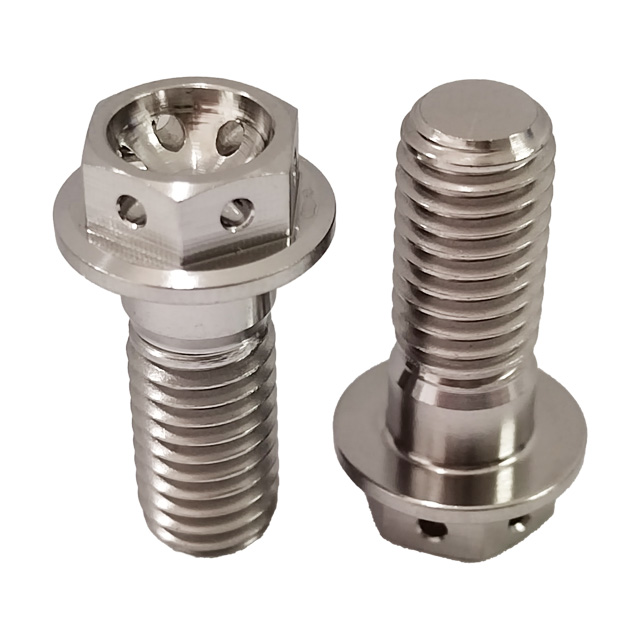
Safety Wire Ready GR5 Titanium Bolts M8*20mm Hex Flange Head Drilled Bolts

GR5 Titanium M8*20mm Hex Flange Drilled Bolts

High-integrity integrated flange head with pre-drilled safety wire lock apertures. Designed specifically for critical motorsport braking calipers and high-vibration aerospace mounts.

Size: M8 × 20mm
Tensile: ≥895 MPa
Feature: Drilled Head
Base: Integral Flange
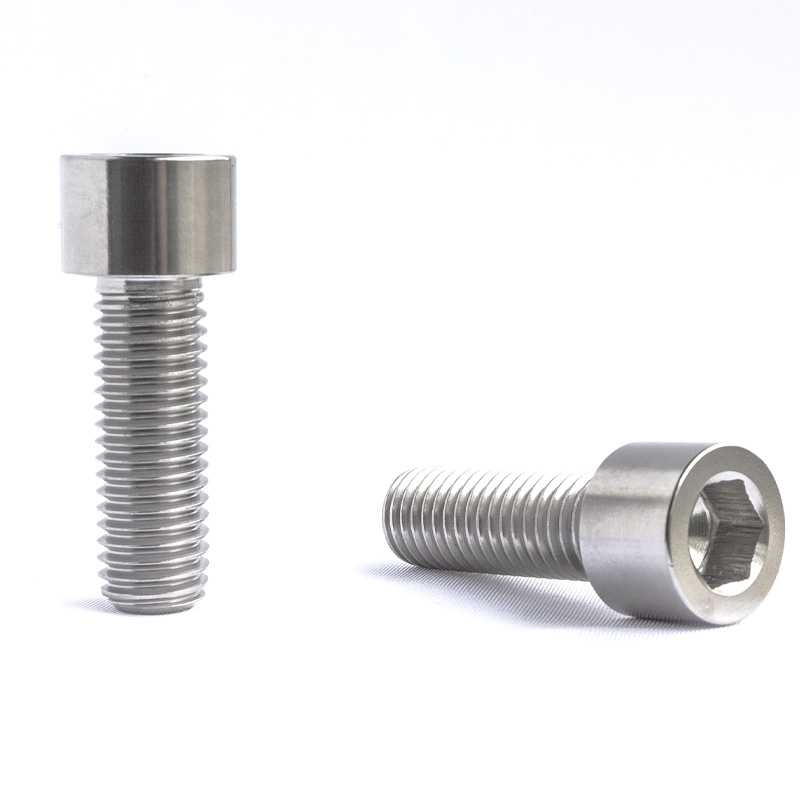
Heavy-Duty Cap GR5 Titanium Bolts M12*45mm Hex Socket Cap Screws

GR5 Titanium M12*45mm Hex Socket Cap Screws

Heavy-duty metric socket cap screws delivering the tensile resistance of class 10.9 steel with 44% reduced mass. Rolled threads optimize dynamic fatigue thresholds under continuous cyclic stress.

Size: M12 × 45mm
Thread: Metric Pitch 1.75
Process: Precision Machined
Standard: ISO 4762 / DIN 912
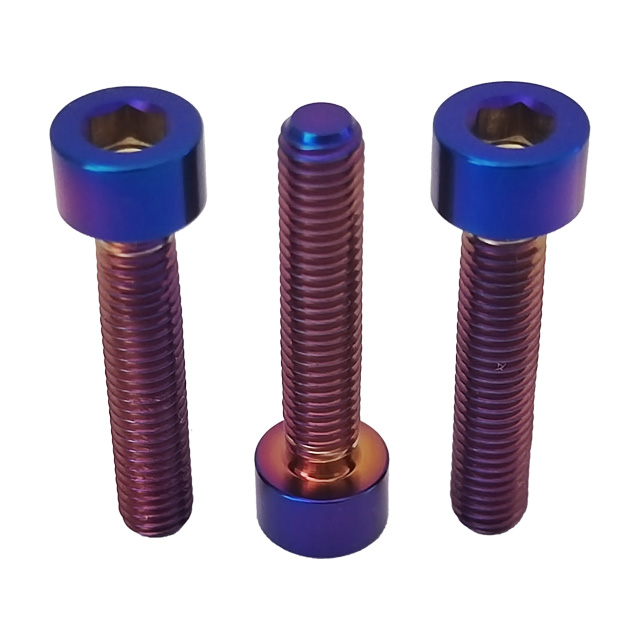
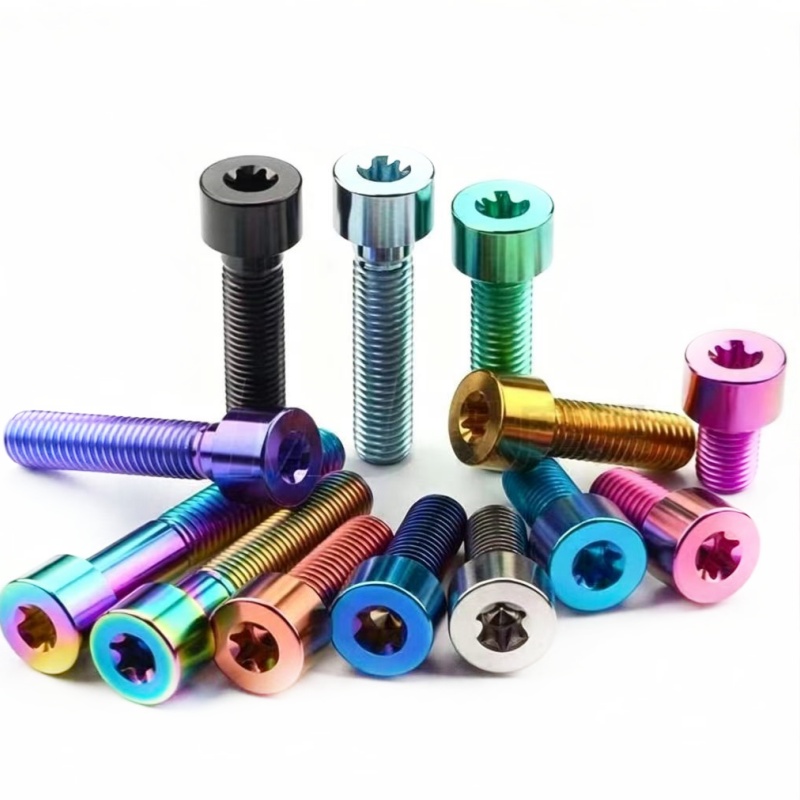
Heat Colored GR5 Titanium Bolts M5*25mm Burn Blue Hex Socket Bolts

GR5 Titanium M5*25mm Burn Blue Socket Bolts

Controlled thermal-oxidation burn blue treatment on cylindrical cup head socket screws. Delivers exceptional chromatic stability, heightened surface passivation, and custom aesthetics.

Size: M5 × 25mm
Treatment: Thermal Burn Blue
Hardness: 30-34 HRC
Corrosion: Zero Marine Rust
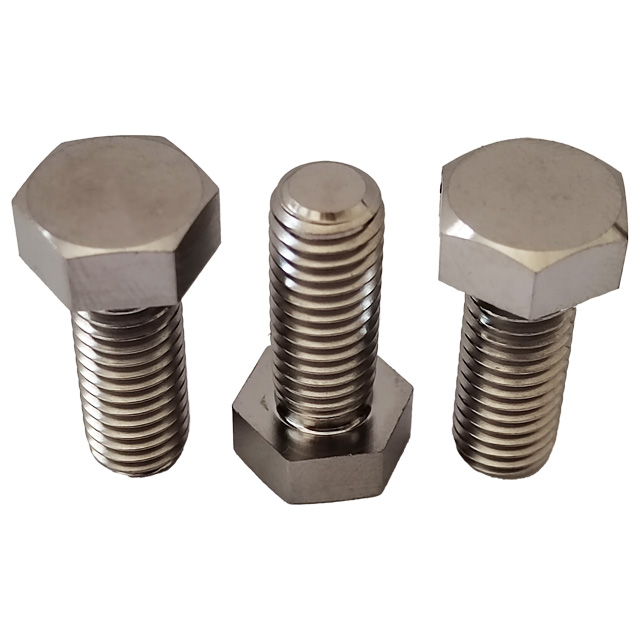
Full Thread CNC GR5 Titanium Bolts M8*20mm CNC Machined Hexagon Head

GR5 Titanium M8*20mm CNC Full Thread Bolts

Five-axis CNC turned hexagon head fasteners featuring precision full shank threading to ISO 6g class tolerance. Ensures precise pre-load retention in threaded aluminum and composite blind holes.

Size: M8 × 20mm
Threading: Full Thread 6g
Tolerance: ±0.02 mm
Origin: Baoji Certified Bar
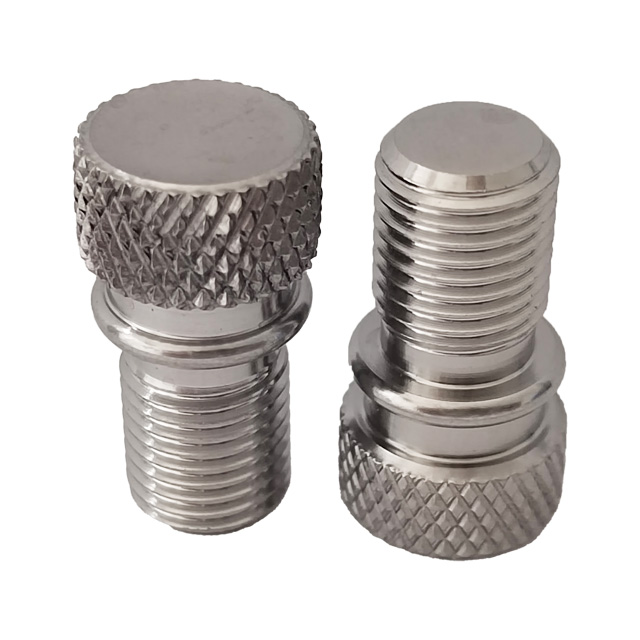
Knurled Grip GR5 Titanium Bolts M9*1.0*12mm Knurled Head Bolts

GR5 Titanium M9*1.0*12mm Knurled Bolts

Diamond-knurled outer cylindrical head combined with an internal precision socket drive. Tailored for manual calibration, specialized optical mounts, and swift field maintenance.

Size: M9 × 1.0 × 12mm
Head Type: Knurled + Hex Drive
Pitch: 1.0 Fine Metric
Application: Tool-less / Hybrid
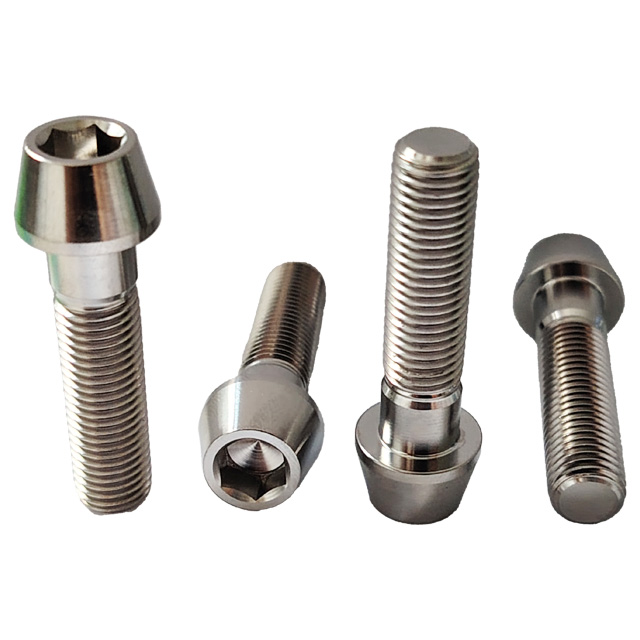
Tapered Conical GR5 Titanium Bolts M8 M10 M12 CNC Machined Tapered Head

GR5 Titanium M8/M10/M12 Tapered Socket Bolts

Conical head profile designed through finite element weight-reduction geometry, eliminating rotational non-structural mass in high-speed spinning assemblies, racing hubs, and crank assemblies.

Sizes: M8, M10, M12
Profile: Tapered Cone Head
Density: 4.43 g/cm³
Drive: Internal Hex Socket
2011

Founded in Baoji Titanium Valley

≤1h

RFQ Engineering Response Time

44%

Weight Reduction vs Alloy Steel

≥895MPa

Tensile Strength Threshold

100%

Lot Chemical & Thread Inspection

Engineering Whitepaper: Metallurgical Benchmarking of Titanium Socket Screws

A technical assessment comparing Ti-6Al-4V Alpha-Beta alloy fasteners against high-tensile carbon steels and austenitic stainless alloys in critical structural environments.

Alpha-Beta Phase Matrix Optimization

Navzo utilizes premier ASTM B348 Grade 5 titanium, featuring 6% Aluminum for alpha-phase stabilization and 4% Vanadium for ductile beta-phase retention. This metallurgical composition delivers an exceptional strength-to-density ratio exceeding 200 kN·m/kg, establishing high tensile yield capabilities under dynamic cyclic loads.

Crystal Structure: HCP + BCC

Rolled Threads vs. Cut Threads Integrity

Unlike budget factories that mill or cut threads—shearing the natural metallurgical grain flow—our primary lines employ CNC multi-die thread rolling. Thread rolling induces localized compressive residual stress across thread roots, mitigating stress notch sensitivity and increasing fatigue resistance by over 35% under cyclic shear.

Continuous Grain Flow Lines

Electrochemical Passivation & Biocompatibility

Titanium inherently develops an instantaneous, tenacious titanium dioxide (TiO2) passivation film when exposed to air. This ceramic-grade barrier prevents degradation from chlorides, sour gases, and seawater, making Navzo socket screws virtually immune to pitting and crevice corrosion across pH 3 to 11 environments.

ASTM F136 / ISO 5832 Compliant
Material Specification Density (g/cm³) Tensile Strength (MPa) Yield Strength (MPa) Modulus of Elasticity (GPa) Corrosion Resistance Weight Advantage
Ti-6Al-4V (Grade 5 Titanium) 4.43 ≥895 – 1000 ≥828 114 Immune to chlorides, ambient saltwater, mild acids 44% lighter than steel
Alloy Steel 10.9 (Quenched & Tempered) 7.85 1040 940 210 Extremely poor (Requires zinc / cadmium plating) Baseline (Heavy)
Alloy Steel 12.9 (High-Strength) 7.85 1220 1100 210 Rapid rusting; prone to hydrogen embrittlement Baseline (Heavy)
A2-70 (AISI 304 Stainless Steel) 7.90 700 450 193 Moderate; susceptible to stress corrosion cracking Similar mass to steel
A4-80 (AISI 316 Marine Stainless) 8.00 800 600 193 High in mild marine, but heavy and prone to galling Similar mass to steel

Technological Evolution & Future Procurement Dynamics (2025–2030)

Strategic purchasing insights for supply chain managers, procurement engineers, and precision design teams integrating advanced titanium socket hardware into next-generation systems.

Electrification & Unsprung Mass Optimization

In high-performance electric vehicles (EVs) and electric aviation (eVTOL), reducing unsprung rotating mass in brake assemblies, hub carriers, and motor mounts directly enhances regenerative braking efficiency, battery range, and handling dynamics. Procurement volume for DIN 912 M6 to M12 socket screws in Tier-1 automotive is projected to experience a compound annual growth rate of 14.8% through 2030.

Automotive Lightweighting

CFRP Galvanic Compatibility Demands

The global shift toward Carbon Fiber Reinforced Polymers (CFRP) in aerospace fuselages and high-end automotive monocoques has exposed severe galvanic corrosion issues with traditional steel and aluminum fasteners. Titanium possesses an electrode potential comparable to conductive carbon fibers (+0.05V vs. standard hydrogen electrode), eliminating the catastrophic galvanic degradation observed in conventional hardware.

Galvanic Isolation

High-Precision PVD Thin-Film Coatings

Surface treatments are transitioning from purely aesthetic anodizing toward functional Physical Vapor Deposition (PVD) finishes, such as Diamond-Like Carbon (DLC) and Titanium Carbo-Nitride (TiCN). These micron-level crystalline deposits (1–3 μm) introduce surface micro-hardness values exceeding 2500 HV, drastically curbing galling tendencies and thread friction coefficients during automated high-speed torque installations.

Tribological Coatings

Baoji Supply Chain Centralization

International OEMs are moving away from multi-tiered trading brokers toward verified direct-from-factory partnerships located in the Baoji Titanium Valley industrial cluster. Direct mill consolidation reduces procurement lead times from 14 weeks down to 3 weeks, guarantees raw material chemical traceability back to vacuum arc remelted ingots, and significantly compresses production costs.

Integrated Sourcing Hub

Navzo Precision Titanium: Verified Manufacturing Infrastructure

Located in the heart of China's Titanium Valley, Navzo integrates raw ingot sourcing, precision cold/warm heading, multi-axis CNC machining, and automated optical batch sorting under an ISO-guided quality management system.

Geographic Proximity to Premium Sponge Mills

Headquartered on Yucai Road within Baoji's High-Tech Development Zone since 2011, Navzo sources titanium wire rod directly from China's primary melting mills. This close proximity ensures direct control over chemical composition, strictly limiting interstitial gas contents (O ≤ 0.18%, H ≤ 0.0125%, N ≤ 0.03%) to eliminate internal embrittlement risks.

Raw Material Integrity

Rapid Technical RFQ Turnaround (≤1 Hour)

Our dedicated engineering group operates an active inquiry desk guaranteeing technical feasibility review, tolerance validation, and quotation response within one hour during business operating hours. Drawing support is provided for STEP, DWG, DXF, and PDF formats, with DFM (Design for Manufacturability) guidance provided before production startup.

Real-Time Engineering Desk

Rigorous Quality Assurance & Metrology

Every single batch undergoes dimensional verification using computerized optical projectors, multi-axis coordinate measuring machines (CMM), and hardened thread go/no-go ring gauges. Destructive tensile shear, micro-Vickers hardness, and spectrometer PMI checks are performed and archived with formal Mill Test Certificates (MTC EN 10204 3.1).

Traceability Standard 3.1

Manufacturing Execution & Quality Control Workflow

From aerospace-grade ingot inspection to final thread micrometer verification, discover our cleanroom-adjacent production process.

01

Spectrometric Wire Assay

Incoming Ti-6Al-4V coils undergo direct-reading spark spectrometer assay to verify alloy chemistry, followed by ultrasonic testing to confirm zero internal voids.

02

Dual-Die Warm/Cold Heading

Socket heads and conical geometries are formed under precise temperature control to maintain metallurgical grain flow, minimizing internal residual shearing stress.

03

Thread Rolling & CNC Turning

Threads are cold-rolled via hardened flat or rotary cylindrical dies to achieve 6g metric pitch tolerances, followed by 5-axis CNC shank and recess detailing.

04

Passivation, PVD & Optical Sorting

Automated ultrasonic degreasing, color-matched electrochemical anodizing or vacuum PVD coating, capped by automated optical sorting to isolate any minor imperfections.

Frequently Asked Questions: Technical Engineering & Sourcing

Practical, detailed answers from our metallurgy department covering installation dynamics, galling prevention, surface coatings, and supply chain logistics.

Why is Grade 5 (Ti-6Al-4V) preferred over commercially pure Grade 2 for socket screws?
Commercially pure titanium (Grade 2) possesses exceptional chemical corrosion resistance but provides a yield strength of only ~275 MPa, which is insufficient for pre-loaded mechanical joints. Grade 5 is an alpha-beta alloy containing 6% Aluminum and 4% Vanadium, heat-treatable to achieve yield strengths exceeding 828 MPa and ultimate tensile capacities of 895 to 1000+ MPa. This mechanical strength mirrors or exceeds quenched alloy steel fasteners (Metric Class 8.8 and 10.9) while providing a 44% mass reduction and superior endurance under dynamic fatigue loading. Grade 2 is generally reserved for non-load bearing chemical immersion components and plating bath anodes.
How should engineers address titanium thread galling during installation?
Titanium's natural passivated oxide layer (TiO2) can cause micro-frictional cold welding or galling when tightened at high speeds without lubrication, especially in titanium-to-titanium or titanium-to-stainless mating interfaces. To prevent galling:
  1. Always apply an anti-seize paste formulated with molybdenum disulfide (MoS2), copper paste, or synthetic PTFE compounds prior to threading.
  2. Recalculate installation torque using modified torque-friction nut factors (typically k = 0.12 to 0.15 for lubricated titanium vs. 0.20 for dry steel).
  3. Use hand tools or low-RPM, torque-limiting screwdrivers rather than aggressive high-speed impact drivers during assembly.
  4. Alternatively, specify Physical Vapor Deposition (PVD) Diamond-Like Carbon (DLC) coatings on the screw shank to provide a self-lubricating, wear-resistant outer layer.
What are the differences between anodizing, thermal burn blue, and PVD vacuum coating?
The three primary surface finishing processes offer distinct technical and aesthetic advantages:
  • Electrochemical Anodizing (Type II / III): Immerses parts in an electrolytic acid bath; by regulating direct-current voltage (15V to 110V), constructive optical interference alters perceived colors (gold, purple, electric blue, green) without requiring pigments. The oxide layer is micro-thin (~20 to 100 nm) and adds negligible dimensional thickness, making it ideal for maintaining tight thread tolerances.
  • Thermal Burn Blue: Employs open induction or oven heat treating (approx. 400°C–550°C) to produce a chromatic gradient transition from bronze gold to deep cobalt blue. It provides iconic aesthetics for high-end motorcycle exhausts and motorsport engine bays.
  • PVD (Physical Vapor Deposition): Sputters metallic vapor (such as Titanium Nitride or Carbon) within a high-vacuum chamber to deposit a 1 to 3 μm ceramic film. PVD provides superior scratch resistance, high surface hardness (2000–3000 HV), and elevated wear resistance for components subject to repetitive adjustment or harsh abrasive conditions.
Does direct contact between titanium socket screws and aluminum cause galvanic corrosion?
While titanium is noble (+0.05V) and aluminum is active (-0.90V on the galvanic index), the pairing behaves far more stably in real-world conditions than steel-aluminum or copper-aluminum couplings. Titanium's inert passivation film creates high electrical polarization resistance, which restricts electron transfer under ambient conditions. However, in aggressive saltwater or marine washdown environments, localized galvanic corrosion of the adjacent aluminum can occur if an electrolyte bridge forms. To eliminate galvanic potential entirely:
  • Specify non-conductive isolative washers (such as PTFE, PEEK, or passivated titanium washers).
  • Apply a quality zinc chromate, barium chromate primer, or specialized fluoropolymer barrier paste across the screw head shoulder and shank.
  • Ensure the surrounding aluminum casting features hard-coat anodization (MIL-A-8625 Type III) to provide electrical insulation.
What design standards, tolerances, and quality certifications do Navzo socket screws adhere to?
Standard catalog lines conform directly to international fastener specifications, including DIN 912, ISO 4762, ASME/ANSI B18.3, and DIN 7991 (for countersunk flat profiles). Thread accuracy is held strictly to ISO metric 6g tolerances (or Class 3A for imperial UNC/UNF threads). For customized OEM aerospace, cycling, and medical requests, we machine to customer blueprint tolerances as narrow as ±0.01 mm on Japanese 5-axis CNC machining centers. Every order can be accompanied by Mill Test Certificates (MTC EN 10204 3.1) stating melt heat lot, tensile yield, elongation percentage, chemical composition analysis, and non-destructive test results.
What are Navzo's standard Minimum Order Quantities (MOQ) and production lead times?
For standard catalog dimensions (such as standard M4 to M10 DIN 912 socket screws in natural polished or anodized finishes), our standard MOQ starts at 100 to 200 pieces per size, with immediate dispatch from our Baoji inventory hubs within 3 to 5 business days. For customized OEM designs involving non-standard head shapes, drilled safety wire apertures, bespoke knurling, or specific laser engravings, our prototyping batch minimum is 50 to 100 units, with volume runs generally scheduled in batches of 500 to 10,000+ pieces. Production lead times for custom CNC components average 15 to 20 business days, backed by express air logistics to North America and Europe within 4 to 7 days.
Can Navzo produce custom titanium socket fasteners directly from CAD files?
Yes. Our technical engineering division routinely supports OEM and ODM projects. Customers can supply digital CAD models in STEP, STP, IGES, DXF, or PDF blueprint formats. Our engineering team conducts a thorough Design for Manufacturability (DFM) review to analyze drive recess geometry (Hex, Torx, or spline), head-to-shank fillet radius (crucial for dynamic shear stress distribution), and thread relief runouts. We provide tooling feasibility feedback, material grade optimization advice, and formal cost breakdowns within 1 business hour.

Ready to Optimize Your Structural Assembly Weight?

Consult with Navzo's Baoji engineering team. Whether you need 200 pieces of catalog DIN 912 socket screws for rapid testing or high-volume multi-axis OEM runs with full 3.1 mill certifications, our team replies within 1 hour.