DIN 7991 Flush
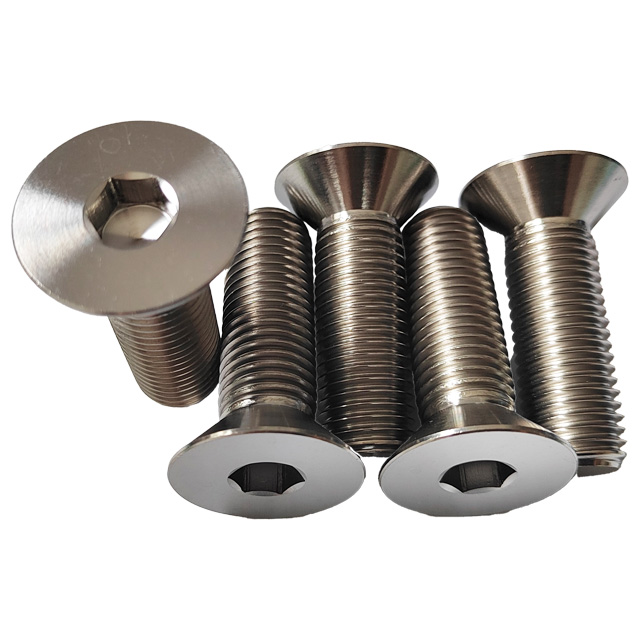
Standard: DIN 7991
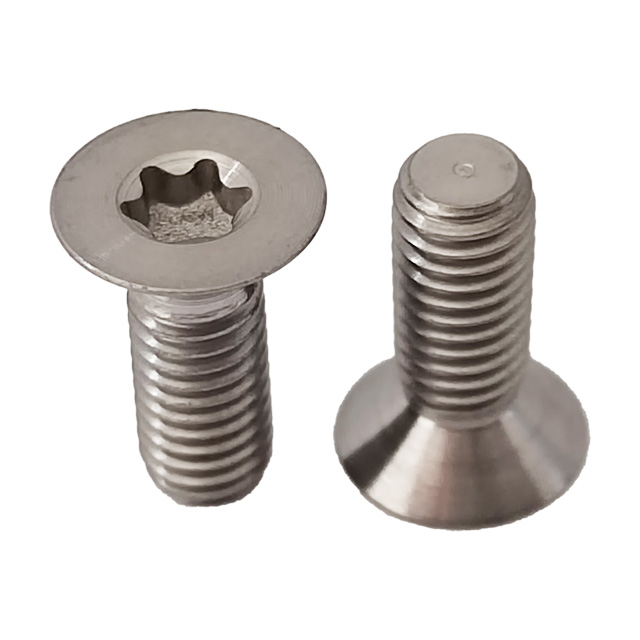
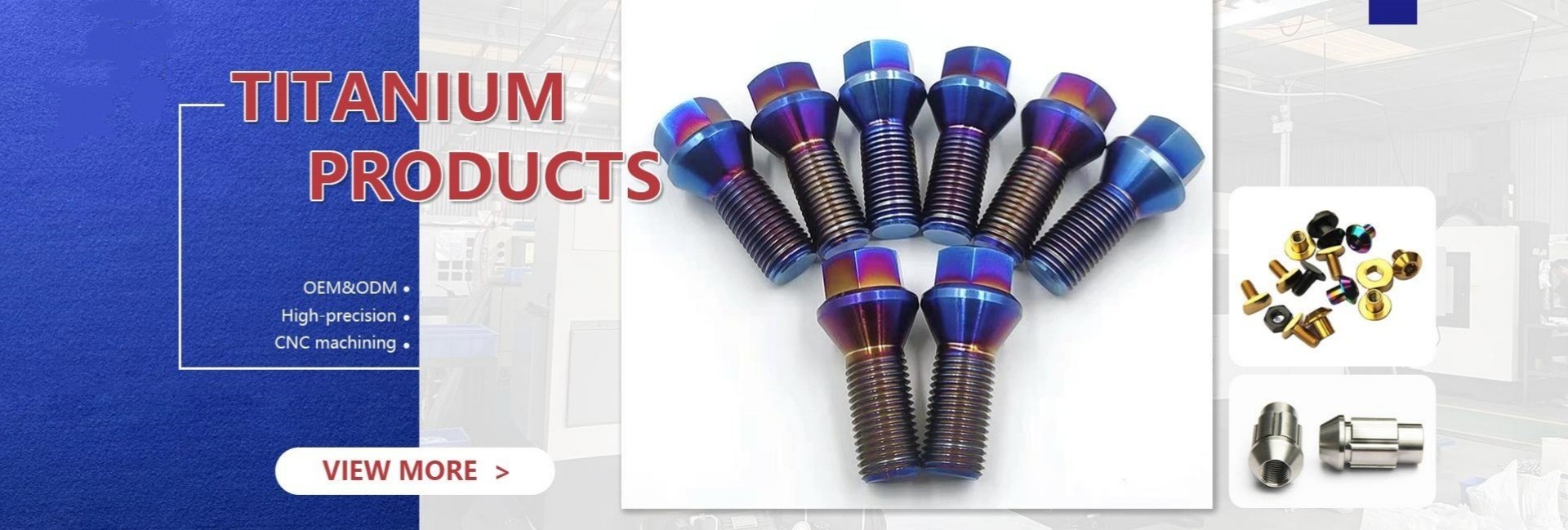
GR5 Titanium Bolts M10*20mm Countersunk Hex Socket Round Head Screws
- ThreadM10 × 1.50
- Length20 mm
- MaterialTi-6Al-4V (Gr5)
- DriveHex Socket
Manufactured using progressive multi-station cold heading and high-precision CNC multi-axis turning. Thread profiles are fully rolled to maintain continuous metallurgical grain flow for maximum fatigue life.
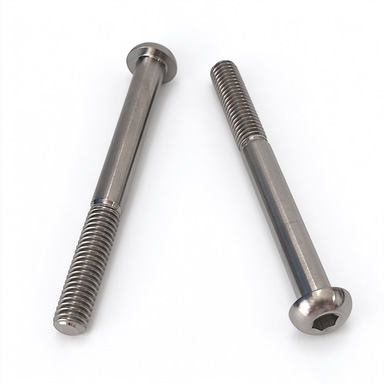
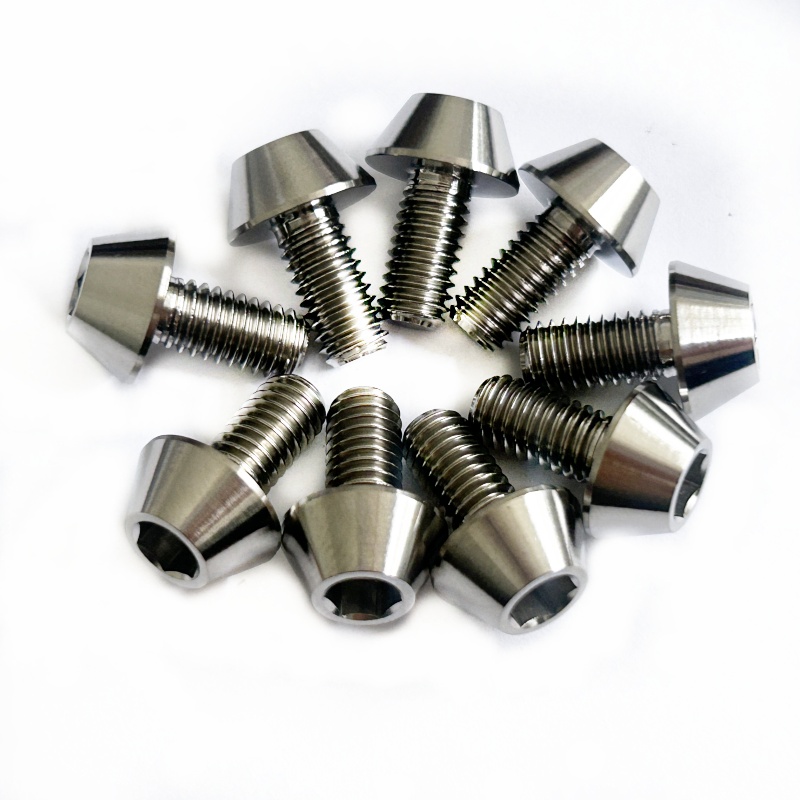
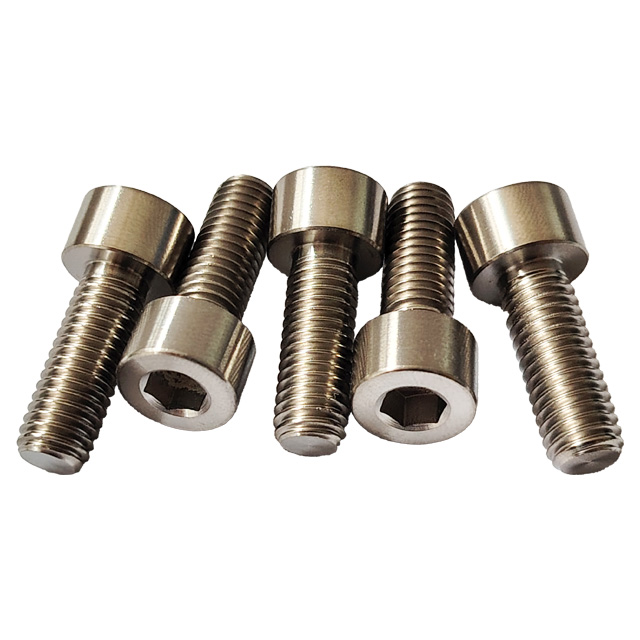
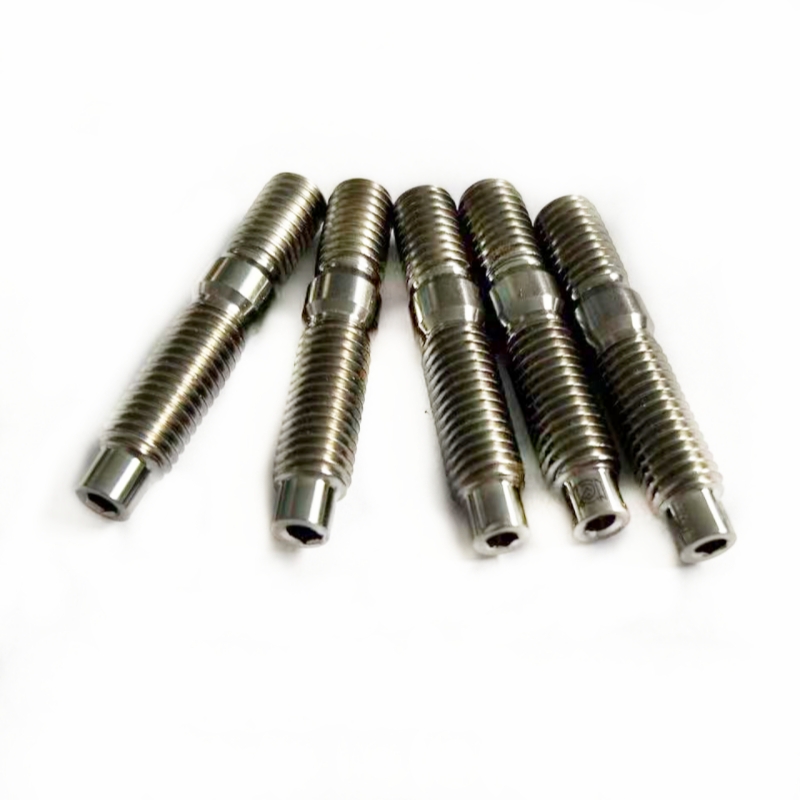
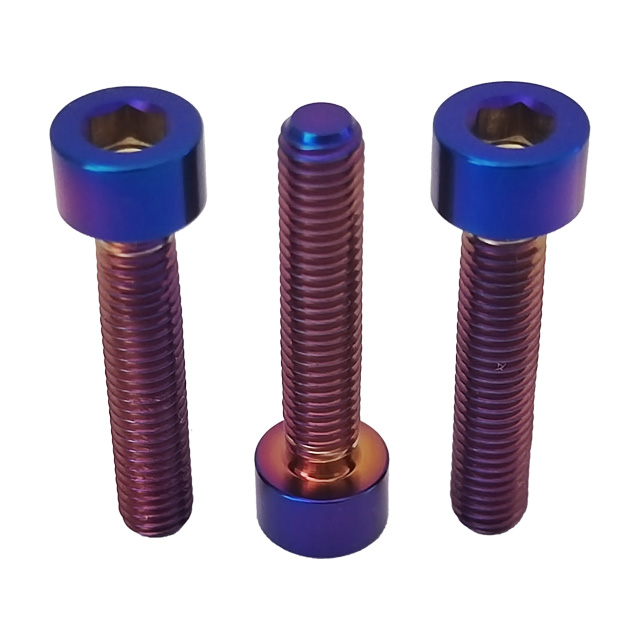
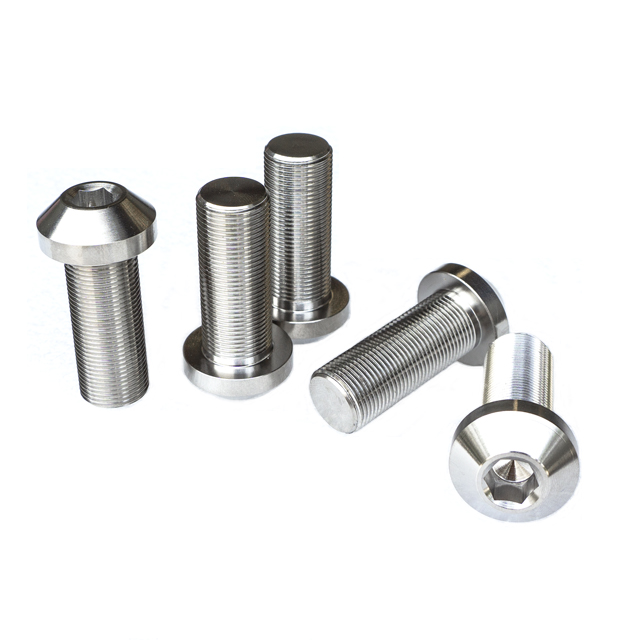
In high-stress mechanical assemblies where mass reduction directly correlates with kinematic efficiency or fuel consumption, titanium screws are the premier fastener class. Rather than substituting steel on a simple 1:1 volumetric basis, industrial engineering requires a thorough assessment of metallurgy, thread forming dynamics, galvanic boundaries, and shear stress distribution. At Navzo Precision Titanium Products Co., Ltd., based in the heart of Baoji High-Tech Industrial Development Zone, we engineer our fasteners to satisfy rigorous international standards such as DIN, ISO, ASTM, and custom customer prints.
A primary failure mode of sub-standard commercial titanium screws is fatigue failure at the first engaged thread root under alternating tensile loads. Lower-tier manufacturers often machine threads using single-point CNC threading tools because titanium's low thermal conductivity (approx. 6.7 W/m·K) quickly wears out tooling dies. However, CNC single-point thread turning interrupts the natural longitudinal grain boundaries of cold-drawn titanium bars, introducing micro-notches that act as local stress concentration risers.
Navzo utilizes cold and warm progressive thread rolling techniques. Thread rolling plastically displaces titanium's grain structures around the root radiuses rather than shearing through them. This burnishes the root geometry, introduces beneficial compressive residual stresses on the thread flanks, and increases thread shear strength by up to 25–30%. For motorsport hubs, brake caliper mounts, and aerospace fixtures, rolled threads are indispensable for mitigating multi-axial fatigue cracking over millions of load cycles.
| Material Specification | Density (g/cm³) | Tensile Strength (MPa) | Yield Strength (MPa) | Modulus of Elasticity (GPa) | Corrosion Resistance | Optimal Application |
|---|---|---|---|---|---|---|
| Ti-6Al-4V Grade 5 (Navzo Certified) | 4.43 | 895 – 1050 | ≥ 828 | 110 – 114 | Extreme (Immune to Chlorides) | Motorsport, Aerospace, Performance Cycling |
| Commercially Pure Ti (Grade 2) | 4.51 | 345 – 480 | ≥ 275 | 103 – 107 | Extreme (Chemical Acids) | Plating Anodes, Marine Desalination, Non-Structural |
| Alloy Steel 12.9 (High-Strength) | 7.85 | 1220 | 1100 | 205 – 210 | Poor (Requires Zinc/Phosphate Coating) | Heavy Civil Machinery, Stationary Die Tooling |
| Stainless Steel A2-70 (AISI 304) | 7.93 | 700 | 450 | 193 | Moderate (Pitting in Marine Environments) | General Commercial Fasteners, Food Grade Equipment |
| Stainless Steel A4-80 (AISI 316) | 8.00 | 800 | 600 | 196 | High (Marine Atmosphere) | Architectural Marine Hardware, Marine Rigging |
Titanium possesses an instantaneous, self-healing passive surface oxide film ($TiO_2$), which delivers remarkable resistance against sea mist, acids, and atmospheric weathering. However, under high contact loads during torque pre-tensioning, this thin oxide film can rupture. When bare titanium slides against another bare titanium or aluminum interface, the clean metallic surfaces can cold-weld, causing localized severe shear tearing known as galling or thread seizure.
To overcome this intrinsic tribological limitation, Navzo applies advanced surface modification techniques tailored to the operating environment:
Located in Yucai Road within Baoji's High-Tech Zone, Navzo operates at the center of the world's most concentrated titanium production cluster, enabling rapid raw material traceability and scalable manufacturing.
Direct supply partnerships with local smelting mills ensure access to premier vacuum-arc remelted (VAR) sponge titanium ingots, eliminating raw material broker premiums and stabilizing supply chains.
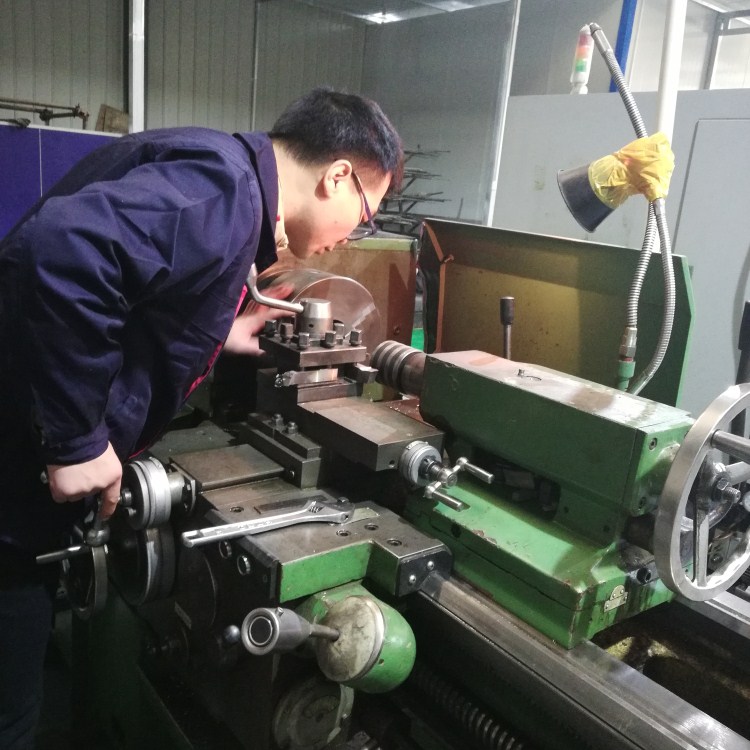
From progressive heading machines to precision 5-axis CNC turning and milling centers, optical sorting benches, and cleanroom anodizing lines—every production phase operates under an ISO-aligned quality umbrella.
We provide full EN 10204 Type 3.1 Inspection Certificates with every production lot, documenting chemical composition via optical emission spectroscopy, tensile elongation, and dimensional verification.
Our dedicated engineering team operates across global time zones, reviewing 2D drawings (DWG, PDF) and 3D CAD models (STEP, IGES) within an hour to evaluate tolerances, tool reach, and cycle times.
We manufacture custom geometries including drilled safety wire hex heads, ultra-low profile umbrella heads, Torx-Plus tamper-resistant drives, and captive-washer race studs with low-friction coatings.
Equipped with optical profile projectors, digital video measuring machines (VMM), certified Go/No-Go thread pitch gauges, Rockwell hardness testers, and salt-mist environmental chambers to ensure zero-defect consignments.
As advanced mobility sectors accelerate lightweighting and carbon reduction initiatives, procurement managers must anticipate technological and regulatory shifts across the titanium supply base.
Combining Electron Beam Melting (EBM) or Laser Powder Bed Fusion (LPBF) for complex, hollow-head internal geometries with precision CNC thread rolling to maximize weight optimization while maintaining structural fatigue limits.
Western and Asian Tier-1 suppliers are reducing reliance on spot metal markets by establishing multi-year frameworks directly with fully integrated Baoji mills that possess independent ingot-to-fastener capabilities.
Rising demand for vanadium-free titanium alloys (such as Ti-6Al-7Nb and Ti-15Mo) across surgical robotics, consumer electronics, and specialized marine assemblies to eliminate biological cytotoxicity and enhance recyclability.
Emergence of titanium structural bolts equipped with embedded micro-piezoelectric ultrasonic sensors or RFID load monitors, enabling real-time clamping pre-load measurement in high-speed rail and aerospace applications.
Clear, direct answers to common questions raised by procurement directors, quality inspectors, and design engineers before issuing requests for quotation (RFQs).
Grade 5 (Ti-6Al-4V) titanium screws reliably replace Grade 8.8 and Grade 10.9 alloy steel bolts with a ~44% weight savings and superior corrosion immunity. However, replacing Grade 12.9 fasteners (tensile strength ~1220 MPa) requires caution: engineering calculations must verify that the calculated joint clamp load does not exceed Grade 5's minimum 895–1000 MPa tensile limit, or fastener diameter must be scaled accordingly.
Because titanium has a modulus of elasticity (~114 GPa) roughly half that of carbon steel (~210 GPa), titanium screws elongate further under identical clamping loads. Friction coefficients also differ depending on whether the fastener is bare, anodized, or PVD coated. Typically, tightening torque should be adjusted to 70–85% of standard carbon steel values when using high-performance anti-seize paste to avoid over-stretching the shank.
Unlike aluminum and structural steel—which corrode rapidly when in direct electrical contact with carbon fiber reinforced polymers (CFRP) due to significant galvanic potential differences—titanium shares a remarkably close electrochemical potential with carbon (+0.0V to +0.1V versus saturated calomel electrode). Titanium fasteners are the aerospace industry standard for direct fastening into carbon fiber skins without requiring insulating primers or non-conductive sleeves.
For standard catalog sizes (e.g., DIN 912, DIN 7991, ISO 7380 in M3 to M12 dimensions), our MOQ ranges from 100 to 200 pieces per specification with immediate inventory dispatch. For bespoke CNC-machined titanium parts or custom OEM head configurations, pre-production trial samples can be produced within 7–12 business days based on your engineering drawings prior to mass volume runs.
Anodizing creates an electrochemical oxide film where regulated voltage determines the color through light refraction. Burnt blue is an open-flame or controlled thermal oxidation process that produces a blue-purple-gold gradient, favored for motorsport exhaust styling. Physical Vapor Deposition (PVD) vacuum-plates a microscopic ceramic film (e.g., TiN, TiAlN), delivering superior scratch resistance and surface hardness for high-wear service environments.
Every commercial export order includes comprehensive documentation: EN 10204 Type 3.1 Mill Test Certificates verifying raw material chemical composition and mechanical properties, dimensional CMM inspection reports, certificate of origin (COO), customized export commercial packaging records, and complete logistics tracking.
Whether you require standard catalogue DIN bolts or custom CNC titanium components manufactured to precise micro-inch tolerances, our Baoji engineering facility delivers unmatched reliability, speed, and cost efficiency.