High-Performance Titanium Fasteners Portfolio
Explore our aerospace-grade Ti-6Al-4V (Grade 5) metric hardware engineered specifically for extreme cyclic vibration, shear stress resistance, and zero-corrosion longevity.
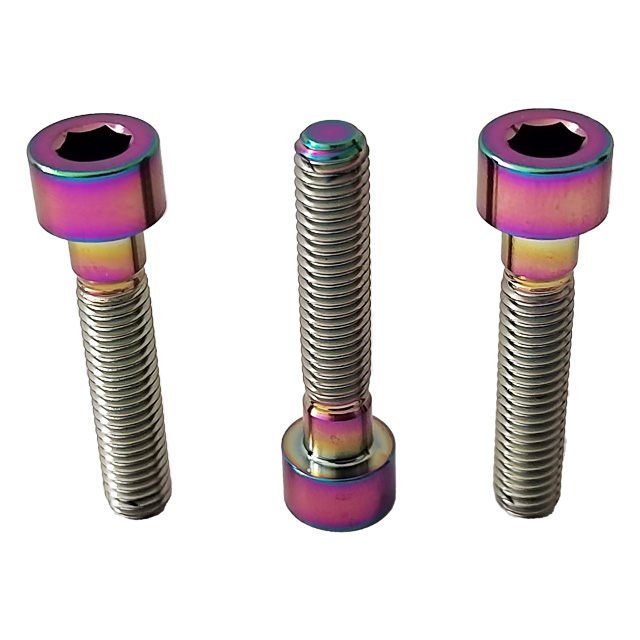
GR5 Titanium Bolts M8*40mm Colored Cylinder Head Hex Socket Bolts Factory Price Round Head Allen Screws
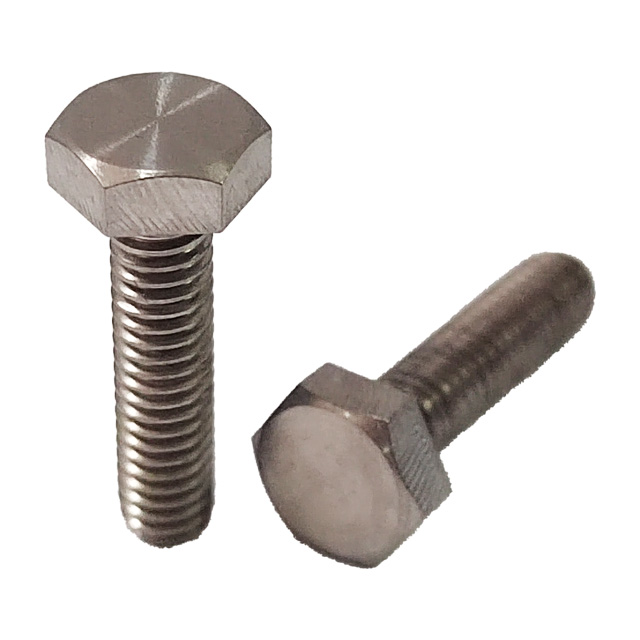
GR5 Titanium Bolts M4*15mm Factory Price Hexagon Head Full Thread Bolts High Strength Flat Head Screws
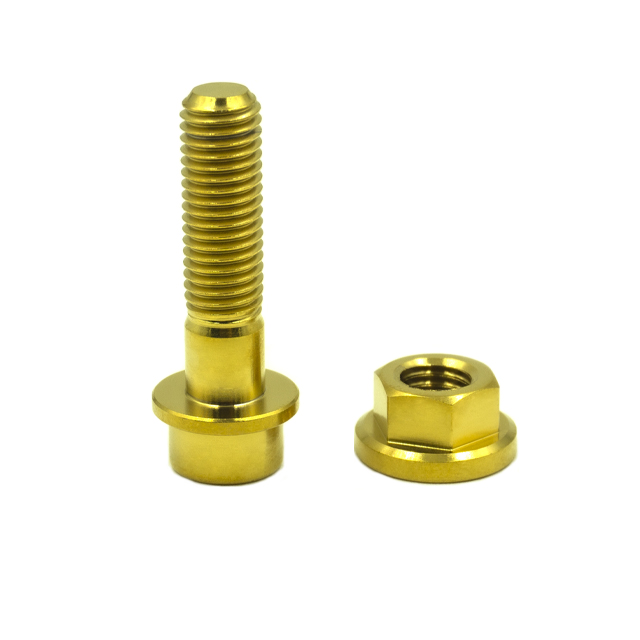
PSSTI GR5 Titanium Gold Flange Head Bolts Round Head Bolts M7*27
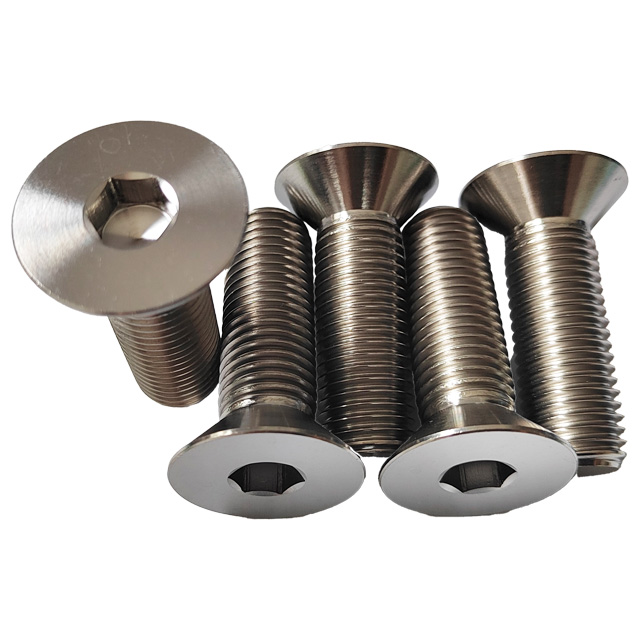
GR5 Titanium Bolts M10*20mm Factory Price Countersunk Head Hex Socket Bolts High Quality Round Head Inner Hex Screws
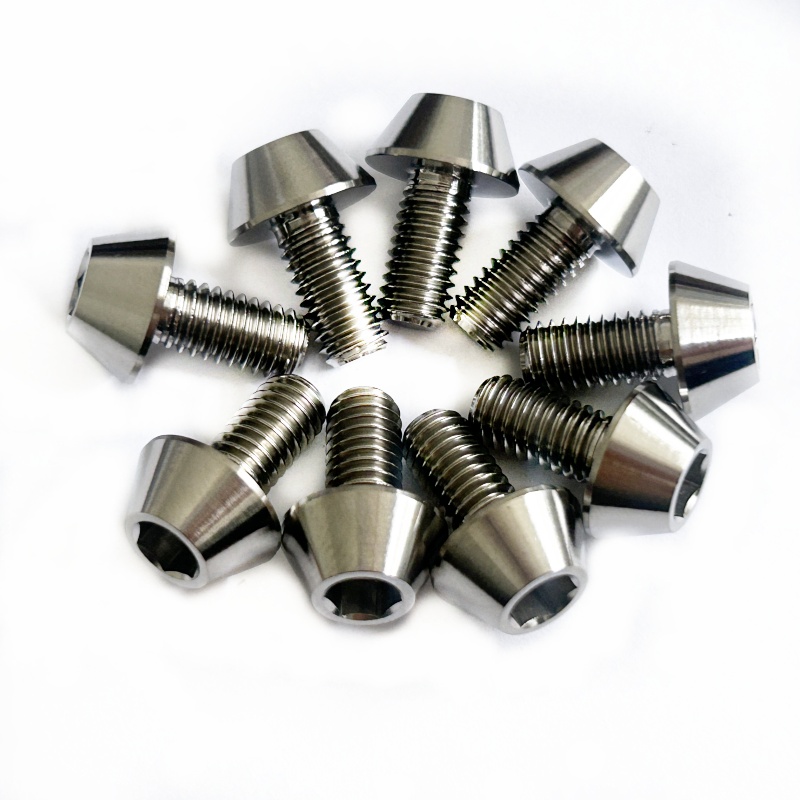
M6*12 Titanium Allen Hex Bolts Umbrella Type Screws Bike Frame Bolt for Bicycles
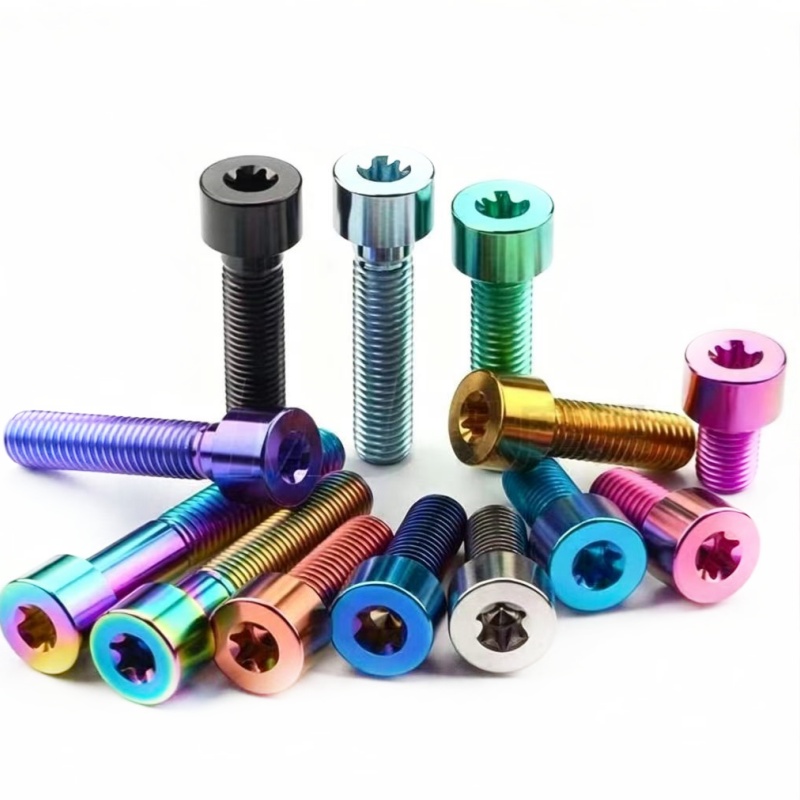
DIN912 M5 Titanium Socket Head Cap Screw Titanium Alloy Bolt for Motorcycle New Energy Aviation Medical Bicycle Modification
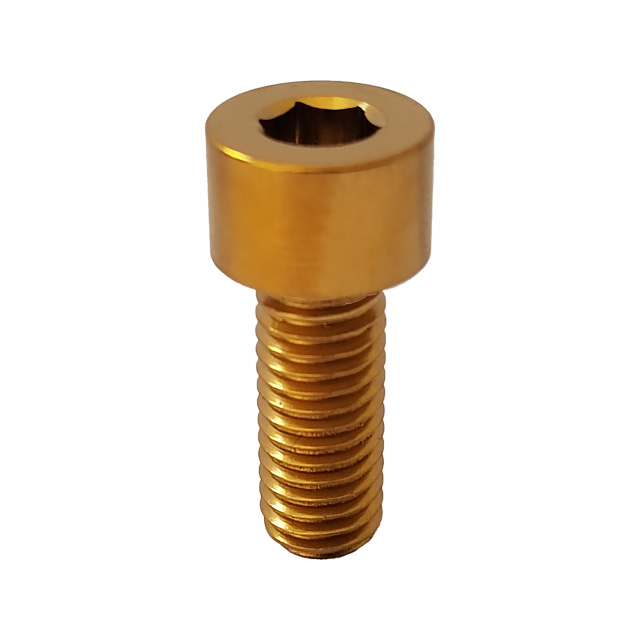
GR5 Titanium Bolts M10*30mm Golden Cylinder Head Hex Socket Bolts Factory Price Cap Head Inner Hex Screws
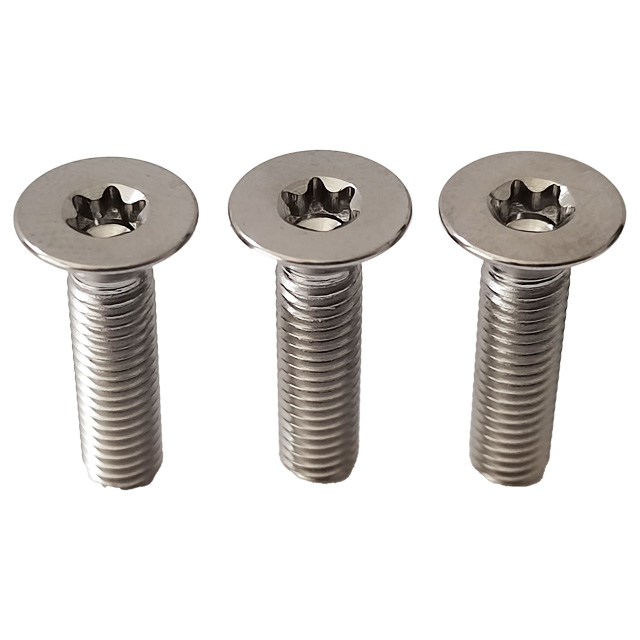
GR5 Titanium Bolts M5*20mm High Quality Countersunk Head Hex Socket Bolts Factory Price Round Head Allen Screws
The Engineering Physics of Titanium Exhaust Studs in Extreme Thermal Environments
Why Tier-1 engine builders and motorsport engineering outfits are abandoning OEM alloy steel studs and stainless variants in favor of Ti-6Al-4V Alpha-Beta Titanium Fastener Systems.
Internal combustion engine exhaust manifolds and turbocharger turbine housings endure some of the most punishing thermo-mechanical duty cycles in mechanical engineering. Exhaust gas temperatures (EGT) routinely fluctuate between ambient room temperature and 900°C to 1050°C (1650°F to 1920°F) under wide-open throttle conditions. In high-boost forced induction powertrains, conventional Grade 8.8, 10.9, or even 12.9 carbon steel exhaust studs suffer catastrophic mechanical degradation due to rapid oxidation, thermal elongation plastic deformation, and accelerated galvanic seizing inside aluminum cylinder heads.
1. The Mismatch in Coefficient of Thermal Expansion (CTE)
A primary failure mode of factory exhaust manifold studs is the acute differential in the Coefficient of Thermal Expansion (CTE) between cast aluminum cylinder heads (approx. 22-24 × 10-6 /K) and conventional carbon or alloy steel fasteners (approx. 11-13 × 10-6 /K). As the engine reaches operating temperature, the aluminum head expands at nearly double the rate of the steel stud. This differential expansion generates massive cyclic tensile stresses within the stud body, frequently surpassing the steel's elastic limit at elevated temperatures. Once yield stress is breached, the stud experiences plastic elongation, resulting in loss of clamping preload upon cooldown. The result: blown exhaust manifold gaskets, auditory exhaust leaks, warpage of the manifold flange, and unmetered oxygen sensor errors.
By comparison, Ti-6Al-4V Grade 5 Titanium exhibits a CTE of approximately 8.6 × 10⁻⁶ /K coupled with a modulus of elasticity of roughly 114 GPa (approximately half that of steel's 205 GPa). This substantially lower elastic modulus functions as an elastic mechanical spring. The titanium stud stretches elastically under thermal expansion without entering its plastic deformation zone, consistently preserving clamp load integrity across repeated thermal shock cycles.
| Fastener Material | Density (g/cm³) | Tensile Strength (MPa) | Yield Strength (MPa) | Modulus of Elasticity (GPa) | Thermal Expansion (10⁻⁶/K) | Oxidation / Galling Resistance |
|---|---|---|---|---|---|---|
| Ti-6Al-4V (Grade 5 Titanium) | 4.43 | 895 – 1050 | 828 – 950 | 114 | 8.6 | Outstanding / Forms Inherent TiO₂ Film |
| High-Tensile Steel 10.9 | 7.85 | 1040 | 940 | 205 | 11.5 | Poor (Prone to Severe High-Heat Rust & Shear) |
| Stainless Steel A2-70 / 304 | 7.93 | 700 | 450 | 193 | 16.0 | Moderate / Highly Prone to Thread Galling |
| Inconel 625 (Nickel Superalloy) | 8.44 | 930 | 517 | 208 | 12.8 | Exceptional / Weight-Penalizing & High Cost |
2. Microstructural Grain Flow: Cold-Heading & Thread Rolling vs. Lathe Machining
In high-vibration automotive exhaust architecture, manufacturing methodology dictates fatigue life. Low-tier market suppliers frequently machine titanium studs directly from hex bar stock on standard CNC lathes. While dimensionally adequate, single-point CNC cutting severs the longitudinal grain structure of the titanium crystalline lattice, leaving microscopic stress concentration notches at the root of the thread.
As an ISO-compliant manufacturer and direct exporter based in Baoji, China, Navzo Precision Titanium utilizes high-tonnage warm heading and hydraulic thread-rolling processes per DIN / ISO / UNJ aerospace standards. Thread rolling does not cut metal; rather, it displaces the metal plastically through hardened dies under compressive pressure. This burnishes the root radii and compresses the grain flow continuously along the thread crest and flank. Consequently, Navzo rolled titanium threads demonstrate a 30% to 40% increase in cyclic shear fatigue resistance, rendering them virtually immune to notch-stress fracturing caused by engine harmonics and turbocharger thermal buffeting.
3. Preventing Thread Galling & High-Temperature Seizure
Titanium exhibits an exceptional natural affinity for oxygen, instantaneously creating an inert, microscopic titanium dioxide (TiO₂) passivation layer that stops corrosion in saltwater, chlorides, and caustic exhaust condensates. However, under non-lubricated high-torque metal-to-metal contact, this oxide layer can experience friction breakdown, leading to microscopic cold-welding known as galling.
To eliminate galling in extreme exhaust manifold and turbo downpipe environments, Navzo provides engineered surface modification treatments:
- PVD (Physical Vapor Deposition) Titanium Nitride (TiN) / TiAlN: Imparts a microscopically hard surface skin (>2500 HV) that reduces friction coefficients, completely preventing thread galling during torquing into aluminum or cast-iron blocks.
- Electrolytic Anodization (Type II & Type III): Thickens the functional oxide barrier, optimizing galling mitigation and offering distinct color-coding (burnt blue, gold, purple, black).
- Engineered Thread Lubrication Protocols: Every stud assembly is compatible with high-temperature copper, nickel, or MoS₂ (Molybdenum Disulfide) anti-seize lubricants, allowing exact torque-tension conversions without thread binding.
Future B2B Procurement Trends in Titanium Exhaust Fasteners
Strategic procurement analysis for automotive OEMs, aftermarket performance distributors, and precision race engineering departments.
Turbo Downsizing & Higher EGTs
Modern Euro-7 and EPA-compliant powertrains utilize aggressively downsized, high-boost internal combustion engines and hybrid systems. Exhaust gas temperatures increasingly surpass 1000°C, accelerating the OEM transition from cast iron and grade-plated steel studs to titanium thermal studs.
Integrated 12-Point Aero Flange Systems
Traditional hex nuts are rapidly being phased out in professional engine builds in favor of compact, self-locking 12-point (bi-hex) titanium flange nuts. These offer superior wrench clearance in tight turbo runners and distribute clamping stress more uniformly across copper composite gaskets.
Digital Material Traceability & MTRs
Institutional buyers now mandate digital, lot-specific EN 10204 3.1 Mill Test Reports (MTR). Purchasing teams reject non-traceable scrap-melt titanium, demanding raw ingot verification via Optical Emission Spectrometry (OES) to guarantee minimum 895 MPa tensile integrity.
PVD Functional Hard-Coating Demand
Procurement departments are moving away from raw bare titanium in high-heat zones toward functional physical vapor deposition (PVD) coatings. Hard thin-film TiAlN layers provide continuous oxidation resistance up to 800°C, extending fastener life across multi-season endurance racing.
Precision Fabrication Workflow: From Raw Sponge to Finished Stud
Navzo's fully integrated production chain ensures micrometric accuracy and metallurgical superiority at each stage of manufacturing.
1. Certified Feedstock Selection
We source 100% virgin titanium sponge refined directly in Baoji, China. Ingot stock undergoes double or triple Vacuum Arc Remelting (VAR) to ensure absolute metallurgical homogeneity without interstitial gas inclusions (O, N, H, C).
2. Cold Heading & CNC Multi-Axis Forming
Stud blanks and hex/12-point heads are formed using cold or warm heading machinery, preserving grain structure. Complex features, Allen broaches, and Torx sockets are cut with high-precision Swiss-type multi-axis CNC machines to ±0.01mm tolerances.
3. Controlled Thread Rolling
Threads are rolled cold after heat treatment, hardening the thread flanks and creating an unbroken grain envelope. Stud ends feature clean dog-point lead-ins or integrated internal hex broaches for simple, damage-free hand tool installation.
Why Tier-1 Importers Partner With Navzo Precision
Founded on January 10, 2011 in the high-tech industrial epicenter of Baoji, Shaanxi, Navzo combines deep material science expertise with world-class export reliability.
Baoji Cluster Advantage
Situated in China's "Titanium Valley," we maintain direct raw material supply chains with primary titanium mills. This proximity ensures traceable mill runs, stable material availability, and highly competitive B2B export pricing.
Full In-House Quality Assurance
Every fastener production batch is verified using optical coordinate measuring machines (CMM), digital thread go/no-go ring gauges, micro-hardness testers, and destructive tensile testing equipment before export sign-off.
Complete OEM/ODM Customization
Whether you require standard DIN 912 socket bolts, bespoke stepped exhaust studs (e.g., M10 to M8 transitions), reverse-thread studs, or custom-branded packaging with laser logo engraving, our engineers deliver turnkey solutions.
Global Export Footprint
With more than a decade of continuous export operations, Navzo fasteners are trusted by motorsports shops, automotive OEMs, and aerospace parts distributors in the USA, Germany, Japan, the UK, South Korea, and Australia.
Rapid RFQ & Sample Turnaround
Our multilingual engineering sales desk maintains an average inquiry response time of under one hour during business days. Custom CNC prototype samples can be manufactured and shipped within 7 to 10 working days.
Complete Surface Finishing Capabilities
From aerospace vibration tumbling and mirror mechanical polishing to controlled multi-color electrolytic anodizing (gold, burnt blue, purple, bronze) and vacuum PVD coating, all finishing is executed under strict QA oversight.
Frequently Asked Questions About Sourcing Titanium Exhaust Studs
Clear, engineering-backed answers addressing the most critical procurement, metallurgical, and installation considerations.
Why choose Grade 5 (Ti-6Al-4V) over Grade 2 commercially pure titanium for exhaust studs?
Grade 2 commercially pure titanium has an ultimate tensile strength of only ~345–450 MPa, making it structurally unsuitable for high-pressure exhaust clamping. Grade 5 (Ti-6Al-4V) is an alpha-beta alloy heat-treated to achieve a minimum tensile strength of 895–1000+ MPa and yield strength above 828 MPa, delivering the mechanical muscle required to hold turbochargers and heavy exhaust manifolds without shearing.
Will titanium exhaust studs cause galvanic corrosion inside an aluminum cylinder head?
No. While titanium and aluminum occupy different electrochemical potentials, titanium quickly forms a non-conductive, self-healing passivated TiO₂ ceramic oxide layer that arrests galvanic current. When paired with high-temperature anti-seize paste (nickel or copper based), galvanic corrosion is effectively mitigated, performing vastly better than bare zinc-plated carbon steel studs that rust and freeze into aluminum threads.
What tightening torque should be applied to titanium exhaust manifold studs?
Because Grade 5 titanium possesses a lower modulus of elasticity (114 GPa vs. steel's 205 GPa) and lower thread friction when lubricated, recommended torque values are generally 15% to 20% lower than corresponding Grade 10.9 steel fasteners to generate equivalent clamping preload. For standard M8x1.25 studs, 18–22 lb-ft (24–30 Nm) is typical; for M10x1.25 studs, 35–42 lb-ft (47–57 Nm) is recommended with anti-seize.
What are the standard pitch configurations for automotive exhaust studs?
We manufacture and stock common metric engine configurations: M8×1.25mm (popular for European, VAG, BMW, and motorcycle heads), M10×1.25mm (standard Japanese OEM pitch for Toyota, Nissan, Subaru, Mitsubishi), and M10×1.50mm coarse pitch (common in domestic US V8 engines). We also engineer custom step-down studs (e.g., M10 cylinder block thread transitioning to M8 nut shank).
What documentation is provided with wholesale export shipments?
Every commercial export consignment includes certified EN 10204 Type 3.1 Mill Test Reports (MTR) specifying the chemical composition analysis (percentages of Ti, Al, V, Fe, C, N, H, O) and physical mechanical test data (tensile, yield, elongation). Additional dimensional CMM inspection reports, coating thickness certifications, and Certificate of Origin (CO) documentation are supplied upon request.
What is the standard Minimum Order Quantity (MOQ) and lead time?
For catalog sizes in stock, our MOQ is 100 to 200 units per specification. For custom OEM/ODM fasteners manufactured from custom engineering drawings (STEP, DWG, or PDF), production runs typically begin at 500 units. Turnaround time for custom orders ranges between 15 to 25 business days, backed by express air courier delivery options worldwide.
Ready to Upgrade Your Exhaust Fastening Systems?
Whether you require a standard wholesale quotation for metric exhaust studs or need engineering review on custom drawings, our Baoji engineering headquarters delivers direct factory pricing with guaranteed metallurgical authenticity.