Precision Titanium Screws & DIN 912 Fasteners
Engineered for extreme shear loads, high-vibration automotive powertrains, and weight-critical aerospace and cycling frameworks. Sourced from certified Baoji titanium rod stock.
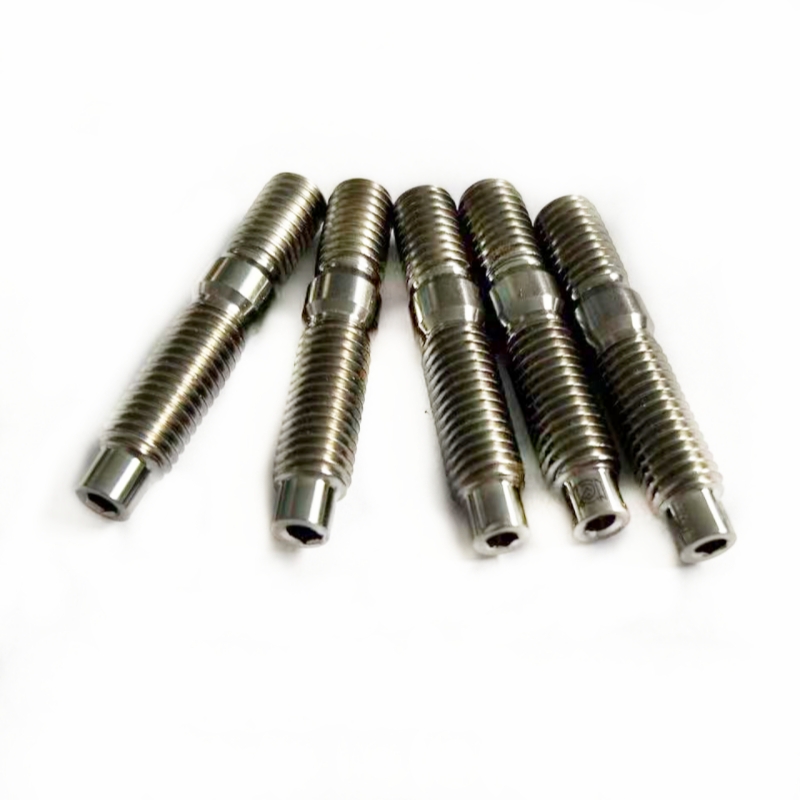
GR5 Titanium Exhaust Manifold Stud Manifold Bolt Polished M8*1.25*45
- Thread Pitch: M8 × 1.25
- Overall Length: 45 mm
- Finish: Mirror Polished
- Tensile Strength: ≥ 895 MPa
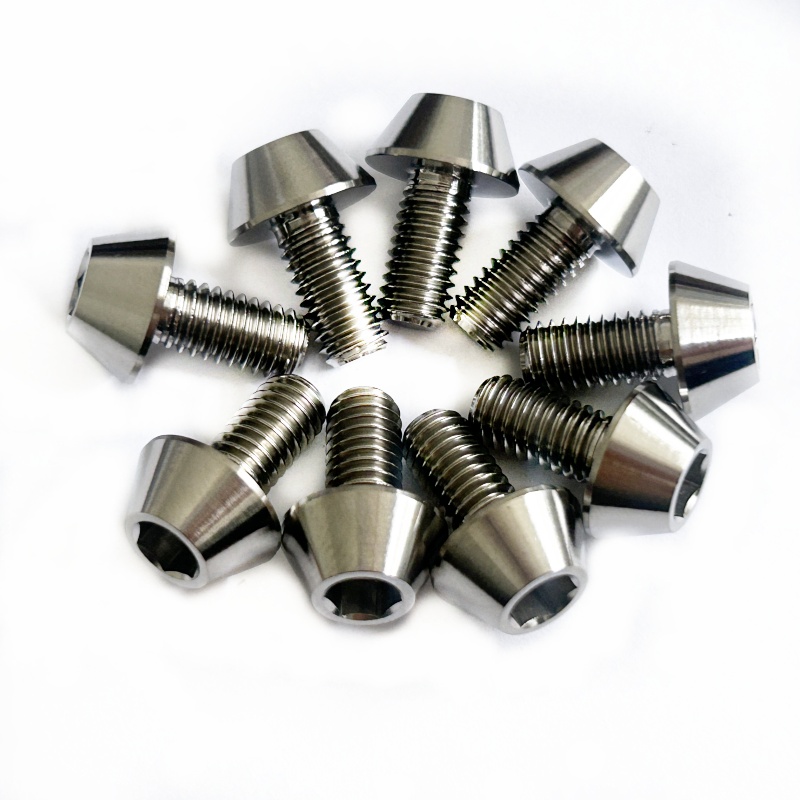
M6*12 Titanium Allen Hex Bolts Umbrella Type Bike Frame Screws
- Drive Style: Internal Hex Socket
- Head Geometry: Low-Profile Umbrella
- Nominal Size: M6 × 12 mm
- Target App: Bicycle Frame & Cage
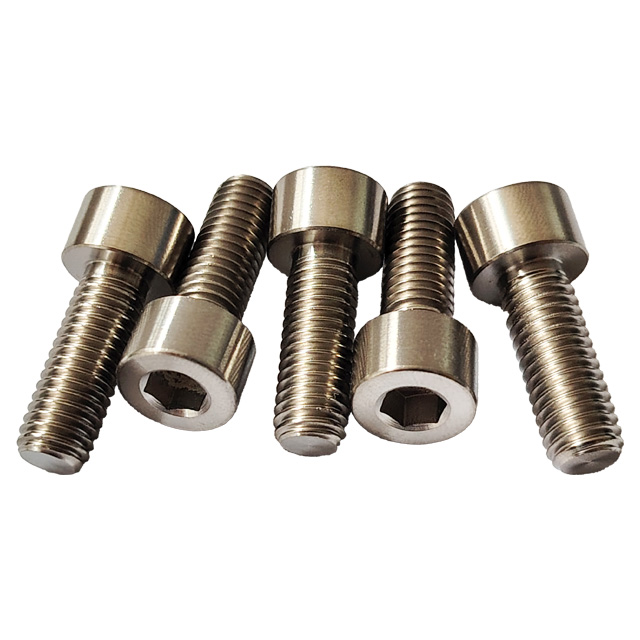
GR5 Titanium DIN 912 Cylindrical Cap Head Hex Socket Bolts M10*40mm
- Standard: DIN 912 / ISO 4762
- Dimension: M10 × 40 mm
- Material: Ti-6Al-4V Grade 5
- Yield Strength: ≥ 828 MPa
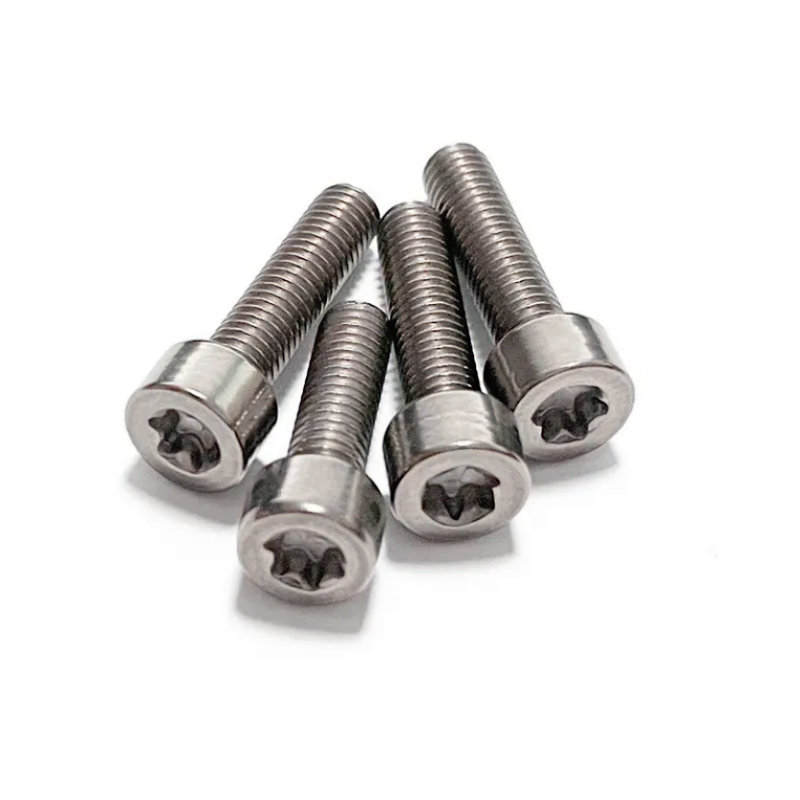
GR5 Titanium T30 Torx Drive Bolts for Motorcycle & Powertrain
- Drive Type: High-Torque Torx T30
- Cam-Out Proof: 100% Anti-Slip
- Alloy Grade: Ti-6Al-4V ELI / Gr5
- Industry: Superbike & Racing
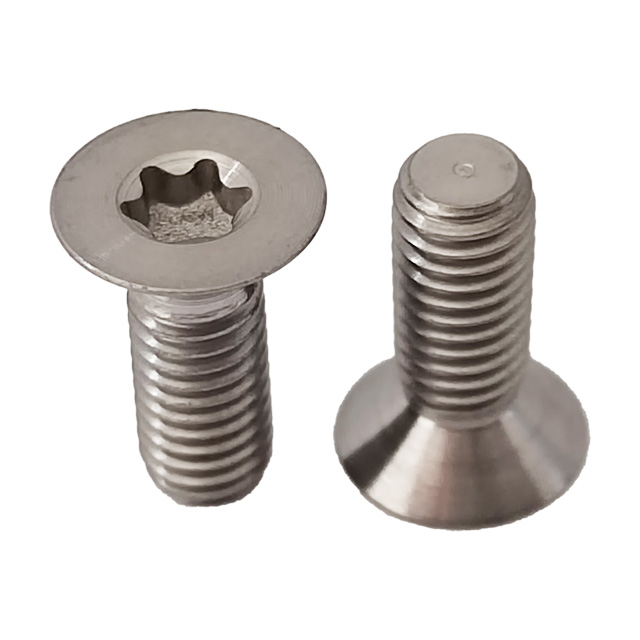
GR5 Titanium Countersunk Flat Head Inner Torx Screws M5*13mm
- Profile: Flush 90° Countersunk
- Size: M5 × 13 mm
- Drive: Torx Plum Drive
- Corrosion Rating: Zero Marine Galling
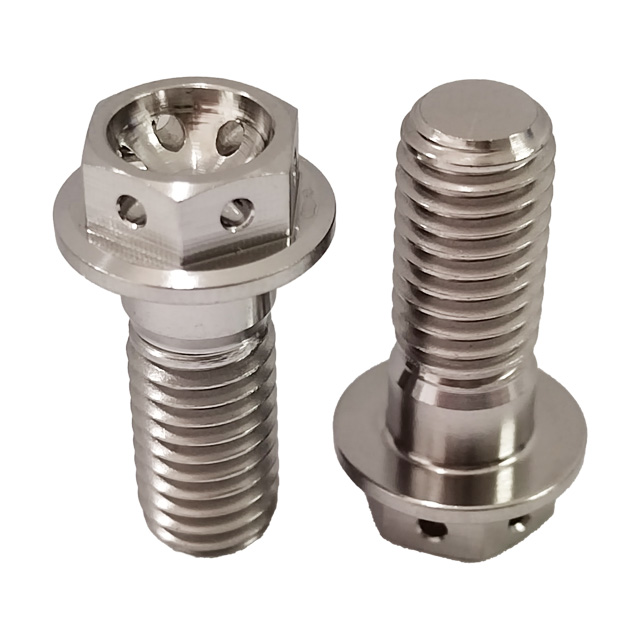
GR5 Titanium Hex Flange Safety-Drilled Race Bolts M8*20mm
- Head Style: Integrated Flange Head
- Safety Feature: Cross-Drilled Wire Holes
- Dimension: M8 × 20 mm
- Torque Range: 28 – 32 N·m
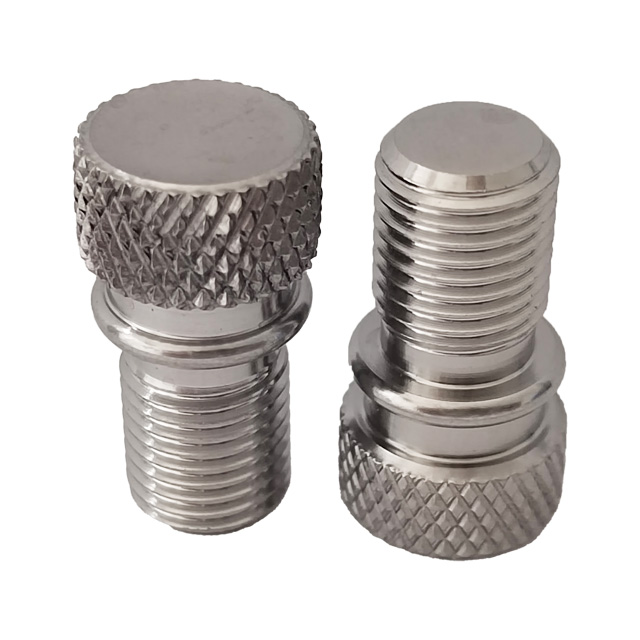
GR5 Titanium Cylindrical Head Knurled Screws M9*1.0*12mm
- Head Rim: Diamond Knurl Grip
- Pitch: M9 × 1.0 Fine Metric
- Length: 12 mm
- Manufacture: CNC Precision Lathe
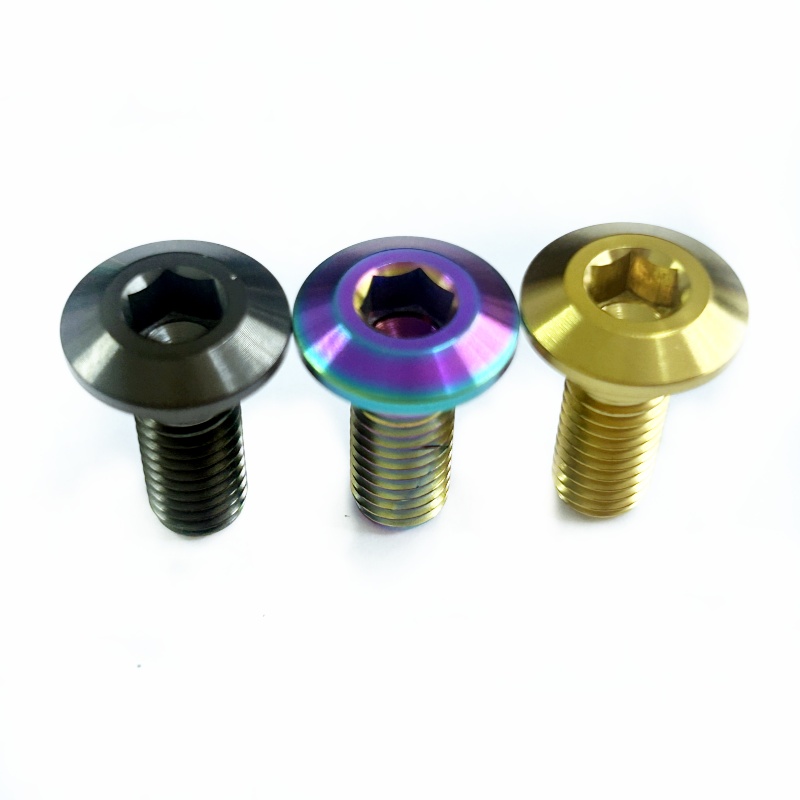
M8 GR5 Titanium Shoulder Hex Socket Disc Brake Refit Bolts
- Configuration: Precision Shoulder Shank
- Drive: Deep Hexagonal Socket
- Compatibility: Performance Rotor Mounts
- Fatigue Life: > 2 × 10⁶ Cycles
Engineering Whitepaper: Metallurgical Standards and Structural Mechanics of DIN 912 Titanium Fasteners
In precision engineering, mechanical joints represent the single greatest point of operational vulnerability under dynamic shear and vibrational cycling. The DIN 912 standard (internationally recognized as ISO 4762) defines the rigorous geometric specifications for socket head cap screws—a profile engineered to provide superior tensile clamping force in compact, recessed assembly bores. When fabricated from Grade 5 Titanium (Ti-6Al-4V, UNS R56400, Werkstoff 3.7165), DIN 912 screws transcend the thermal, corrosive, and mass limitations of traditional high-tensile steels and standard austenitic stainless fasteners.
Core Metallurgical Principle: Grade 5 titanium delivers an exceptional strength-to-density ratio ($190 \times 10^3 \text{ N}\cdot\text{m/kg}$), combining an alpha-beta duplex crystalline phase stabilized by 6% aluminum and 4% vanadium. This crystalline morphology provides an ultimate tensile strength exceeding 895 MPa with a density of only 4.43 g/cm³, offering structural parity with Class 10.9 and 12.9 alloy steels while eliminating brittle failure modes caused by atmospheric rust and hydrogen-induced intergranular stress cracking.
Mechanical Performance Benchmark: Ti-6Al-4V vs. Competing Fastener Alloys
Procurement engineers balancing mass budgets against fatigue resistance must scrutinize baseline mechanical indicators. The table below delineates the critical engineering parameters governing standard metric fastener options:
| Material Designation | Alloy Class | Density (g/cm³) | Yield Strength ($R_{p0.2}$, MPa) | Tensile Strength ($R_m$, MPa) | Elastic Modulus ($E$, GPa) | Corrosion Resistance |
|---|---|---|---|---|---|---|
| Navzo GR5 Ti-6Al-4V | Alpha-Beta Titanium | 4.43 | 828 | 895 – 1050 | 114 | Immune in Salt Spray, Chlorides & Acids |
| CP Grade 2 Titanium | Commercially Pure α | 4.51 | 275 | 345 – 480 | 103 | Outstanding Chemical & Marine Stability |
| Alloy Steel Class 12.9 | Quenched & Tempered | 7.85 | 1100 | 1220 | 210 | Severe Rust Without Sacrificial Plating |
| Stainless Steel A2-70 / 304 | Austenitic Cr-Ni | 7.90 | 450 | 700 | 193 | Moderate Pitting in Chloride Environments |
| Stainless Steel A4-80 / 316 | Austenitic Cr-Ni-Mo | 8.00 | 600 | 800 | 193 | Resistant to Marine Crevice Corrosion |
Cold-Forged Heading vs. Subtractive CNC Machining
When evaluating qualified DIN 912 titanium screw factories, assessing the manufacturing forming pathway is decisive for component longevity. While rapid-turnaround prototypes are frequently turned on CNC Swiss lathes from drawn titanium bars, premium-tier DIN 912 fasteners destined for safety-critical aerospace and motorsport nodes utilize multi-station cold heading:
1. Continuous Metallurgical Grain Flow: Cold heading deforms the titanium wire stock along natural crystallographic planes, maintaining uninterrupted grain boundaries curving from the fastener shank into the cylindrical head and internal hexagon socket. This reduces notch sensitivity ($K_t$) at the critical head-to-shank junction, increasing cyclical fatigue thresholds by up to 35% compared to fully subtractive, cut-turned heads where microstructural fibers are severed.
2. Thread Rolling Mechanics: All high-integrity DIN 912 titanium bolts produced by Navzo feature threads rolled between reciprocating or circular flat dies under high compressive pressure after heat treatment. Thread rolling induces compressive residual stresses within the thread root radii, resisting micro-crack propagation under extreme thermal cyclic fatigue—crucial for exhaust manifold studs and high-output caliper mounting bolts.
Navzo Precision Titanium: Factory Strengths & Ecosystem
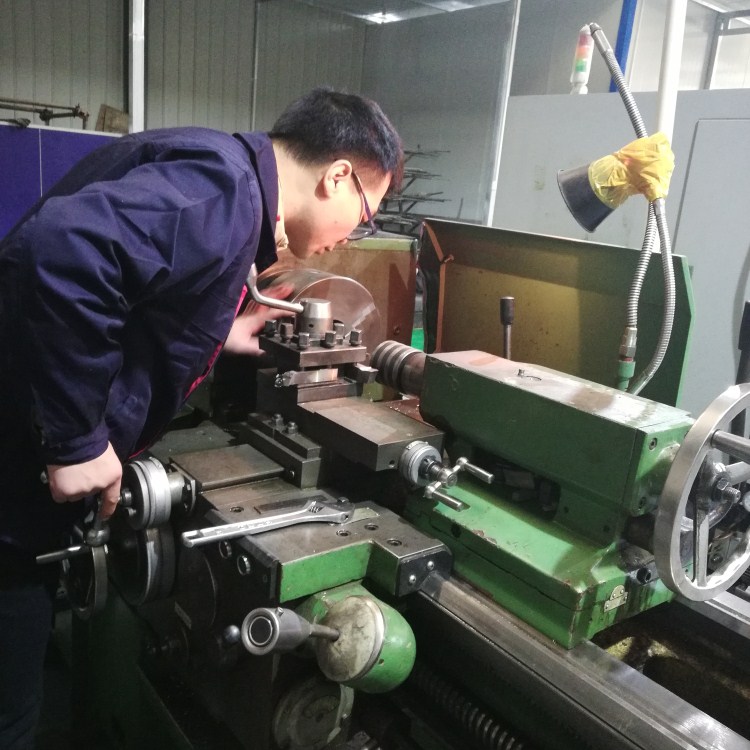
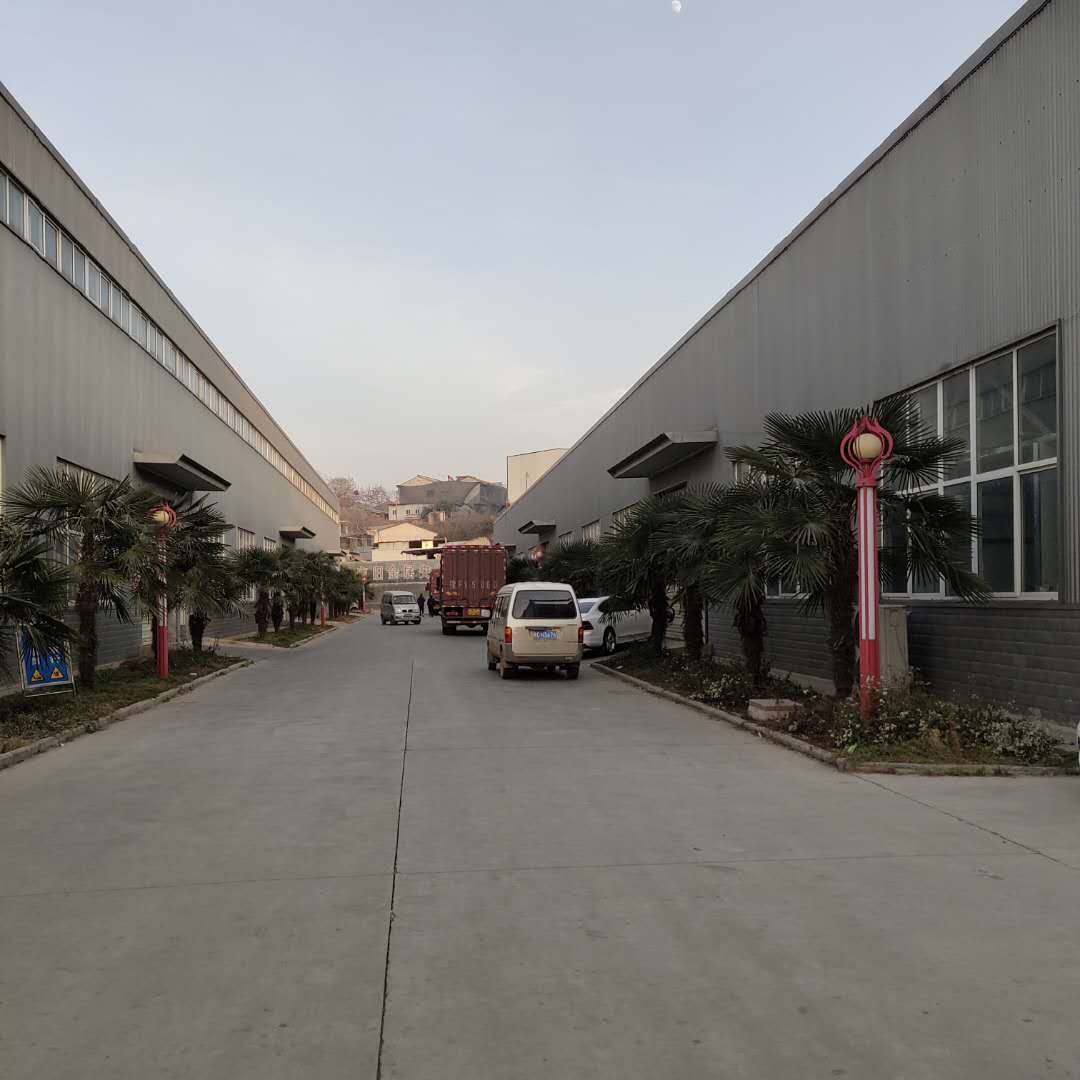
Situated in Baoji, China—globally acknowledged as "Titanium Valley"—Navzo combines deep metallurgical raw material supply chains with advanced in-house forming, CNC turning, and testing facilities.
Baoji Titanium Supply Chain
Direct proximity to premier titanium sponge reduction plants and vacuum arc remelting (VAR) centers ensures 100% traceable Grade 5 billets compliant with ASTM B348, AMS 4928, and ISO 5832 standards.
End-to-End Vertical Control
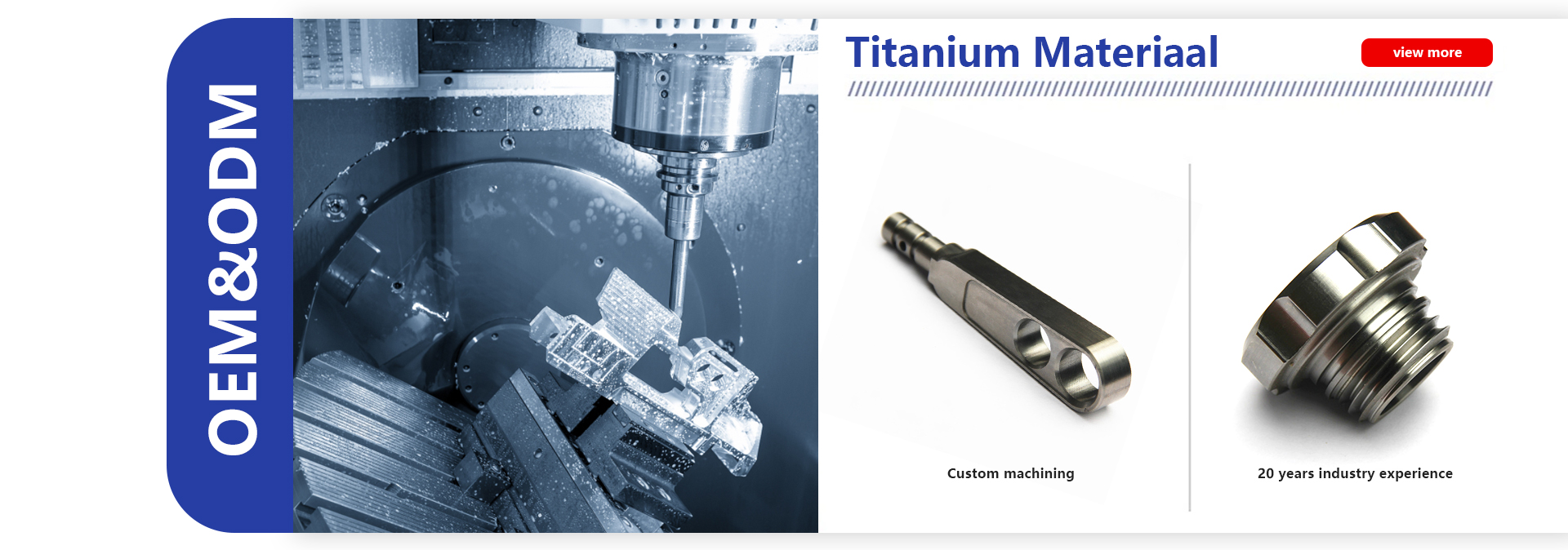
From multi-station high-speed heading presses and 5-axis CNC machining centers to specialized rolled threading lines and automated optical sorting, entire production workflows remain enclosed within our managed facility.
Rigorous Metrology & MTRs
Every production run includes comprehensive chemical composition reports via optical emission spectroscopy, thread profile projector inspection (6H / 6g tolerance), and digital EN 10204 3.1 certification upon shipment.
Custom Color & Surface Lab
In-house physical vapor deposition (PVD) coating chambers and digital multi-stage bath anodization facilities allow tight control over decorative and functional finishes, including burnt blue, gold, oil slick, and DLC black.
Agile OEM & Drawing Customization
Rapid prototyping from customer STEP, DWG, or PDF CAD files. Our engineering staff provides Design for Manufacturability (DFM) reviews within 24 hours, optimizing tolerances, knurling styles, and socket drives.
Global Sourcing Reliability
Supplying tier-1 aftermarket brands, industrial valve builders, and racing engineering syndicates across North America, Germany, the UK, Japan, and Australia with zero-defect quality control protocols.

Future Procurement Trends for DIN 912 Titanium Screws (2025–2030)
Navigating raw material supply-chain dynamics, decarbonization mandates, and emerging application sectors in global B2B fastener procurement.
1. EV Powertrain Lightweighting and Decarbonization Mandates
As battery electric vehicles (BEVs) and hyper-performance hybrid architectures demand ever-greater driving ranges, rotating un-sprung mass and chassis structural weight have become primary targets for optimization. Fastener-level mass reduction provides immediate efficiency dividends without altering cast aluminum subframes or battery tray chassis dimensions. Engineering procurement teams are migrating from heavy Grade 8.8 and 10.9 steel hex cap fasteners to DIN 912 GR5 titanium bolts across battery enclosure covers, high-voltage busbar connections, and hub-carrier suspension knuckles. Furthermore, the non-magnetic permeability of titanium minimizes electromagnetic interference (EMI) adjacent to inverter motor drives.
2. Consolidation into High-Capacity "Titanium Valley" Hubs
Global supply chain vulnerabilities exposed during recent international disruptions have accelerated the consolidation of fastener sourcing toward vertically integrated geographic manufacturing clusters. Baoji, China accounts for over 60% of China's domestic titanium output and roughly 20% of the world's supply. By sourcing DIN 912 fasteners directly from established factories within Baoji's High-Tech Industrial Zone, B2B procurement managers eliminate inter-regional logistics bottlenecks, secure lower mill-direct billet pricing, and gain immediate access to localized metallurgical testing laboratories and anodizing facilities.
3. Growth in Marine Robotics, Subsea Nodes, and Hydrogen Systems
Beyond traditional aerospace and racing aftermarket niches, autonomous underwater vehicles (AUVs), oceanographic sensor arrays, and offshore green-hydrogen electrolyzer stacks are driving substantial demand spikes for DIN 912 titanium fasteners. In submerged marine environments, steel fasteners require ongoing cathodic protection or costly multi-layer zinc-nickel flake coatings that inevitably degrade. Grade 5 and Grade 2 titanium fasteners naturally generate an instantaneously self-healing, passivated titanium dioxide ($\text{TiO}_2$) barrier film, achieving zero pitting and crevice corrosion across decades of saltwater submersion.
Technological Innovations in Titanium Fastener Engineering
From micro-tribology surface enhancements to hybrid additive tooling, explore how modern factories are pushing DIN 912 performance forward.
B2B Purchasing FAQ: DIN 912 Titanium Fasteners
Expert engineering guidance addressing thread galling, torque tension factors, material grades, galvanic isolation, and factory auditing.
What is the definitive mechanical difference between Grade 5 (Ti-6Al-4V) and Grade 2 for DIN 912 cap screws?
Grade 2 is commercially pure (CP) alpha titanium with a much lower tensile strength (approx. 345–480 MPa). While structurally insufficient for high-torque mechanical joints, Grade 2 exhibits superior resistance to severe reducing chemical media and is typically deployed in chemical processing reactors, electroplating anode fixtures, and decorative non-structural consumer products.
How can thread galling (cold welding) be mitigated when torquing DIN 912 titanium screws?
- Anti-Seize Lubricant: Apply a specialized nickel-free or copper-free, molybdenum disulfide ($MoS_2$) or high-purity ceramic-based assembly paste prior to tightening.
- Advanced Surface Coatings: Specify physical vapor deposition (PVD) coatings such as Diamond-Like Carbon (DLC) or Titanium Nitride (TiN), which impart a hard ceramic barrier with ultra-low friction coefficients.
- Controlled Torque Speeds: Avoid excessive RPM using impact guns; manual torque wrenches calibrated to appropriate friction factors ($K$) ensure controlled preload without localized thermal spikes.
What is the recommended tightening torque calculation for DIN 912 titanium screws?
Is galvanic corrosion a risk when pairing DIN 912 titanium screws with aluminum or carbon fiber?
In Carbon Fiber (CFRP) Assemblies: Unlike stainless or zinc-plated alloy steels, titanium possesses a near-identical electrochemical potential to carbon fibers. Titanium fasteners will not initiate galvanic corrosion when torqued directly into bare carbon composite matrixes, making DIN 912 GR5 the universal standard in aerospace and supercar carbon chassis.
What documentation and quality certificates should accompany an export batch of DIN 912 titanium fasteners?
- EN 10204 Type 3.1 Mill Test Certificate (MTR): Verifying chemical composition (percentages of Ti, Al, V, Fe, C, N, H, O) via spectrometer and tensile test metrics ($R_m$, $R_{p0.2}$, elongation %).
- Dimensional Metrology Report: Verifying DIN 912/ISO 4762 compliance, including head diameter, head height, socket depth, total length, and go/no-go 6g thread gauge checks.
- Raw Billet Ultrasonic Testing (UT) Records: Confirming internal void-free soundness per AMS 2631 or ASTM B348.
What are Navzo's standard Minimum Order Quantities (MOQ) and production lead times?
Connect Directly With Navzo's Engineering Fastener Team
Accelerate your procurement pipeline with direct factory pricing, traceable Grade 5 mill-certified titanium stock, and 1-hour engineering response windows. Whether you need standard DIN 912 socket screws or custom multi-axis CNC parts, our Baoji facility is built to support your exacting build specifications.