Precision GR5 Titanium Fasteners Catalogue
Direct from our Baoji manufacturing plant: high-integrity Grade 5 (Ti-6Al-4V) hex-driven bolts, manifold studs, and precision locking hardware engineered for high tensile fatigue resistance, zero chloride corrosion, and 44% mass reduction.
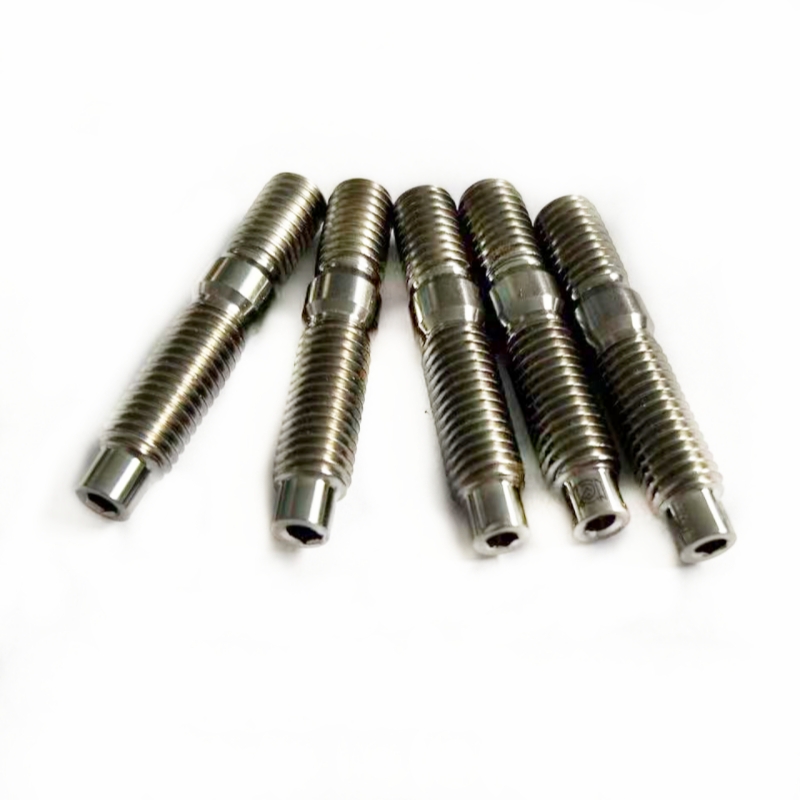
GR5 Titanium Exhaust Manifold Stud Manifold Bolt Polished Finish in Stock M8*1.25*45
- Standard Size
- M8 × 1.25 × 45 mm
- Tensile Strength
- 980 - 1050 MPa
- Surface Finish
- Electropolished Micro-Ra <0.4
- Operating Temp
- -50°C to +450°C
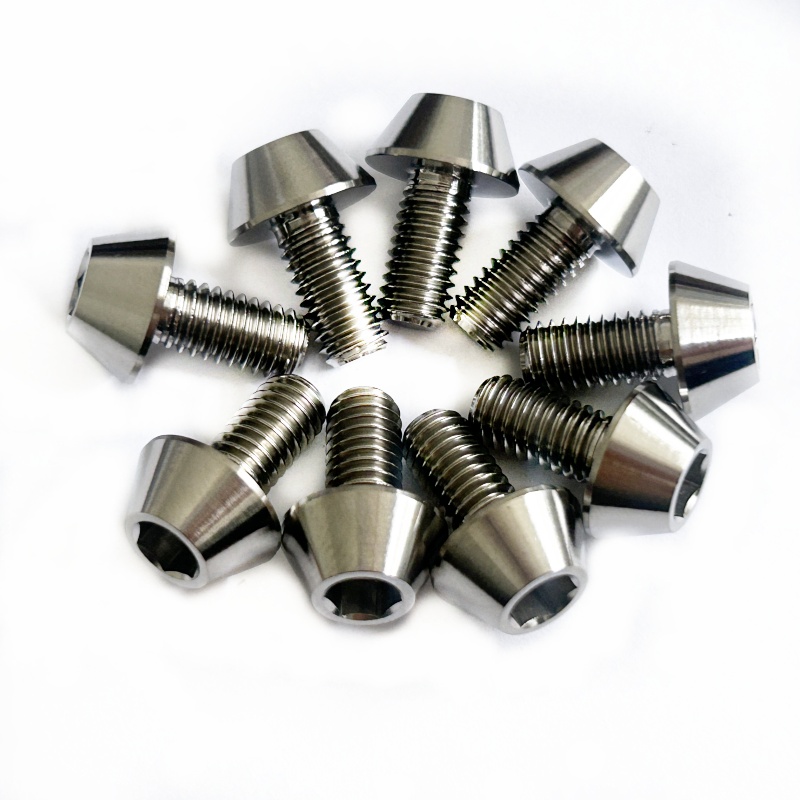
M6*12 Titanium Allen Hex Bolts Umbrella Type Screws Bike Frame Bolt for Bicycles
- Thread Config
- M6 × 1.0 × 12 mm
- Head Geometry
- Low-Profile Umbrella Dome
- Drive Mechanism
- Precision Internal Hex (Allen)
- Weight Metric
- 2.2 grams / unit
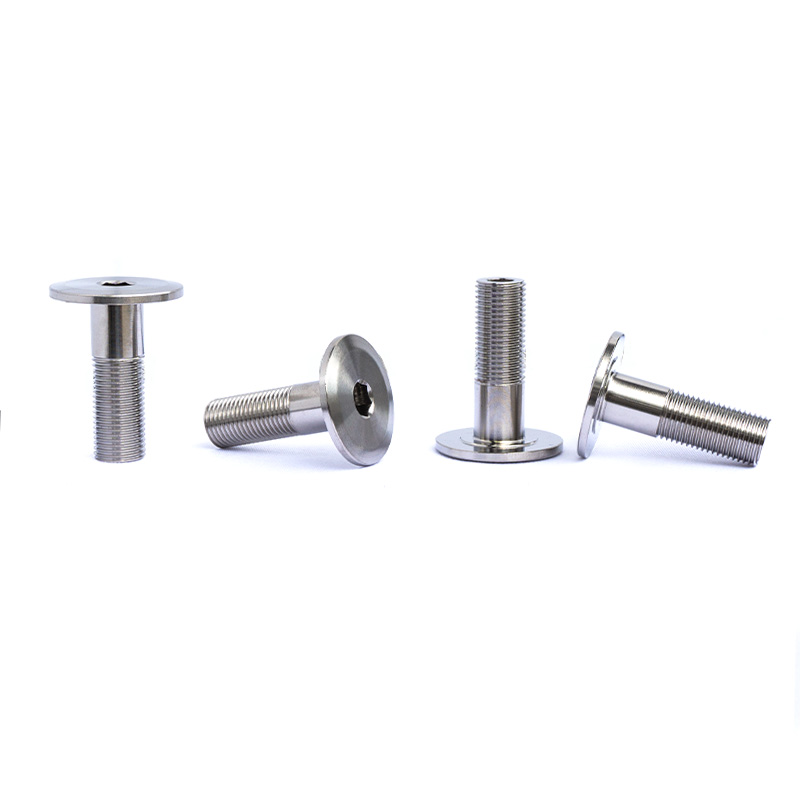
GR5 Titanium Bolts M10*1*33mm Large Flat Head Hex Socket Hollow Bolts Factory Price
- Thread Spec
- M10 × 1.0 Fine Pitch × 33mm
- Bore Architecture
- Axial Deep-Hollow Bored
- Weight Saving
- 55% vs Solid Carbon Steel
- Application
- Suspension & Banjo Assembly
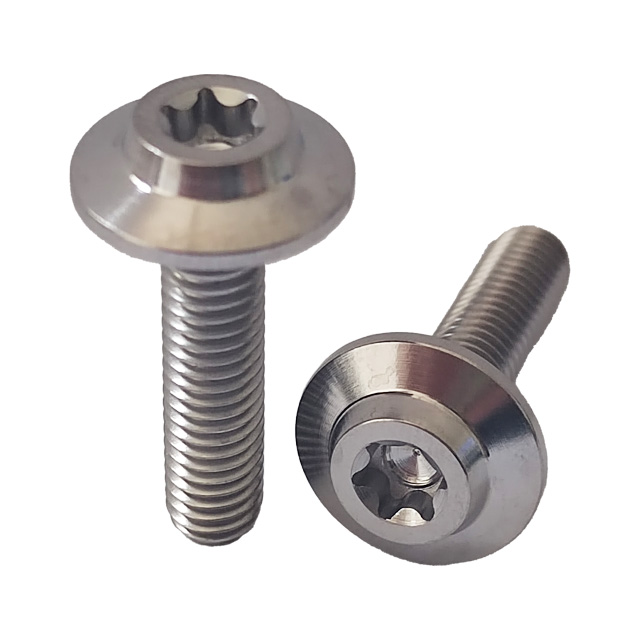
GR5 Titanium Bolts M6*25mm Umbrella Flange Head Inner Torx Plum Screws
- Size Parameter
- M6 × 1.0 × 25 mm
- Flange Interface
- Integrated Stress-Distributing Washer
- Drive Standard
- Internal Torx T30 / Plum
- Fatigue Life
- >1.5 × 10⁶ Cycles (ISO 3800)
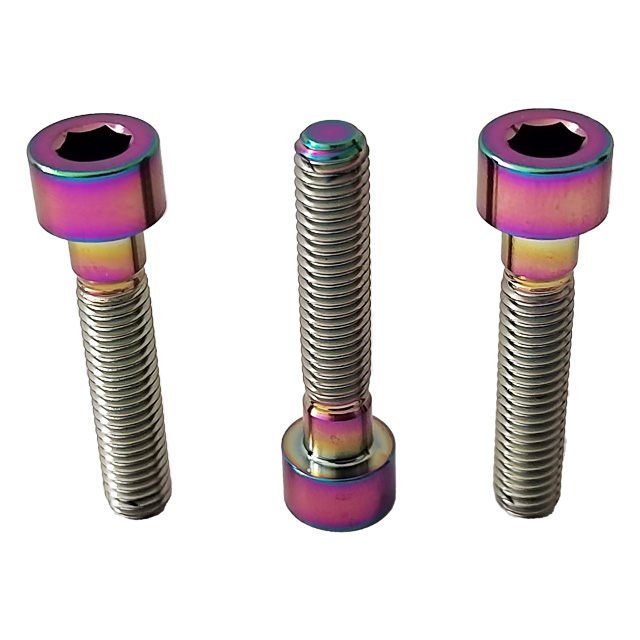
GR5 Titanium Bolts M8*40mm Colored Cylinder Head Hex Socket Cap Screws
- Thread Pitch
- M8 × 1.25 × 40 mm
- Head Profile
- DIN 912 Deep Socket Cap
- Anodized Palette
- Burnt-Blue, Gold, Purple, DLC
- Proof Load
- 830 MPa Nominal
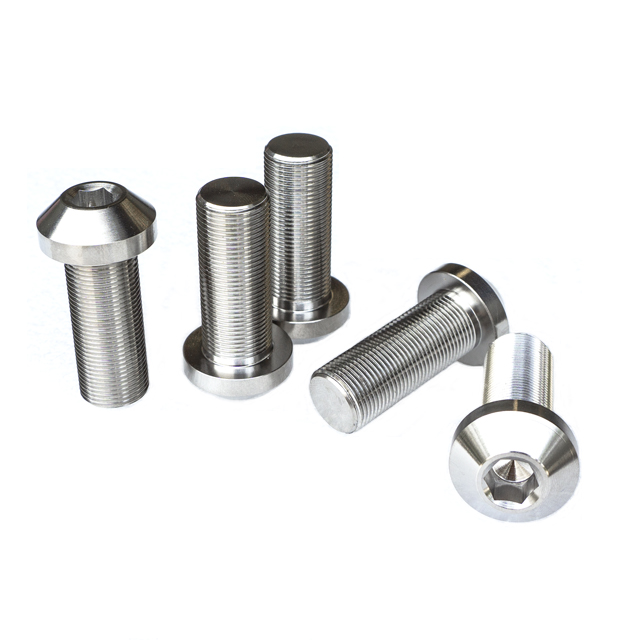
GR5 Titanium Bolts M14*1.0*35mm Umbrella Head Hex Socket Taper Screws
- Dimensional Code
- M14 × 1.0 Fine Pitch × 35 mm
- Yield Strength
- 880 MPa Min
- Torque Capacity
- Up to 110 N·m (Lubricated)
- Quality Control
- 100% Optical Dimension Gauged
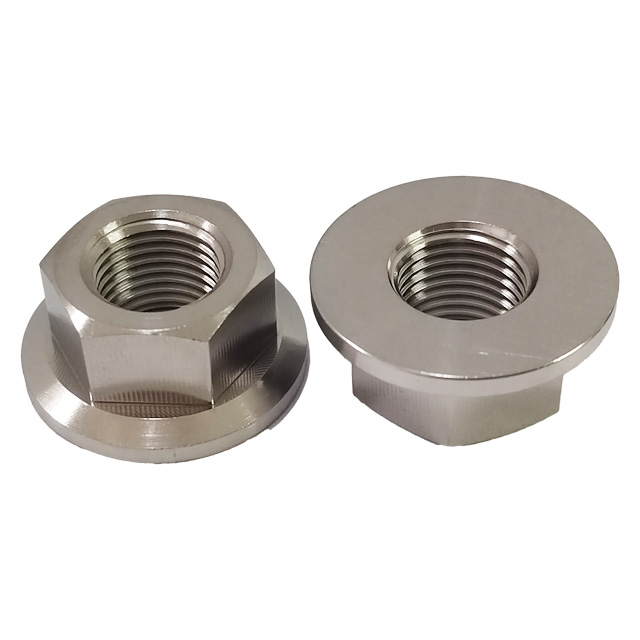
GR5 Titanium Nuts M12*1.5 High Strength Hex Flange Full Thread Right Hand Fasteners
- Internal Thread
- M12 × 1.5 Right-Hand (6H)
- Locking Design
- Serrated Flange Base
- Density Metric
- 4.43 g/cm³ (Vs 7.85 Steel)
- Standard Cert
- DIN 6923 / ISO 4161 Compliant
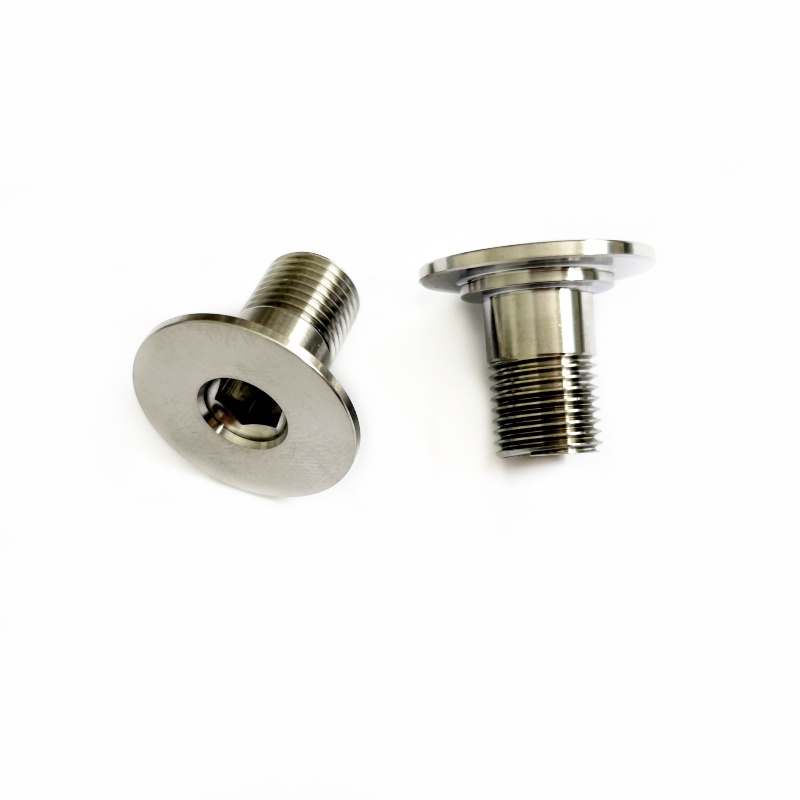
GR5 Titanium Big Pan Hexagon Head Bolts in Stock Factory Supply M10*18
- Thread Pitch
- M10 × 1.25 / 1.5 × 18 mm
- Drive Profile
- External Heavy Hex Pan Head
- Grain Structure
- Hot-Forged Head + Rolled Thread
- Stock Status
- Ready for Global Shipment
Ti-6Al-4V Grade 5 Metallurgy & Mechanical Integrity
Why Tier-1 engineering procurement teams replace 304/316 stainless steels and Grade 8.8/10.9 structural steels with Baoji Navzo cold-worked Ti-6Al-4V titanium hex bolts.
Dual-Phase (α + β) Lattice Optimization
Navzo Ti-6Al-4V fasteners exploit a carefully balanced alloy matrix containing 6% Aluminum (alpha-phase stabilizer for elevated tensile strength) and 4% Vanadium (beta-phase stabilizer providing ductile toughness). This microstructure yields a minimum yield strength of 828 MPa and ultimate tensile values exceeding 950–1050 MPa, effectively rivaling heat-treated ISO 898-1 Class 10.9 carbon steel while reducing density from 7.85 g/cm³ down to 4.43 g/cm³.
Fatigue Limit & Notch Sensitivity
Titanium exhibits an exceptional endurance limit under cyclic axial fatigue compared to lightweight aluminum alternatives. Because titanium has an elastic modulus of 114 GPa (approximately half that of structural steel), our hex bolts absorb high-amplitude dynamic vibrations, bending impacts, and thermal expansion cycles without inducing micro-crack propagation across critical head-to-shank fillet radiuses.
Chloride Immunity & Biocompatibility
Grade 5 titanium forms an instantaneous, self-healing stoichiometric Titanium Dioxide (TiO₂) passive barrier upon air contact. Unlike 316L stainless steel, which suffers catastrophic chloride pitting and crevice corrosion under marine splash or salt spray conditions, Navzo Grade 5 hex fasteners exhibit zero pitting corrosion across decades of saltwater, petrochemical, and racing exhaust immersion.
| Material Specification | Density (g/cm³) | Yield Strength (MPa) | Tensile Strength (MPa) | Modulus (GPa) | Strength-to-Weight Ratio | Corrosion Resistance |
|---|---|---|---|---|---|---|
| Navzo Ti-6Al-4V (Grade 5) | 4.43 | 828 - 910 | 950 - 1050 | 114 | 214 - 237 kN·m/kg | Immune to Cl⁻, Sea Water & Nitric Acid |
| Commercially Pure Ti (Grade 2) | 4.51 | 275 - 350 | 345 - 480 | 103 | 76 - 106 kN·m/kg | Superior Chemical Resistance |
| Stainless Steel A4-80 (AISI 316) | 8.00 | 600 | 800 | 193 | 100 kN·m/kg | Moderate (Prone to Pitting in Warm Sea Water) |
| High-Tensile Alloy Steel 10.9 | 7.85 | 900 | 1000 - 1040 | 210 | 127 - 132 kN·m/kg | Extremely Poor (Requires Zinc/Cadmium Plating) |
| Aircraft Aluminum 7075-T6 | 2.81 | 503 | 572 | 71.7 | 203 kN·m/kg | Prone to Stress-Corrosion Cracking (SCC) |
Hot/Cold Heading & Continuous Grain Directionality
Navzo utilizes specialized multi-station cold and warm forging heading machines. By plastic deformation under hydrostatic pressure, the head of our hex bolts is shaped without severing the crystalline metal grain lines. Grain flow contours wrap uninterrupted around the hex shoulder and through the shank, increasing the dynamic shear yield resistance of the head by up to 30% over cut-machined bolts.
Thread Rolling Per Aerospace UNJ / ISO 965 Classes
Threads are never lathe-chased or cut with dies. Instead, Navzo precision rolls all metric and imperial threads between hardened carbide dies. Rolling induces high compressive residual stresses in the thread roots and burnishes the flank surface roughness to Ra <0.2 μm. This virtually eliminates notch-induced fatigue fractures, tripling operational life under severe cyclic stress.
Eliminating Thread Galling & Surface Wear
Titanium alloys are notoriously vulnerable to thread galling (adhesive friction cold-welding) when driven under high clamp loads. Navzo employs four state-of-the-art surface conversion and vapor deposition systems to guarantee consistent nut-tightening torque factors.
Micro-Arc & Type II Anodizing
Converts the reactive metallic outer substrate into an amorphous 2–5 μm dense oxide layer. Reduces friction coefficient down to 0.12–0.15 when combined with anti-seize pastes, drastically suppressing adhesive galling in titanium-on-titanium and titanium-on-aluminum threads.
PVD Vacuum Hard Coatings (TiN / DLC)
Physical Vapor Deposition coats the bolt with Diamond-Like Carbon (DLC) or Titanium Nitride (TiN) at micro-hardnesses exceeding 2500–3200 HV. Provides uncompromised scratch resistance, jet-black or rich gold aesthetics, and dry-film lubricity for frequently assembled race suspension components.
Burnt-Blue Thermal Vacuum Tempering
Utilizes computer-controlled furnace vacuum oxidation to create gradient spectrum interference optics (deep royal blue to iridescent purple and gold). Favored worldwide by elite aftermarket superbike, exhaust, and performance tuning racing teams.
Mechanical & Electropolishing
Multi-stage vibratory tumbling and electrochemical deburring mirror-smooths the shank and head surfaces to an ultra-clean Ra 0.2 μm mirror finish, removing microscopic micro-notches that could otherwise serve as sites for fatigue initiation.
Future Trends in Titanium Fastener Sourcing
How macroeconomic shifts, commercial aerospace expansions, lightweight EV designs, and supply chain realignments are transforming global titanium fastener procurement.
EV Mass De-weighting & Unsprung Inertia
As electric vehicle architectures migrate toward 800V high-density battery architectures, reducing un-sprung mass across suspension uprights, brake calipers, and drive motors has become an engineering imperative. Replacing steel fasteners with Grade 5 titanium lowers unsprung inertial loads, extending EV driving range and sharpening wheel rebound dampening dynamics.
Consolidation around China Titanium Valley (Baoji)
Baoji, Shaanxi accounts for over 65% of China’s titanium processing output and nearly 25% of global capacity. Forward-thinking procurement officers are bypassing multi-tier regional brokers, establishing direct factory agreements with verified Baoji original manufacturers like Navzo to lock in predictable raw sponge allocations and insulate against volatile European/North American ingot price spikes.
Direct OEM Blueprint Customization (On-Demand CAD)
The standard catalogue era is giving way to high-mix, custom-tolerance procurement. OEM engineering departments now demand integrated washer flanges, captive sleeves, inner Torx plum drives inside hex heads, and specialized hollow weight-relief drillings delivered directly from STEP/IGES models within accelerated 10-to-15 day prototyping windows.
Stringent Carbon & ESG Total Lifecycle Sourcing
While the initial unit purchase cost of Grade 5 titanium hex bolts is higher than carbon steel, titanium's lifetime chemical immunity completely eliminates recurring maintenance cycles, stripping, replating, and toxic hexavalent chromium coatings. Over a 20-year operational lifecycle in marine splash or chemical processing, titanium yields a 40–60% lower Total Cost of Ownership (TCO).
Navzo Precision Titanium Co., Ltd.
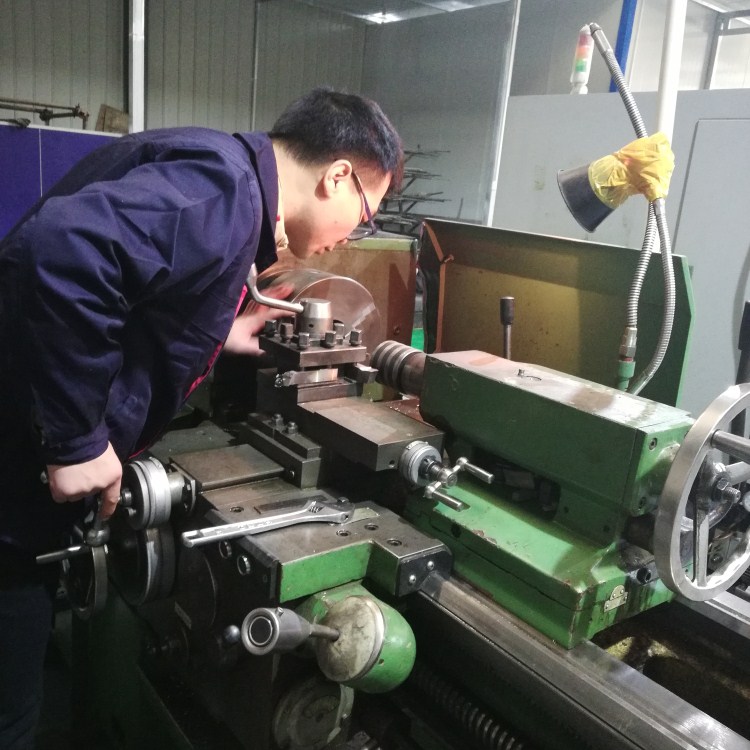
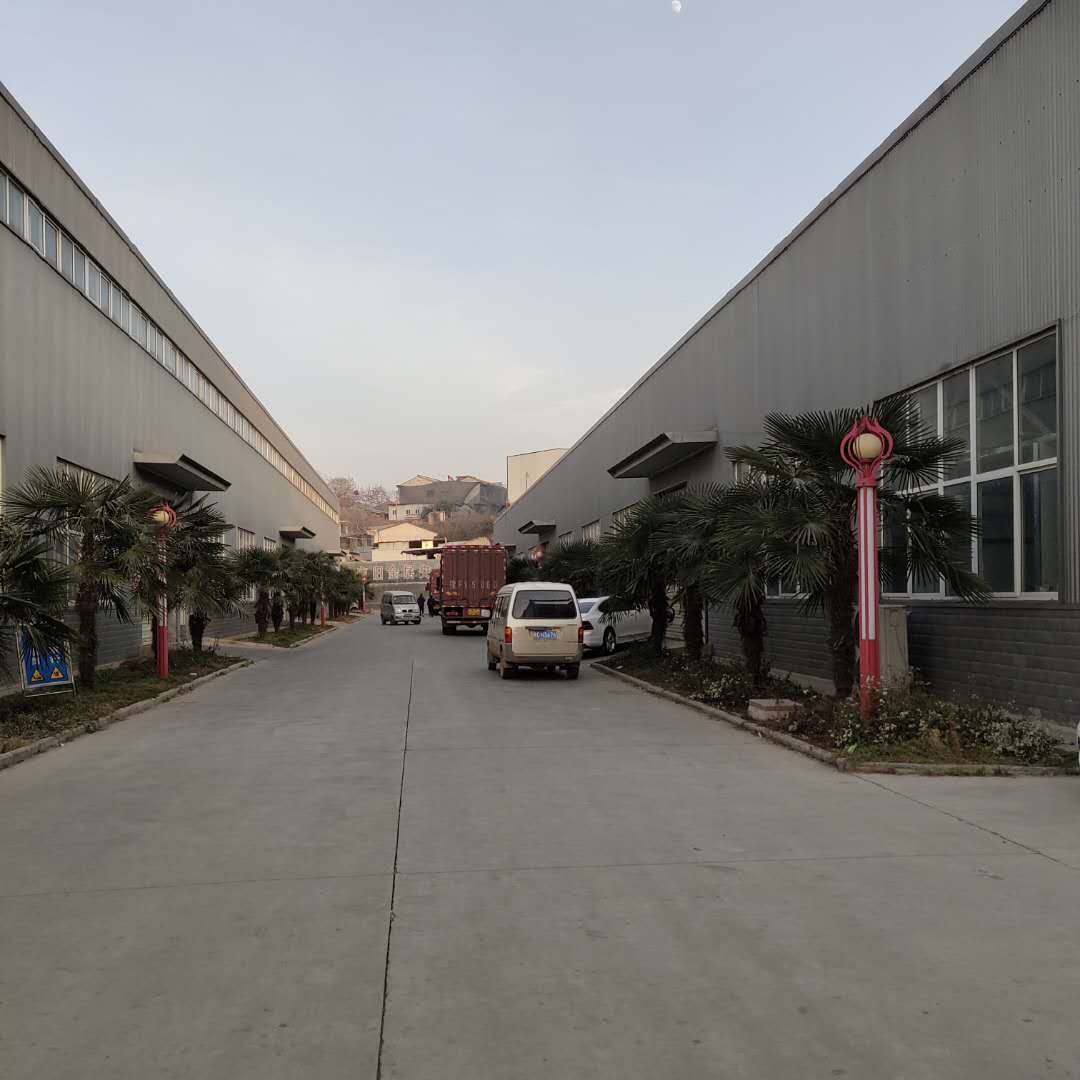
Founded on January 10, 2011, in the High-tech Development Zone of Baoji (China's world-renowned Titanium Valley), Navzo operates an integrated manufacturing facility combining cold heading machines, multi-axis high-speed CNC machining centers, and optical coordinate measuring machines.
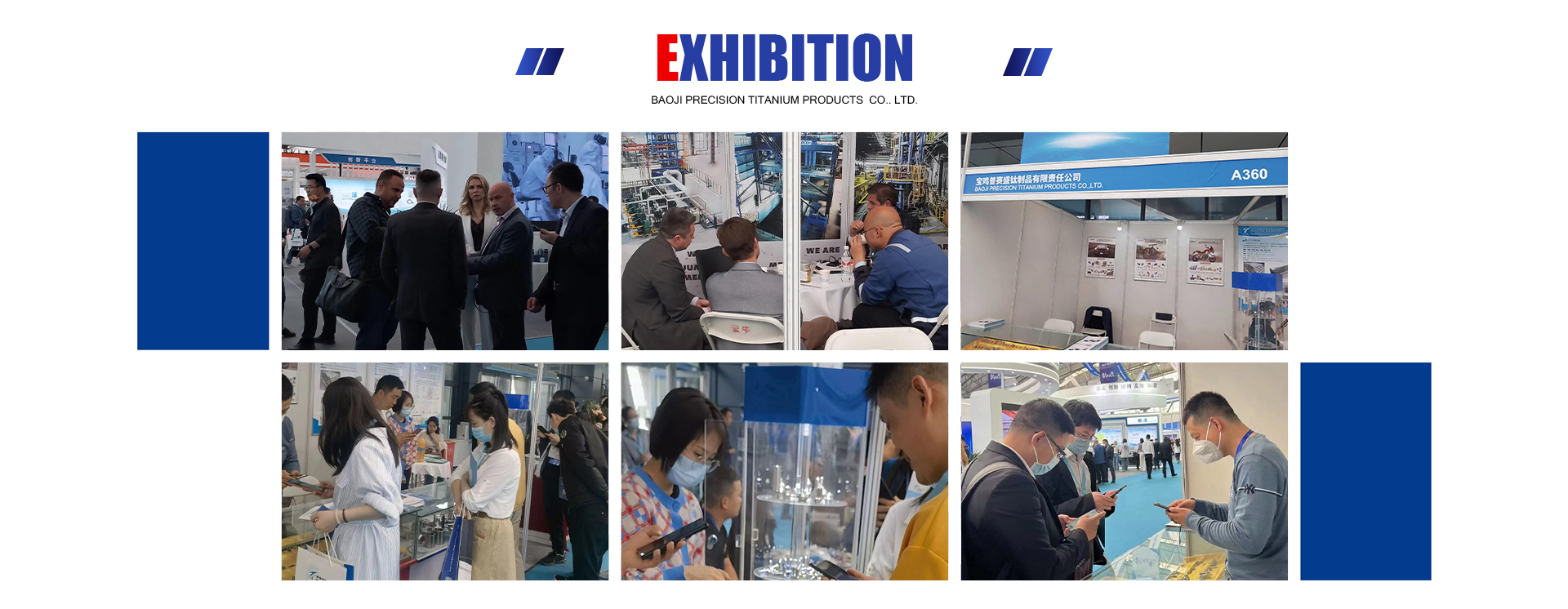
We manage every stage of fastener synthesis—from spectral alloy ingot testing to final automated laser sorting—supplying precision fastener components to high-profile automotive, marine, cycling, and instrumentation clients in the USA, Germany, Japan, South Korea, Russia, and the Netherlands.
- 100% Baoji Certified Ti-6Al-4V Bar
- Full EN 10204 3.1 Mill Test Reports
- Fast Turnaround: ≤1 Hour Response
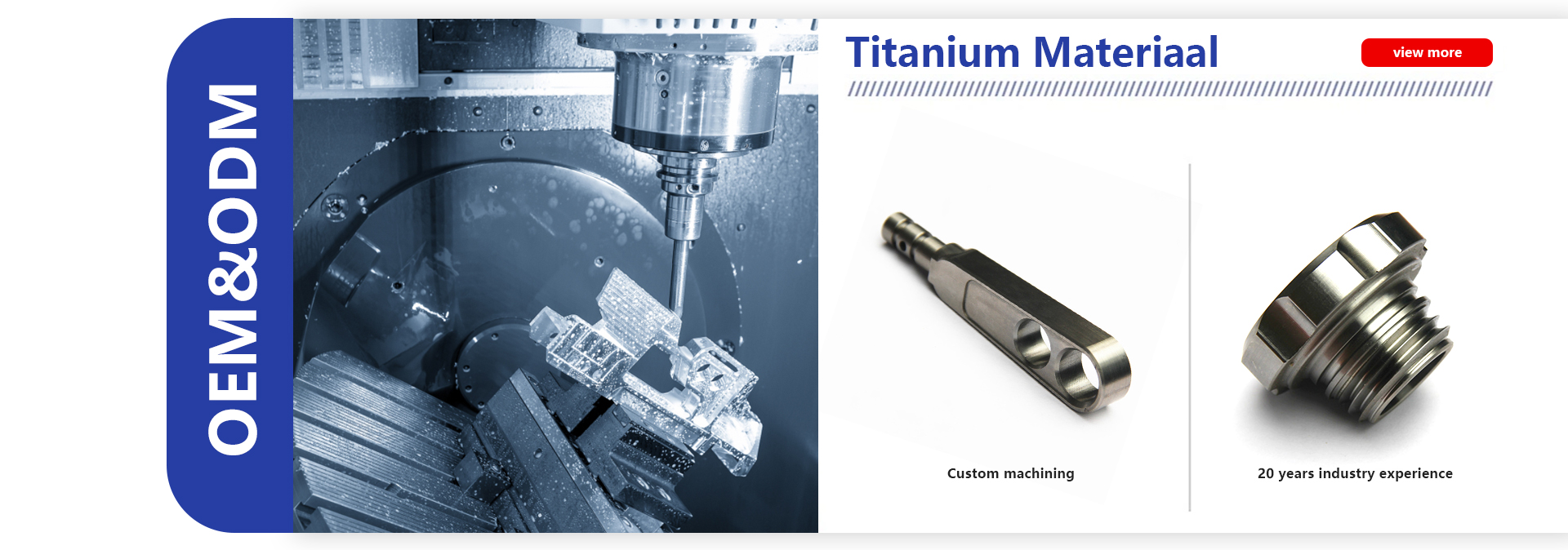
- Custom OEM/ODM to 2D/3D Models
- Optical Profile Projection Gauging
- High 34% Direct Client Reorder Rate
Frequently Asked Questions by Procurement Engineers
Direct metallurgical and logistical answers prepared by our senior chief fastener engineer and export directors.
How should torque values be calculated for GR5 titanium hex bolts to prevent galling?
Does galvanic corrosion occur when Grade 5 titanium bolts contact 6061/7075 aluminum or CFRP?
What is the distinction between Grade 5 (Ti-6Al-4V) and Grade 2 commercial titanium bolts?
What quality documentation and mill certifications accompany each export shipment?
What are the Minimum Order Quantities (MOQ) and production lead times for standard vs. custom bolts?
What is the maximum continuous service temperature for Grade 5 titanium hex bolts?
Which surface finish should I specify: PVD coating, Type II anodized, or Burnt Blue?
How does cold-rolling threads compare to cut threads in high-vibration applications?
Request Direct Factory Quotation & Engineering Review
Partner with Baoji's premier titanium fastener manufacturing plant. Send your bill of materials, standard DIN/ISO specifications, or custom 2D/3D engineering drawings (PDF, DWG, STEP) for rapid price calculations and feasibility evaluation.