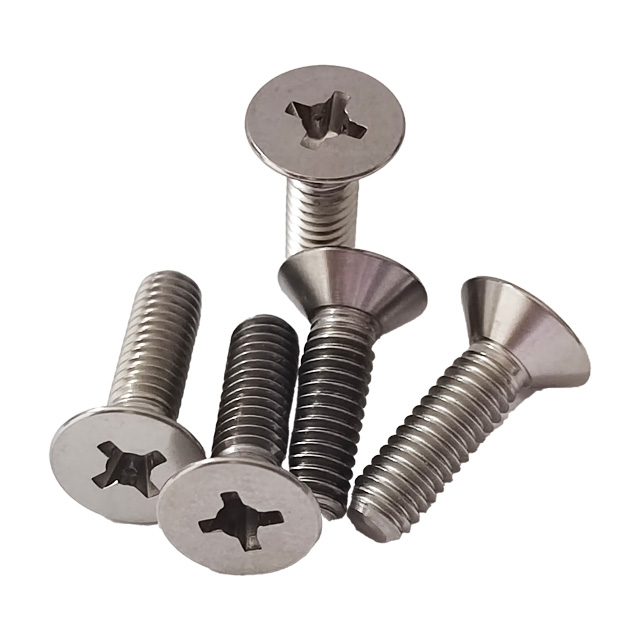
ISO Flat Head
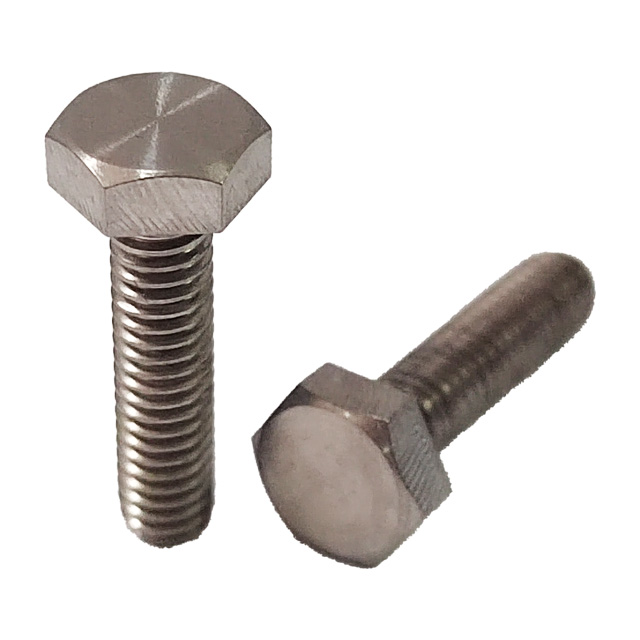
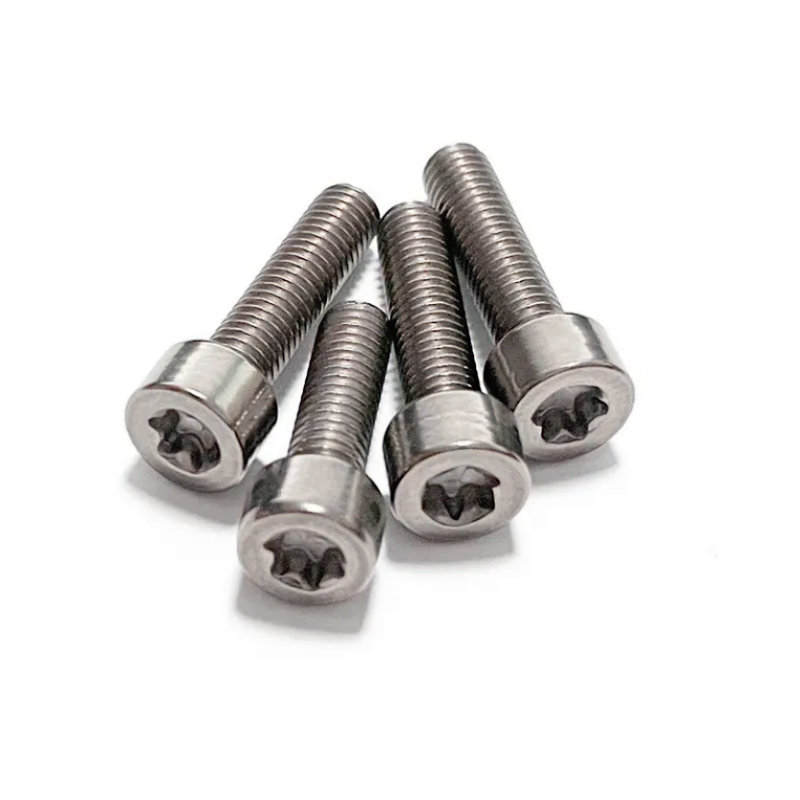
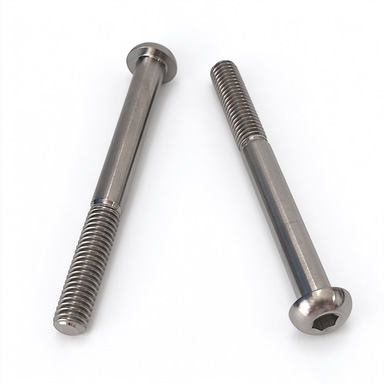
GR5 Titanium Bolts M4*15mm Full Thread High Strength Screws
Grade: Ti-6Al-4V (GR5)
Thread: M4 × 0.7mm
Tensile: ≥ 950 MPa
Tolerance: DIN 6g / ±0.01mm
Manufactured under strict ISO 9001:2015 process controls from certified aerospace-grade Ti-6Al-4V billet stock. Offering ≥895 MPa tensile strength and 44% mass reduction compared to alloy steel.
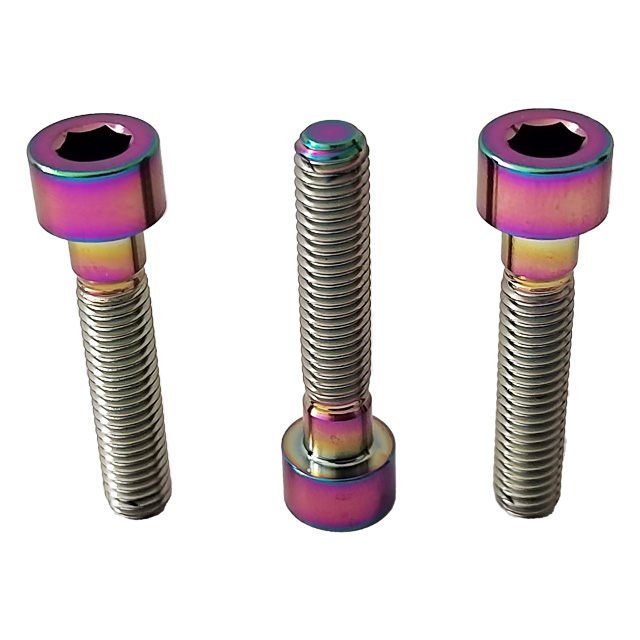
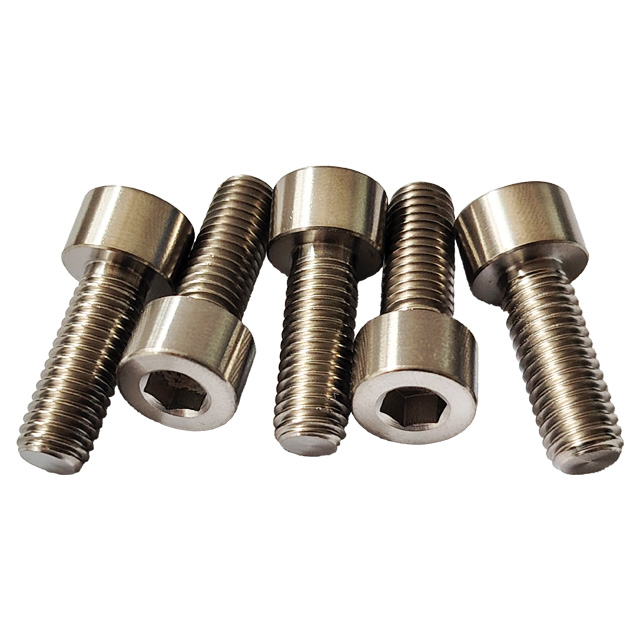
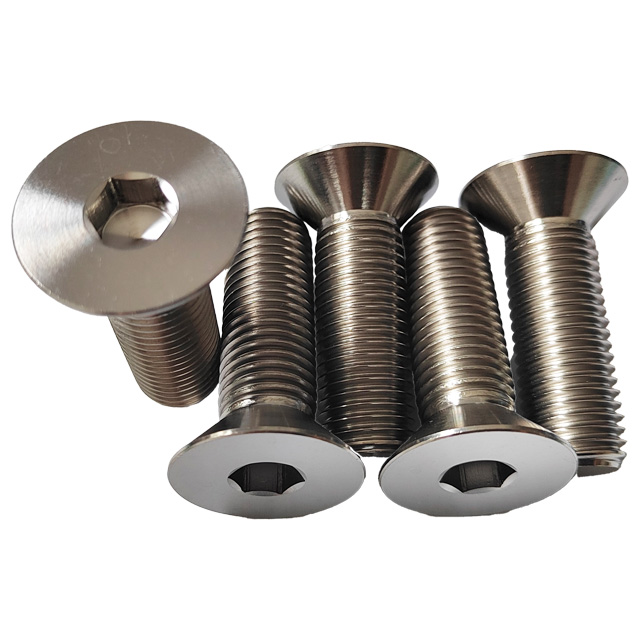
Procuring precision-machined titanium hardware from China has transitioned from a pure cost-arbitrage strategy into an advanced engineering partnership. Baoji City, located in Shaanxi Province, represents the epicentre of China's titanium industry—known internationally as "China Titanium Valley." The region accounts for over 60% of domestic titanium output and upwards of 20% of global sponge-to-ingot processing capacity.
This geographic concentration creates an unparalleled industrial clustering effect: local vacuum arc remelting (VAR) furnaces, electron-beam cold hearth melting, precision bar drawing, multi-axis Swiss CNC turning, cold heading, and advanced surface functionalization operate within an integrated 20-kilometer logistics radius. For international OEMs, Tier-1 automotive race teams, and aerospace subcontractors, this condensed value chain eliminates material intermediate freight markups, reduces lead times from 12 weeks to under 15 business days, and ensures that titanium billets never encounter unmonitored storage conditions.
Our manufacturing complex at Navzo leverages this immediate proximity to certified melt sources. Every production run of Ti-6Al-4V (Grade 5) begins with vacuum-refined ingot stock exhibiting interstitial control compliant with ASTM B348, AMS 4928, and ISO 5832-3 standards. By maintaining direct integration with raw material suppliers, our machining tolerances remain stable across multi-thousand piece batches, preventing the micro-structural batch variation that plagues decentralized fastener converters.
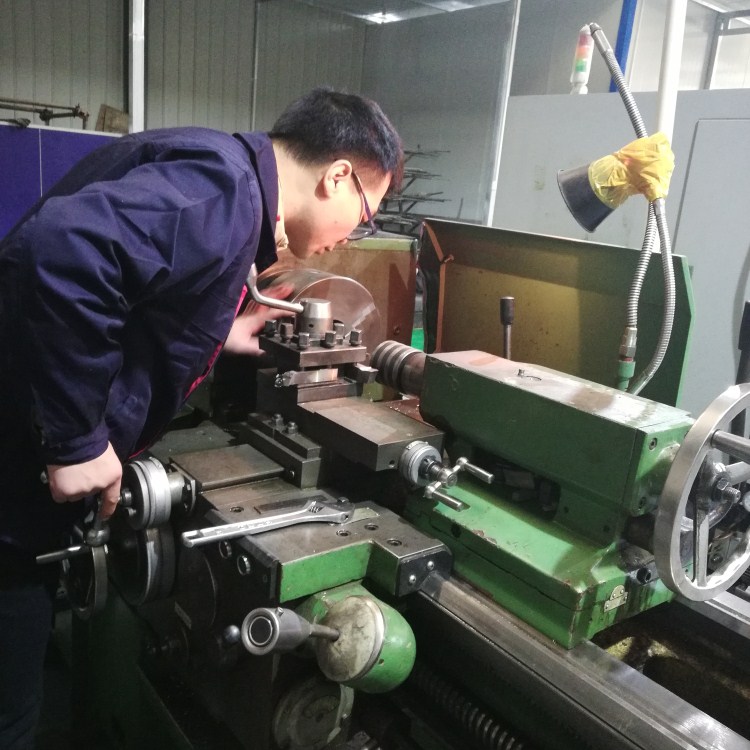
Technical precision, localized raw material integrity, and comprehensive metallurgical testing back every fastener that leaves our Baoji machining center.
We avoid secondary melt or scrap-doped ingots. 100% of our bar stock is drawn from double-melted VAR Ti-6Al-4V bars with complete chemical breakdown and EN 10204 3.1 inspection certification.
Our fasteners utilize warm thread rolling under hydraulic CNC dies rather than single-point cutting. This plastically flows grain lines uninterrupted through crests and roots, raising shear fatigue life by >35%.
Complex geometries, hollow weight-relief pockets, and proprietary drive sockets are executed on high-rigidity CNC machining centers equipped with high-pressure internal coolant to prevent thermal work-hardening.
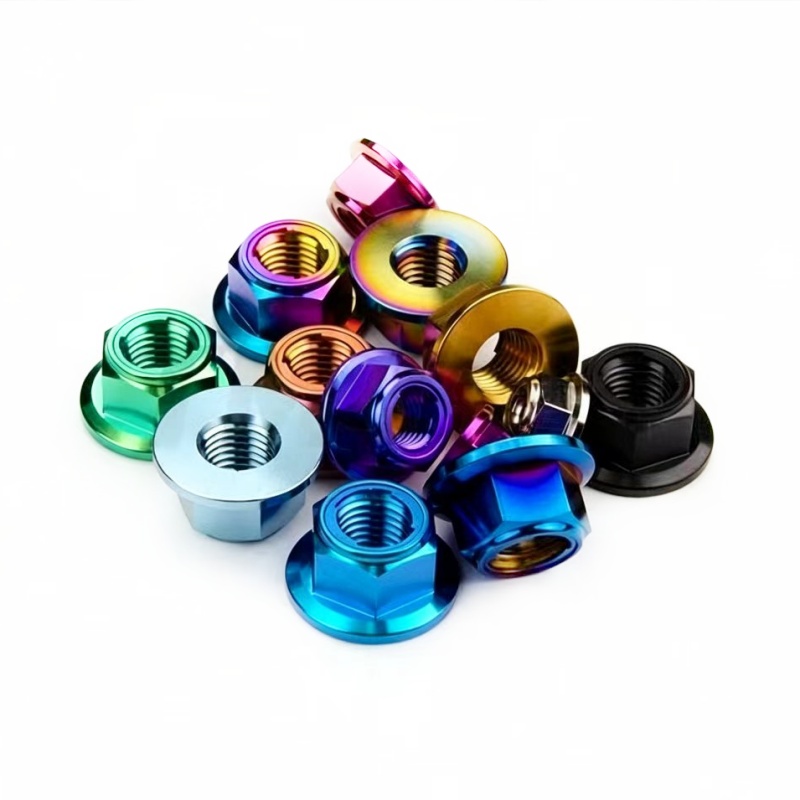
In-house electrochemical color anodizing (Type II / III) and physical vapor deposition (TiN gold, DLC diamond black, burnt rainbow) provide exceptional surface hardness (>2500 HV) and anti-galling defense.
Every single batch undergoes dimensional verification using Keyence optical measuring systems, thread pitch gauge verification, torque destructive testing, and portable XRF spectrometer chemical validation.
Talk directly to bilingual manufacturing engineers. Receive DFM (Design for Manufacturability) reports, STEP file modifications, and fixed DDP pricing within 60 minutes during standard Asian-European business overlaps.
Structural comparison of mechanical properties, mass density, and corrosion resistance metrics for critical engineering assemblies.
| Alloy Specification | Density (g/cm³) | Tensile Strength (MPa) | Yield Strength (MPa) | Strength-to-Weight Ratio | Galvanic / Cl¯ Corrosion | Primary Industrial Application |
|---|---|---|---|---|---|---|
| Titanium Grade 5 (Ti-6Al-4V) | 4.43 | 895 - 1050 | 828 | 214 kN·m/kg | Virtually Inert (Immune to Cl¯) | Motorsport, Aerospace, EV Hubs, Marine Hardware |
| Commercially Pure Ti (Grade 2) | 4.51 | 345 - 480 | 275 | 89 kN·m/kg | Immune to Cl¯ and Acids | Chemical Processing, Anodes, Exhaust Piping |
| Alloy Steel 12.9 (Quenched & Tempered) | 7.85 | 1220 | 1100 | 155 kN·m/kg | Rapid Rust without Surface Plating | Heavy Industrial Presses, Mining Machinery |
| Stainless Steel (A2-70 / 304) | 7.90 | 700 | 450 | 88 kN·m/kg | Moderate (Subject to Pitting/Crevice) | General Architecture, Food Processing Equipment |
| Marine Stainless (A4-80 / 316) | 8.00 | 800 | 600 | 100 kN·m/kg | High Marine Resistance | Boat Deck Fixtures, Coastal Petrochemical Lines |
| Aluminum Alloy 7075-T6 | 2.81 | 572 | 503 | 203 kN·m/kg | Moderate (Prone to Exfoliation/Stress Rust) | Secondary Aircraft Structures, Bike Sprockets |
*Data reflects minimum nominal room-temperature mechanical properties in accordance with ASTM B348, ISO 898-1, and ISO 3506-1 standards. Mill test reports (MTR) provided with each delivery lot.
Key market dynamics shaping high-performance alloy purchasing, supply-chain localization, and regulatory compliance.
Unsprung mass reduction has become vital for EV range optimization and urban air mobility (eVTOL) payload certification. Tier-1 designers are replacing 10.9-grade steel suspension bolts with GR5 titanium, cutting up to 18 kilograms per platform.
Modern defense and automotive procurement departments require end-to-end digital batch traceability. Ingot heat numbers, chemical spectrograms, and carbon footprint telemetry are directly integrated into cloud-accessible barcode tags.
Single-setup 7-axis and 9-axis Swiss CNC turning minimizes human setup errors, holding pitch diameter and concentricity within ±0.003mm. This eliminates post-machining balancing needs on high-RPM rotating assemblies.
Environmental bans on hexavalent chromium plating have accelerated industrial migration to environmentally benign Physical Vapor Deposition (PVD). Titanium nitride (TiN) and Diamond-Like Carbon (DLC) provide extreme hardness without environmental toxicity.
Overcoming low thermal conductivity and chemical affinity challenges through next-generation machining methodologies.
Titanium’s low thermal conductivity ($6.7 \text{ W/m}\cdot\text{K}$) concentrates heat at cutting tool tips. Utilizing cryogenic supercritical CO2 or liquid nitrogen delivers crisp chip evacuation, extends carbide tool life by 300%, and prevents micro-burrs.
High-efficiency milling algorithms maintain a constant tool engagement angle, drastically reducing tool chatter and radial deflection on slender aerospace brackets, thin-wall hydraulic fittings, and deep-pocket titanium casings.
Hybrid Direct Energy Deposition (DED) creates near-net shape blanks, followed by high-speed CNC finish profiling. This slashes the Buy-to-Fly ratio from 10:1 down to 1.3:1, curbing expensive raw billet scrap and lowering finished part unit costs.
Post-machining ultrasonic surface rolling induces high compressive residual stress within fastener fillet necks and bearing surfaces, suppressing fatigue crack propagation under cyclical motorsport stress regimes.
Authoritative technical, logistical, and metallurgical guidance for procurement managers and mechanical design engineers.
Thread cutting severs the continuous metallic crystalline grain flow of the titanium bar, introducing microscopic notch stress risers at the thread root. Hydraulic thread rolling cold-works the material, inducing beneficial compressive residual stresses that increase fatigue endurance under cyclical vibration loads by 30% to 50%.
Titanium has a thin native oxide film that can shear under sliding friction, causing cold welding (galling). To prevent this, we recommend anti-seize pastes (copper or moly disulfide-based), Physical Vapor Deposition (PVD) hard films, or micro-arc oxidation (MAO). Applying an anodized surface also mitigates direct metal contact.
Every delivery includes an EN 10204 Type 3.1 Inspection Certificate detailing exact chemical heat analysis (Ti, Al, V, Fe, C, N, H, O levels) and mechanical tensile/yield testing. Optical CMM dimensional reports and coating thickness certificates are provided with every batch.
Standard metric fasteners (M3 through M16 in DIN 912, DIN 7991, ISO 7380) maintain an MOQ of 100 to 200 pieces per specification with immediate off-the-shelf dispatch. Custom CNC titanium parts manufactured from 2D/3D engineering drawings typically have an MOQ of 50 pieces and ship in 12–18 business days.
Unlike aluminum and carbon steel, titanium shares a very similar electrochemical electrode potential with carbon fiber, making it immune to galvanic corrosion in composite assemblies. When bolted into aluminum frames in wet marine conditions, non-conductive paste or anodizing prevents aluminum from acting as a sacrificial anode.
Grade 5 maintains high structural stability from cryogenic temperatures up to approximately 350°C to 400°C (660°F to 750°F). Above 400°C, oxygen pickup causes surface alpha-case embrittlement. For ultra-high exhaust manifolds exceeding 600°C, we recommend specialized Ti-6242 (Ti-6Al-2Sn-4Zr-2Mo) or Inconel 718 fasteners.
Submit your CAD models (.STEP / .IGES / .DWG) or custom fastener bill of materials. Our Baoji application engineers review manufacturability, tolerance stack-ups, and provide transparent factory-direct pricing within one hour.