High-Integrity Titanium Head Bolts & Fasteners
Explore factory-direct GR5 Ti-6Al-4V fastener solutions manufactured under strict metallurgical control, featuring high-fatigue rolled threads and zero-tolerance concentricity.
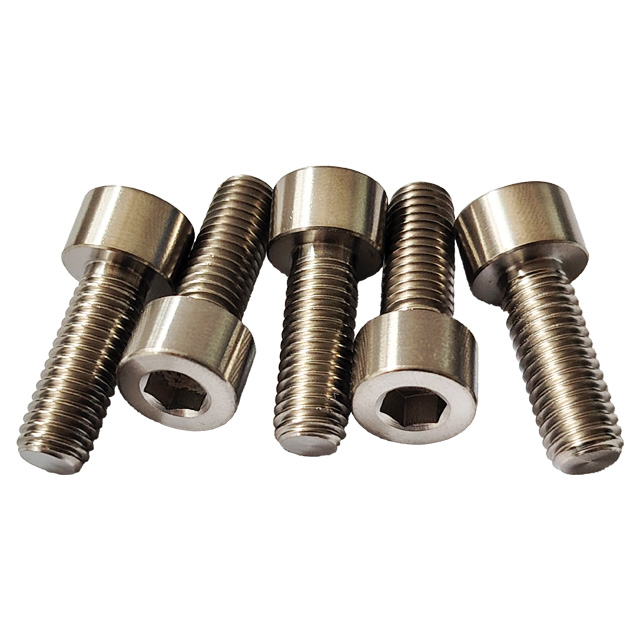
GR5 Titanium Bolts M8*25mm High Strength Cylindrical Head Hex Socket Bolts Factory Price Cup Head Allen Screws
- Grade
- Ti-6Al-4V (Grade 5)
- Tensile
- ≥ 950 MPa
- Threading
- Rolled M8 × 1.25
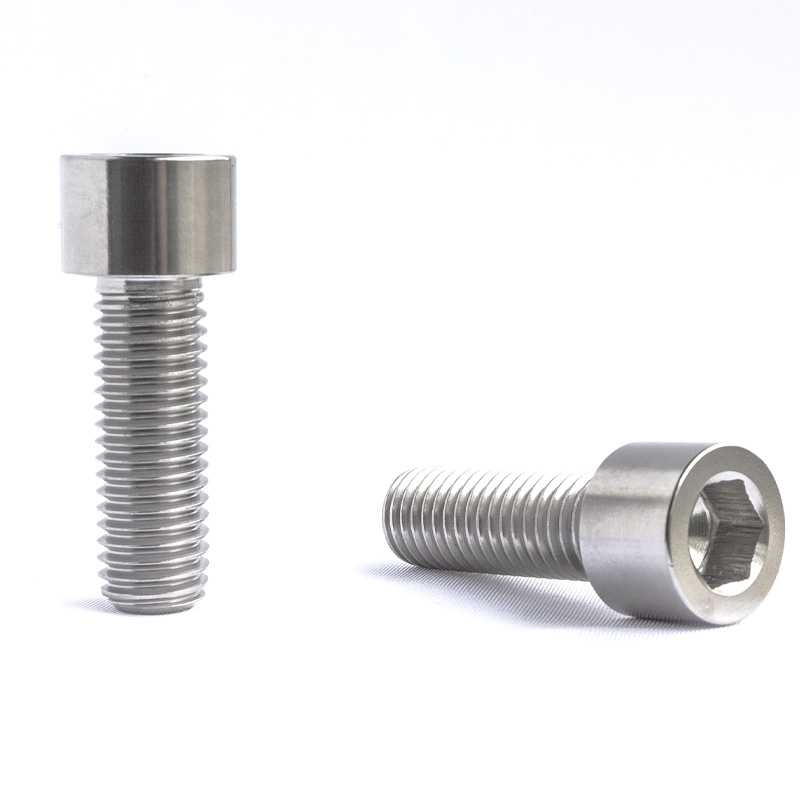
GR5 Titanium Bolts M12*45mm Factory Price Cylindrical Head Hex Socket Bolts High Strength Cap Head Allen Screws
- Grade
- Ti-6Al-4V (Grade 5)
- Tensile
- ≥ 980 MPa
- Head Style
- Cap Head Allen
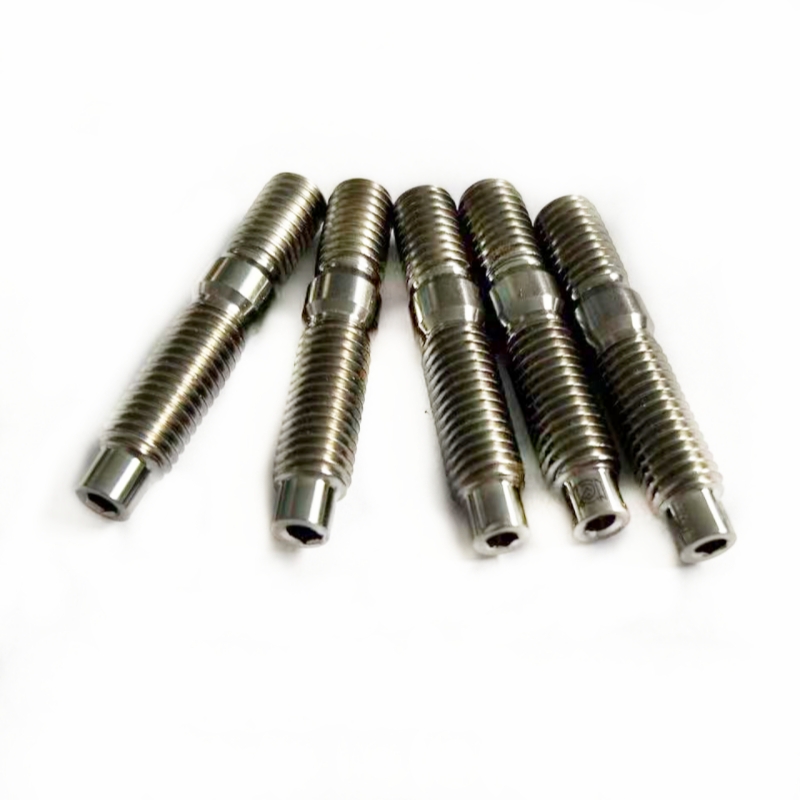
GR5 Titanium Exhaust Manifold Stud Manifold Bolt Polished Finish in Stock M8*1.25*45
- Application
- Manifold / Turbo
- Finish
- Mirror Polished
- Thread Pitch
- M8 × 1.25 × 45
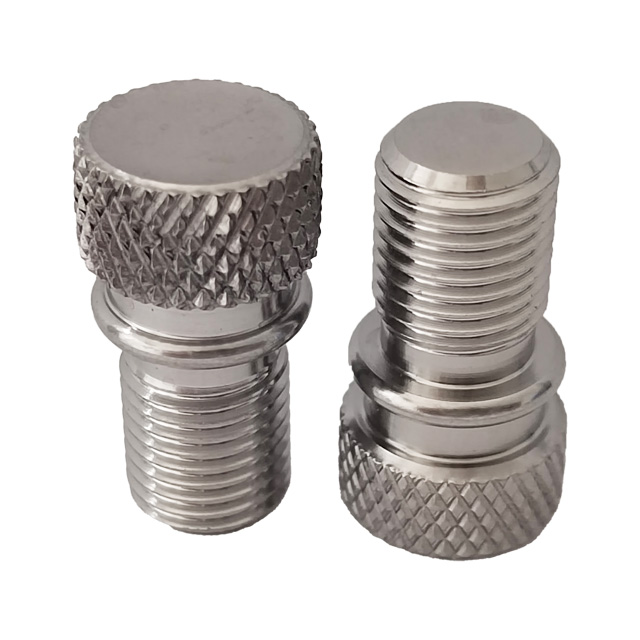
GR5 Titanium Bolts M9*1.0*12mm Hot Sale Cylindrical Head Knurled Bolts Factory Price Hand-Tightening Screws
- Head Type
- Knurled Cylindrical
- Drive
- Dual Hand / Hex
- Dimensions
- M9 × 1.0 × 12mm
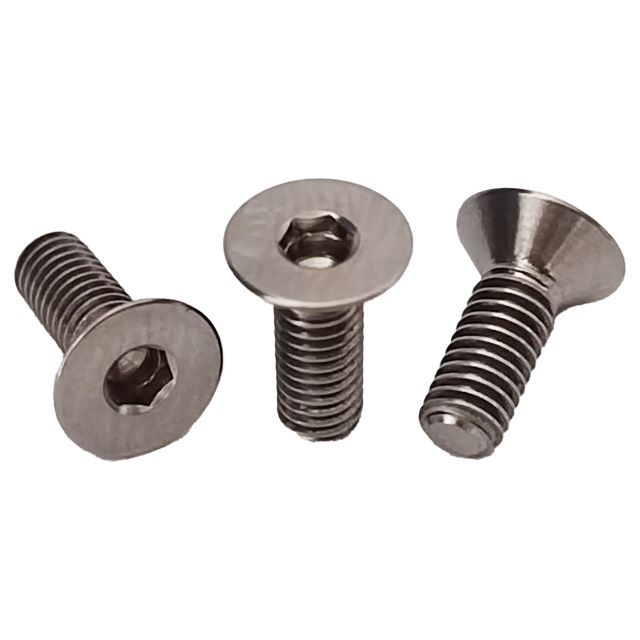
GR5 Titanium Bolts M8*20mm CNC Machined Countersunk Head Hex Socket Bolts Hot Sale Flat Head Allen Screws
- Head Angle
- 90° Countersunk
- Machining
- Multi-Axis CNC
- Standard
- DIN 7991 / ISO 10642
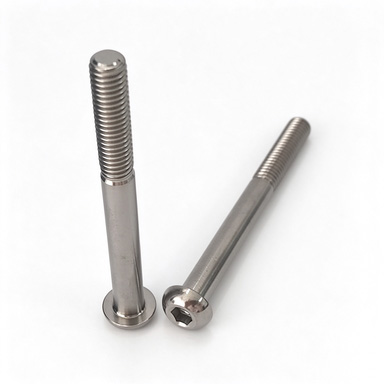
GR5 Titanium Bolts M6*70mm Factory Price Button Head Inner Hex Bolts Lightweight Half-Round Head Hex Socket Screws
- Profile
- Button / Dome Head
- Length
- 70mm Precision Shank
- Standard
- ISO 7380
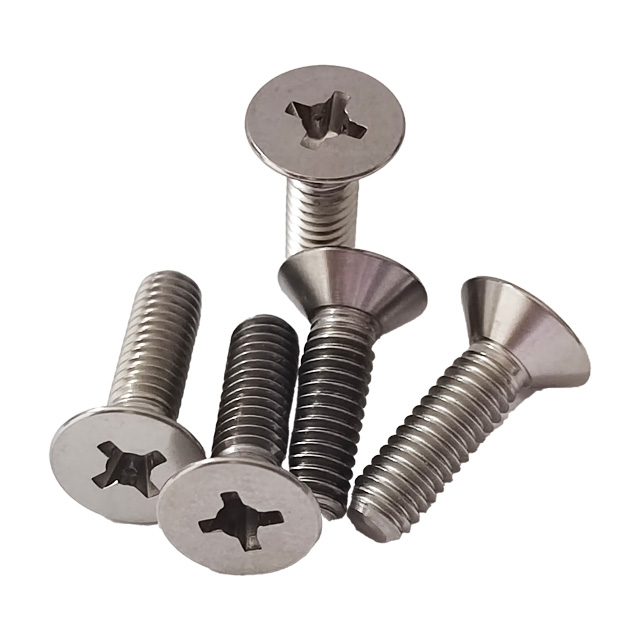
GR5 Titanium Bolts M8*20mm Factory Price Countersunk Head Cross Bolts High Quality Flat Head Phillips Screws
- Drive
- Phillips Cross Recess
- Surface
- Satin Micro-Blasted
- Standard
- DIN 965 / ISO 7046
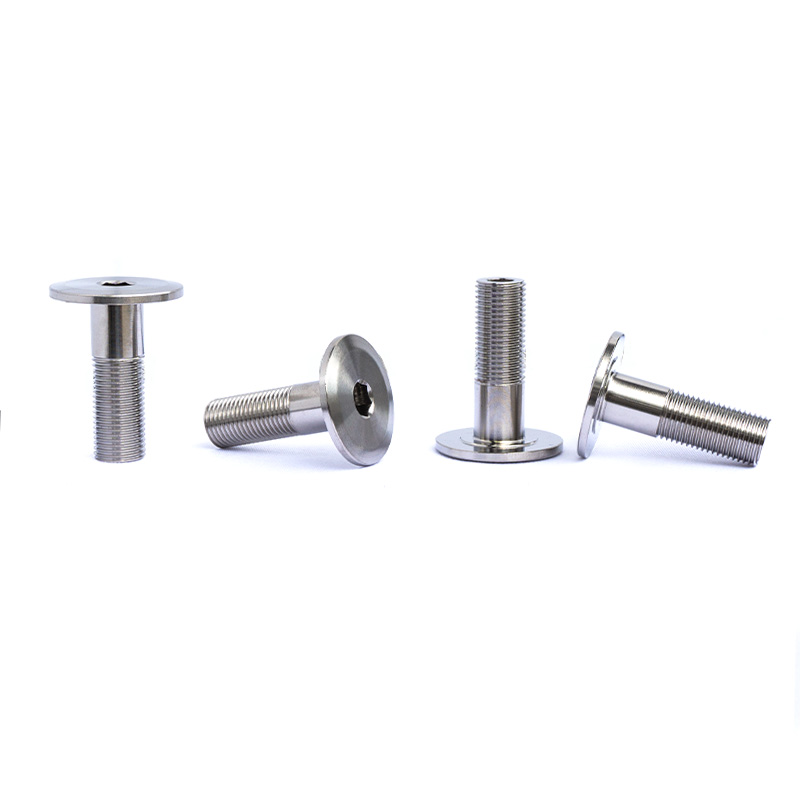
GR5 Titanium Bolts M10*1*33mm Factory Price Large Flat Head Hex Socket Hollow Bolts High Quality Thin Round Head Allen Screw
- Design
- Hollow Weight Relief
- Pitch
- Fine M10 × 1.0 × 33
- Weight Saving
- -55% vs Solid Steel
Engineering Architecture of Grade 5 (Ti-6Al-4V) Fasteners
A comprehensive examination of crystallographic microstructure, shear dynamics, galling tribology, and mechanical endurance under severe thermal cycling.
Titanium head bolts represent a pinnacle of modern structural fastening technology, substituting legacy quenched-and-tempered alloy steels (such as AISI 4140, 4340, and Grade 12.9 high-tensile hardware) in hyper-demanding environments. At the center of our precision manufacturing process in Baoji, China—globally recognized as the hub of titanium metallurgy—is Grade 5 Titanium (UNS R56400 / Werkstoff 3.7165 / Ti-6Al-4V). This alpha-beta dual-phase titanium alloy is alloyed with approximately 6% Aluminum (an alpha stabilizer augmenting high-temperature stability and tensile modulus) and 4% Vanadium (a beta stabilizer enhancing room-temperature ductility and enabling precipitation hardening).
Unlike basic commercial pure (CP) titanium grades (such as Grade 2, primarily specified for chemical immersion and marine corrosion resistance), Ti-6Al-4V delivers an exceptional strength-to-density ratio. With a mass density of approximately 4.43 g/cm³ compared to 7.85 g/cm³ for structural steel, titanium cuts component mass by approximately 44% while maintaining minimum ultimate tensile strengths ranging between 895 MPa and 1,050 MPa. In powertrain head bolt and critical chassis applications, this substantial reduction in un-sprung and rotating mass directly curtails rotational inertia, decreases harmonic resonance, and enhances dynamic structural responsiveness.
| Material Specification | Density (g/cm³) | Tensile Strength (MPa) | Yield Strength 0.2% (MPa) | Modulus of Elasticity (GPa) | Fatigue Strength (10⁷ Cycles) | Corrosion Resistance |
|---|---|---|---|---|---|---|
| Navzo GR5 Titanium (Ti-6Al-4V) | 4.43 | 950 – 1080 | 880 – 950 | 114 | ~510 MPa | Exceptional (Immune to Chlorides) |
| High-Tensile Alloy Steel 12.9 | 7.85 | 1220 | 1100 | 205 | ~480 MPa (Environment Sensitive) | Very Low (Prone to Rust & Pitting) |
| Stainless Steel AISI 316 / A4-80 | 8.00 | 800 | 600 | 193 | ~310 MPa | High (Subject to Crevice Pitting) |
| Commercially Pure Ti (Grade 2) | 4.51 | 345 – 450 | 275 – 350 | 103 | ~220 MPa | Extreme Chemical Resistance |
| Aerospace Aluminum 7075-T6 | 2.81 | 572 | 503 | 71.7 | ~159 MPa | Moderate (Prone to Exfoliation) |
Grade 5 titanium provides 45% higher specific strength per unit mass compared to alloy steels.
Lower modulus allows superior resilience under violent engine block thermal expansion cycles.
Minimizes head-gasket pinch stress and cyclic loosening in forced-induction combustion chambers.
The Importance of Cold-Headed Blanking & Rolled Thread Architecture
A critical mechanical failure mode in custom aftermarket head bolts is fatigue delamination at the head-to-shank transition radius (run-out juncture) and within the initial thread roots. Cut threads generated by single-point turning interrupt the metallurgical grain flow of the titanium bar, introducing microscopic notch stress concentrations and micro-tear initiations.
At Navzo Precision Titanium, our OEM cylinder head bolts and manifold studs are engineered using precision cold and warm forging heading machines combined with secondary multi-axis thread rolling. By displacing the titanium grain boundary continuously along the crests and valleys of the thread profile (UNJ / Metric ISO standards), the grain structure remains unbroken and compressive residual stresses are permanently induced along the thread root. This cold-work hardening increases cyclic fatigue life by over 300% under severe reciprocating combustion pressures.
End-to-End OEM/ODM Fastener Engineering
From custom CAD/STEP blueprints to high-volume manufacturing, our Baoji facility provides comprehensive tailoring across head geometries, socket configurations, and thread classes.
Head Geometry & Drive Customization
We produce standard DIN 912 socket caps, DIN 7991 countersunk profiles, ISO 7380 dome button heads, race-spec 12-point ARP-style flange heads, and custom hollow-bored designs that optimize clamping load distribution.
- Hex Socket, Torx (T20–T50), 12-Point Flange
- Deep broached internal sockets to avoid cam-out
- Knurled and lightened perimeter profiling
Thread Rolling & Shank Engineering
From M3 miniature avionics screws up to M24 heavy industrial studs, our automated thread-rolling systems yield ultra-smooth surfaces (Ra ≤ 0.4 μm) that limit galling and maximize initial clamp tension.
- Metric ISO Coarse / Fine & UN / UNF Class 6g/4h
- Precision ground unthreaded shanks with smooth radius
- Centerless grinding for precise runout control
Advanced Surface Finishing
Surface treatment directly influences frictional coefficient, surface hardness, and anti-galling performance. We offer specialized anodizing, PVD deposition, and micro-arc oxidation.
- Physical Vapor Deposition (PVD TiN, TiAlN, DLC)
- Type II & Type III Electrochemical Anodizing
- Hand mirror polishing & precision flame bluing
Future Procurement Trends: 2025–2030
Key strategic procurement shifts shaping international supply chains for mission-critical titanium fasteners across aerospace, motorsports, and high-efficiency automotive platforms.
Electric Propulsion Trend 01
The rapid shift toward high-output EV powertrains demands weight savings to extend battery range. Procurement teams are replacing conventional steel chassis and battery casing hardware with Grade 5 titanium bolts to eliminate parasitic mass.
Origin Verification Trend 02
Global aerospace and tier-1 defense buyers are mandating complete metallurgical traceability under EN 10204 3.1. Material certifications documenting sponge origin, melt numbers, and vacuum arc remelting cycles are now basic procurement requirements.
Dry-Film & DLC Coatings Trend 03
Wet anti-seize lubricants cause contamination in cleanrooms and space assemblies. Procurement is shifting toward permanent factory-applied dry-film lubricants (MoS&sub2;) and Diamond-Like Carbon (DLC) films to permanently resolve galling issues.
Near-Net-Shape Sourcing Trend 04
With titanium raw material prices fluctuating, industrial procurement is moving away from full bar machining toward cold-heading and hybrid near-net-shape blanking to minimize buy-to-fly ratios and lower cost per unit.
Strategic sourcing teams are re-evaluating supplier geographical concentration. Working directly with integrated manufacturers in Baoji provides an advantage by combining raw material ingot melting, wire drawing, cold-heading, heat treatment, and precision multi-axis CNC finishing within a tightly coordinated industrial cluster. This reduces freight delays and protects OEM production lines from geopolitical supply shocks.
Next-Generation Technological Developments
Forward-looking alloy development, advanced modeling, and precision surface technologies driving modern titanium fastening solutions.
Metastable Beta-Alloy Innovations
While Ti-6Al-4V remains the industry standard, next-generation platforms are incorporating high-strength beta titanium alloys, including Ti-10V-2Fe-3Al and Beta-C (Ti-3Al-8V-6Cr-4Mo-4Zr). These alloys achieve tensile strengths exceeding 1,250 MPa through solution treatment and aging, matching Grade 12.9 alloy steels while preserving titanium's density advantage.
- Enhanced shear tolerance for extreme aerospace fasteners
- Superior deep-hardenability in heavy thread cross-sections
Laser Cladding & Micro-Arc Oxidation
To overcome titanium's sensitivity to friction wear and adhesive galling, our engineering laboratory is developing Micro-Arc Oxidation (MAO) ceramics and laser-assisted titanium-carbide (TiC) surface treatments. These create an integrated ceramic conversion layer on thread flanks, reducing the coefficient of friction ($μ$) to under 0.12 without sacrificial fluid coatings.
- Eliminates fluid anti-seize paste requirements
- Stable performance past 600°C exhaust environments
Smart Fasteners with Embedded Sensing
Looking toward predictive structural monitoring, prototype head bolts are being designed with central micro-EDM cavities. These hollow centers accommodate ultrasonic piezo-transducers and passive RFID strain gauges, enabling technicians to read real-time preload elongation and residual clamp tension without disassembling the engine casing.
- Direct ultrasonic bolt-elongation calibration
- Prevents catastrophic joint loosening in race conditions
Technical Questions Buyers Ask Before Ordering
Clear, engineering-focused answers covering metallurgy, galvanic corrosion, tightening dynamics, quality assurance, and global logistics.
Why is Grade 5 (Ti-6Al-4V) preferred over Grade 2 for head bolts?
Grade 2 is commercially pure titanium offering moderate mechanical strength (yield strength approx. 275-350 MPa). It is well-suited for chemical processing vessels, heat exchangers, and marine exhaust pipes where chemical resistance is paramount.
In contrast, engine cylinder head bolts and chassis joints must withstand heavy clamping preloads and cyclic combustion shock. Grade 5 (Ti-6Al-4V) is an alpha-beta alloy heat-treated to achieve minimum yield strengths of 880-920 MPa and tensile strengths above 950-1,050 MPa. This provides the structural resilience required to maintain gasket compression without permanent plastic deformation.
How should torque specifications be calculated for titanium fasteners?
Titanium bolts should never be tightened using standard steel torque values from generic shop manuals. Because titanium’s elastic modulus (~114 GPa) is roughly half that of steel (~205 GPa), a titanium bolt stretches roughly twice as much as steel under an equivalent tensile clamp load.
Torque is calculated via $T = K \cdot D \cdot F$, where $T$ is tightening torque, $D$ is nominal bolt diameter, $F$ is target clamp tension, and $K$ is the nut friction factor. When using standard molybdenum-disulfide or anti-seize paste, $K$ typically ranges between 0.10 and 0.15. Generally, titanium fasteners require 15% to 25% lower torque than Class 10.9/12.9 steel to achieve target clamp tension without overstretching the shank.
Does titanium cause galvanic corrosion when paired with aluminum or carbon fiber?
Titanium possesses a noble electrochemical potential (+0.05V vs. standard hydrogen electrode), making it chemically stable. When installed directly into aluminum engine blocks (-0.75V) in the presence of an electrolyte (moisture or road salt), galvanic corrosion can affect the surrounding aluminum casing if not properly isolated.
When fastening into aluminum or carbon fiber structures, we recommend: 1) applying an approved fluoropolymer, zinc-phosphate, or molybdenum anti-seize paste; or 2) specifying factory-applied PVD barrier coatings (DLC, TiAlN) or Type II hard anodization to prevent metallic electron exchange between the surfaces.
Why is thread rolling superior to CNC thread cutting for cylinder head bolts?
Thread cutting severs the microstructural grain flow lines of the titanium rod stock, creating small stress risers along the thread roots where cyclic fatigue cracks can initiate under engine vibrations.
Thread rolling is a cold-forming process where precision carbide dies displace the material plastically. This preserves continuous grain flow around the root profile and work-hardens the surface, inducing compressive residual stresses. As a result, rolled-thread titanium bolts offer up to a 30% higher endurance limit and significantly improved resistance to stripping under heavy tensile preloads.
What is thread galling (cold welding) and how can it be avoided?
Titanium naturally forms an ultra-thin, protective titanium dioxide (TiO&sub2;) passivation layer. Under high-speed installation without lubrication, friction-induced heat breaks down this oxide film. The bare metallic thread asperities come into direct contact, leading to micro-welding, thread tearing, and joint seizure—commonly referred to as galling.
Galling can be prevented by: 1) using low run-down RPM during assembly (avoid impact wrenches on dry threads); 2) applying a quality nickel- or copper-based anti-seize compound; and 3) choosing factory-applied surface treatments like PVD, baked solid film lubricants, or micro-arc oxidation.
What documentation and quality certificates accompany export shipments?
Every batch shipped from Navzo Precision Titanium includes comprehensive quality documentation: 1) EN 10204 3.1 Material Test Reports (MTR) detailing chemical composition (spectrometric verification) and mechanical properties (tensile, yield, elongation, hardness); 2) Dimensional inspection reports generated via Mitutoyo optical comparators; and 3) Surface finish and plating thickness certifications.
Third-party testing via SGS, TÜV, or independent accredited metallurgy laboratories can also be provided upon request prior to export dispatch.
What is the standard Minimum Order Quantity (MOQ) and production lead time?
For standard catalog inventory items (such as DIN 912 M6, M8, M10 cylindrical socket cap bolts), our standard MOQ is typically 100 to 200 pieces per size, with stock orders dispatching within 48 to 72 hours.
For custom OEM/ODM fasteners requiring specialized head geometries, non-standard lengths, custom thread pitches, or specific PVD color finishes, prototype sample runs start at 50 to 100 pieces. Full production batches generally ship within 15 to 25 business days following technical drawing sign-off.
Which head drive standard is best: Hex Socket, Torx, or 12-Point Flange?
The ideal drive style depends directly on your assembly requirements. Standard Internal Hex (Allen) drives are globally ubiquitous, but can strip at small sizes under heavy repetitive torque. Torx (Star) drives provide superior torque transfer, reducing cam-out and tool slippage.
For engine cylinder head studs, main bearing caps, and high-horsepower motorsport turbo manifolds, 12-point (bi-hex) flange heads are preferred. They distribute clamping load over a wider footprint without needing a loose washer, and can handle extreme installation torque with standard 12-point sockets.
Why Tier-1 Engineers Source from Navzo Precision
Located on Yucai Road in the High-Tech Development Zone of Baoji, Shaanxi, Navzo has delivered engineered titanium fastening solutions to global markets since 2011.
Baoji Titanium Valley Synergy
Over 80% of China's titanium sponge refining and conversion occurs within our industrial cluster. This proximity shortens our supply chain, ensures direct access to premium aerospace-grade ingots, and insulates our customers from raw material market volatility.
- Direct mill-certified bar stock access
- Reduced intermediate logistics and overhead
Full In-House Quality Assurance
Every manufacturing step is monitored in-house. From incoming ultrasonic flaw detection to high-speed optical sorting, Rockwell hardness testing, and thread pitch micrometer inspection, our quality procedures prevent out-of-spec hardware from reaching your loading dock.
- Optical profile comparators (±0.002 mm accuracy)
- Automated tensile pull and cyclic fatigue rigs
Experienced Global Exporter
We serve precision-engineering accounts across the United States, Germany, Japan, South Korea, Russia, the Netherlands, and Thailand. Our multilingual engineering team provides rapid quote turnaround and responsive DFM (Design for Manufacturability) design feedback.
- Rapid 1-hour average response time during business hours
- Custom packaging, barcoding, and private-label options
Start Your OEM/ODM Titanium Fastener Project
Send us your 2D/3D component drawings (PDF, DWG, STEP) or catalog specifications. Our applications engineering team will review your tolerances, material specs, and surface finishing requirements to provide an initial quotation and manufacturability review within 24 hours.