Stem / Fork
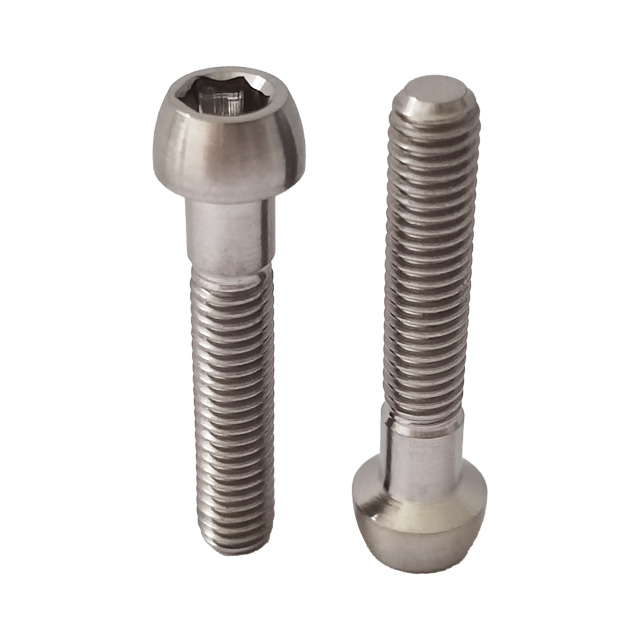
Explore our export-grade line of GR5 (Ti-6Al-4V) titanium bolts, anti-loosening locking nuts, and custom CNC hardware. Sourced from certified Baoji ingots, cold rolled for superior grain alignment, and finished for motorsport and professional competitive cycling.
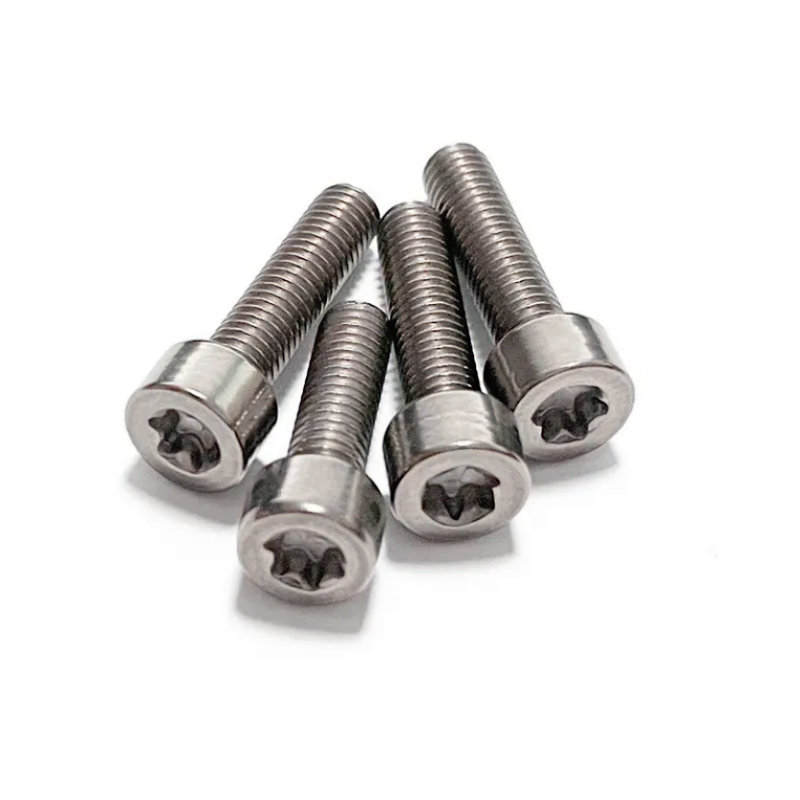
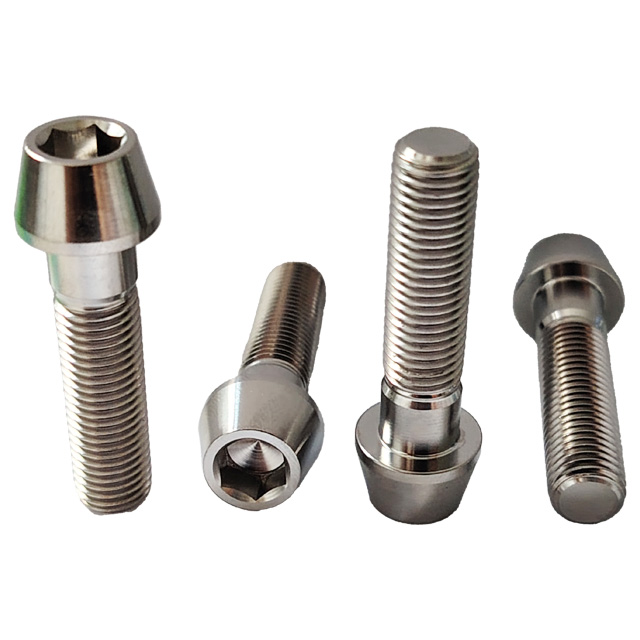
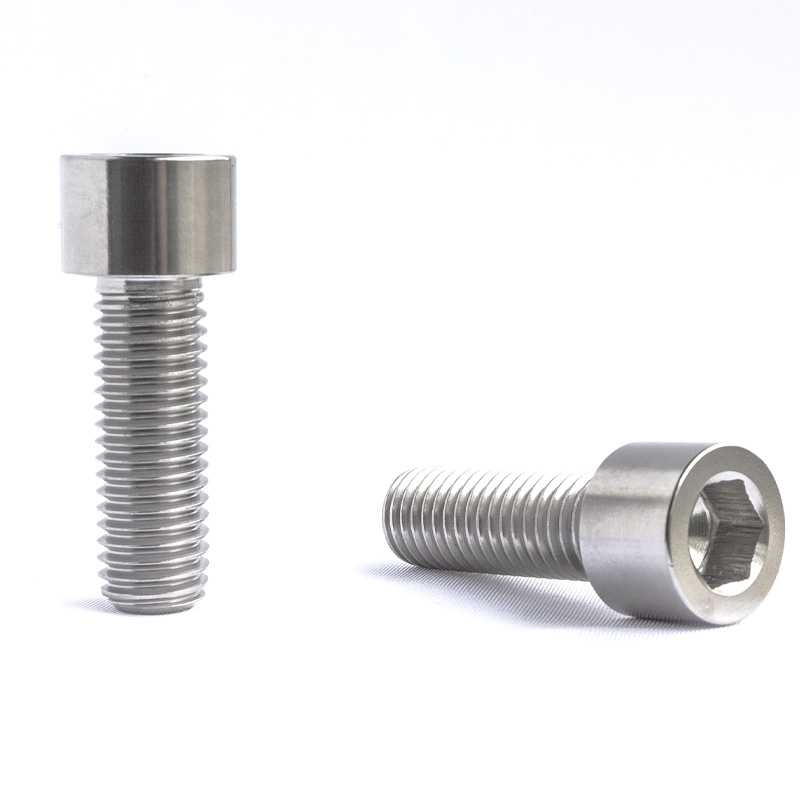
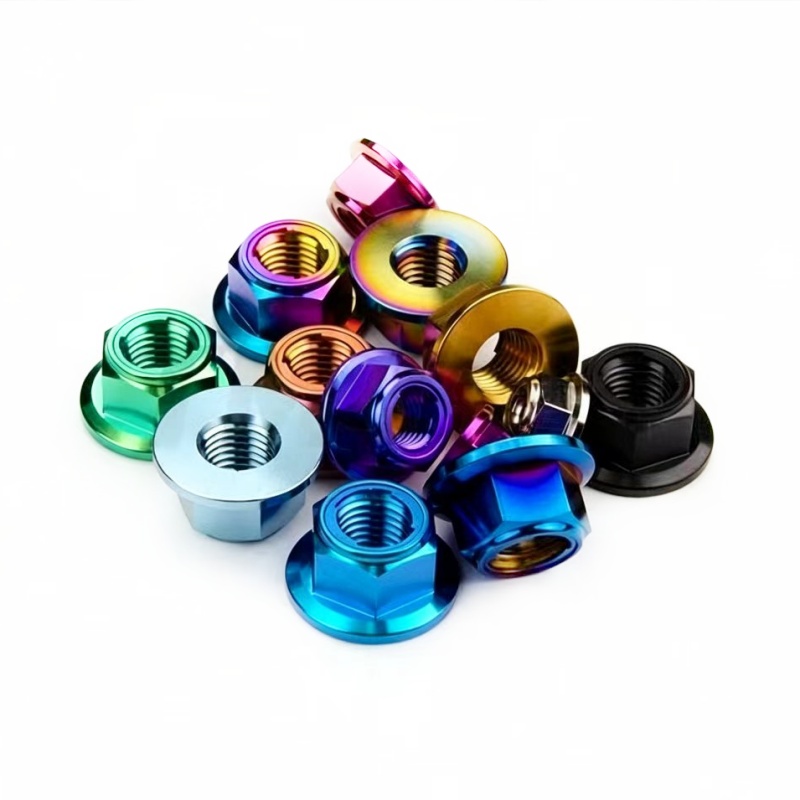
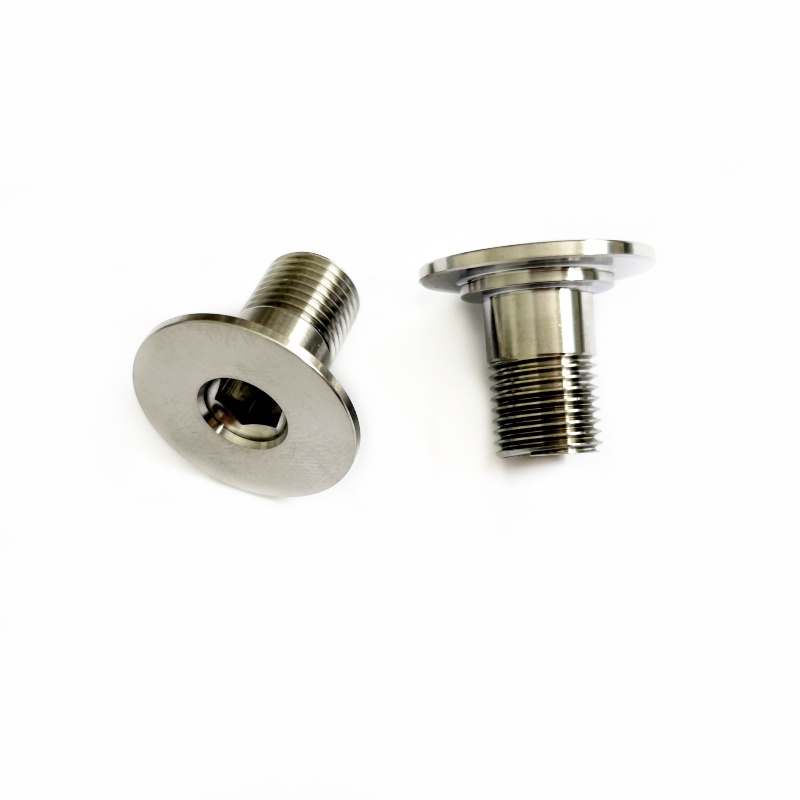
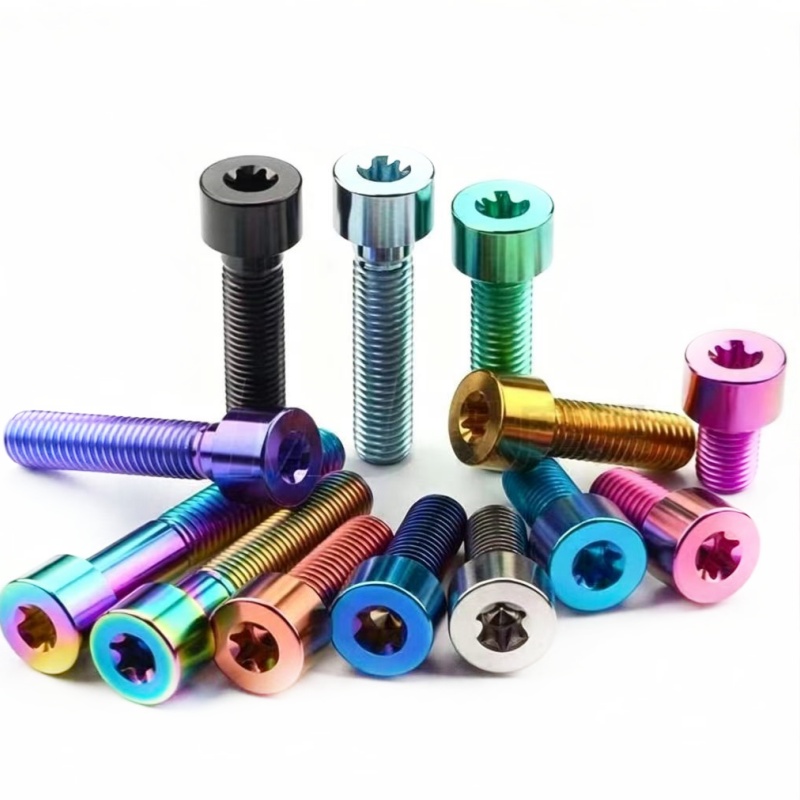
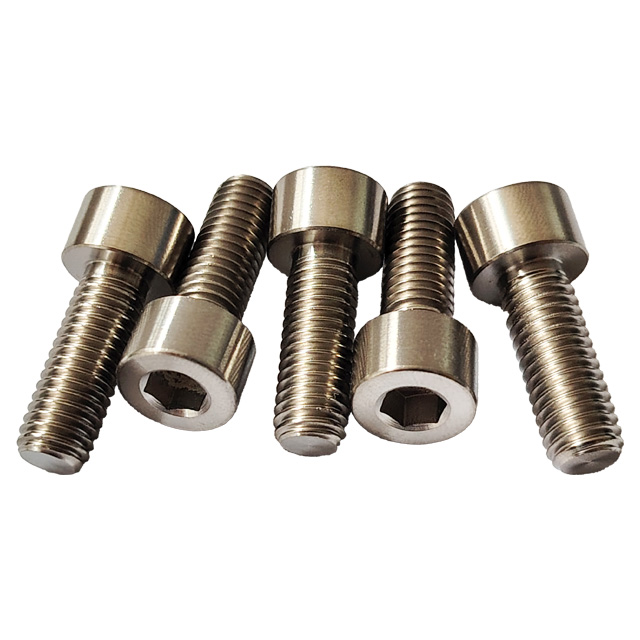
In modern bicycle design—spanning carbon fiber aero road frames, full-suspension downhill MTBs, and electric cargo bikes—fasteners bear dynamic multi-axial cyclic loading, harsh environmental washouts, and galvanic potential mismatches. Titanium alloy hardware represents the pinnacle of strength-to-weight optimization.
| Material Specification | Density (g/cm³) | Tensile Strength (MPa) | Yield Strength (MPa) | Modulus of Elasticity (GPa) | Corrosion & Galvanic Immunity | Strength-to-Weight Ratio |
|---|---|---|---|---|---|---|
| Navzo GR5 Titanium (Ti-6Al-4V Cold Rolled) | 4.43 | 950 – 1050 | 880 – 940 | 114 | Immune (Bio-inert oxide TiO₂ film) | 225 kN·m/kg (Superior) |
| Commercially Pure Grade 2 Titanium | 4.51 | 345 – 480 | 275 – 350 | 103 | Immune to chlorides / perspiration | 90 kN·m/kg (Moderate) |
| High-Tensile Alloy Steel (Class 10.9 / 12.9) | 7.85 | 1040 – 1220 | 940 – 1100 | 205 | High rust risk; causes carbon galvanic cells | 140 kN·m/kg (Heavy) |
| Austenitic Stainless Steel (A2-70 / 304) | 7.93 | 700 | 450 | 193 | Susceptible to crevice pitting in salt/mud | 88 kN·m/kg (Heavy) |
| Aircraft Aluminum 7075-T6 (Al-Zn Alloy) | 2.81 | 570 | 505 | 71.7 | Prone to stress-corrosion cracking & shear strip | 202 kN·m/kg (Poor Fatigue) |
A critical differentiator in professional OEM/ODM titanium fasteners lies in the metallurgical grain structure of the thread profile. Sub-standard machine shops single-point cut threads on CNC lathes, which shears through the longitudinal crystalline grains of the Ti-6Al-4V bar stock. This creates microscopic notch stress concentrators at the thread roots, leading to premature fatigue shearing under cyclical handlebar pulling or disc brake vibration.
Navzo Precision Titanium enforces an aerospace cold thread-rolling regime. Two reciprocating hardened carbide dies progressively compress and deform the titanium grain boundaries smoothly around the crests and valleys. This work-hardens the surface layer, increases fatigue endurance limits by more than 35%, and eliminates microscopic tear defects.
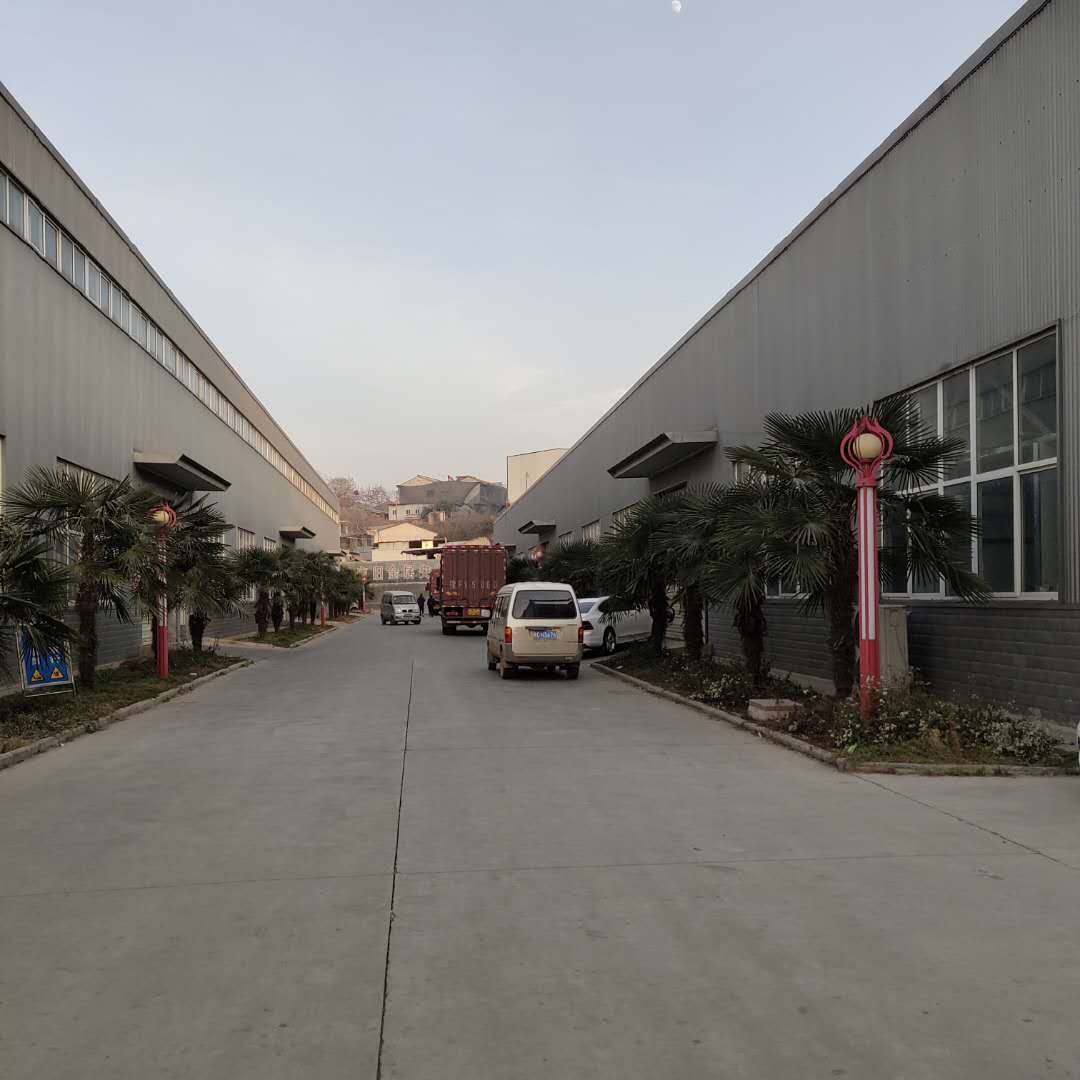
Headquartered on Yucai Road within the National High-tech Industrial Development Zone of Baoji, China's designated "Titanium Valley," Navzo Precision Titanium controls raw ingot melting, precision extrusion, CNC multi-axis turning, and specialized surface treatment under one integrated facility.
We source vacuum-arc-remelted (VAR) Ti-6Al-4V alloy billets with exact chemical control (Al 5.5–6.75%, V 3.5–4.5%, Fe < 0.25%, O < 0.2%). Full EN 10204 3.1 Mill Test Reports (MTR) accompany every OEM batch to guarantee traceability.
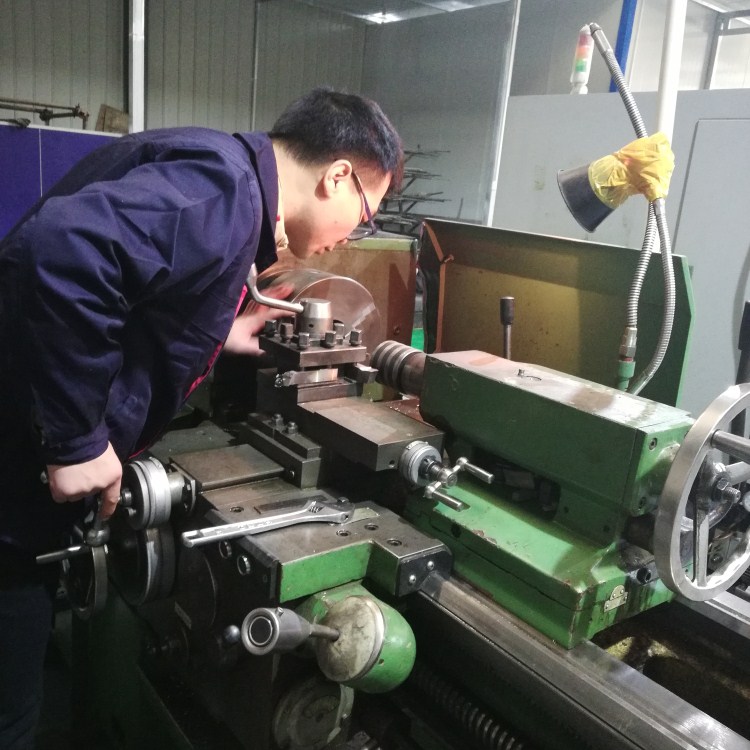
Our workshop operates Swiss-type CNC lathes and multi-axis turn-mill machining centers capable of maintaining dimensional tolerances down to ±0.005mm. Ideal for custom recessed sockets, low-profile umbrella flanges, and weight-reducing hollow drilling.
Beyond standard cosmetic anodization, Navzo provides industrial PVD vacuum coating (TiN, TiCN, DLC). Coatings achieve a surface hardness exceeding 2500 HV, dramatically reducing thread-to-thread galling friction while delivering vibrant Oilslick/Rainbow and Deep Gold finishes.
Every single OEM run passes strict metric Class 6g ring gauge and pitch micrometer quality gates. Screw heads undergo optical profile analysis to verify zero internal hex/torx slippage under rated assembly torque values.
We work directly with bicycle brands and motorsport race teams. Provide 2D CAD prints (PDF/DWG) or 3D models (STEP/IGES), and our metallurgical engineering team will provide DFM (Design for Manufacturability) analysis within 24 hours.
From sample pilot runs of 100 pieces for field durability tests to monthly mass production orders exceeding 250,000 fasteners, Navzo supports rapid tool adjustment and custom laser logo branding with reliable container-level shipping.


As bicycle architecture shifts toward integrated cockpits, lightweight electric assist powertrains, and aerodynamic optimization, fastener design criteria are undergoing significant technical evolution. Procurement managers must adapt their technical specifications accordingly.
With integrated handlebar stem routing, bolt clearance tolerances are tighter than ever. OEMs are phasing out bulky DIN 912 socket caps in favor of ultra-low profile conical umbrella heads and countersunk Torx T25/T30 configurations that prevent cable chafing inside stem cavities.
Modern lightweight e-MTBs generate sustained drive-unit torsional stresses and rear linkage shock loads. Traditional alloy or pure Grade 2 titanium fasteners experience shear failure; demand is shifting entirely to Grade 5 Ti-6Al-4V fasteners with Class 10.9-equivalent fatigue ratings.
Electrochemical anodization is prone to UV fading and surface rubbing over time. Commercial procurement contracts now specify PVD (Physical Vapor Deposition) magnetron sputtering for durable Burnt Blue, Jet Black DLC, and Chameleon finishes that resist trail debris abrasions.
Factory automated bike assembly lines demand dry-to-touch anti-galling thread micro-encapsulation or specialized molybdenum/graphite dry coatings. This eliminates thread binding during high-speed air-wrench tightening and speeds up OEM production runs.
Expert answers to the most common engineering and procurement inquiries raised by frame builders, professional race mechanics, and supply chain directors.
Commercially Pure Grade 2 titanium possesses a tensile yield of only ~275-350 MPa, which is insufficient for stem clamps, seatpost clamps, caliper adapters, or disc rotor screws. GR5 is an alpha-beta alloy heat-treatable to tensile yields exceeding 880–950 MPa, delivering the mechanical safety margins required for high-stress cyclic cycling loads.
Titanium threads form an instantaneous protective titanium dioxide (TiO₂) film. Under dry high clamping pressure, friction can strip this oxide, causing direct metal-to-metal micro-welding (galling). Navzo solves this by offering precision cold-rolled threads (smooth root finish Ra < 0.4μm), micro-PVD anti-friction coatings, and recommending copper or nickel-based anti-seize pastes on dry install.
Unlike steel or aluminum, titanium has an electrochemical galvanic potential extremely close to elemental carbon (graphite) on the galvanic series chart (-0.05V vs SCE). This makes GR5 titanium the safest metallurgical coupling for direct contact with uninsulated carbon fiber laminates, preventing electrolytic oxidation.
Because titanium has a modulus of elasticity (114 GPa) roughly half that of steel (205 GPa), it elastically stretches more under preload. When substituting steel bolts with GR5 titanium, apply the same manufacturer torque spec using a calibrated torque wrench with anti-seize compound. Common ranges: M5 stem bolts: 5–6 N·m; M6 disc caliper bolts: 9–10 N·m.
For catalog sizes in stock, our minimum order quantity starts at 100 to 200 pieces. For custom CNC drawings, bespoke head forms, or proprietary thread pitches, sample tooling runs can be completed within 10–14 business days. Mass production batch deliveries range from 1,000 to 100,000+ units with batch-level material test reports.
Every commercial export order includes an EN 10204 3.1 Material Inspection Certificate verifying chemical composition and mechanical tensile properties, an Optical Dimension Inspection Report (confirming Class 6g/6H tolerances), and SGS/RoHS compliance statements for global customs clearance.
Accelerate your high-end bicycle assembly lines with aerospace-certified Grade 5 titanium fasteners. Submit your 2D/3D technical drawings or standard BOM requirements. Our metallurgical engineering desk guarantees an actionable feasibility review and quotation within 1 hour.