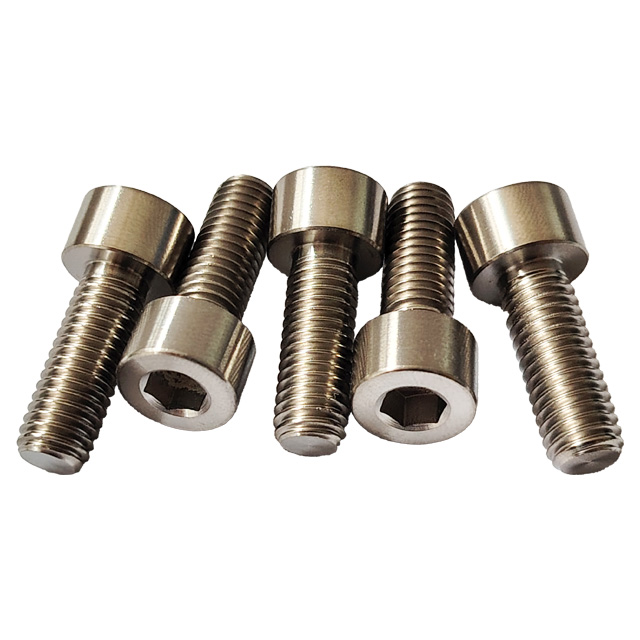
Precision Titanium Fasteners Catalog
Factory-direct Grade 5 Titanium wheel bolts, hex cap screws, and flange nuts engineered for extreme thermal stability and unsprung weight reduction.
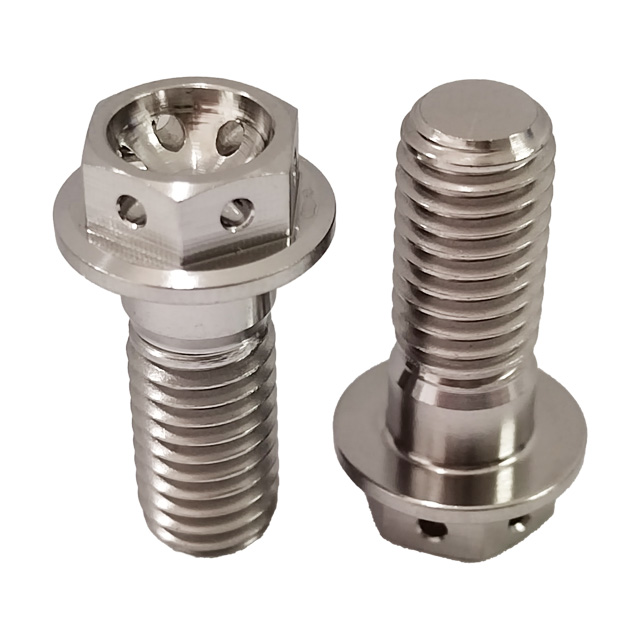
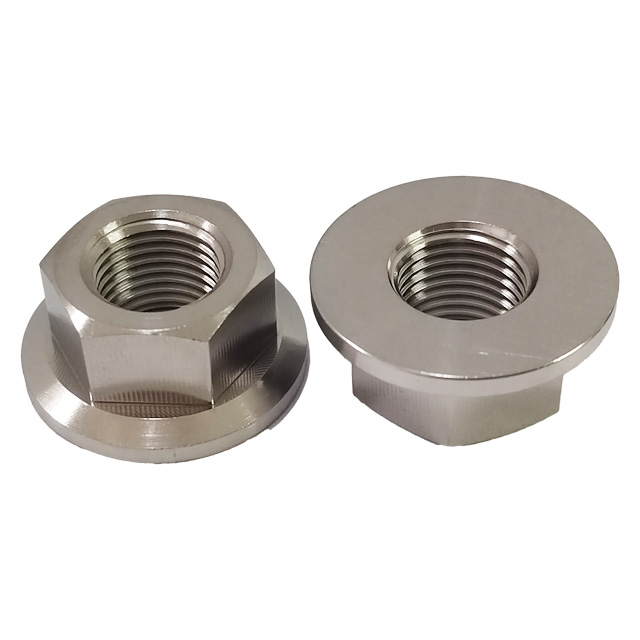
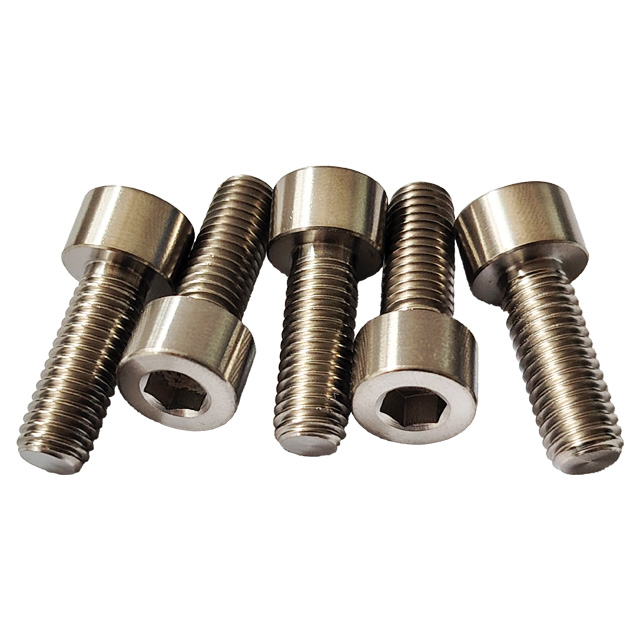
Engineering Superiority: The Metallurgy of OEM Titanium Wheel Lug Fasteners
In modern high-performance automotive engineering, aerospace technology, and elite motorsport design, replacing conventional Grade 10.9 or 12.9 carbon steel wheel bolts with custom OEM Ti-6Al-4V (Grade 5 Titanium) wheel lug fasteners represents one of the most effective mechanical upgrades available. Wheel lug bolts and studs operate under extreme conditions characterized by severe dynamic stress, violent shear forces, cyclic vibrational loading, and extreme heat cycles transferred directly from brake rotor assemblies.
Navzo Precision Titanium Products Co., Ltd., based in China’s premier titanium production center—Baoji High-tech Development Zone—specializes in high-precision OEM and ODM titanium manufacturing. Utilizing state-of-the-art multi-axis CNC machine tools and precision cold-heading thread rolling machinery, Navzo produces custom titanium wheel bolts engineered to exacting pitch diameter tolerances (ISO 965 Class 6g) and flawless fatigue endurance limits.
Information Gain Key Metric: Ti-6Al-4V offers a specific strength ratio (tensile strength divided by density) of ~212 kN·m/kg, compared to ~125 kN·m/kg for Grade 10.9 steel. This mechanical differential enables a 42%–45% reduction in fastener weight without sacrificing tensile capacity or shear integrity.
45%
Unsprung Mass Reduction
950+
Min. Tensile Strength (MPa)
100%
Thread Rolling Flow Grain
≤1h
B2B RFQ Response Time
Unsprung Rotational Mass Mechanics and Vehicle Dynamics
From a vehicle dynamics standpoint, wheel fasteners belong to both unsprung mass and rotational inertia systems. Reducing unsprung weight directly decreases kinetic energy inertia during wheel vertical oscillations, allowing suspension dampers and springs to react significantly faster to changes in pavement topology. Simultaneously, lowering the rotational moment of inertia (I = ∑ m r²) reduces wheel assembly spin-up resistance during aggressive acceleration and minimizes energy expenditure during heavy braking.
A typical high-performance sports car or luxury vehicle utilizing 20 wheel lug bolts can save up to 1.2 kg to 1.8 kg of pure rotational unsprung weight across all four hubs. In track applications, this reduction yields measurable improvements in corner turning response, wheel dampening tracking, steering feel feedback, and lap-time consistency.
Metallurgical Data: Grade 5 Ti-6Al-4V vs. Steel Fastener Alloys
Evaluating raw mechanical parameters is essential for tier-1 automotive buyers, aftermarket brand engineers, and procurement specialists when validating titanium lug fasteners against legacy steel hardware. The table below outlines empirical engineering data comparing forged/rolled Ti-6Al-4V with standard automotive fastener steel grades.
| Material Grade | Density (g/cm³) | Tensile Strength (MPa) | Yield Strength 0.2% (MPa) | Shear Strength (MPa) | Modulus of Elasticity (GPa) | Corrosion Resistance |
|---|---|---|---|---|---|---|
| Ti-6Al-4V (Grade 5 Titanium) | 4.43 | 950 – 1050 | 880 – 920 | 610 – 650 | 114 | Immune (Salt Spay >1000h) |
| Class 10.9 Carbon Steel | 7.85 | 1040 | 940 | 620 | 210 | Poor (Requires Plating) |
| Class 12.9 Alloy Steel | 7.85 | 1220 | 1100 | 730 | 210 | Poor (Prone to Rust & HE) |
| Stainless Steel A2-70 (304) | 7.93 | 700 | 450 | 420 | 193 | Moderate |
| GR2 Commercially Pure Titanium | 4.51 | 345 | 275 | 240 | 105 | Excellent |
Critical Structural Insight: Thread Rolling vs. Thread Machining
A paramount consideration for OEM custom wheel bolts is thread manufacturing methodology. Cutting thread profiles using traditional CNC turning or threading dies cuts through the alloy’s longitudinal grain structure, introducing severe micro-notches at the thread roots that act as fatigue crack initiation sites under cyclic shear loads.
At Navzo Precision Titanium, all critical titanium wheel lug studs and bolts undergo cold-rolling or warm thread rolling processes. Thread rolling plastically deforms the Ti-6Al-4V crystalline matrix, compressing the material grain lines along contoured thread profiles. This cold working effect increases thread root fatigue life by over 300% and increases thread strip resistance under elevated clamping torque specifications.
OEM Customization & Engineering Solutions
From custom head geometries to bespoke pitch thread profiles, Navzo offers comprehensive ODM and OEM contract manufacturing based on technical drawings and CAD specs.
Seat Profile Precision
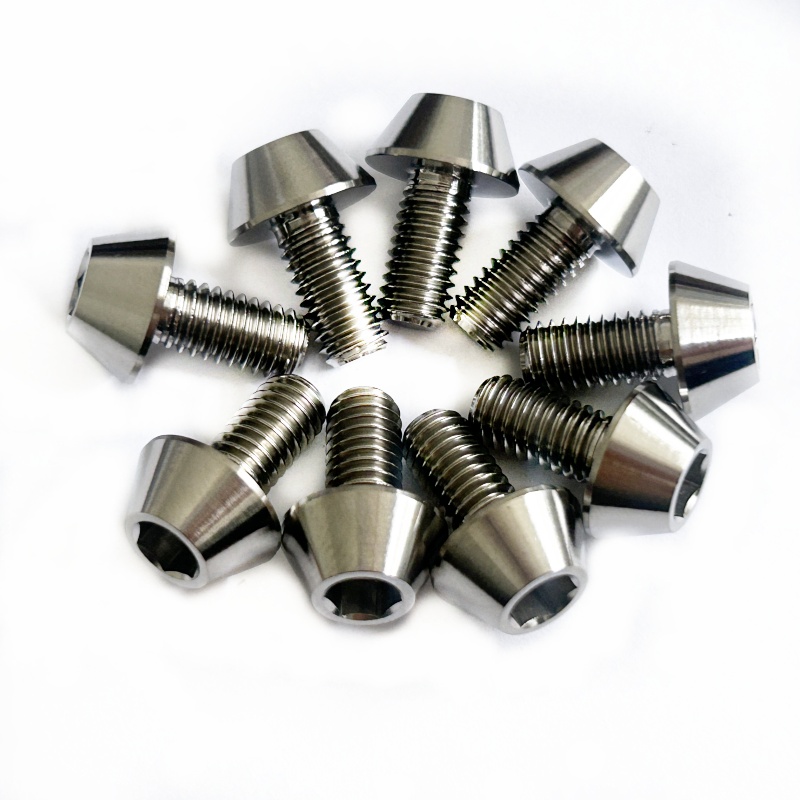
Precision machining for 60-degree conical cone seats, floating washer seats, and exact-radius ball seats (R12, R13, R14) ensuring 100% surface contact with alloy wheel seating interfaces.
Drive Head Geometries
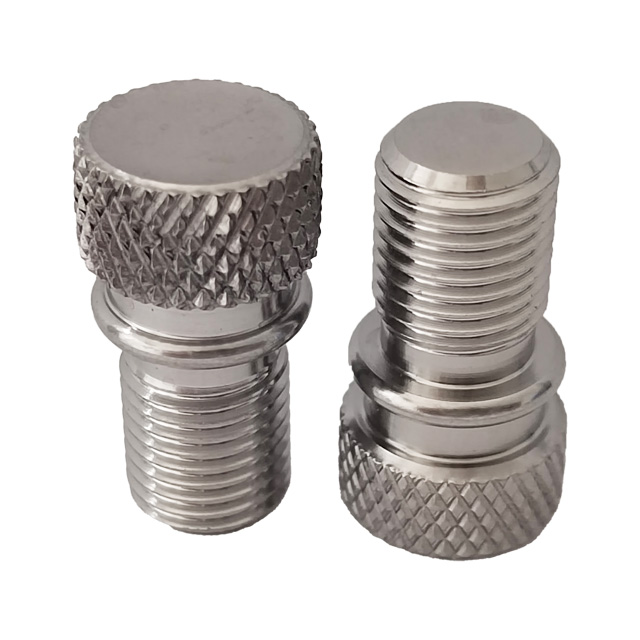
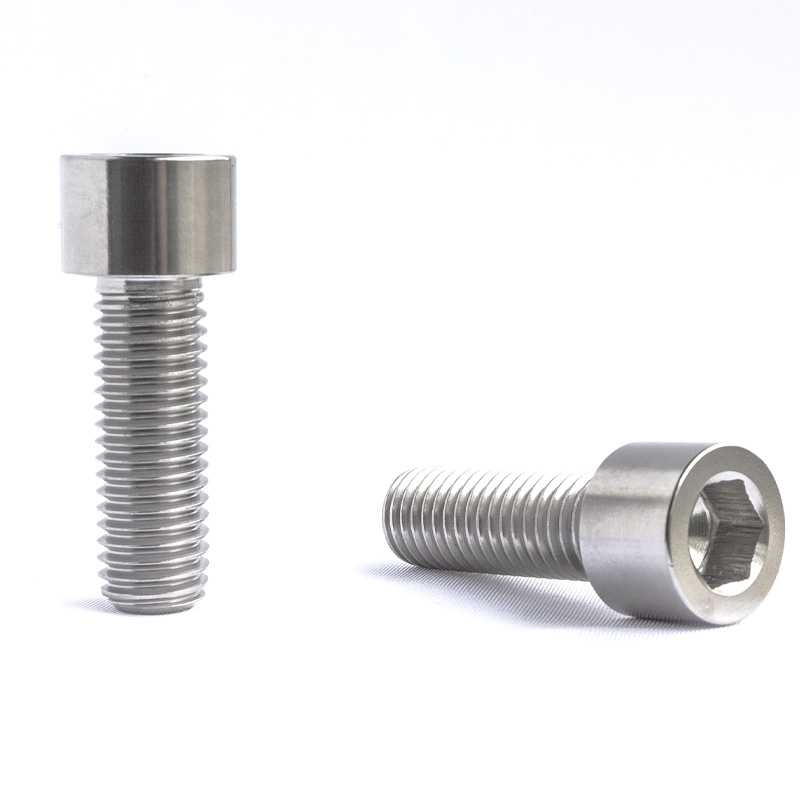
Custom tooling for internal Torx (T50/T55/T60), 12-point spline flange heads, extended hex drives, knurled thumb grips, and proprietary security anti-theft bolt head patterns.
Extended Shank Lengths
Bespoke shank lengths (28mm to 65mm+) engineered to accommodate aftermarket wheel spacers, widebody wheel offset conversions, and specialized race car wheel setups.
Surface & PVD Coatings
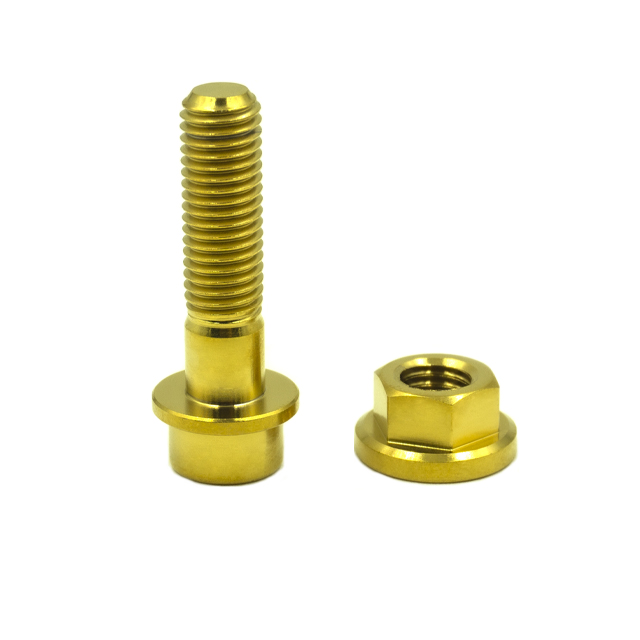
In-house electrochemical anodizing, burnt blue thermal treatment, and Physical Vapor Deposition (PVD) gold, black DLC, and rainbow finishes for enhanced micro-hardness and UV durability.
Surface Tribology: Anti-Galling Metallurgy and PVD Treatments
A critical engineering topic frequently encountered when transitioning from steel to titanium fasteners is thread galling (cold welding). Titanium alloys possess a natural passivation layer of titanium oxide (TiO²). Under high clamp loads without lubrication or proper surface finishing, friction can strip this thin oxide film, leading to direct metal-to-metal contact, severe micro-adhesion, and thread damage.
To eliminate thread galling, Navzo employs advanced surface engineering options paired with rigorous assembly torque guidelines:
Type II Anodization
Increases natural oxide surface film thickness up to several micrometers, increasing surface micro-hardness and building an insulating barrier against galvanic interaction with aluminum wheel hubs.
PVD Hard Coating
Deposits ultra-hard thin films such as Titanium Nitride (TiN) or Diamond-Like Carbon (DLC) reaching hard levels of 2000–3000 HV, drastically lowering friction coefficients and preventing galling during repeated wheel changes.
Controlled Thermal Oxidation
Known as "Burnt Blue," this process thermally grows a durable, color-shifting titanium oxide structure that resists discoloration under intense brake rotor heat radiation exceeding 400°C.
Assembly Best Practice: Navzo recommends applying a dedicated anti-seize paste containing copper, molybdenum disulfide (MoS²), or graphite powder to titanium threads. This stabilizes the friction factor (μ ≈ 0.12 – 0.14) and ensures consistent target pre-load torque without thread binding.
Future Sourcing Trends for Titanium OEM Automotive Fasteners
As global automotive original equipment manufacturers (OEMs) shift rapidly toward vehicle electrification and lightweighting to comply with stringent fuel efficiency standards and battery range targets, fastener procurement strategies are undergoing structural evolution.
1. Acceleration in Electric Vehicle (EV) Unsprung Mass Optimization
Electric cars carry heavy battery packs that place extra load on chassis suspension components. OEMs are aggressively looking for weight reduction across non-battery assemblies. Substituting heavy steel wheel bolts and studs with Grade 5 Titanium reduces mass directly at the wheel hub, offseting heavy EV curb weights and improving electric driving range per charge.
2. Transition from Machined Bar Stock to Hybrid Cold Forging
Traditionally, specialized titanium bolts were turned entirely from bar stock on CNC lathes, resulting in high material waste (high buy-to-fly ratio). The market is pivoting toward multi-station automatic warm-heading and cold-heading technologies. Forging bolt heads prior to CNC final turning optimizes raw material efficiency, lowers unit manufacturing costs for volume buyers, and improves head-to-shank structural integrity.
3. Demand for Full Supply Chain Traceability and Raw Material Verification
International automotive brands now demand rigorous material traceability starting from titanium sponge melting to vacuum arc remelting (VAR) ingots, wire rod drawing, and final bolt inspection. Buyers require EN 10204 3.1 Mill Test Reports (MTRs) validating chemical composition (Al: 5.5–6.75%, V: 3.5–4.5%, Fe: ≤0.30%, O: ≤0.20%) and tensile testing figures for every single production lot.
Navzo Enterprise Advantages & Manufacturing Hub
Located in Baoji—China's renowned "Titanium Valley"—Navzo combines raw material supply chain proximity with advanced multi-axis CNC manufacturing power.
Baoji Supply Chain Hub
Direct partnership with top raw titanium ingot producers in Baoji ensures immediate access to premium certified Grade 5 titanium bar stock at competitive factory costs.
Strict Quality Control
100% thread pitch gauge inspection, optical sorting for critical dimensions, spectral material analyzer (PMI testing), and tensile test certificates provided per shipment.
Rapid OEM Engineering
In-house engineering experts review 2D/3D CAD drawings (STEP, DWG, PDF) within 1 hour, providing manufacturability feedback and prototype turnaround times.
Global Export Footprint
Over 10 years exporting precision fasteners to key tier-1 automotive and industrial distribution channels across North America, Germany, Japan, UK, South Korea, and Australia.
Frequently Asked Procurement Questions
Technical and commercial answers for automotive buyers, brand managers, and engineering teams.
Why is Ti-6Al-4V (Grade 5) preferred over Grade 2 Titanium for wheel lug bolts?
Grade 2 Titanium is commercially pure titanium with an ultimate tensile strength of around 345 MPa, which is far too low for high-load automotive wheel hubs. Grade 5 (Ti-6Al-4V) is an alpha-beta alloy heat-treated to achieve tensile strength above 950 MPa and yield strength over 880 MPa, matching Class 10.9 steel performance while saving ~45% weight.
How does Navzo prevent galvanic corrosion when titanium wheel bolts contact aluminum wheels?
Galvanic corrosion occurs when two dissimilar metals with different electrical potentials contact each other in the presence of an electrolyte (such as salt water). Titanium and aluminum have a high potential difference. Navzo solves this by offering specialized surface treatments like Type II anodization or PVD coatings that form a non-conductive barrier layer, effectively eliminating galvanic corrosion risks.
What is the typical Minimum Order Quantity (MOQ) for custom OEM titanium wheel bolts?
Standard inventory sizes (e.g., M12x1.5, M14x1.25, M14x1.5 hex socket bolts) have low MOQs starting from 100 to 200 pieces. Fully customized OEM bolt designs with unique head profiles, custom lengths, or PVD colors start at 200 to 500 pieces per batch, depending on setup tooling complexity.
Can Navzo manufacture titanium wheel bolts based on sample parts or 2D/3D CAD drawings?
Yes, our engineering department works with standard 3D file formats (STEP, IGES, X_T) and 2D engineering drawings (PDF, DWG). If drawings are unavailable, you can send physical samples to our Baoji facility for 3D laser scanning and reverse engineering.
Are thread rolled bolts superior to turned threads for wheel studs?
Absoltely. Thread rolling forms threads by cold plastic displacement without cutting material fibers. This preserves grain continuity, increases surface hardness, eliminates micro-groove notch stress points, and yields significantly higher fatigue resistance against road vibrations and high braking heat.
What quality certification documents accompany wholesale export orders?
Every shipment includes a comprehensive quality documentation packet containing EN 10204 3.1 Mill Test Reports (chemical composition analysis and mechanical tensile/yield testing figures), dimensional inspection reports, and surface treatment compliance records.