Technical Whitepaper & Metallurgy
Engineering Fundamentals of Titanium Rotor Fasteners
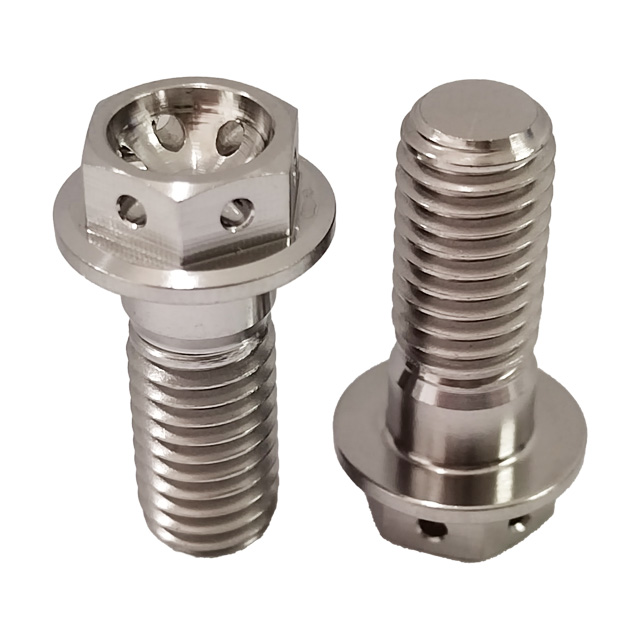
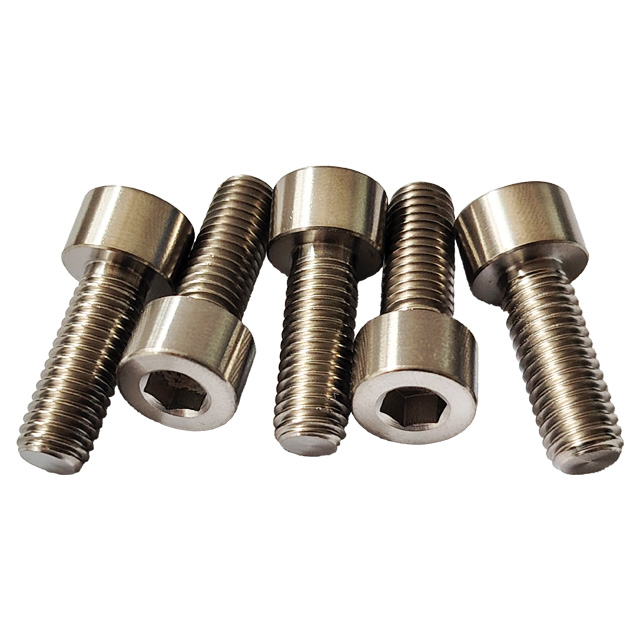
Brake disc rotor bolts serve as single-point safety-critical joints in vehicle dynamic stability systems. Situated at the direct interface between the wheel carrier/hub and the spinning friction disc, these fasteners absorb multi-axis dynamic shear loads, cyclic torque spikes during high-g decelerations, and violent thermal transfers exceeding 600°C under severe track conditions. Sourcing reliable OEM titanium rotor bolts requires a rigorous understanding of the distinction between cut threads and cold-rolled grain architectures, fastener preload mechanics, and alpha-beta titanium alloy microstructures.
Key Engineering Finding: Under severe braking events, rotor fasteners experience simultaneous shear stress from kinetic friction deceleration and cyclic tension caused by the lateral thermal expansion of floating or solid brake hats. Navzo precision Grade 5 fasteners maintain a fatigue endurance limit exceeding 510 MPa at 10⁷ cycles, outperforming austenitic stainless steel hardware by more than 280% under harmonic vibration.
Dynamic Shear Resistance and Unsprung Mass Optimization
Unsprung rotational mass located at the outer hub directly influences gyroscopic precession, suspension response latency, and wheel rebound dynamics. Replacing OEM zinc-plated grade 10.9 steel rotor bolts with Ti-6Al-4V fasteners yields an immediate 44% to 47% weight delta on the most critical rotational axis. Unlike static chassis bolts, rotating rotor bolts act as kinetic flywheels; reducing mass here decreases the rotational moment of inertia ($I = m \cdot r^2$), which directly enhances throttle responsiveness, reduces braking stopping distances, and sharpens handling transition vectors in competitive motorcycling and racing vehicle applications.
However, lightweighting must not compromise fastener clamping force ($F_M$). Because titanium possesses an elasticity modulus of approximately 110–114 GPa—roughly half that of high-tensile alloy steel (205–210 GPa)—titanium bolts stretch elastically under clamp load twice as much as steel at equivalent stresses. This enhanced elastic elongation serves as an integrated spring washer mechanism, effectively buffering against loosening induced by rapid thermal expansion cycles when the brake rotor transitions from ambient temperature to elevated operating temperatures.
Grain Flow Integrity: Rolled Threads vs. Machined Cut Threads
A frequent cause of premature bolt failure in cheap aftermarket rotor bolts is the use of single-point CNC cut threads. Machining threads sever the longitudinal crystalline grain flow of the titanium bar stock, generating micro-notches, stress concentration risers, and micro-voids at the thread root.
At our Baoji manufacturing plant, all Navzo OEM rotor bolts feature hydraulically cold-rolled threads produced after precision CNC shank turning. The thread-rolling dies plastically displace the titanium alloy along smooth burnished contours, inducing high compressive residual surface stresses into the thread root fillet. This cold work-hardening process increases surface hardness up to HV 360–390 and enhances fatigue life by 300% to 450% compared to cut-thread fasteners, eliminating root fatigue fractures under high-frequency anti-lock braking (ABS) pulsing.