Engineered Titanium Flange & Socket Bolt Inventory
Manufactured directly from certified Ti-6Al-4V billet stock in Baoji. Each fastener delivers high tensile resilience, fatigue resistance, and absolute immunity to atmospheric and galvanic oxidation.
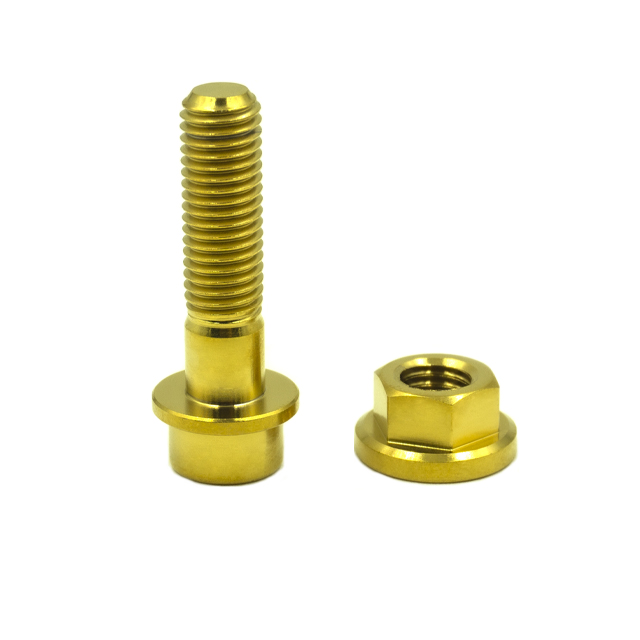
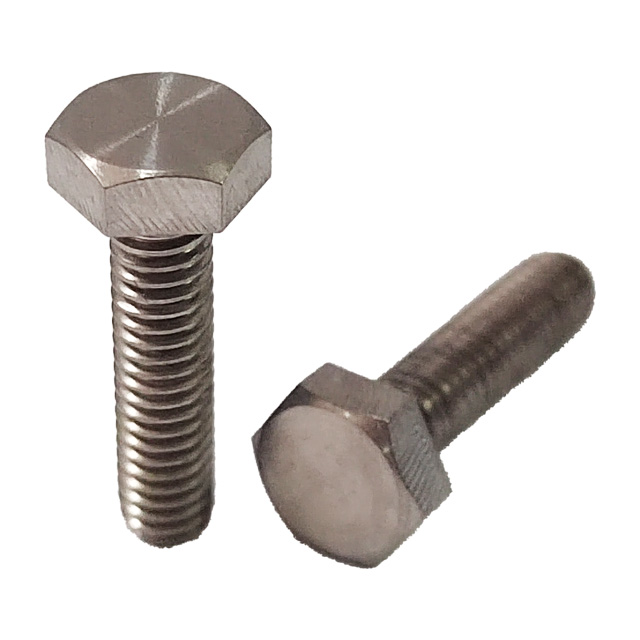
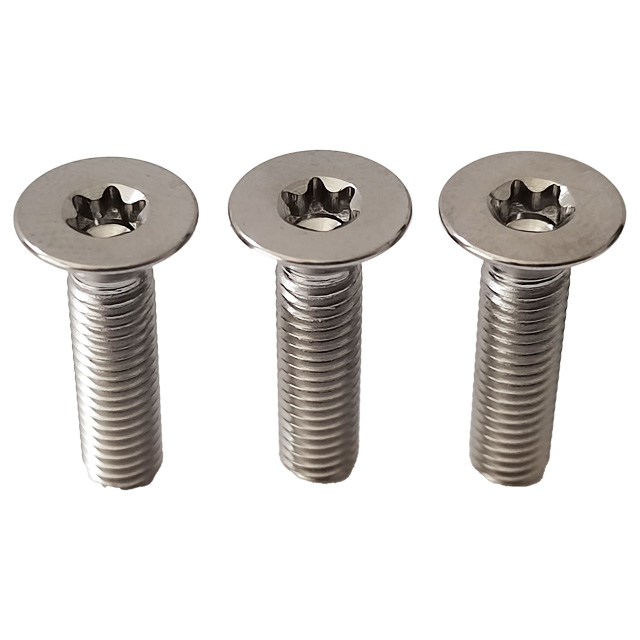
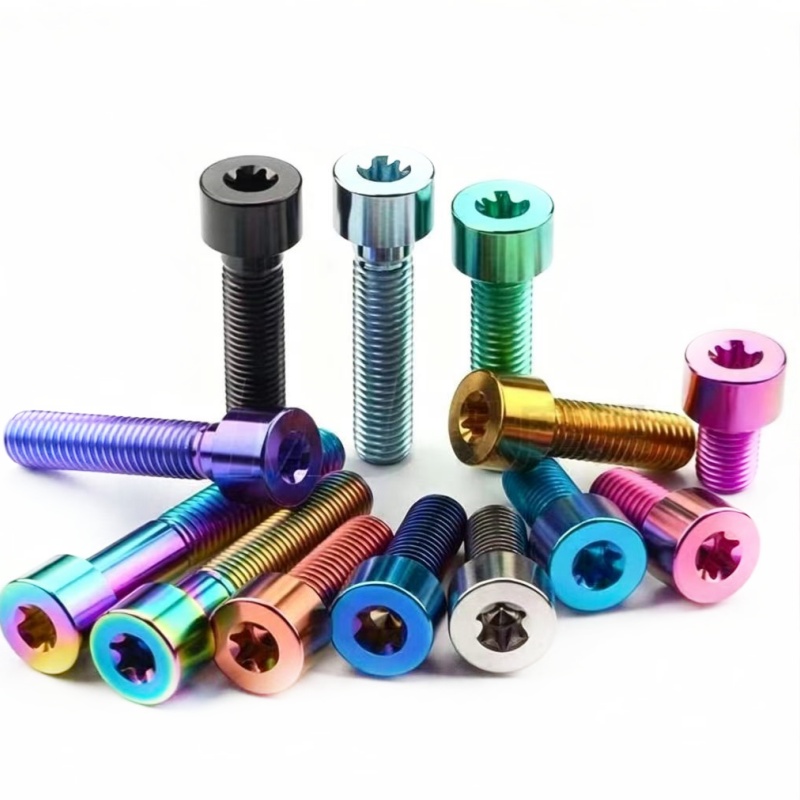
Navzo Precision: Origin of Titanium Fastener Excellence
Founded on Yucai Road within the High-tech Development Zone of Baoji, China (globally recognized as "China's Titanium Valley"), Navzo Precision Titanium Products Co., Ltd. has spent over a decade perfecting the cold heading, hot forging, CNC turning, and thread-rolling dynamics of Grade 5 (Ti-6Al-4V) and commercial pure titanium fasteners.
Direct Baoji Raw Material Stream
By sitting directly at the epicenter of China's titanium sponge and ingot supply chain, Navzo maintains uninterrupted access to high-purity vacuum arc remelted (VAR) bars, drastically cutting material procurement lead times and guaranteeing chemical conformity.
Advanced Grain-Flow Cold Heading
Unlike basic machine shops that simply mill bolts out of bar stock, Navzo combines high-tonnage cold heading with warm pre-treatment. This maintains unbroken internal metallurgical grain lines through the head-shank transition for elite fatigue tolerance.
Rolled Thread Cold Plasticity
Threads are exclusively created via planetary and cylindrical die thread-rolling equipment. Cold forming cold-works the thread roots and crests, increasing root surface hardness by 15-20% and eliminating notch-sensitivity cracking under cyclic shear stress.
Rigid In-House Metrology & QA
Every single batch undergoes dimensional verification with Mitutoyo optical comparators, Class 6g go/no-go ring gauges, hardness testing, and micro-crack eddy current inspection, backed by EN 10204 3.1 Mill Test Certificates detailing composition and pull-tests.
Full-Spectrum Surface Finishing
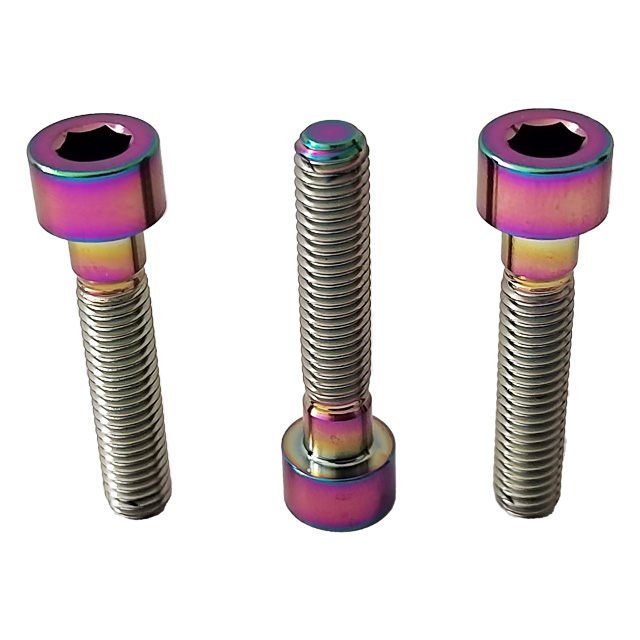
Navzo houses comprehensive surface engineering systems: micro-arc anodic oxidation, Physical Vapor Deposition (PVD - DLC, TiN, TiAlN), vacuum heat-induced burnt blue, and optical mechanical mirror polishing, addressing both aesthetic and anti-galling needs.
Rapid Engineering Turnaround
Our rapid-prototyping team reviews CAD models (STEP, IGES, DWG) and finishes engineering DFM checks within 24 hours. Custom flange geometry, hollow broached shafts, and non-standard thread pitches move to physical pilot testing within 10 to 14 business days.
1. Mechanical Anatomy of Custom Flange Bolts: Eliminating Embedment & Washer Creep
In high-vibration, cyclic loading environments—such as automotive turbocharger manifolds, motorcycle suspension linkages, marine drive assemblies, and aerospace avionics brackets—bolted joint integrity depends on clamping load retention. Standard hexagonal bolts require separate washers to distribute clamp force over a larger contact footprint. However, under high dynamic shear, separate washers create two distinct interface planes, multiplying the risk of joint slip, friction variations, and embedment relaxation.
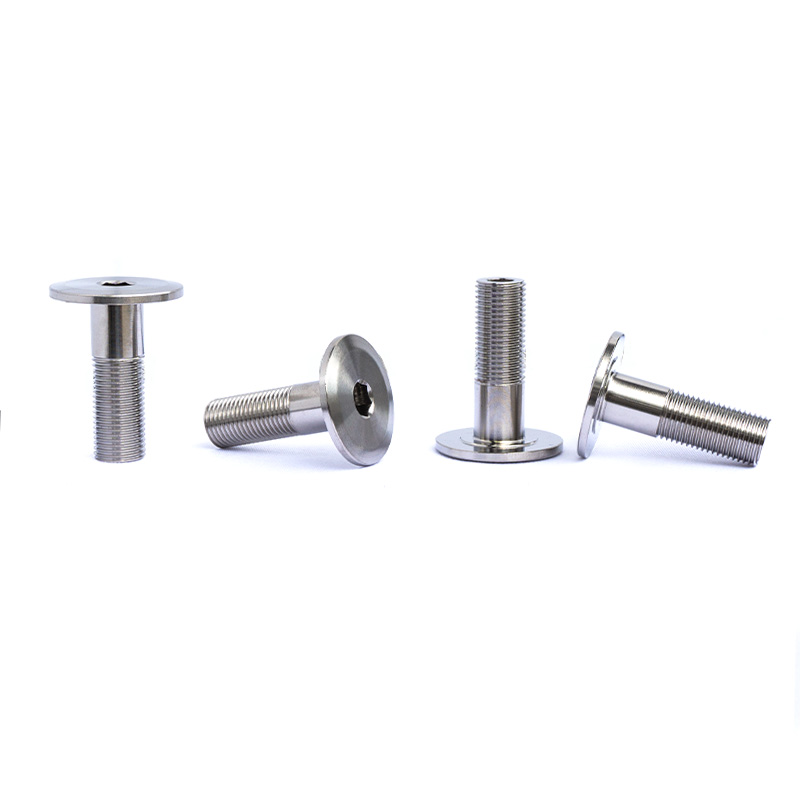
An integrally forged titanium flange bolt merges the washer face directly into the bolt head, providing a unified bearing surface area that can be up to 2.2 times wider than a standard bolt head. This structural continuity yields three distinct physical advantages: First, it drastically reduces contact pressure on softer mating substrates (such as cast aluminum, magnesium casings, or carbon fiber composite laminates), preventing the fastener head from crushing or sinking into the parent material. Second, by eliminating the secondary slip plane of a loose washer, the flange bolt minimizes rotational back-off during severe harmonic oscillations. Third, the generous transition fillet radius beneath the integrated flange eliminates localized notch concentrations, effectively distributing stress flow throughout the solid shank.
Engineering Principle: The integral flange functions as a structural beam under preload tension. By carefully specifying the flange skirt thickness and angle, our engineers introduce a minute concave deflection profile (Belleville effect) that acts as an elastic spring store, continually compensating for thermal expansion differential between titanium and aluminum casings.
| Material Specification | Density (g/cm³) | Tensile Strength (MPa) | Yield Strength (0.2%, MPa) | Modulus of Elasticity (GPa) | Corrosion Resistance |
|---|---|---|---|---|---|
| Titanium Grade 5 (Ti-6Al-4V) | 4.43 | 895 - 1050 | 828 - 920 | 114 | Immune in Marine / Ambient |
| Structural Steel Grade 10.9 | 7.85 | 1000 - 1040 | 900 - 940 | 210 | Requires Zinc/Galvanic Coating |
| Alloy Steel Grade 12.9 | 7.85 | 1220 | 1100 | 210 | High Risk of Hydrogen Embrittlement |
| Austenitic Stainless A2-70 (304) | 7.90 | 700 | 450 | 193 | Prone to Pitting & Crevice Attack |
| Marine Stainless A4-80 (316) | 8.00 | 800 | 600 | 193 | Moderate Marine Resistance |
As demonstrated in the metallurgical table above, Grade 5 Titanium delivers an unmatched strength-to-weight ratio. With a density of just 4.43 g/cm³, a Ti-6Al-4V flange bolt is roughly 44% lighter than an equivalent 10.9-grade alloy steel bolt, while achieving superior tensile performance compared to A4-80 stainless steel. Furthermore, titanium exhibits an elastic modulus of approximately 114 GPa—nearly half that of structural carbon steel (210 GPa). This lower modulus gives titanium fasteners roughly twice the elastic stretch capacity at a given preload force. This elasticity prevents the fastener from snapping under sudden shock loads and accommodates joint thermal elongation without plastic deformation.
2. Thread Forming Integrity: Rolled Threads vs. Cut Threads
A critical consideration during B2B OEM titanium fastener procurement is the thread forming methodology. Single-point lathe cutting or tapping cuts directly across the grain structure of the annealed titanium bar, exposing microscopic end grains and machining tears in the thread root valleys. Under cyclic tension-tension fatigue testing, these tears act as micro-notches where microcracks initiate and propagate catastrophically.
Navzo utilizes dedicated cold and warm thread-rolling processes. Hardened tool steel cylindrical dies apply gradual radial pressure into the rotating bolt blank. This displaces the titanium alloy plastically rather than cutting it away. The grain flow lines within the metal are continuously compressed and redirected, contouring smoothly along the root, flanks, and crest of the thread profile. The burnishing action of the rolling dies induces deep residual compressive stresses into the thread roots, raising fatigue life by up to 300% compared to machined threads, while significantly improving thread flank galling resistance during assembly.
Preventing Thread Galling & Enhancing Tribological Performance
Despite its remarkable mechanical resilience and passive titanium oxide (TiO2) protective layer, titanium has a naturally high coefficient of friction when brought into sliding contact with itself or other metals under high contact pressures. This phenomenon, known in tribology as dry sliding adhesive wear or "galling", can cause micro-welding between male and female thread flanks during high-torque tightening, leading to joint seizure.
As an engineering-driven OEM supplier, Navzo has solved this metallurgical challenge through comprehensive surface engineering protocols and customized plating pathways:
Tribology Protocol: Never assemble dry titanium flange fasteners into dry titanium or stainless internal threads. To ensure accurate torque-tension conversion and avoid galling, always specify an engineered PVD surface coating, micro-arc anodizing, or apply a specialist anti-seize compound with MoS2, graphite, or copper base particles.
1. Hard Anodic Oxidation (Type II / Micro-Arc Anodizing): Unlike decorative Type I cosmetic coloring, Type II industrial anodization modifies the surface under controlled electrochemical baths. It grows a dense, low-friction, micro-porous oxide matrix that permanently traps liquid anti-seize lubricants and provides an insulating dielectric barrier to prevent galvanic corrosion when mating against carbon fiber composites or aluminum alloys.
2. Vacuum PVD Thin-Film Coatings (Diamond-Like Carbon / TiN / TiAlN): For high-frequency service applications, Navzo applies vacuum Physical Vapor Deposition. Applying a Diamond-Like Carbon (DLC) coating deposits an ultra-hard (2500 - 3500 HV) carbon matrix with a friction coefficient as low as 0.08–0.12. This delivers dry self-lubricating capability while preventing thread galling even after repetitive high-torque impacts.
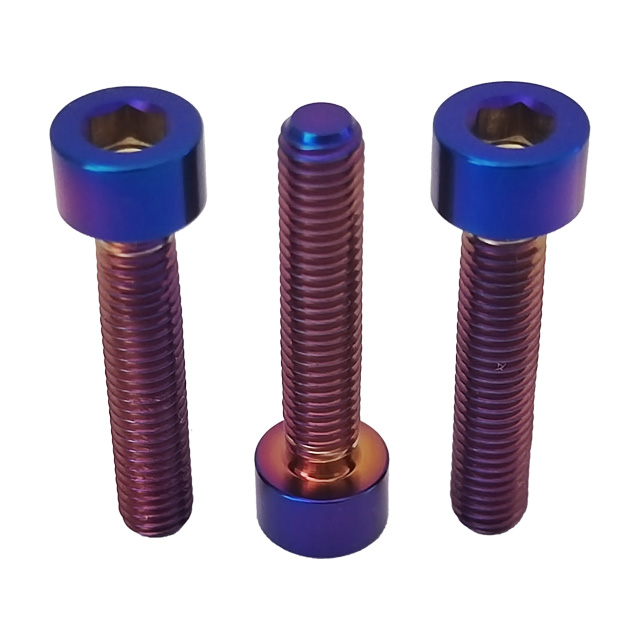
3. Thermal Color Oxidation (Burnt Blue / Gold): Utilizing precision vacuum heat treatments, we induce a controlled optical interference oxide layer on the fastener surface. This burnt blue or gold finish is fully integrated into the base metal, eliminating any risk of flaking, chipping, or thermal degradation up to operating temperatures of 400°C.
Future Sourcing & Procurement Trends (2025–2035)
As tier-1 industrial designers, electric vehicle architectures, and commercial aerospace systems evolve, procurement strategies for critical structural fasteners are experiencing seismic technological shifts.
EV Mass Reduction & Unsprung Inversion
Electric vehicle architectures are under immense pressure to lower battery pack casing weights and reduce unsprung mass at brake calipers and wheel hubs. Replacing high-tensile steel flange bolts with Grade 5 titanium recovers critical kilowatt-hours, boosting overall EV range without compromising chassis rigidity.
eVTOL & Urban Air Mobility Expansion
The sudden emergence of electric vertical takeoff and landing (eVTOL) aircraft demands strict structural safety factors alongside aggressive weight optimization. Procurement standards are pivoting toward dual-certified AMS 4928 Grade 5 titanium bolts featuring pre-drilled safety wire heads and 12-point flange drive profiles.
Carbon-Neutral Titanium Sponge Smelting
Global aerospace OEMs now demand comprehensive Scope 1, 2, and 3 emission audits across the supply chain. Titanium producers in the Baoji cluster are adopting zero-emission magnesium recycling and clean-electricity vacuum induction furnaces, lowering the embodied carbon footprint of every fastener blank.
Digital Twin & Mill Batch Serialization
Enterprise buyers are rapidly digitizing supply chain records. Navzo supports QR-code and micro-laser lot serialization on oversized bolt flanges, providing instant access to optical metrology curves, raw material melt chemistries, and tensile pull records stored securely online.
Custom Engineering Workflows: From STEP Drawing to Batch Qualification
Navzo Precision provides complete OEM manufacturing contracts, accommodating complex geometries that go far beyond standard DIN 6921 or ISO 4162 blueprints. Whether your design requires a low-profile umbrella flange, a 12-point star aerospace head, cross-drilled heads for safety lock-wires, or an internal Torx (Star) broached drive, our engineering department follows a five-stage production framework:
Phase 1: Design for Manufacturability (DFM)
Our engineers review your 2D PDF blueprints and 3D CAD files (STEP/IGES). We evaluate draft angles, head fillet transitions, and thread runout clearances to ensure efficient heading operations and prevent stress concentrations.
Phase 2: Certified Material Assaying
Titanium wire coils and round bars are procured directly from certified Baoji mills. In-house spectrometers confirm the chemical ratios of aluminum (5.5-6.75%), vanadium (3.5-4.5%), and limit interstitial elements (Fe, C, N, H, O) to strict aerospace limits.
Phase 3: Hybrid Heading & CNC Turning
Blank shafts are high-speed cold or warm headed to create the flange head blank. Complex fluted details, lightweight hollow bore centers, and specialized drive pockets are completed on Citizen high-precision Swiss-type multi-axis CNC machines.
Phase 4: Cold Thread Rolling
Shank diameters are ground to precise pitch dimensions prior to entering thread-rolling dies. Thread profiles are rolled under controlled pressure, ensuring continuous metal flow and forming smooth, uniform radii across root surfaces.
Phase 5: Coating & Surface Conditioning
Fasteners pass through automated ultrasonic degreasing stations before moving to specified finishing lines: electrochemical anodizing, titanium nitride PVD, vacuum thermal blueing, or micro-bead blasted matte finishes.
Phase 6: Quality Release & Packaging
First Article Inspection (FAI) reports are compiled using optical coordinate measuring machines and digital pitch gauges. Approved batches are sealed in anti-static, moisture-proof compartment packaging to safeguard thread integrity during international transport.
Frequently Asked Questions for B2B Fastener Procurement
Technical, metallurgical, and commercial answers compiled by Navzo's senior fastener engineers to assist purchasing directors and mechanical design teams.