Precision Grade 5 (Ti-6Al-4V) Machined Fasteners & Components
Engineered for maximum tensile strength, zero seawater corrosion, and up to 45% weight reduction over grade 12.9 alloy steel. Fully batch-tested with EN 10204 3.1 Mill Test Reports.
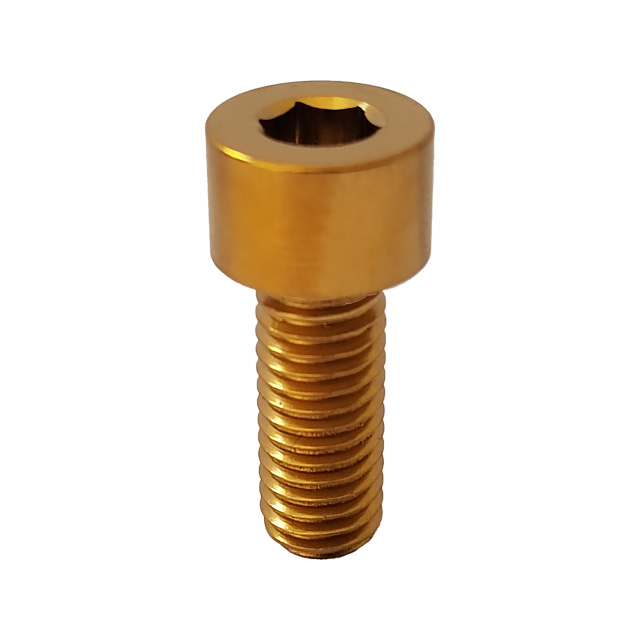
GR5 Titanium Bolts M10*30mm Golden Cylinder Head Hex Socket Bolts Factory Price Cap Head Inner Hex Screws
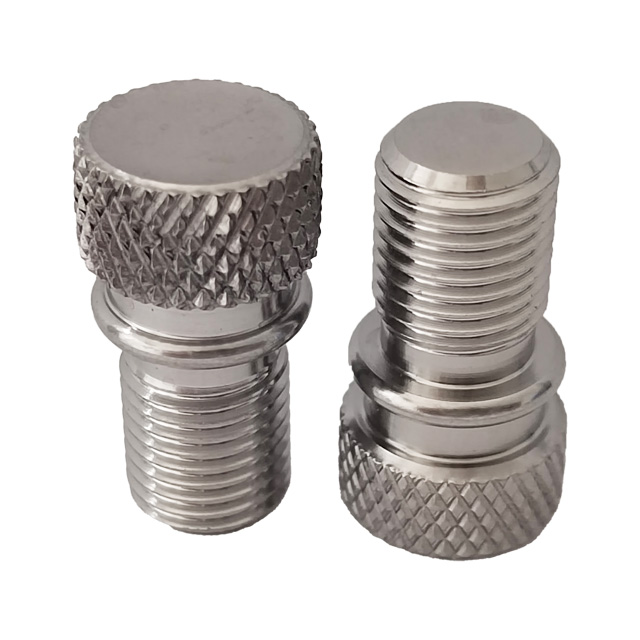
GR5 Titanium Bolts M9*1.0*12mm Hot Sale Cylindrical Head Knurled Bolts Factory Price Hand-Tightening Screws
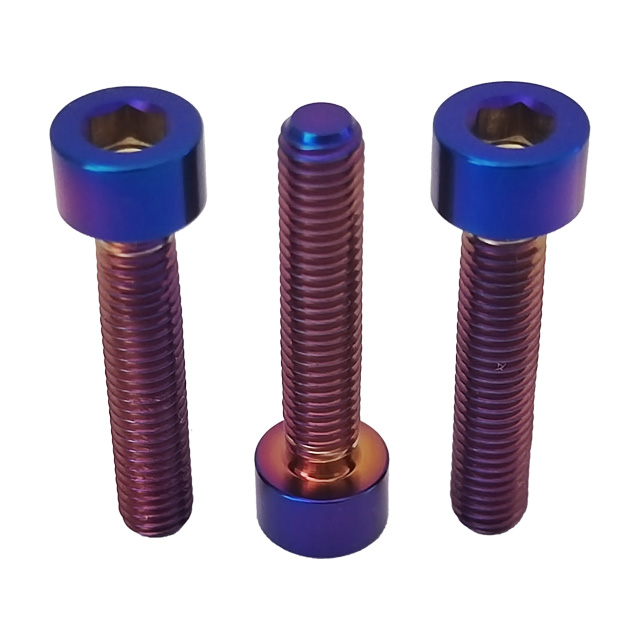
GR5 Titanium Bolts M5*25mm Burn Blue Cup Head Hex Socket Bolts High Quality Cylindrical Head Allen Screws
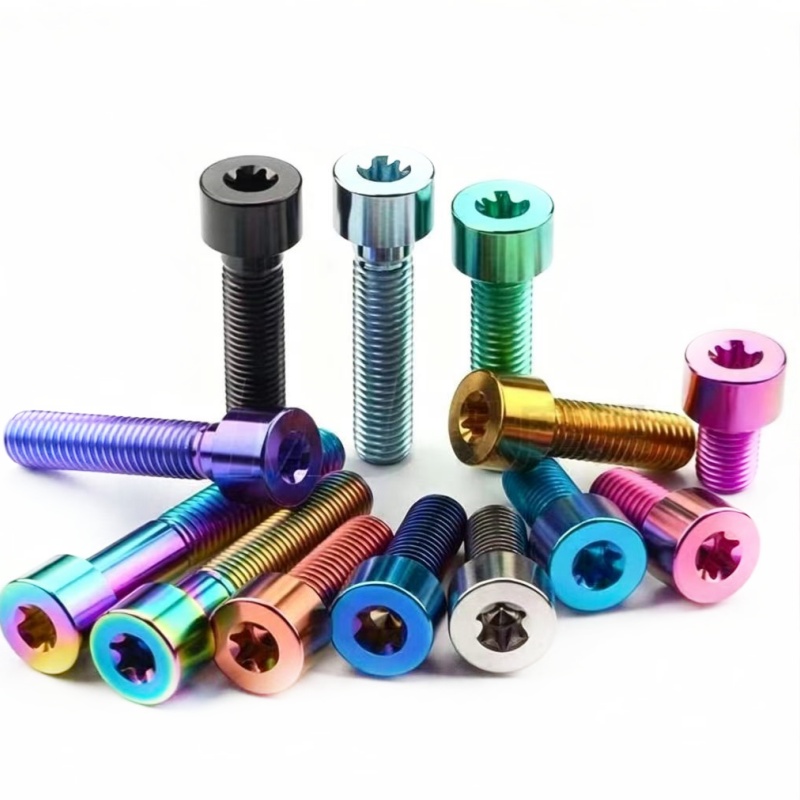
DIN912 M5 Titanium Socket Head Cap Screw Titanium Alloy Bolt for Motorcycle New Energy Aviation Medical Bicycle Modification
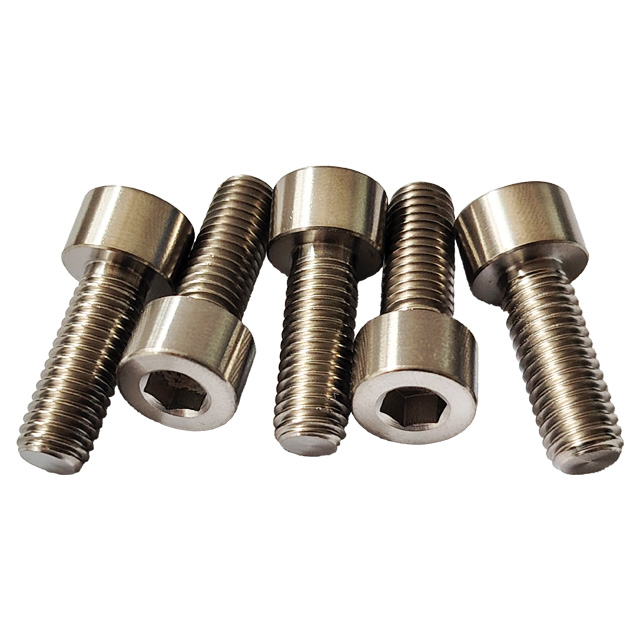
GR5 Titanium Bolts M8*25mm High Strength Cylindrical Head Hex Socket Bolts Factory Price Cup Head Allen Screws
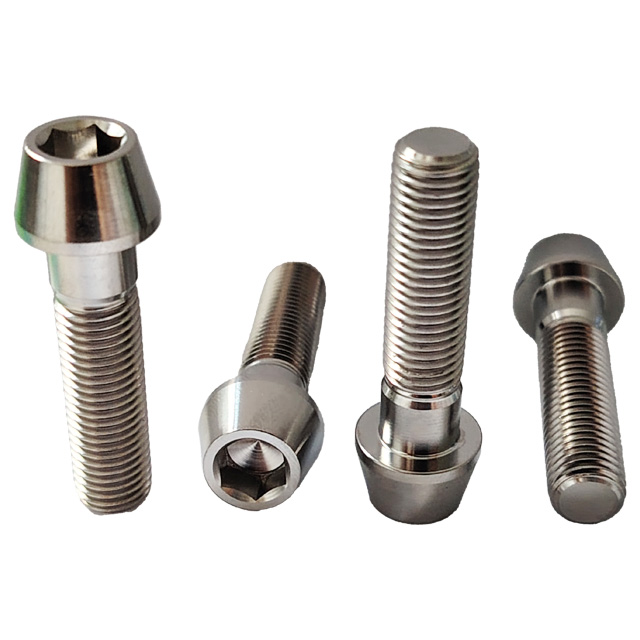
GR5 Titanium Bolts M8 M10 M12 CNC Machined Tapered Head Inner Hex Bolts Factory Price Cone Head Hex Socket Screws
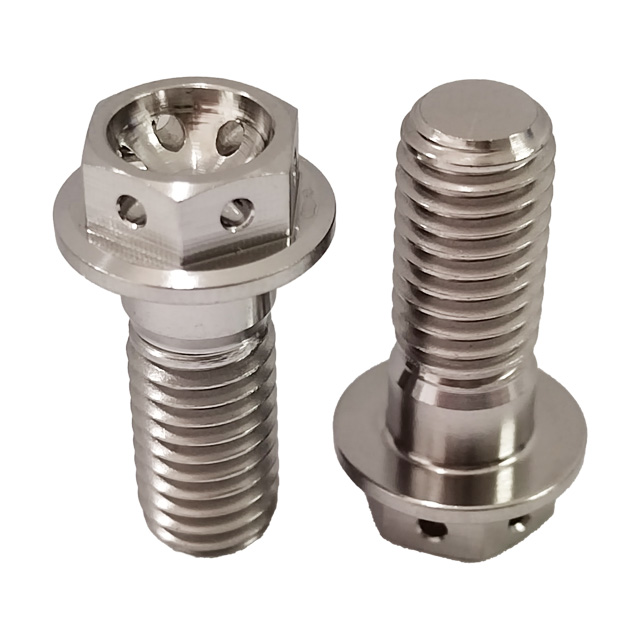
GR5 Titanium Bolts M8*20mm Factory Price Hex Flange Head Drilled Bolts High Quality Flange Head Slotted Screws
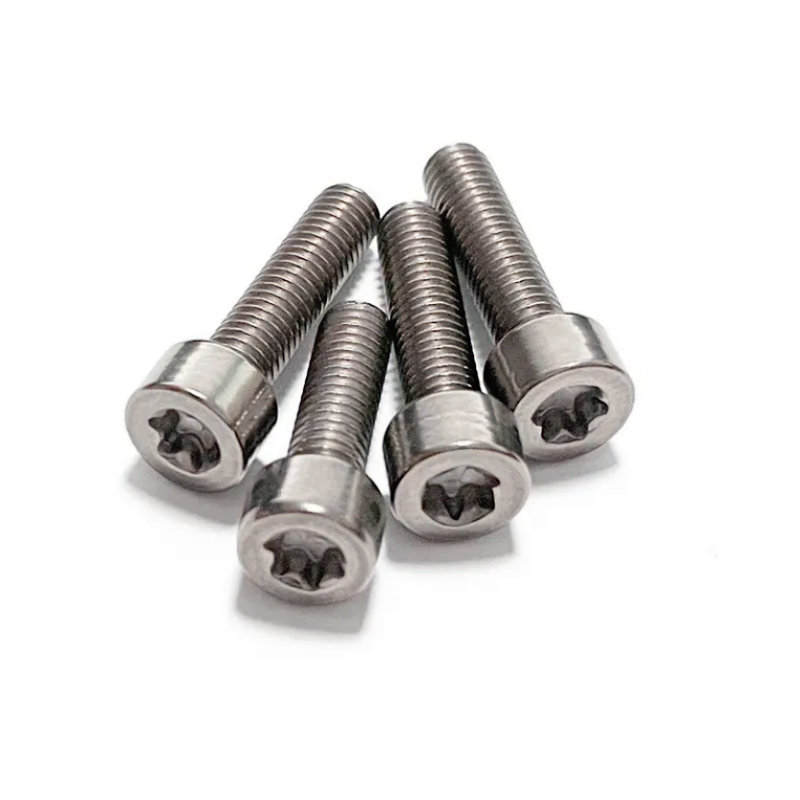
Gr5 Titanium Screws Titanium T30 Torx Bolts for Motorcycle Racing Performance Fastener
Why Tier-1 OEM Engineers & Global Procurement Trust Navzo Titanium
Headquartered on Yucai Road in the High-tech Development Zone of Baoji (China's Titanium Valley), Navzo integrates raw material smelting provenance with high-end CNC fabrication to eliminate supply chain friction.
Direct Baoji Ingot Provenance
We source vacuum-arc remelted (VAR) Grade 5 (Ti-6Al-4V) and Grade 2 titanium directly from local Baoji sponge mills. Each batch is 100% traceable with chemical spectrometry and mechanical tensile certifications conforming to ASTM B348, AMS 4928, and ISO 5832 specifications.
Cold Heading & 5-Axis Precision
Unlike basic machine shops that exclusively cut threads, our facility combines automated multi-station cold heading machines for grain-aligned fastener blanks with 3-, 4-, and 5-axis CNC Swiss machining centers. Thread profiles are rolled post-heat treatment to maximize shear and fatigue endurance.
Specialized Anti-Galling Surface Finishes
Titanium inherently suffers from galling and thread cold-welding under torque. Navzo provides proprietary surface modifications including High-Vacuum Physical Vapor Deposition (PVD), Micro-Arc Oxidation (MAO), Thermal Anodizing, and Molydisulfide (MoS2) dry-film coatings for smooth cycling.
CMM & Optical Gauge Inspection
Every critical batch passes coordinate measuring machine (CMM) verification, non-destructive ultrasonic flaw detection, digital optical comparator profile checks, and thread go/no-go ring gauge inspection. Zero defects, guaranteed pitch diameter, and burr-free chamfers.
Bespoke OEM/ODM From STEP Files
We routinely manufacture non-standard heads, internal/external relief bores, lightening pockets, asymmetric flanged sleeves, and custom titanium equipment fittings. Our engineers complete DFM (Design for Manufacturability) analysis within 24 hours of receiving your 3D CAD models.
Agile MOQ & Rapid Production Cycles
With massive raw billet inventories stored in-house, standard sizes ship within 3–7 days from catalog stock. For prototype CNC production runs, we provide 5-day rapid sampling, supporting tier-1 industrial clients across the United States, Germany, Japan, South Korea, and the UK.
Comparative Metallurgical Benchmark: Titanium Alloys vs. Conventional Metals
Evaluating mechanical properties, strength-to-weight ratios, and galvanic corrosion resistance across engineering materials commonly used in high-stress fastening and structural assemblies.
| Alloy Grade & Condition | Density (ρ, g/cm³) | Tensile Strength (Rm, MPa) | Yield Strength (Rp0.2, MPa) | Strength-to-Weight Ratio | Marine Salt-Spray Resistance | Primary Industrial Use-Case |
|---|---|---|---|---|---|---|
| Titanium GR5 (Ti-6Al-4V Annealed) | 4.43 | 950 – 1050 | 880 | 225 kN·m/kg | Immune (>2000h) | Aerospace, Supercar Hubs, Racing Calipers |
| Commercially Pure Ti (Grade 2) | 4.51 | 345 – 480 | 275 | 88 kN·m/kg | Immune (>2000h) | Chemical Heat Exchangers, Marine, Anodes |
| Alloy Steel Class 12.9 (Quenched/Tempered) | 7.85 | 1220 | 1100 | 155 kN·m/kg | Poor (Corrodes Quickly) | Heavy Machinery, High-Clamping Powertrain |
| Stainless Steel 316L (A4-80 Cold Worked) | 8.00 | 800 | 600 | 100 kN·m/kg | High (∼1000h) | Marine Hardware, Food Processing, Architecture |
| Aluminium 7075-T6 (Aerospace Grade) | 2.81 | 570 | 505 | 202 kN·m/kg | Moderate (Pitting Risk) | Aircraft Structures, Bicycle Components |
Global Procurement & Technology Trends in Titanium Machining (2025–2030)
How progressive supply chains are transitioning from transactional part purchasing to strategically integrated, high-precision titanium manufacturing partnerships.
Disintermediation & Direct Baoji Sourcing
Global OEMs are cutting out regional trading houses to source directly from Baoji titanium manufacturing clusters. Direct mill integration reduces markups by 25–40% and eliminates counterfeit grade risks via direct mill heat number traceability.
Lightweighting in Electric Mobility
With electric hypercars, battery electric vehicles (BEVs), and e-motorcycles prioritizing weight reduction to extend battery range, titanium suspension fasteners and motor mountings are replacing steel to reduce curb mass without sacrificing chassis stiffness.
Near-Net-Shape Cold Heading + CNC
Machining titanium generates high tool wear and chips (poor thermal conductivity). Advanced manufacturers are shifting from full bar billet machining to cold/warm heading blanks, followed by 5-axis finish milling, cutting cycle times and raw material scrap.
Advanced Physical Vapor Deposition
Aerospace and high-end automotive buyers increasingly require PVD Titanium Carbo-Nitride (TiCN) and Diamond-Like Carbon (DLC) coatings. These vacuum coatings achieve surface hardnesses exceeding 2500 HV, eliminating galvanic binding with carbon fiber.
Overcoming Titanium Machinability Challenges: Tooling, Heat & Thread Rolling
Titanium alloy Ti-6Al-4V is notorious for low thermal conductivity (6.7 W/m·K), high chemical reactivity at elevated temperatures, and low modulus of elasticity (114 GPa). Here is how Navzo engineers precision.
High-Pressure Through-Spindle Cooling
Because titanium conducts almost no heat into the chip, cutting temperatures at the tool-workpiece interface can exceed 1000°C. Navzo employs 70-bar high-pressure through-coolant tooling with water-soluble micro-emulsions to blast away chips instantly, preventing work hardening and edge buildup (BUE).
Cold-Formed Rolled Threads vs. Cut Threads
CNC cut threads interrupt the internal grain structure of the titanium bar, introducing microscopic notch stress concentrations. Navzo runs high-pressure cylindrical die thread rolling on all structural bolts. Rolled threads compress the grain flow along the root radius, increasing cyclic fatigue life by up to 35%.
Micro-Vibration Damping & Rigid Tooling
With a modulus of elasticity nearly half that of steel, titanium pushes away from the cutting tool during milling passes, causing dimensional springback and chatter. We implement rigid carbide toolholders, optimized positive rake geometry (≥12°), and climb-milling techniques to lock tolerances to ±0.005mm.
Frequently Asked Questions by Industrial Sourcing Teams
Essential guidance covering titanium metallurgical grades, anti-galling lubrication, custom tooling lead times, and global shipping protocols.
What is the primary difference between Grade 2 and Grade 5 titanium components?
Grade 2 is commercially pure (CP) unalloyed titanium offering outstanding ductility and near-infinite resistance to chloride, saltwater, and chemical media, but with moderate tensile strength (∼345–480 MPa). Grade 5 (Ti-6Al-4V) is an alpha-beta alloy heat-treated to deliver minimum tensile strengths of 895–1050 MPa. Grade 5 is mandatory for load-bearing fasteners, caliper mounts, and structural powertrain applications, while Grade 2 is preferred for chemical piping, exhaust baffles, and anodizing fixtures.
How does Navzo solve the thread galling issue in titanium-to-titanium assemblies?
Galling occurs because titanium quickly generates a self-healing native oxide film that, under localized frictional pressure, can shear and micro-weld opposing threads together. We solve this through: (1) high-precision Class 6g/6H thread rolling that eliminates surface micro-asperities; (2) PVD or Micro-Arc Oxidation (MAO) surface conversions that increase surface hardness; and (3) supplying factory-applied anti-seize pastes (copper or nickel-based) and molybdenum disulfide dry lubricants.
What standard quality documentation and certificates accompany wholesale orders?
Every commercial production run ships with an inspection documentation package. This includes raw material Mill Test Certificates (MTR) according to EN 10204 3.1 detailing chemical composition (O, N, C, H, Fe, Al, V) and mechanical pull tests, alongside CMM dimensional inspection reports, plating/coating thickness verification, and RoHS/REACH compliance declarations.
What tolerances can your CNC Swiss lathes and 5-axis centers maintain?
On precision turned diameters and internal bores, our multi-axis Swiss-style lathes maintain standard tolerances of ±0.005mm (±0.0002 in). On milled contours, multi-axis face features, and hole concentricity, we comfortably hold ±0.01mm. Thread accuracy strictly satisfies ISO 965-2 / ANSI B1.1 Class 6g external and 6H internal tolerances.
What are the minimum order quantities (MOQ) for catalog items vs. custom parts?
For standard catalog fasteners (e.g., DIN 912 M5/M6/M8 socket bolts, M14 wheel lug nuts), our MOQ is 100 to 200 pieces per size. For fully bespoke OEM/ODM custom components produced from customer CAD drawings (STEP, IGES, DWG), we offer prototype test runs as low as 10–50 pieces, transitioning into production batches of 500 to 100,000+ pieces.
Which surface finishing processes provide the greatest scratch and wear resistance?
While electrochemical color anodizing offers stunning cosmetic tones (gold, blue, purple, bronze) at an economical price point, vacuum PVD (Physical Vapor Deposition) provides far superior surface hardness (over 2000–2500 Vickers). PVD coatings (like TiN gold, TiAlN black, and TiCN) form a metallurgical bond with the substrate, making them ideal for high-wear wheel lug nuts and frequently torqued race fasteners.
Does titanium cause galvanic corrosion when paired with carbon fiber or aluminum?
Titanium and carbon fiber have very close electrochemical galvanic potentials, making Grade 5 titanium the only metallic fastener recommended by aerospace engineers for direct assembly into carbon composite matrices (aluminum and alloy steel create intense galvanic coupling with carbon, corroding rapidly). When pairing titanium with aluminum housings, an anti-corrosion barrier or zinc-free barrier paste is recommended in marine atmospheres.
What is the typical production and delivery timeline for B2B export shipments?
In-stock inventory orders ship within 48 to 72 hours. Custom CNC machining runs typically require 10 to 14 business days for initial samples, with mass production completed within 20 to 28 days depending on batch scale and surface finish requirements. Express courier air shipments (FedEx, DHL, UPS) reach North America and Europe in 3 to 5 business days.
Can Navzo perform laser etching, custom branding, and custom packaging?
Yes. We offer high-resolution fiber laser marking directly on bolt heads, nut flanges, or machined housings with your brand logo, thread dimension, material grade (e.g., Ti-6Al-4V), or traceability lot numbers. Custom packaging options include anti-scratch thermoformed clamshell blister packs, labeled barcode bags, and foam-lined master cartons.
How do you guarantee material purity and avoid inferior scrap blends?
We reject recycled secondary melting stock. Navzo exclusively procures virgin sponge-melted titanium bars certified with low interstitial element levels (ELI Grade where designated). Every incoming heat lot is checked using a handheld X-ray fluorescence (XRF) spectrometer to verify elemental titanium, aluminum, and vanadium ratios before a single chip is cut.
Request a Rapid 1-Hour Quote for Precision Titanium Parts
Send us your 2D drawings (PDF, DWG) or 3D CAD files (STEP, IGES), target dimensions, material grade, and estimated order quantities. Our engineering team in Baoji will review manufacturability, DFM optimization, and provide factory-direct wholesale pricing within 60 minutes.