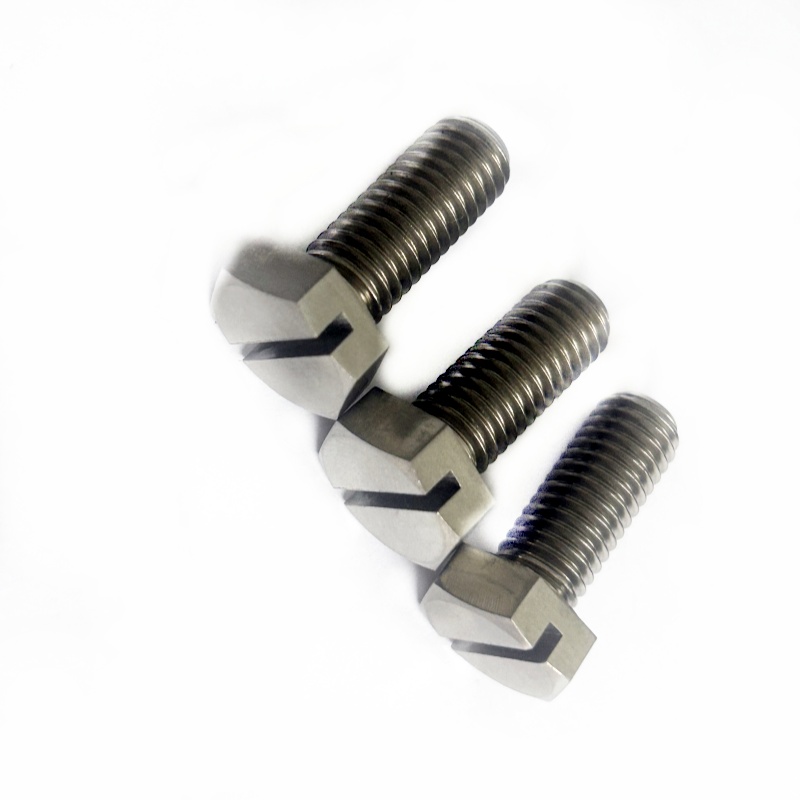
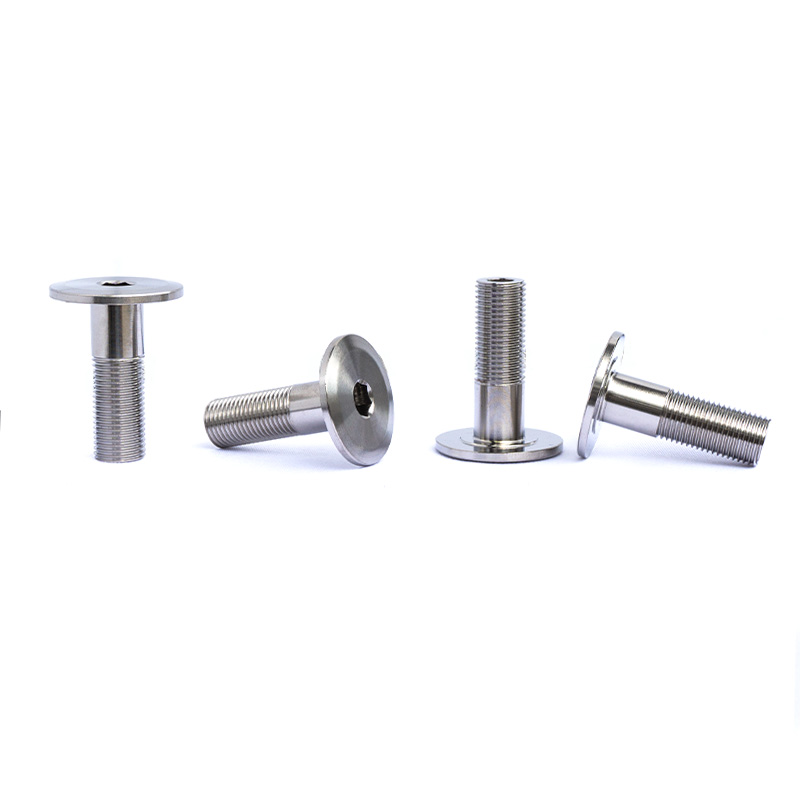
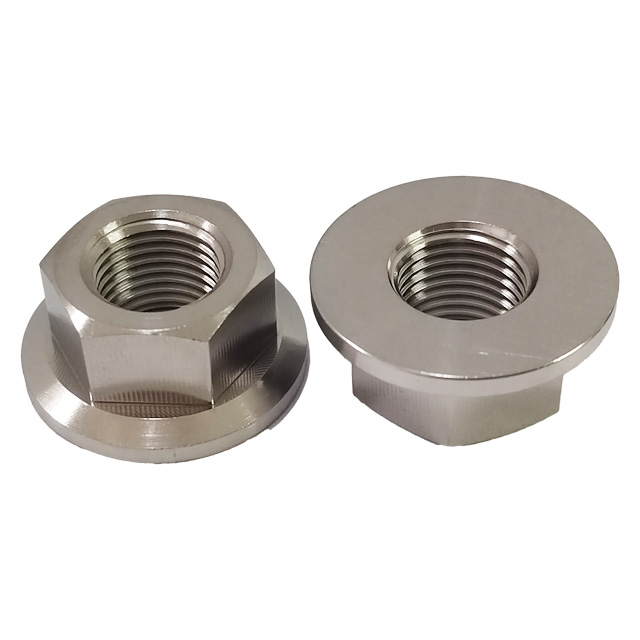
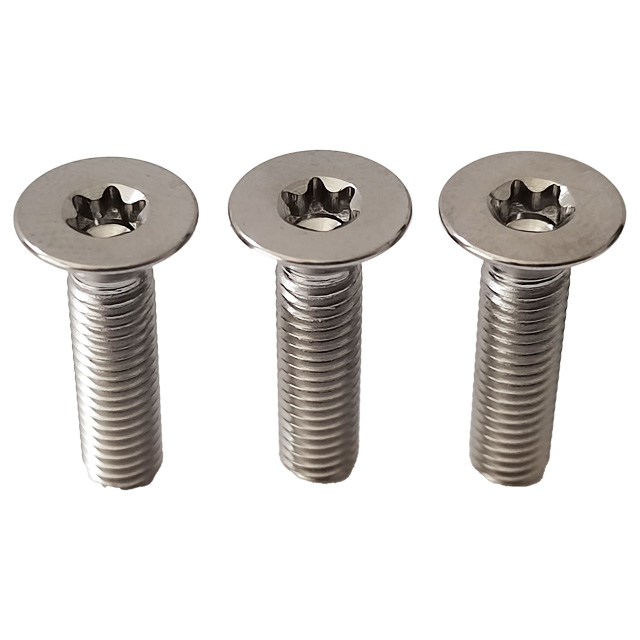
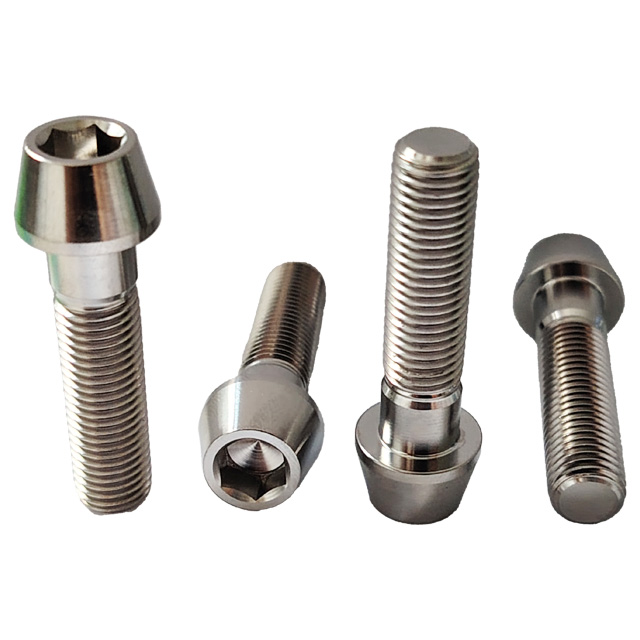
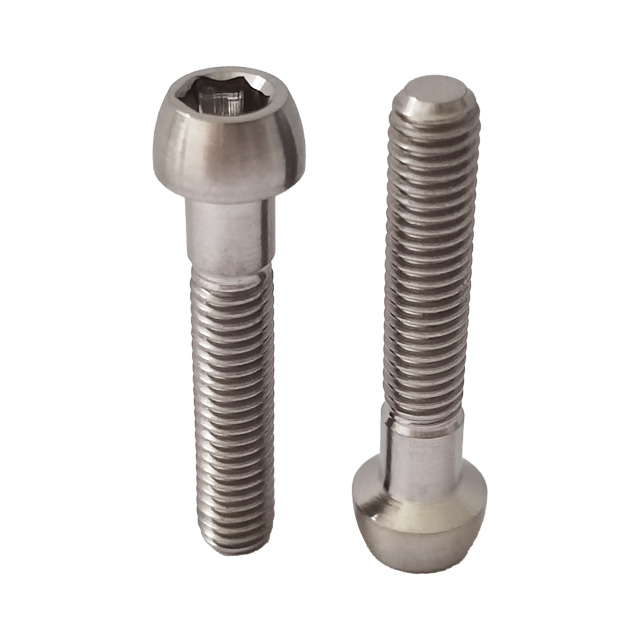
Explore our export-grade high-strength fasteners and complex turn-mill components manufactured from traceable aerospace-grade bar stock in Baoji, China.
Engineering Grade 5 (Ti-6Al-4V) vs Commercial Alternatives
Titanium CNC manufacturing demands strict thermodynamic and mechanical controls. Understand the crystal phase boundaries, shear resistance, and thermal conductivity metrics governing precision alloy machining.
Alloy / Specification
Yield Strength (0.2% MPa)
Tensile Strength (MPa)
Density (g/cm³)
Modulus of Elasticity (GPa)
Thermal Conductivity (W/m·K)
Corrosion Resistance
Primary Industrial Sector
Titanium Gr5 (Ti-6Al-4V)
828–910
895–1050
4.43
114
6.7
Superior Marine / Acid
Aerospace, Motorsport, Defense
Titanium Gr2 (Unalloyed CP)
275–350
345–480
4.51
103
16.4
Extreme Chemical
Anodes, Chemical Vessels, Marine
Stainless Steel 316L
220–290
520–680
8.00
193
16.3
Pitting Susceptible
Food, Medical Hardware, Sanitary
Alloy Steel 12.9 (Quenched)
1100
1220
7.85
210
42.6
Requires Plating
Heavy Plant, Mining Equipment
Aluminium 7075-T6
503
572
2.81
71.7
130.0
Galvanic Vulnerable
Lightweight Structurals, Frames
Why Material Integrity Dictates CNC Success
Titanium's extremely low thermal conductivity (6.7 W/m·K vs 42.6 W/m·K in carbon steel) causes over 80% of cutting heat to concentrate right at the tool tip rather than dispersing through chip removal. This unique thermodynamic characteristic triggers rapid thermal degradation of cutting flutes and accelerates work-hardening if feeds and speeds fluctuate. At Navzo, our precision CNC turning centers use ultra-high-pressure through-spindle coolant delivery (up to 70 bar) coupled with custom physical vapor deposition (PVD) TiAlN/AlCrN micro-grain tungsten carbide cutters. This proprietary setup prevents workpiece micro-welding, suppresses built-up edge (BUE) formation, and preserves structural crystal phases throughout heavy milling cuts.
"Rolled thread configurations consistently achieve up to 300% greater fatigue lifespan compared to single-point cut threads because cold-deformation preserves continuous grain boundary alignment along the root radius."
Baoji Titanium Ecosystem
Why Tier-1 Engineers Source Direct from Navzo Precision
Positioned right in China's Silicon Valley of Titanium, Navzo pairs local raw sponge production advantages with rigorous European export quality management.
Vertical Raw Material Traceability
We source double-melted and triple-melted Vacuum Arc Remelted (VAR) titanium bars exclusively from audited regional Baoji smelters. Each delivery includes complete chemical composition analysis and mechanical tensile testing records under EN 10204 3.1 protocols to guarantee zero hydrogen embrittlement or porous core flaws.
5-Axis Simultaneous Turn-Mill Centers
Our workshop houses high-precision Brother 5-axis machining centers and Citizen Swiss-type lathes. This machining setup enables multi-operation production—from complex 3D contour profiling and deep-hole drilling to eccentric turning and thread form rolling—in one synchronized clamping, keeping geometric runout within 5 microns.
Cold Thread Rolling Excellence
Rather than cutting away structural metal to create threads, we use hydraulic thread-rolling machines to form external profiles. This cold-forming process plasticizes the Grade 5 titanium, creating smooth, work-hardened thread surfaces and uninterrupted grain lines that prevent catastrophic stress fractures during high-vibration use.
Complete In-House Metrology Lab
Every batch undergo systematic dimensional verification using Zeiss Contact Coordinate Measuring Machines (CMM), Mitutoyo optical profile projectors, precision digital thread plug gauges, and Mitutoyo digital surface roughness testers (ensuring smooth Ra 0.4 µm surfaces without micro-notch risks).
Specialized Surface Treatments
Our in-house finishing lines provide Type II and Type III electrochemical anodizing, high-temperature burnt blue oxidation, physical vapor deposition (PVD) diamond-like carbon (DLC), and chemical micro-passivation to protect surfaces from abrasive wear, high friction, and cosmetic fading.
Global Export Supply Chain Agility
We serve industrial buyers in over 30 countries across North America, the EU, and the Asia-Pacific. We support flexible delivery terms (FOB, CIF, DAP, DDP) and protect parts with vacuum-sealed vapor corrosion inhibitor (VCI) packaging to ensure zero oxidation during ocean or air transit.
Industry 4.0 & Market Intelligence
Future Procurement Trends in Precision CNC Titanium
Strategic procurement in 2026 and beyond requires balancing rising raw material costs, tightening ESG tracking mandates, and surging demand across electric vehicles and aerospace systems.
EV Lightweighting & Unsprung Mass
High-performance electric vehicles and hypercars are moving away from traditional steels in favor of titanium wheel hubs, steering knuckles, and brake hardware. Trimming unsprung rotational mass by 40% directly improves suspension damping response, preserves battery efficiency, and extends real-world driving range.
eVTOL & Urban Air Mobility Sourcing
Urban Air Mobility (UAM) and commercial eVTOL aircraft require ultralight components certified to tight aero standards. Navzo provides low-mass, corrosion-proof titanium engine mounts, rotor retainers, and structural pivot pins that resist harsh atmospheric oxidation without requiring toxic surface plating.
Additive-Subtractive Hybrid Machining
Complex internal fluid channels and lattice structures are produced using Laser Powder Bed Fusion (LPBF), then finished with high-precision 5-axis CNC machining across all mating faces, bearing seats, and critical threads. This approach cuts the buy-to-fly material ratio from 12:1 down to 2.5:1.
Digital Product Passports & ESG
Global aerospace OEMs increasingly require digital audit trails covering raw material carbon intensity, recycled scrap percentages, and smelter melting energy sources. Navzo provides complete lot-level documentation for full supply-chain transparency and effortless regulatory compliance.
Procurement Technical Knowledge
Frequently Asked Questions: Sourcing CNC Titanium Parts
Clear, practical answers from our manufacturing engineering and export teams addressing common questions on materials, machining, finishes, and order logistics.
How do you resolve thread galling and seizure in titanium bolts?
Titanium threads gall easily due to their microscopic oxide layer friction. Navzo solves this by cold-rolling threads to a smooth Ra ≤ 0.4 µm surface finish, applying durable PVD DLC coatings or micro-arc oxidation, and specifying copper-based or MoS2-based anti-seize lubricants during final assembly.
What dimensional tolerances can Navzo maintain on custom drawings?
Using our precision Swiss-type turning lathes and temperature-controlled 5-axis machining centers, we routinely hold outer and inner diameters to ±0.005 mm (±0.0002 inches), linear shaft dimensions to ±0.01 mm, and true positional runouts under 0.008 mm, verified on coordinate measuring machines.
Why is Grade 5 (Ti-6Al-4V) preferred over Grade 2 for CNC parts?
Grade 2 commercially pure titanium offers good ductility and corrosion resistance, but its tensile strength is limited to about 345–480 MPa. Grade 5 is an alpha-beta alloy with a yield point above 828 MPa and tensile strength reaching 895–1050 MPa. That makes it the ideal choice for high-stress bolts, connecting pins, and critical rotating components.
Does titanium cause galvanic corrosion when paired with carbon fiber or aluminum?
Titanium is electrochemically compatible with carbon fiber composites because they share similar galvanic potentials. Unlike steel, titanium will not trigger oxidation in composite airframes. However, when titanium bolts clamp into 6061 or 7075 aluminum, the aluminum becomes the sacrificial anode. In those cases, we apply insulating anodized coatings, zinc-nickel plating on the aluminum side, or dielectric barrier washers to break electrical contact.
What are your typical order minimums (MOQ) and production lead times?
For standard catalog fasteners, our MOQ starts at 100 to 200 pieces. For custom CNC machined components from your drawings, initial prototype batches can start as low as 10 to 50 pieces. Production prototypes typically ship in 7 to 10 working days, while full production runs deliver in 3 to 4 weeks depending on surface treatment requirements.
Which quality certificates and inspection records ship with an order?
Every shipment can include an EN 10204 3.1 Mill Test Certificate detailing melt heat numbers, alloy chemistry, tensile yield data, and elongation tests. We also provide full CMM dimensional inspection reports, surface finish certifications, and third-party SGS or RoHS compliance documentation upon request.
What is the difference between anodized, burnt blue, and PVD finishes?
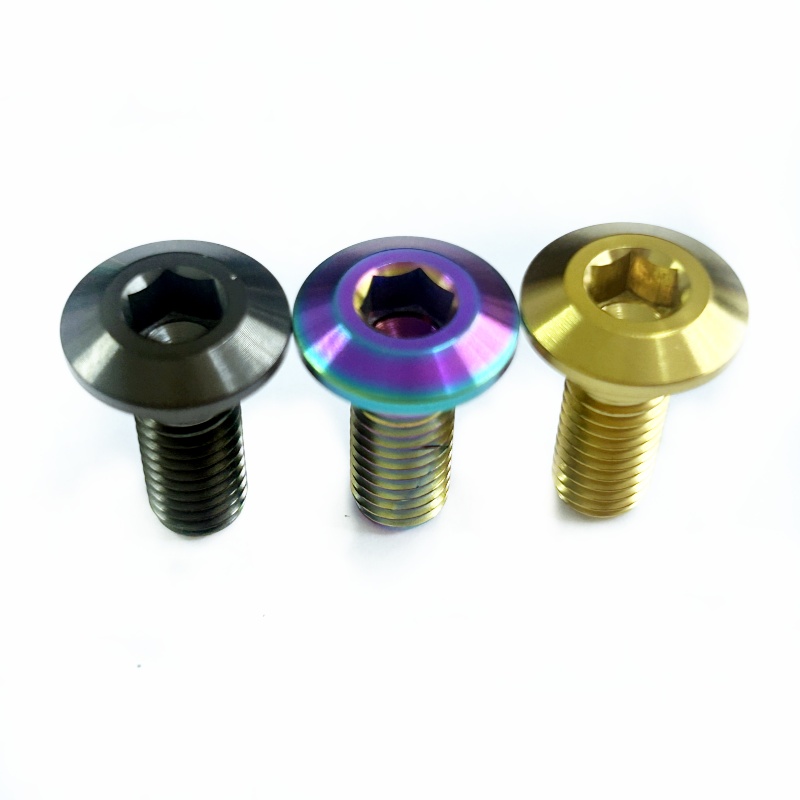
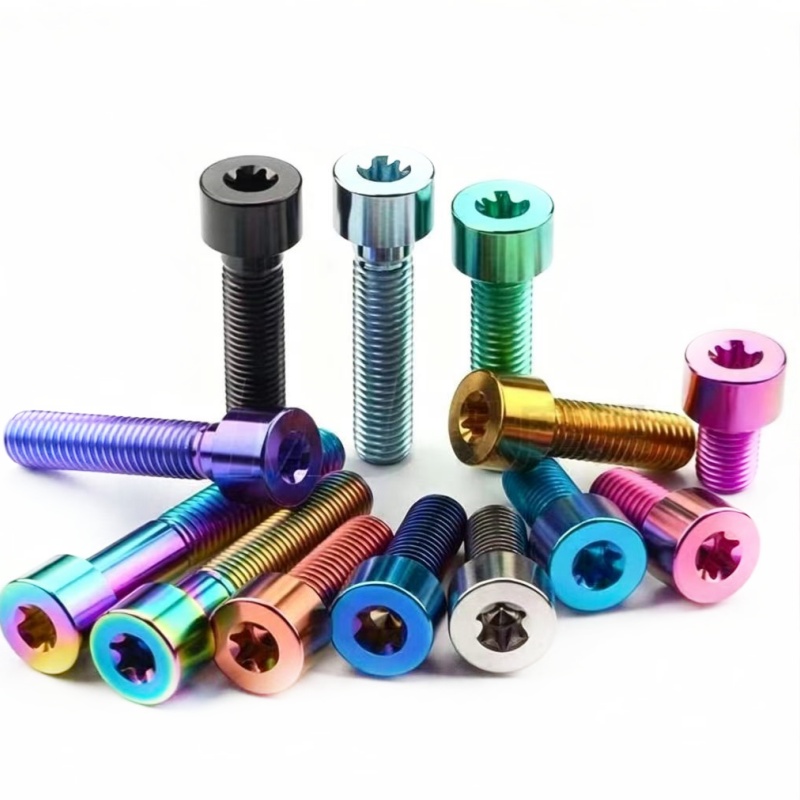
Anodizing creates a transparent oxide film electrochemically, where voltage controls the reflective color (gold, purple, cyan, blue). Burnt blue uses controlled heat tinting to generate a rich gradient look favored on motorcycle parts. PVD deposits a hard titanium-nitride or diamond-like carbon layer in a vacuum chamber, boosting surface hardness above 2000 HV for superior scratch and wear protection.
Which CAD file formats are preferred for manufacturing feasibility reviews?
We work with 3D model formats including STEP (.stp), IGES (.igs), and Parasolid (.x_t) alongside 2D PDF or DWG drawings that clearly state critical tolerances, thread pitches, edge break requirements, and surface finish notes. Our engineering team returns detailed DFM feedback and formal quotes within 1 to 4 hours.
Accelerate Your Engineering Project with Certified Titanium Machining
Looking to reduce component weight, replace corrosion-prone alloys, or source custom Grade 5 titanium turned parts? Share your CAD files with our Baoji engineering team for instant DFM analysis and reliable factory-direct pricing.