Precision Titanium Exhaust Fasteners & Engine Components
Engineered for high-heat automotive, motorcycle racing, and aerospace exhaust manifolds. Manufactured from certified aerospace-grade titanium alloys to resist thermal fatigue, creep, and intense mechanical shear.
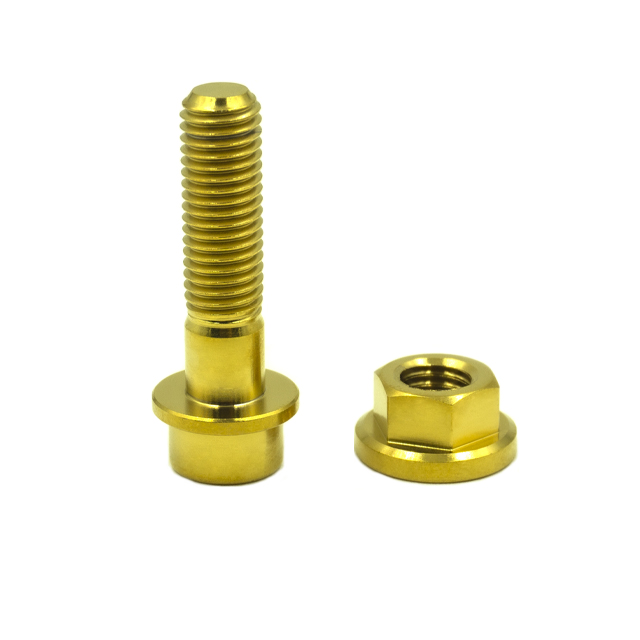
PSSTI GR5 Titanium Gold Flange Head Bolts Round Head Bolts M7*27
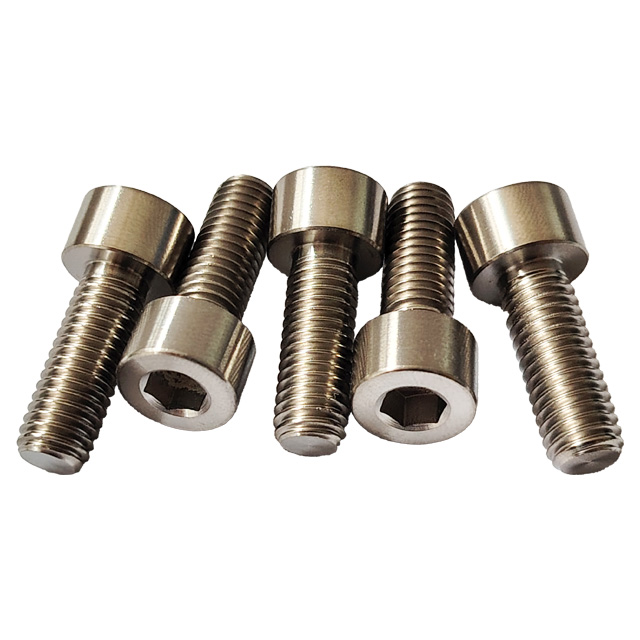
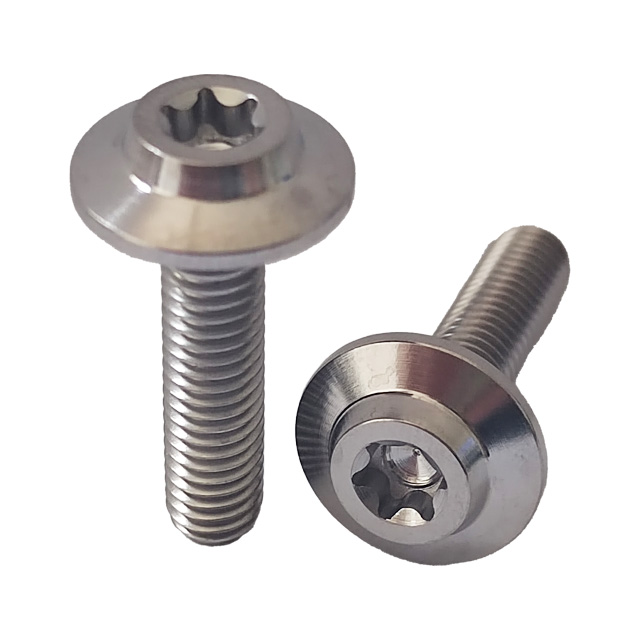
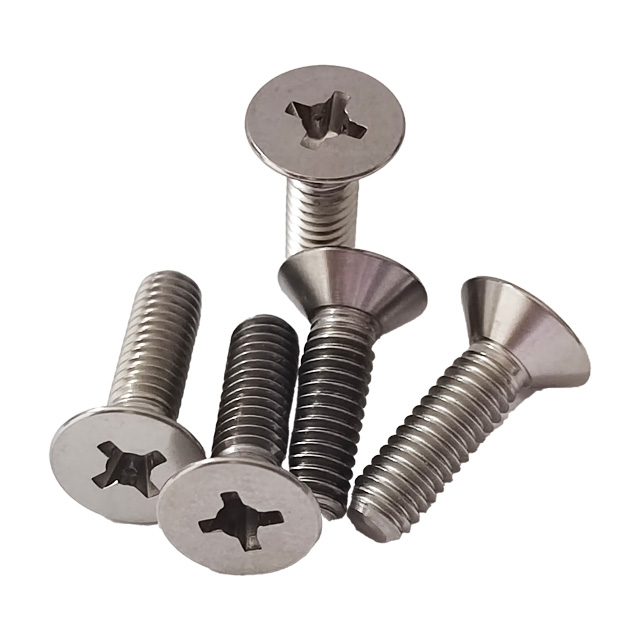
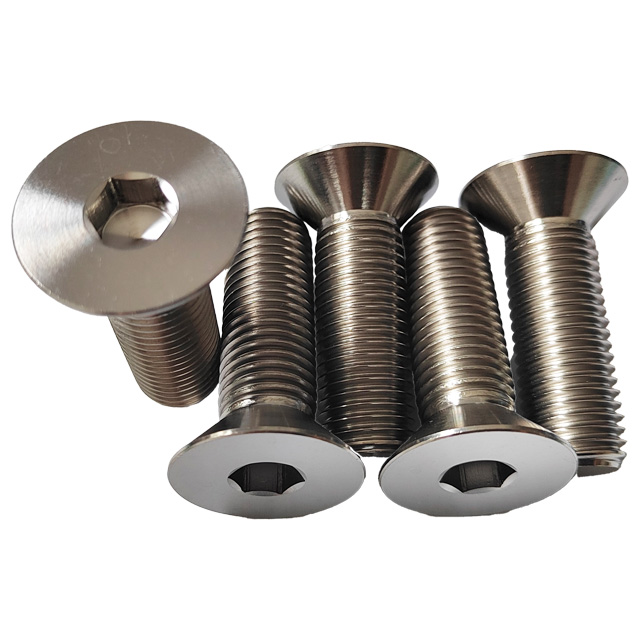
GR5 Titanium Bolts M8*20mm Factory Price Countersunk Head Cross Bolts High Quality Flat Head Phillips Screws
Engineering Titanium Exhaust Valves for Extreme Thermodynamic Cycles
A rigorous examination of reciprocating valvetrain mass, thermal conductivity limits, gamma-titanium intermetallics, and surface barrier tribology in internal combustion environments.
1. The Physics of Valvetrain Inertia & Valve Float Mitigation
In modern high-output internal combustion engines, whether powering hybrid endurance racecars, turbocharged hypercars, or high-revving supersport motorcycles, the valvetrain is subjected to severe mechanical accelerations exceeding 5,000 g. At engine speeds ranging from 9,000 to over 16,000 RPM, the reciprocating mass of traditional steel exhaust valves creates enormous momentum. This kinetic energy induces valve float—an uncontrolled bounce off the camshaft profile that degrades volumetric efficiency, impairs combustion timing, and risks catastrophic piston-to-valve contact.
Replacing conventional 21-4N austenitic steel or Nimonic 80A nickel-based superalloys with titanium alloys reduces valve moving mass by 40% to 45% (density decreases from ~8.0 g/cm³ to ~4.43-4.51 g/cm³). According to Newton's second law (\(F = ma\)), cutting the mass in half drastically reduces the dynamic spring force required to maintain valvetrain control. Engineers can utilize lighter valve springs with lower seat pressure, which directly reduces camshaft friction losses, parasitic drag, and valvetrain harmonic excitation.
2. Thermal Degradation Thresholds: Ti-6Al-4V vs. Ti-6242 vs. Gamma-TiAl
While intake valves operate in the cooling airstream of the incoming fuel-air charge (rarely exceeding 300°C), exhaust valves reside directly in the incandescent path of expanding exhaust gases, reaching steady-state temperatures of 650°C to 850°C, and transient spikes exceeding 1,050°C under forced induction. Standard Grade 5 (Ti-6Al-4V), an alpha-beta alloy, begins to suffer from microstructural coarsening, rapid oxygen absorption, and accelerated creep deformation when exposed to sustained temperatures above 400°C to 450°C. Therefore, specialized metallurgy is mandatory for severe-duty exhaust applications:
Ti-6Al-2Sn-4Zr-2Mo (Ti-6242): A near-alpha alloy formulated with tin, zirconium, and molybdenum. Ti-6242 extends the maximum operating threshold to 540°C–565°C by impeding dislocation motion and delaying recrystallization. It offers exceptional creep resistance and high-temperature tensile retention, making it the alloy of choice for high-performance four-stroke motorcycle exhaust valves and automotive turbo exhaust manifold hardware.
Gamma Titanium Aluminide (γ-TiAl): Representing the pinnacle of aerospace intermetallic engineering, gamma-TiAl contains roughly 45–48 atomic percent aluminum. Exhibiting an ordered face-centered tetragonal L10 crystal structure, γ-TiAl maintains structural stiffness up to 850°C while achieving a density of just 3.9 g/cm³—lighter than titanium itself. γ-TiAl exhaust valves provide superior thermal-shock resistance, low thermal expansion matching ceramic guides, and zero oxidation spalling within extreme combustion cycles.
| Material Classification | Density (g/cm³) | Tensile Strength (20°C / 600°C) | Max Continuous Operating Temp | Thermal Expansion (\(10^{-6}\)/K) | Application Suitability |
|---|---|---|---|---|---|
| GR5 Ti-6Al-4V (Aerospace) | 4.43 | 950 MPa / 380 MPa | 400°C | 8.6 | Intake Valves / Exhaust Fasteners |
| Ti-6242 (High-Temp Alloy) | 4.54 | 1,020 MPa / 610 MPa | 565°C | 9.1 | Moderate Exhaust / Turbo Fasteners |
| Gamma Titanium Aluminide (γ-TiAl) | 3.90 | 650 MPa / 520 MPa | 850°C – 950°C | 10.8 | Severe-Duty Racing Exhaust Valves |
| Nimonic 80A (Nickel Superalloy) | 8.19 | 1,050 MPa / 750 MPa | 800°C | 12.8 | Heavy Traditional Exhaust Valves |
| 21-4N Stainless Valve Steel | 7.85 | 900 MPa / 320 MPa | 650°C | 15.2 | Standard OEM Automotive Valvetrain |
Precision Product Families for Extreme Exhaust Environments
Navzo Precision Titanium combines 5-axis CNC machining, cold/hot precision heading, vacuum electron beam welding, and physical vapor deposition to deliver valvetrain and exhaust assemblies of uncompromising quality.
Solid & Hollow-Stem Exhaust Valves
Forged heads with friction-welded or continuous CNC stems. Optional hollow stems gun-drilled and back-filled with sodium for accelerated heat transfer from the valve head to the cylinder head guide, reducing peak valve crown temperatures by up to 120°C.
Titanium Exhaust Manifold Studs & Nuts
M8, M10, and M12 rolled-thread studs designed to resist thermal expansion shearing between aluminum cylinder heads and stainless or titanium turbo manifolds. 12-point aero flange locknuts ensure zero vibration back-off at 700°C.
Ultralight Titanium Valve Retainers & Keepers
Engineered from Ti-6Al-4V bar stock with precise CNC conical seat angles. Drops spring retainer mass by 40% compared to chrome-moly steel retainers, shifting the natural harmonic frequency of the spring assembly outside the critical engine rev band.
PVD & DLC Friction Barrier Coatings
Titanium naturally exhibits severe adhesive galling when contacting bronze or cast-iron valve guides. We apply specialized CrN (Chromium Nitride), TiAlN, or Diamond-Like Carbon (DLC) vacuum coatings (2-4 µm) delivering surface hardness above 2,500 HV.
Full Valvetrain Hardware Customization
Comprehensive OEM manufacturing tailored to customer blueprint specifications. From inverted tulip geometry, proprietary undercut stems, dished heads, to specialized keeper lock grooves (radius or 7-degree square), manufactured to ±0.005 mm tolerances.
End-to-End Quality Traceability (EN 10204 3.1)
Every production heat is backed by Baoji mill test certificates confirming elemental chemistry, grain size (ASTM E112), tensile strength, and ultrasonic crack detection. Complete documentation is provided for aerospace and motorsport scrutineering compliance.
Emerging Procurement Trends in Titanium Exhaust Valve Manufacturing
How powertrain hybridization, emissions regulations, advanced metallurgical synthesis, and digital supply chain auditing are redefining procurement strategies over the next decade.
1. Downsized Turbocharged Hybrids Demanding Extreme Valvetrain Resilience
The global automotive landscape is rapidly transitioning toward high-performance hybrid powertrains (PHEVs and HEVs). Combining high-boost downsized combustion engines with electric motor torque shifts engine operating cycles toward sustained full-load boost scenarios alternating with rapid shut-downs. This generates sharp thermal transients within the exhaust tract. Procuring organizations are moving away from traditional steels toward Ti-6242 and Gamma-TiAl to withstand thermal cycling fatigue without face distortion or valve-seat micro-welding.
2. Transition from Subtractive Machining to Near-Net Shape Isothermal Forging
Historically, low material utilization ratios (high buy-to-fly ratios) made titanium valves expensive, with up to 65% of raw billet turned into chips during subtractive lathe operations. Modern procurement contracts now prioritize suppliers equipped with closed-die isothermal hot heading. This technique flows the titanium grain structure continuously along the critical valve transition radius (tulip), enhancing fatigue resistance by 35% while slashing raw material waste and unit costs.
3. Adoption of Multi-Layer PVD & Plasma-Assisted Ceramic Coatings
To eliminate oil consumption and valve guide wear in high-rpm dry-sump racing engines, procurement managers now require multi-layer duplex coating systems. A typical specification pairs a nitrided substrate with a physical vapor-deposited (PVD) Chromium Nitride (CrN) or Titanium Aluminum Carbon Nitride (TiAlCN) barrier. This achieves a friction coefficient (\(\mu\)) under 0.15 against sintered bronze or beryllium-copper guides, effectively tripling service life intervals between cylinder head rebuilds.
4. Supply Chain Consolidation around Baoji "China Titanium Valley"
Geopolitical turbulence and aerospace raw material shortages have elevated supply chain reliability to a board-level procurement priority. Baoji processes over 60% of China's titanium sponge and bar stock, housing the nation's premier melting, forging, and secondary processing facilities. International OEMs are actively establishing long-term agreements directly with vertically integrated Baoji manufacturers like Navzo Precision Titanium to mitigate raw material price volatility, reduce transit bottlenecks, and secure verified ASTM B348 stock.
5. Strict Digital Material Passports & Scope-3 ESG Audits
Tier-1 automotive suppliers in Europe and North America increasingly mandate Digital Product Passports (DPP) documenting the life-cycle carbon footprint of titanium fasteners and valves. Vacuum Arc Remelting (VAR) powered by renewable hydroelectric energy and the incorporation of recycled aerospace-grade clean titanium solids are becoming explicit vendor qualification criteria.
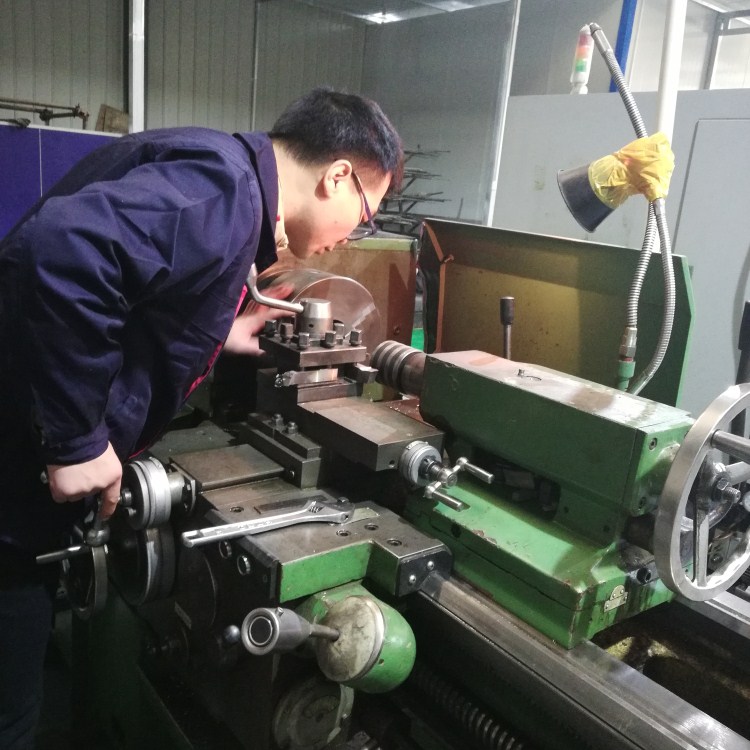
Engineered at the Epicenter of China's Titanium Ecosystem
Founded on January 10, 2011, on Yucai Road within the High-tech Development Zone of Baoji, Shaanxi, Navzo Precision Titanium Products Co., Ltd. operates at the core of China's primary titanium cluster. Being situated in Baoji provides us with uninterrupted access to high-purity titanium sponge, vacuum arc remelting facilities, and certified forging mills.
Over more than a decade of continuous manufacturing and international exporting, we have earned our standing as a top-ranked bolts and precision components supplier. Our enterprise blends on-site verified production facilities, in-house technical engineers, and academic partnerships with domestic metallurgical universities to solve the most difficult thermal, frictional, and mechanical fastener challenges.
We maintain an industry-leading average response time of less than 1 hour, a 100% inquiry resolution rate, and a verified 34% customer reorder rate across major motorsport, aerospace, and high-end automotive buyers throughout North America, Germany, Japan, South Korea, and the UK.
Precision OEM & ODM Engineering Workflow
From custom 3D CAD modeling to certified batch shipment, our rigorous five-phase production system ensures micro-inch dimensional repeatability.
DFM Engineering Review
Comprehensive analysis of STEP/DWG drawings, seat angles, fillet radii, material grades, and surface coating requirements.
Certified Material Sourcing
Selection of ultrasonic-inspected Grade 5, Ti-6242, or customized titanium bar stock with full chemical composition heat logs.
Precision CNC & Heading
Multi-axis Swiss turning, isothermal head upset, CNC centerless grinding, and continuous thread rolling for high fatigue strength.
Surface & Heat Treatment
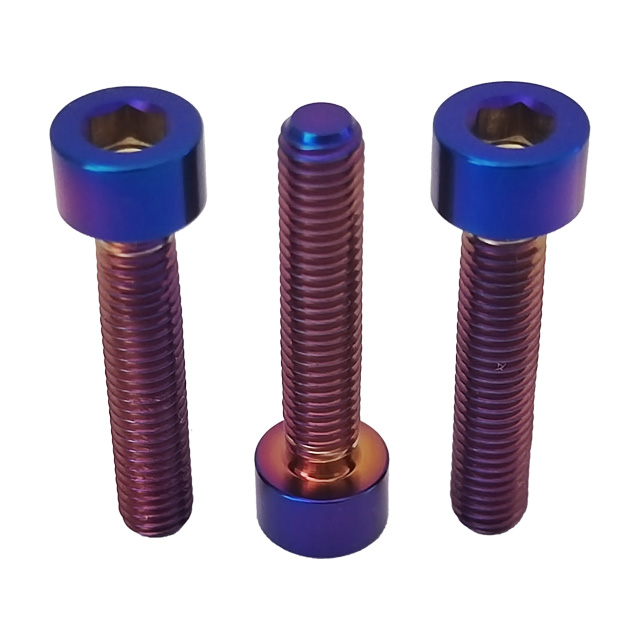
Vacuum stress relief, PVD coating (CrN/DLC), hard anodizing, or controlled thermal oxidation (burnt blue) for race aesthetics.
CMM Inspection & QA
100% optical projector check, coordinate measuring machine (CMM) runout verification, thread plug gauging, and export packing.
Frequently Asked Questions by Automotive & Aerospace Buyers
Technical answers to critical questions regarding metallurgy, thread galling mitigation, thermal expansion tolerances, and international export logistics.