High-Performance Titanium Engine Fasteners
Direct factory supply of certified Ti-6Al-4V Grade 5 high-tensile hardware. CNC finished and cold forged to aerospace tolerances for automotive racing, motorcycle powertrains, and marine propulsion systems.
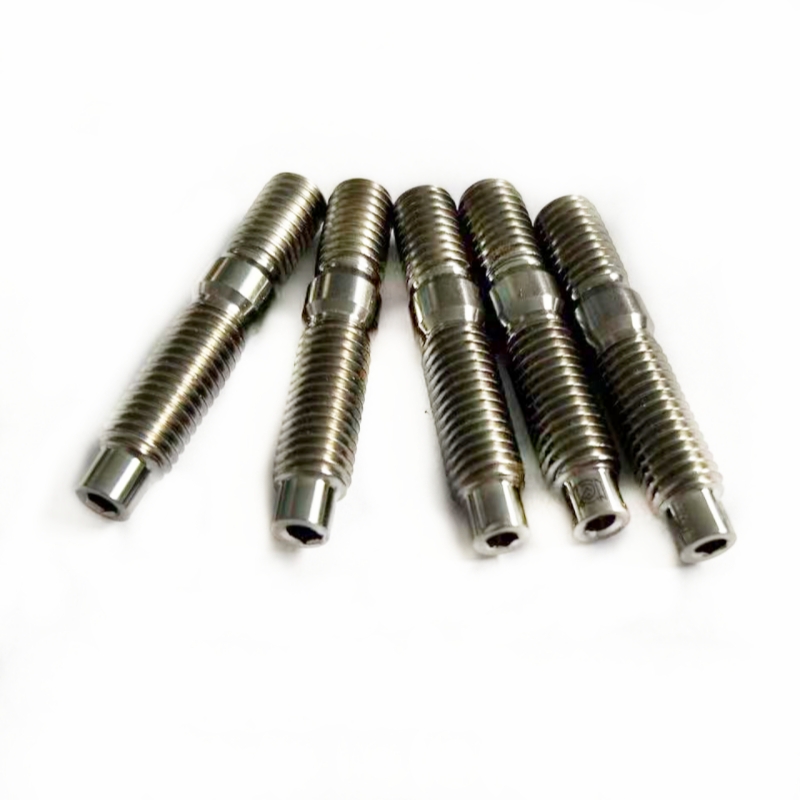
GR5 Titanium Exhaust Manifold Stud Bolt M8*1.25*45
- Material: Ti-6Al-4V (Grade 5)
- Finish: High Polished Raw
- Yield Strength: ≥ 828 MPa
- Thermal Range: Up to 500°C Cyclic
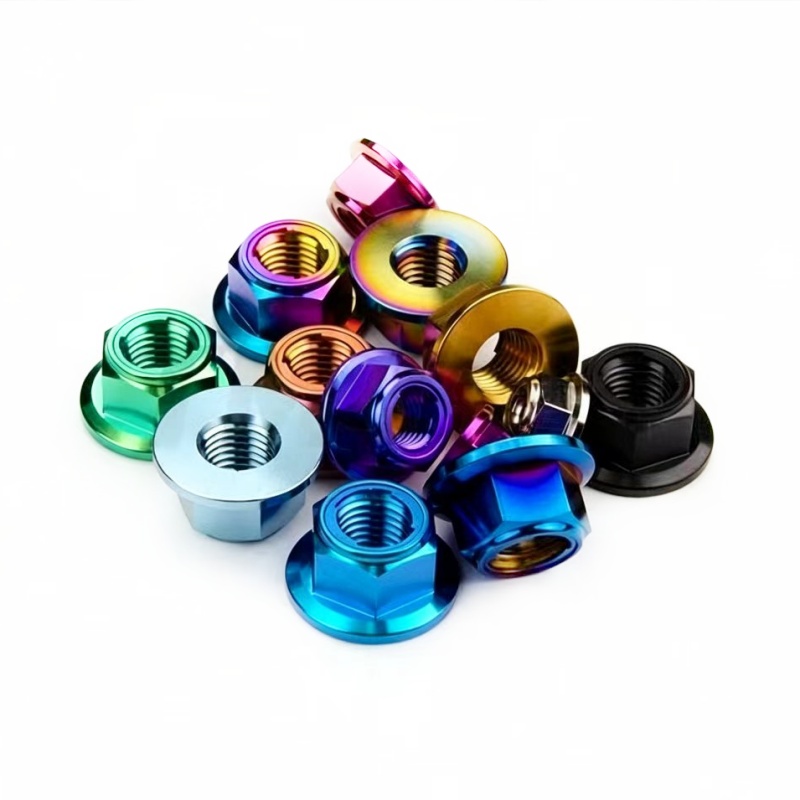
GR5 Titanium Anti-Loosening Lock Nut M6-M10 PVD
- Material: Ti-6Al-4V (Grade 5)
- Coating: PVD Hard Film
- Thread Pitch: 1.0 / 1.25 / 1.5 mm
- Application: Engine Mount & Calipers
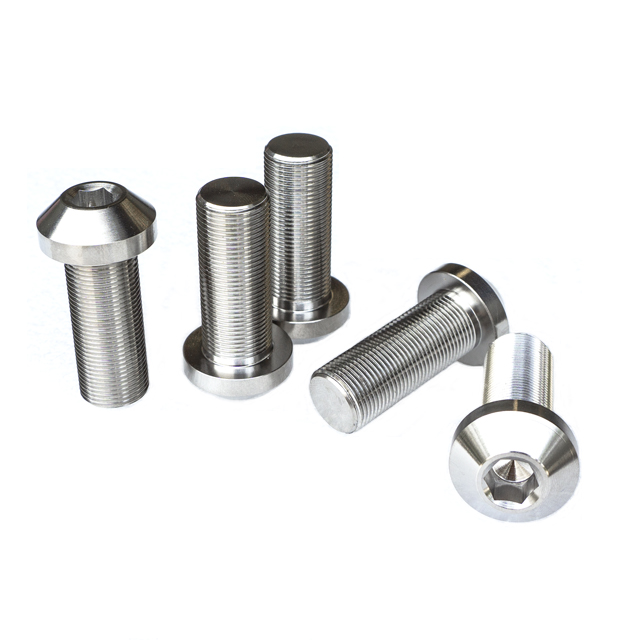
GR5 Titanium Umbrella Head Socket Bolt M14*1.0*35mm
- Head Geometry: Wide Flange Umbrella
- Tensile Strength: ≥ 950 MPa
- Drive Type: Internal Hex Socket
- Feature: Stress Distribution Flange
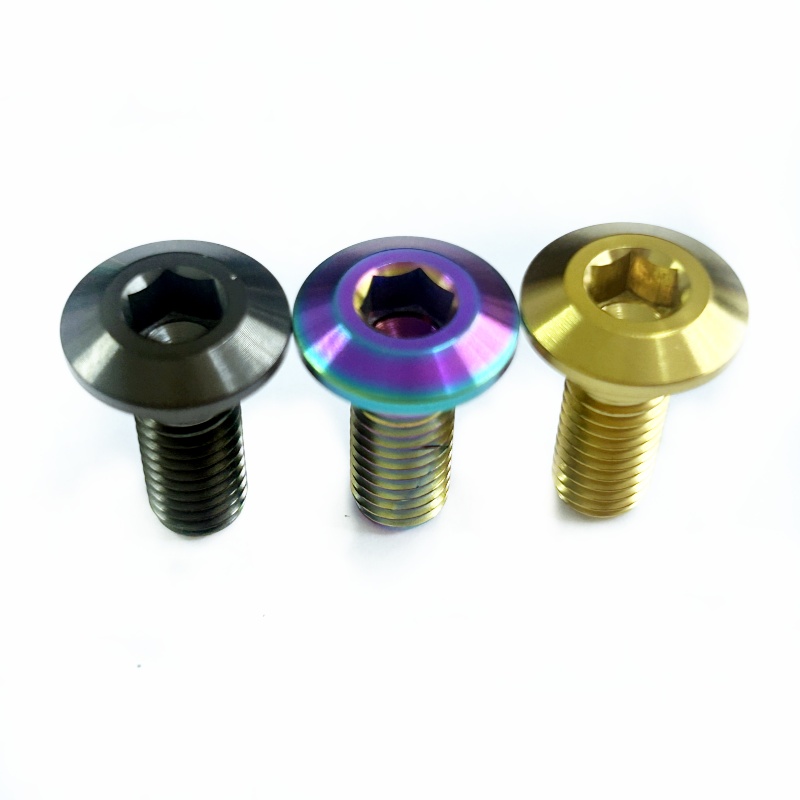
M8 GR5 Titanium Shoulder Bolt Disc Brake Refit
- Standard: Custom Precision Shoulder
- Tolerance: h7 / g6 Ground Shank
- Fatigue Life: > 2.5× Alloy Steel
- Application: Rotor & Hub Assembly
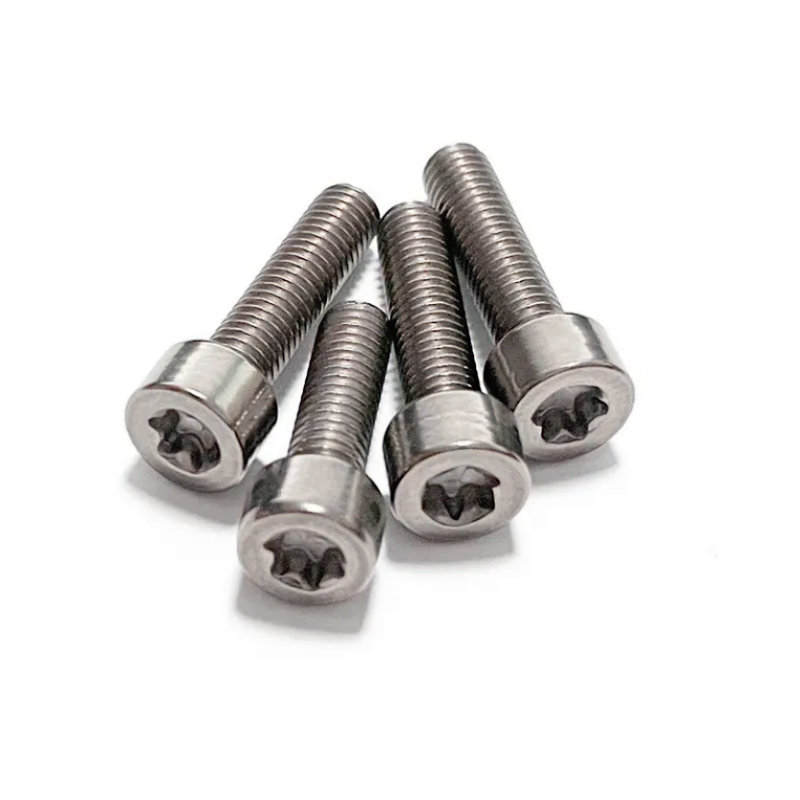
GR5 Titanium T30 Torx Low-Profile Engine Screws
- Drive Style: Torx T30 Cam-Out Proof
- Thread Pitch: Metric Precision Rolled
- Surface: Vapor Degreased / PVD
- Torque Max: 18.5 N·m Rated
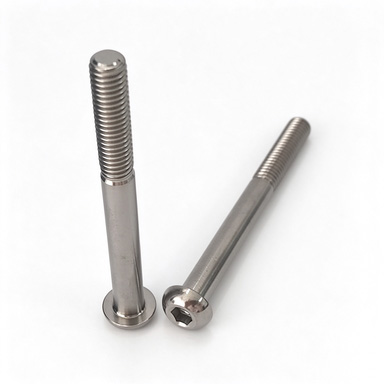
GR5 Titanium Button Head Bolts M6*70mm Crankcase
- Length: 70 mm Deep Clamping
- Head Profile: Low Drag Dome
- Density: 4.43 g/cm³ (45% lighter)
- Machining: 5-Axis Swiss CNC Turned
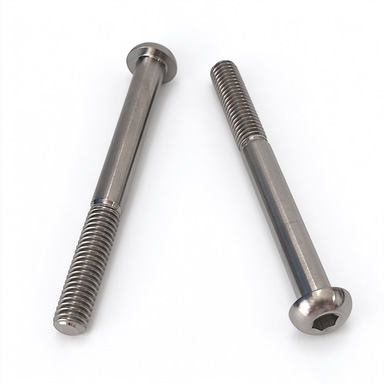
GR5 Titanium Semi-Round Allen Bolts M6*60mm
- Thread Class: Rolled 6g Tolerance
- Corrosion Class: Zero Rust in Halide/Oils
- Modulus: 114 GPa Dynamic Flex
- Application: Stator & Clutch Casings
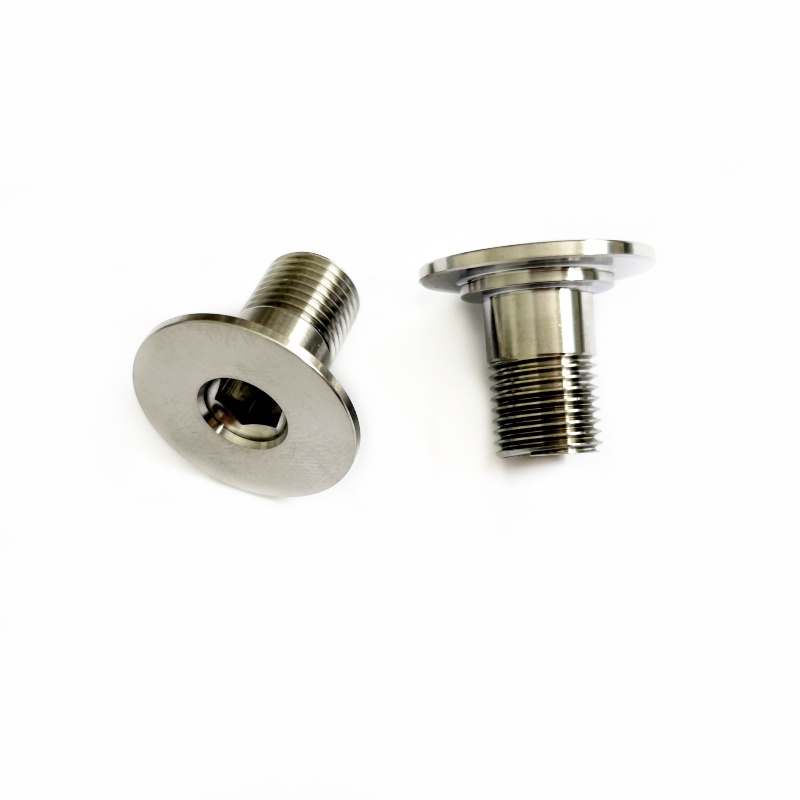
GR5 Titanium Big Pan Hexagon Head Bolts M10*18
- Diameter: M10 × 1.25 / 1.5
- Flange Type: Integrated Wide Base
- Shear Strength: 550 MPa Constant
- Stock Status: Ready to Dispatch Lot
Why Tier-1 Racing & OEM Teams Partner With Navzo
Located on Yucai Road in the High-tech Development Zone of Baoji, Shaanxi—widely acknowledged as China’s Titanium Valley—Navzo Precision Titanium Products Co., Ltd. eliminates intermediate markups, stabilizes lead times, and guarantees 100% material traceability from sponge titanium to finished engine hardware.
Direct Baoji Raw Material Ingot
We source vacuum arc remelted (VAR) Ti-6Al-4V titanium bars directly from certified domestic smelting mills. Every batch comes with full Mill Test Reports (EN 10204 3.1) showing strict control of interstitial elements (O ≤ 0.20%, Fe ≤ 0.30%, H ≤ 0.015%).
Thread Rolling vs. Thread Cutting
Unlike budget machine shops that cut threads and sever metal grain flow lines, Navzo utilizes high-tonnage cold/warm CNC thread rolling dies. This induces compressive residual stress in thread roots, increasing cyclic fatigue failure resistance by over 300% under high RPM.
Rigid 100% Metrology Validation
Equipped with optical profile projectors, Zeiss coordinate measuring machines (CMM), dynamic thread pitch micrometers, and salt-fog test chambers. Every single engine bolt is inspected for pitch diameter, runout, concentricity, and radius transition tolerances.
Rapid 1-Hour RFQ Turnaround
Navzo maintains dedicated overseas engineering sales teams operating across European, North American, and Asia-Pacific time zones. Drawing feasibility, tolerance confirmation, and production quotes are processed within 60 minutes of receiving your 3D CAD/STEP files.
Multispectral Surface Passivation
Offering in-house Type II/Type III anodizing, micro-arc oxidation, heat-treated burnt blue gradients, and vacuum PVD (Physical Vapor Deposition) DLC and TiN coatings that eliminate galling, stabilize friction coefficients, and resist aggressive synthetic oils.
Proven Export Track Record
With more than a decade of specialized export operations serving high-end engine builders in Germany, the United States, the UK, Japan, Australia, and South Korea. Top 4 rated fastener supplier on international B2B directories with verified on-site plant audits.
Mechanical Dynamics: Ti-6Al-4V vs. High-Tensile Steel & Stainless
In forced-induction internal combustion engines, valvetrain assemblies, cylinder head retention, and exhaust systems, fastening integrity hinges on strength-to-weight ratio, thermal expansion coefficients, and shear fatigue limits. Evaluate the empirical engineering values below.
| Material Specification | Density (ρ, g/cm³) | Tensile Strength (Rm, MPa) | Yield Strength (Rp0.2, MPa) | Elastic Modulus (E, GPa) | Thermal Expansion (×10-6/K) | Corrosion Resistance |
|---|---|---|---|---|---|---|
| Navzo GR5 Titanium (Ti-6Al-4V) | 4.43 | 895 – 1050 | 828 – 940 | 110 – 114 | 8.6 | Immune (Passivated TiO&sub2;) |
| Alloy Steel Grade 10.9 (ISO 898-1) | 7.85 | 1000 – 1040 | 900 – 940 | 205 – 210 | 11.8 | Poor (Requires zinc/phosphate plating) |
| Alloy Steel Grade 12.9 (ISO 898-1) | 7.85 | 1220 – 1250 | 1100 | 210 | 11.5 | Very Poor (Susceptible to hydrogen embrittlement) |
| Austenitic Stainless Steel (A2-70 / 304) | 7.90 | 700 | 450 | 193 | 16.5 | Moderate (Prone to stress cracking > 60°C) |
| Nickel Superalloy (Inconel 718) | 8.19 | 1240 – 1375 | 1030 – 1100 | 200 | 13.0 | Exceptional (High Mass / Extreme Cost) |
Preload Retention, Stretch Mechanics, and Fatigue Under Thermal Shocks
The lower modulus of elasticity of Ti-6Al-4V (~114 GPa compared to ~210 GPa in steel) represents a decisive functional advantage in dynamic combustion engine architectures. When subjected to thermal cycles, an engine cylinder head and block expand and contract. Steel bolts, with their high modulus and rigidity, experience enormous cyclical strain spikes, frequently causing micro-yielding, localized fatigue crack initiation, or head gasket crushing.
In contrast, Grade 5 titanium bolts yield greater elongation within their extensive elastic envelope under standard assembly torque. They behave like calibrated tension springs, maintaining a uniform clamping load across varying operational temperatures (-40°C cold starts to +450°C continuous manifold operating heat). Furthermore, because titanium's thermal expansion coefficient (8.6 × 10⁻⁶/K) matches aluminum cylinder heads (approx. 22-24 × 10-6/K) much more harmoniously than steel does regarding differential strain ratios, titanium hardware minimizes bore distortion and head lift under extreme boost pressures.
Future Procurement Trends in Titanium Engine Hardware
The automotive, marine, and motorsport manufacturing landscape is undergoing massive technological disruption. Engineering and procurement heads must adapt their sourcing strategies to stay competitive.
Electrification & Hybrid Downsizing
While traditional large-displacement blocks demand titanium for valvetrain mass reduction, next-generation EV drivetrains specify non-magnetic Grade 5 fasteners to eliminate eddy current losses inside high-speed motor rotors (spinning > 20,000 RPM) and lightweight battery pack containment.
Near-Net-Shape Cold Heading
Global demand is rapidly pivoting away from subtractive billet CNC machining for standard bolts due to high chip scrap rates. Navzo’s investment in multi-station progressive cold headers achieves near-zero waste, reducing unit costs by 28% while optimizing grain boundary density along the bolt shank.
Digital Traceability & ESG Mill Audits
Western automotive procurement protocols increasingly mandate complete ESG accountability, low carbon footprint smelters, and verifiable chemical provenance. Navzo guarantees raw material heats tracked through digital spectroscopic identification from Baoji source ingots to export crating.
PVD Hard Thin-Film Passivation
Galling mitigation has shifted from messy anti-seize pastes to permanent surface engineering. DLC (Diamond-Like Carbon) and multilayer PVD coatings provide dry lubricity with friction coefficients (μ ≤ 0.08), ensuring consistent torque-tension relationships across hundreds of maintenance rebuild cycles.
Inside Navzo Precision Titanium Products
Delivering high-volume consistency with bespoke custom prototyping capabilities across 15,000 m² of specialized titanium fabrication space.
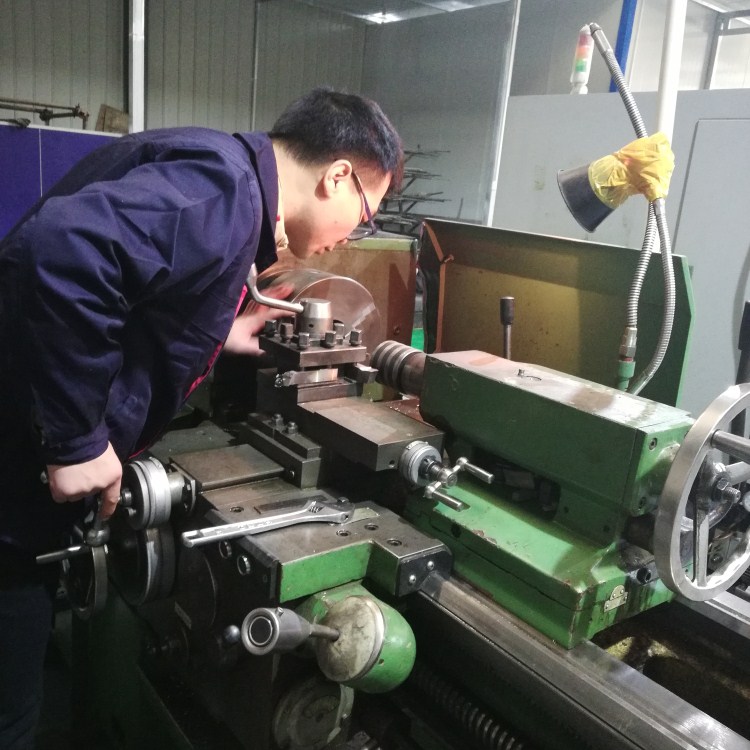
Baoji High-Tech Production Base
Navzo combines automated high-speed multi-axis turning centers, progressive cold-heading stations, dedicated thread rolling lines, and advanced electrochemical coloring baths under unified ISO 9001 and IATF 16949-aligned manufacturing management systems.
Frequently Asked Questions: Sourcing & Installing Titanium Engine Fasteners
Definitive, technically verified solutions to the most critical mechanical and metallurgical questions asked by automotive engineers, master engine builders, and procurement managers.
How do you prevent thread galling in high-stress titanium engine fasteners?
Titanium alloys have a tenacious native titanium dioxide (TiO₂) protective oxide layer that can tear under localized frictional contact pressure, causing bare metal-to-metal micro-welding or galling. Navzo mitigates this phenomenon through three synergistic protocols:
- Precision Thread Rolling: Rolled threads have a surface finish below Ra 0.4 μm, eliminating microscopic peaks that induce friction tearing compared to rough cut threads.
- Engineered Surface Treatments: We offer vacuum Physical Vapor Deposition (PVD) coatings (TiN, TiAlN, DLC) and Type II anti-galling heavy anodization, which creates an ultra-dense, low-friction barrier.
- Lubrication Protocols: During assembly, always apply a high-nickel, molybdenum disulfide (MoS₂), or dedicated fluoropolymer anti-seize paste to normalize friction coefficients to μ = 0.10 – 0.12.
What torque values should be used when replacing 10.9 or 12.9 steel bolts with GR5 titanium?
Because Ti-6Al-4V has a modulus of elasticity approximately half that of steel (114 GPa vs. 210 GPa) and different friction characteristics, applying standard factory steel dry torque can over-stretch the fastener or under-clamp the joint.
As an engineering rule of thumb, when using lubricated threads (with anti-seize), titanium engine bolts should typically be torqued to approximately 80% to 85% of the OEM dry steel torque spec to achieve identical clamping preload without risking exceeding the bolt's yield threshold (828 MPa). Navzo provides exact torque-to-yield and torque-tension calibration curves for specific thread diameters upon request.
Does galvanic corrosion occur between titanium engine bolts and aluminum engine blocks?
On the galvanic potential scale, titanium is highly noble (approx. -0.05V vs. standard calomel electrode), whereas aluminum is active (-0.75V to -0.90V). If an electrolyte (such as salt spray or acidic moisture) bridges the connection, aluminum can theoretically act as a sacrificial anode.
However, in modern engine bays, engine oil, coolant inhibitors, and proper joint sealing isolate the assembly from continuous aqueous electrolytes. Furthermore, using anti-seize compound creates a dielectric barrier, and Navzo's passivated or PVD-coated surfaces virtually eliminate direct galvanic electron transfer, making titanium in aluminum blocks safe for automotive and marine performance builds.
What quality verification documentation accompanies your export shipments?
Every commercial production batch shipped by Navzo is backed by a comprehensive QA package designed for aerospace and automotive tier-supply approval:
- Material Test Report (EN 10204 3.1): Complete chemical spectroscopy breakdown and mechanical tensile/yield/elongation validation.
- Dimensional Metrology Sheet: Go/No-Go thread gauge records, optical comparator measurements, and critical tolerance logs.
- Surface & Hardness Verification: Rockwell C hardness (HRC 32-38 typical for Grade 5) and coating thickness verification (for PVD or anodized lots).
Can Navzo manufacture custom engine bolts from client drawings or samples?
Yes. OEM and ODM bespoke manufacturing represents over 60% of our production volume. Our engineers work directly from 2D drawings (DWG, PDF) and 3D solid models (STEP, IGES, SLDPRT). We can replicate or engineer custom shoulder lengths, undercut shanks for weight optimization, unique 12-point or spline heads, drilled heads for safety wiring, and specialized UNJ/rolled threads for racing series.
What are your typical minimum order quantities (MOQ) and production lead times?
For catalog sizes held in raw or semi-finished stock (such as M6 button heads, M8 exhaust studs, and M10 flange bolts), the standard MOQ starts at just 100 to 200 pieces per SKU. For bespoke custom CNC or cold-headed geometries, prototype pilot runs can be initiated at 200–500 pieces, ramping into tens of thousands of units.
Prototyping lead times typically range from 7 to 12 business days, while volume mass production runs ship within 20 to 28 days via DHL/FedEx air freight or maritime container.
Upgrade Your Powertrain Fastening Engineering Today
Partner directly with China's leading Baoji-based manufacturer. Submit your bill of materials, engineering drawings, or target specifications for immediate technical feasibility review and competitive factory direct pricing.