High-Performance Titanium Studs, Bolts & Fasteners
Manufactured strictly compliant with CE non-preloaded structural bolting standards (EN 15048) and DIN precision standards using cold-rolled threads and multi-axis CNC turning centers.
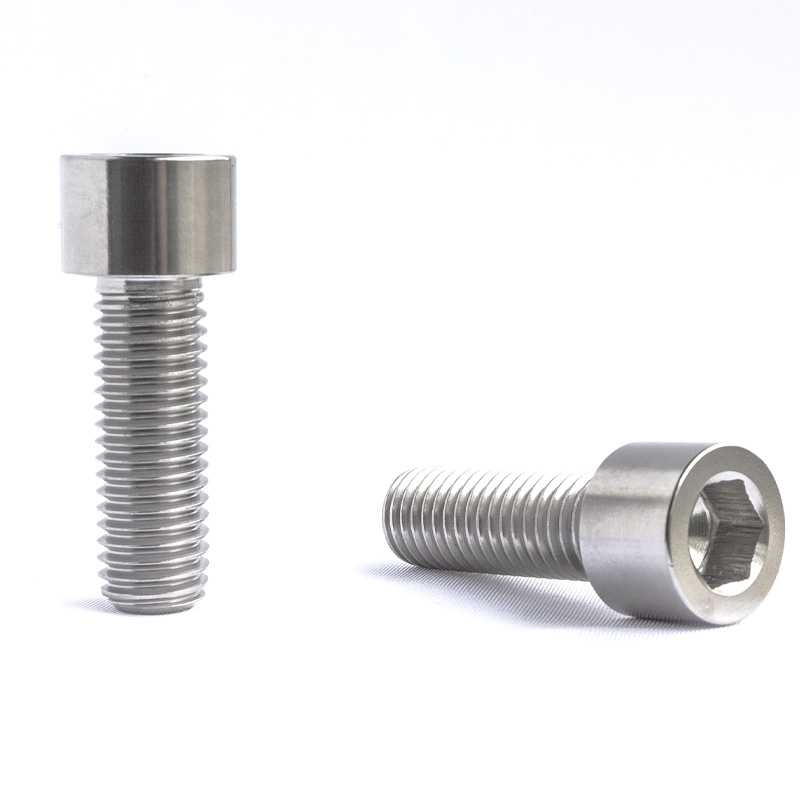
GR5 Titanium Bolts M12*45mm Cylindrical Head Hex Socket Cap Screws
- Material:Ti-6Al-4V Grade 5
- Tensile Strength:950–1050 MPa
- Thread Standard:Metric ISO 965-2 6g
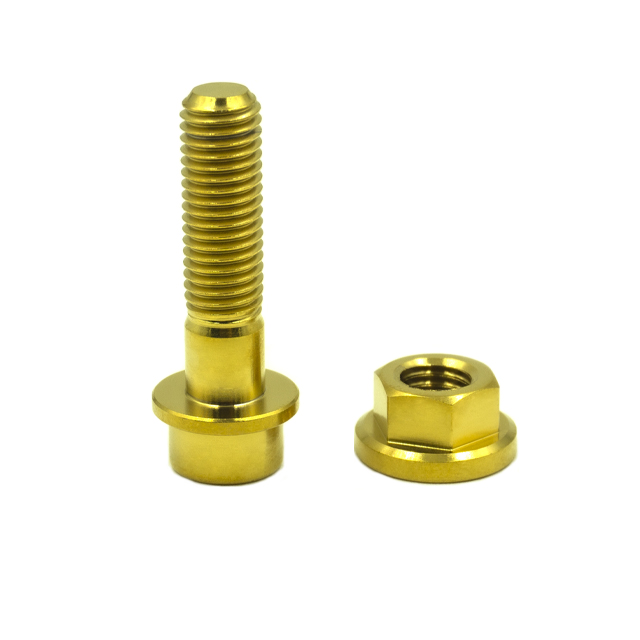
PSSTI GR5 Titanium Gold Flange Head Bolts Round Head M7*27
- Finish:PVD Gold Nitride
- Yield Strength:≥ 828 MPa
- Feature:Integral Flange Washer
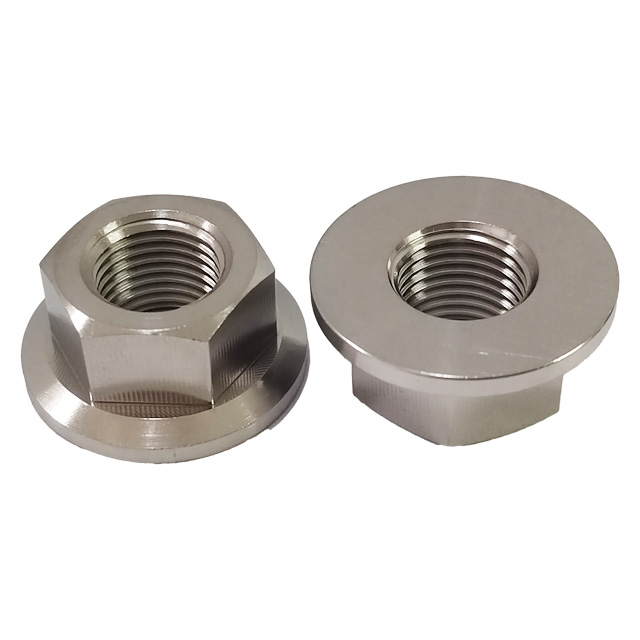
GR5 Titanium Nuts M12*1.5 High Strength Hex Flange Full Thread Nuts
- Thread Pitch:M12 x 1.5 Fine
- Proof Load:920 MPa Class
- Application:Wheel Stud Assembly
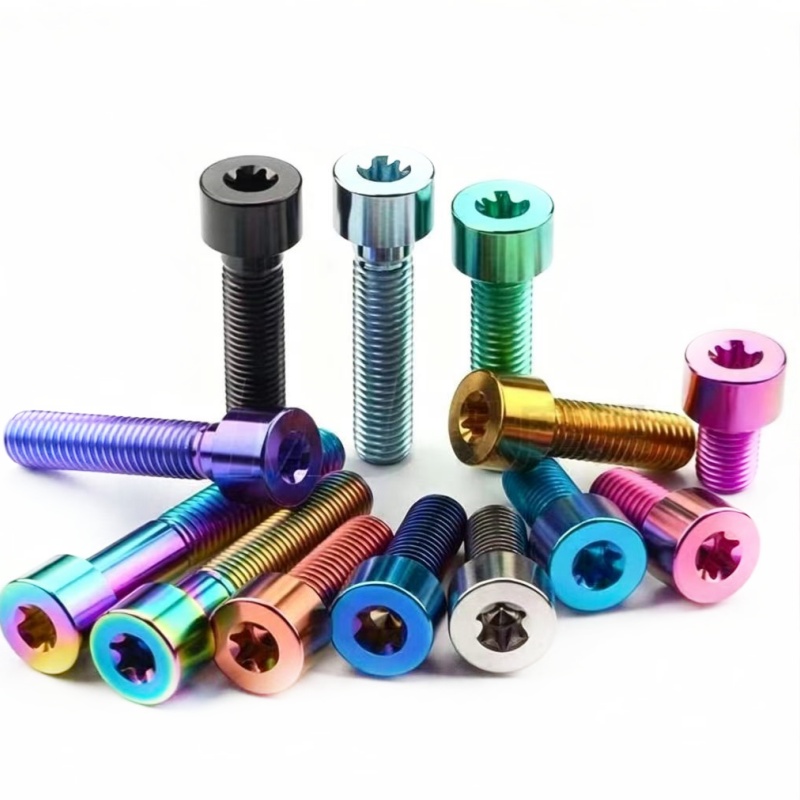
DIN912 M5 Titanium Socket Head Cap Screw Precision Alloy Bolt
- Dimensions:M5 x Custom Length
- Drive:Precision Hex Socket
- Sector:Aero, EV, Medical
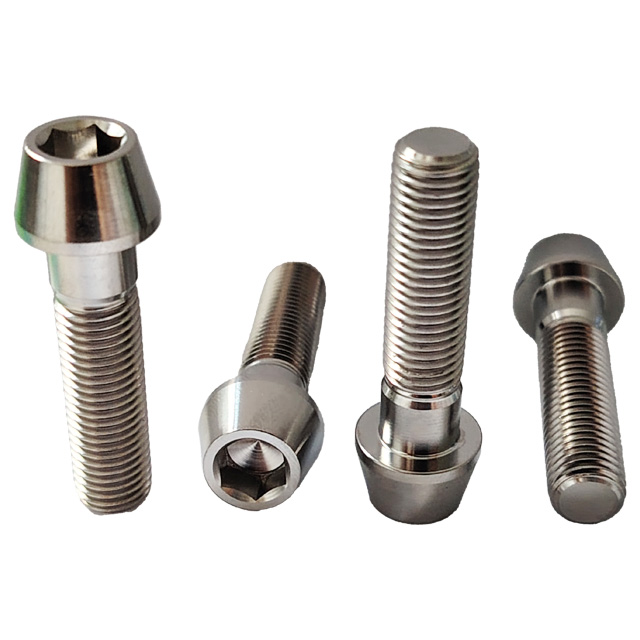
GR5 Titanium Bolts M8 M10 M12 CNC Machined Tapered Head Inner Hex
- Sizes:M8 / M10 / M12
- Profile:Aerodynamic Cone
- Weight Cut:50% vs Class 10.9 Steel
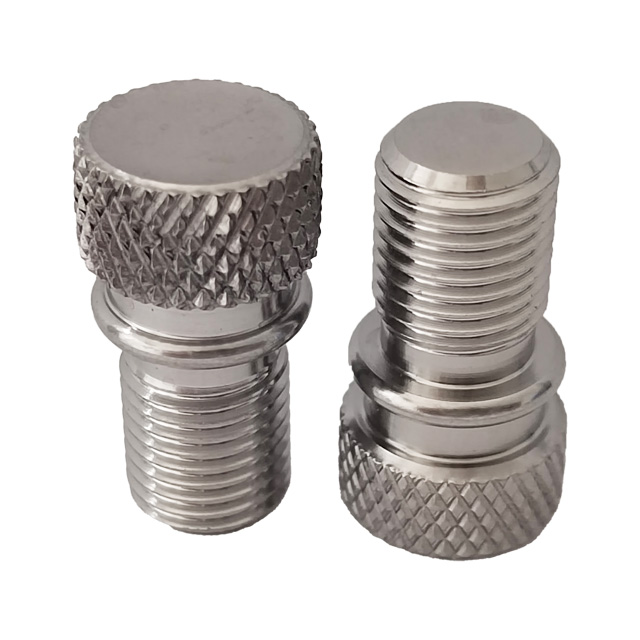
GR5 Titanium Bolts M9*1.0*12mm Cylindrical Knurled Head Screws
- Engagement:Diamond Knurl Manual
- Coating:Natural Acid Pickled
- Usage:Rapid Adjustment Stud
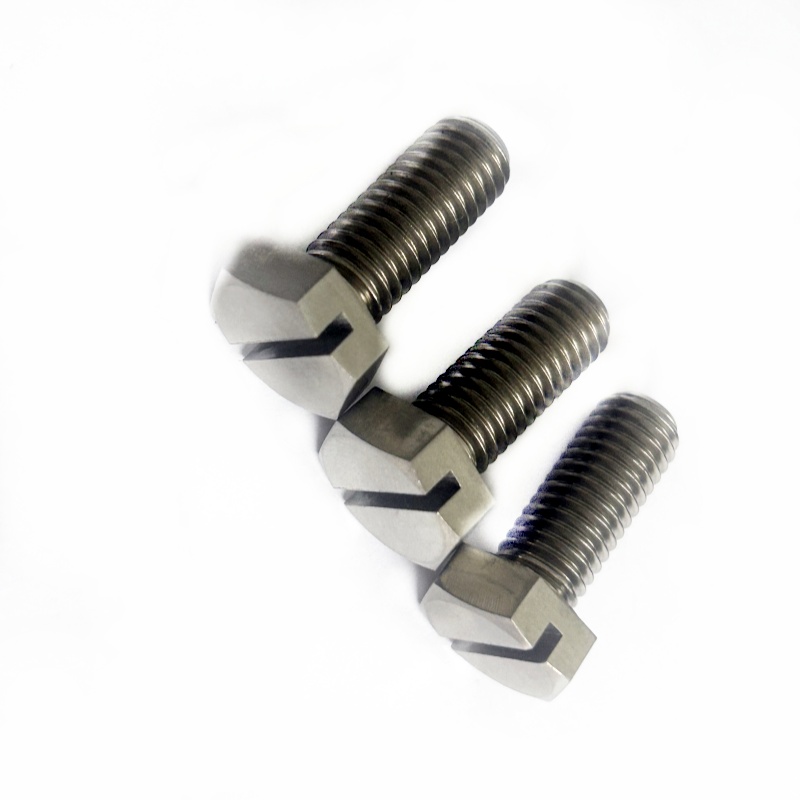
OEM High Precision CNC Machined Titanium Slotted Hexagonal Head Screw
- Drive:Dual Slotted + External Hex
- Machining:5-Axis Swiss Lathe
- Tolerance:ISO h6 / 4h Fit
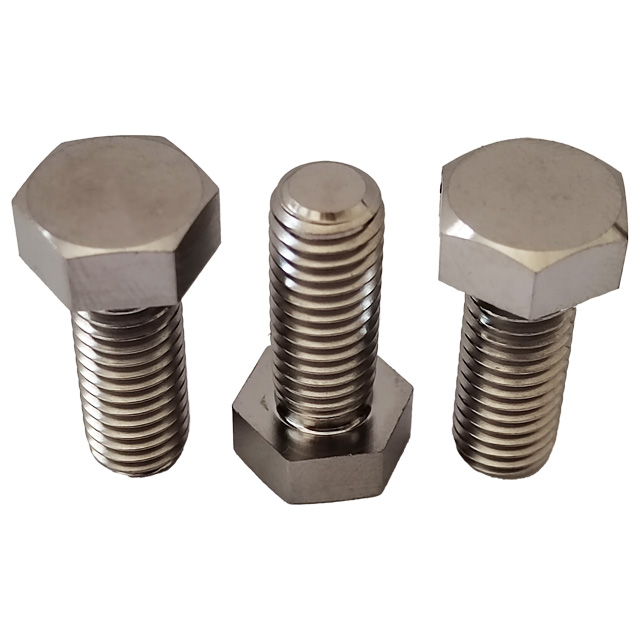
GR5 Titanium Bolts M8*20mm Hexagon Head Full Thread Engine Stud Bolts
- Thread Type:Continuous Rolled M8
- Corrosion:Zero Marine Rust
- Certification:CE 3.1 Mill Certificate
1. Engineering Whitepaper: CE-Marked Titanium Stud Bolting Metallurgy & Structural Mechanics
In high-criticality mechanical assemblies, structural stud bolts function as the foundational tension elements maintaining gasket sealing force, flange interface rigidity, and cyclical shear alignment. Transitioning from high-tensile alloy steels (such as ISO 898-1 Property Class 10.9 and 12.9) or austenitic stainless steels (A2-70, A4-80) to CE-certified Titanium Stud Bolts manufactured from Alpha-Beta Ti-6Al-4V (Grade 5, UNS R56400, W.Nr. 3.7165) resolves the dual failure modes of weight penalties and galvanic pitting in demanding marine, petrochemical, aerospace, and high-performance automotive environments.
Structural Regulatory Compliance: Navzo’s titanium stud bolts comply with European Construction Products Regulation (CPR 305/2011/EU) under EN 15048-1 for non-preloaded structural bolting assemblies, alongside meeting the essential safety prerequisites of the European Pressure Equipment Directive (PED 2014/68/EU Annex I §4.3). Every production batch carries complete heat-treatment pedigree verified through EN 10204 Type 3.1 inspection documentation.
Metallurgical Superiority: Cold-Rolled Threads vs. Cut Threads
A critical divergence in manufacturing quality between consumer fasteners and structural-grade CE certified titanium double-end studs lies in the thread forming methodology. Traditional single-point lathe turning cuts directly through the unbroken grain boundary lines of cold-drawn titanium alloy bar stock. This machining practice creates microscopic stress concentration notches at the root radius, which drastically elevates the susceptibility of the fastener to low-cycle fatigue rupture under dynamic thermal oscillation.
At Navzo’s Baoji manufacturing facility, our structural titanium stud bolts feature 100% cylindrical cold-rolled threads. High-pressure rolling dies plastically deform the Grade 5 alloy around precision root contours. This grain-displacement technique exerts substantial work-hardening on the surface layer, establishing high residual compressive stresses at the root of the thread. As a consequence, our rolled-thread titanium studs demonstrate over a 300% improvement in dynamic fatigue cycle thresholds compared to machine-cut fasteners, rendering them essential for cyclic applications like internal combustion turbo manifolds, offshore marine risers, and aerostructure spar joints.
Comprehensive Mechanical & Physical Property Benchmarking
The selection matrix below evaluates Ti-6Al-4V Grade 5 titanium stud assemblies against standard engineering alloy fasteners under critical mechanical, thermal, and corrosion parameters:
| Alloy / Fastener Grade | Density (g/cm³) | Tensile Strength Rm (MPa) | Yield Strength Rp0.2 (MPa) | Elastic Modulus (GPa) | Thermal Expansion CTE (10⁻⁶/K) | Chloride Pitting Resistance |
|---|---|---|---|---|---|---|
| Ti-6Al-4V Grade 5 (Navzo CE) | 4.43 | 895 – 1050 | 828 – 950 | 114 | 8.6 | Immune (PREN N/A) |
| Commercial Pure Titanium Gr2 | 4.51 | 345 – 480 | 275 – 350 | 103 | 8.6 | Immune |
| Structural Alloy Steel Class 10.9 | 7.85 | 1000 – 1040 | 900 – 940 | 210 | 11.7 | Extremely Poor (Rusts) |
| Austenitic Stainless Steel A4-80 (316) | 8.00 | 800 | 600 | 193 | 16.0 | Moderate (Subject to Crevice) |
| Nickel Superalloy Inconel 718 | 8.19 | 1240 – 1400 | 1030 – 1150 | 205 | 13.0 | Outstanding |
Anti-Galling Tribology & Preload Tension Engineering
A recognized tribological characteristic of titanium alloys is their tendency to undergo adhesive wear, commonly termed thread galling, when coupled with mating titanium or stainless threads under high clamp forces without suitable lubrication. When bare titanium sliding surfaces generate friction under torque, the passive titanium dioxide (TiO₂) film momentarily ruptures, inducing localized micro-welding between adjacent crests and roots.
To eliminate galling in CE-certified critical joints, Navzo deploys advanced surface engineering solutions, including Physical Vapor Deposition (PVD) Titanium Nitride (TiN) or Diamond-Like Carbon (DLC) low-friction boundary coatings, micro-arc oxidation (MAO), and dry molybdenum disulfide (MoS2) film treatments. In standard metric applications where external anti-seize pastes are utilized, the engineering nut factor (torque coefficient K) drops from approximately 0.30 to a highly predictable K = 0.12–0.15, ensuring that applied rotational torque converts accurately into axial clamping preload without inducing torsional plastic deformation along the stud shank.
Why Tier-1 Engineers Source From Navzo
Positioned directly at the nucleus of China's Titanium Valley, Navzo Precision combines deep raw material traceability with full-spectrum internal manufacturing, from heading and CNC threading to dimensional CMM verification.
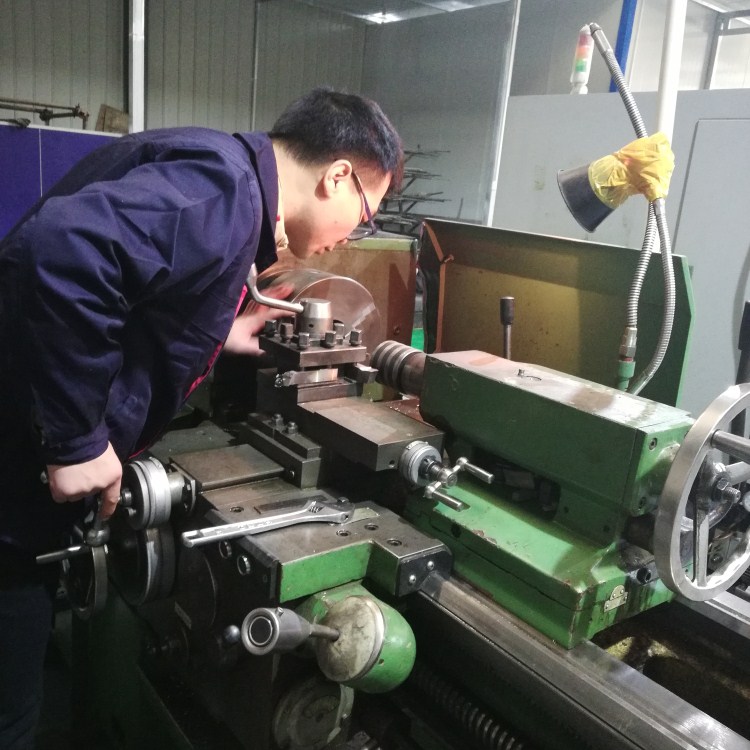
Uncompromising Quality Controlled From Ingot to Thread
Founded in 2011 on Yucai Road in the Baoji High-Tech Industrial Zone, Navzo operates a closed-loop quality management apparatus. By eliminating intermediary trading hubs, we provide authentic European-standard traceability alongside factory-direct pricing benefits.
- 100% Certified Raw Ti Stock: Aerospace-grade Ti-6Al-4V bars compliant with ASTM B348, AMS 4928, and ISO 5832-3 standards.
- Integrated Multi-Station Machinery: High-speed cold heading, dual-spindle Swiss CNC turning, and hydraulic thread rolling stations.
- Exacting Quality Gates: Automated optical sorting machines for pitch consistency, Zeiss CMM inspection, and optical emission spectrometer (OES) melt tests.
- Rapid Technical RFQ Turnaround: Full manufacturing feasibility reviews and formal quotation packages generated in under 1 hour.
Multi-Axis CNC Machining
Equipped with modern 5-axis DMG MORI and Citizen Swiss-type machining centers ensuring tight coaxiality, complex cross-drilled lock-wire safety holes, and exact hex socket broaching.
Traceable Global Logistics
Experienced air and sea export procedures serving verified tier-1 buyers in Germany, the United States, Japan, South Korea, and the Netherlands with complete customs-cleared documentation.
EN 10204 3.1 Traceability
Every shipment is accompanied by detailed chemical composition assays, Charpy impact test data, tensile elongation proof metrics, and dimensional compliance certificates.
Future Procurement & Technological Trends in Titanium Fasteners
As sustainability regulations, aerospace electrification, and clean-energy infrastructure accelerate, strategic procurement leaders are reassessing fastener material lifecycles.
1. Electric Vehicle & Urban Air Mobility Weight Slashing
With battery pack gravimetric energy density remaining a developmental bottleneck, OEMs are replacing steel studs on battery enclosures, inverters, and suspension uprights with CE-certified Grade 5 titanium. Cutting structural hardware mass by 44% yields direct range extension and improves road-holding rotational dynamics in unsprung wheel hubs.
2. Digital Product Passports (DPP) & ESG Validation
Under incoming European Union Ecodesign Regulations, titanium fastener procurement will mandate end-to-end carbon footprint transparency. Navzo is pioneering verifiable sponge origin validation and circular scrap reclamation programs to ensure zero conflict-mineral inputs and a lowered Scope 3 upstream emissions footprint.
3. Shift Toward High-Temperature Near-Beta Alloys
Next-generation aerospace propulsion and hydrogen turbine manifolds demand fasteners capable of withstanding prolonged thermal soak above 400°C without alpha-case embrittlement. Sourcing patterns are transitioning from standard Grade 5 to specialized Ti-6242S and Ti-5553 alloys featuring advanced vacuum nitriding treatments.
Frequently Asked Questions: B2B Titanium Stud Bolt Sourcing
Essential guidance addressing regulatory compliance, galling mitigation, torque tension factors, and precision manufacturing tolerances.
What specific CE documentation accompanies Navzo titanium stud bolts?
Why is thread cold-rolling specified over cut threads for critical stud bolts?
How should engineers address galvanic corrosion when joining titanium to aluminum?
What is the correct torque calculation formula for Grade 5 titanium studs?
Can Navzo manufacture double-ended studs to DIN 938, DIN 939, or custom prints?
Are titanium stud bolts prone to hydrogen embrittlement?
What is the minimum order quantity (MOQ) and standard delivery timeline?
Why does Baoji's industrial cluster provide an edge over regional suppliers?
Request Certified Titanium Stud Fasteners Direct From the Factory
Consult with our senior titanium metallurgy engineers today. Submit your technical drawings, thread pitches, and quantity requirements for instant manufacturability feedback and transparent factory pricing within 1 hour.