A GR5 titanium racing wheel lug nut is a lightweight fastener made from Grade 5 titanium, commonly known as Ti-6Al-4V. It is valued for its high strength-to-weight ratio, corrosion resistance, and distinctive metallic finish. The USGS Mineral Commodity Summaries 2024 identifies aerospace and high-performance engineering as important titanium applications. That context matters. Racing parts often borrow materials proven in demanding environments.
Compared with conventional steel lug nuts, titanium can reduce unsprung and rotating mass. The difference may feel small in one hand. Across four wheels, however, every gram deserves attention. The International Energy Agency’s Global EV Outlook 2024 reported more than 14 million electric car sales in 2023, highlighting the industry’s continuing focus on efficiency and weight reduction. Motorsport follows similar principles, although road-car requirements remain different.
A proper GR5 titanium racing wheel lug nut still requires careful engineering. Its thread quality, seat design, torque range, and galvanic compatibility deserve more attention than appearance. ASTM B348/B348M provides material specifications for titanium and titanium alloy bars and billets, while SAE J995 addresses mechanical requirements for automotive wheel nuts. These references support informed purchasing, but they do not automatically approve every product for every vehicle.
Real-world experience can expose uncomfortable details. Titanium may gall if threads are dry, contaminated, or poorly finished. It may also be unsuitable for certain high-load applications without manufacturer approval. This guide examines material properties, manufacturing quality, fitment, installation practice, and practical limitations. The goal is not to call titanium universally superior. That claim would be too simple.
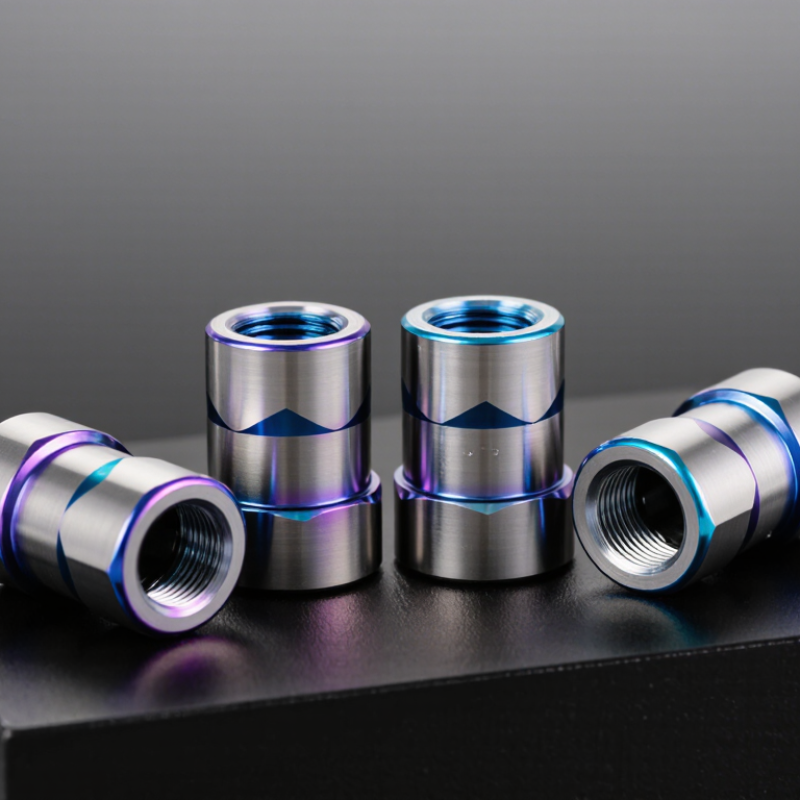
Definition and Meaning of GR5 Titanium Racing Wheel Lug Nuts
A GR5 titanium racing wheel lug nut is a wheel fastener made from Grade 5 titanium. GR5 usually means Ti-6Al-4V, an alloy containing aluminum and vanadium. In practical terms, it offers high strength with much lower weight than common steel lug nuts. This makes it attractive for racing vehicles, where reducing unsprung weight can improve suspension response. Its silver-gray surface also resists corrosion when properly finished.
The meaning of “racing” should be understood carefully. It describes the intended performance environment, not automatic suitability for every wheel. A GR5 lug nut must match the wheel’s seat design, thread size, thread pitch, and required torque. Titanium can gall, especially when threads are dry or dirty. A damaged thread may feel tight while providing poor clamping force. I have seen this mistake during rushed wheel changes. It is easy to underestimate.
Tips: Clean the studs and nuts before installation. Use the manufacturer’s torque specification for the complete wheel system. Apply only a compatible anti-seize compound when approved, because lubrication can change the final torque. Tighten in a star pattern, then recheck after the first heat cycle. Inspect the seating surface for marks or deformation. Titanium is strong, but it is not indestructible. I still inspect each nut after track use, because weight savings should never replace careful maintenance.
What Is a GR5 Titanium Racing Wheel Lug Nut? — Definition and Meaning
| Data Dimension | Typical Specification or Value | Definition and Practical Meaning |
|---|---|---|
| Product Definition | Titanium wheel fastener made from Grade 5 titanium | A GR5 titanium racing wheel lug nut is a threaded fastener used to secure a wheel to a compatible wheel stud. “GR5” commonly refers to Grade 5 titanium, also known as Ti-6Al-4V. |
| Material Designation | Ti-6Al-4V | The alloy contains titanium with approximately 6% aluminum and 4% vanadium by nominal composition. Exact chemistry depends on the applicable material standard and product condition. |
| Material Density | Approximately 4.43 g/cm³ | Grade 5 titanium is substantially lighter than common steel, which has a typical density near 7.85 g/cm³. Actual lug-nut weight depends on thread size, seat design, length, and wall thickness. |
| Minimum Tensile Strength | Approximately 895 MPa for commonly specified Grade 5 titanium bar | This is a material benchmark associated with standard Grade 5 titanium specifications. The finished lug nut’s performance also depends on manufacturing method, heat treatment, geometry, and thread quality. |
| Minimum Yield Strength | Approximately 828 MPa for commonly specified Grade 5 titanium bar | Yield strength indicates the approximate stress level at which permanent deformation begins under a defined test condition. It should not be used alone to determine an installation torque. |
| Elastic Modulus | Approximately 110 GPa | Grade 5 titanium is strong but less stiff than steel. The lower modulus means a titanium lug nut can elastically deform differently from a steel lug nut under the same load. |
| Common Thread Sizes | M12 × 1.25, M12 × 1.5, M14 × 1.5, and 1/2-20 UNF | These are common automotive thread formats, not universal sizes. The lug-nut thread must exactly match the wheel stud’s diameter and pitch or thread form. |
| Thread Pitch Meaning | Metric pitch is measured in millimeters; UNF uses threads per inch | For example, M12 × 1.5 describes a 12 mm nominal thread diameter and a 1.5 mm pitch. A similar-looking but incorrect pitch can damage the stud or nut. |
| Wheel Seat Types | Conical, spherical, or flat seat | The seat must match the wheel’s lug-hole design. A conical seat is not interchangeable with a spherical or flat seat because the contact geometry and load distribution are different. |
| Typical Head or Drive Styles | Hex, spline, or internal drive | Drive style affects installation-tool compatibility and clearance inside the wheel. A racing application may use an extended or reduced-profile design for wheel access. |
| Typical Weight Advantage | Often about 35–45% lighter than a geometrically similar steel lug nut | The approximate reduction comes mainly from titanium’s lower density. The actual percentage varies significantly with nut dimensions, design, and the steel alloy used for comparison. |
| Corrosion Resistance | Very high in normal atmospheric and road environments | Titanium forms a stable protective oxide layer. However, contamination, galvanic coupling with dissimilar metals, road chemicals, and damaged surfaces can still create service issues. |
| Thermal Behavior | Lower thermal conductivity than steel | Titanium transfers heat less efficiently than steel. Wheel-end temperatures still depend on braking system design, airflow, ambient conditions, and driving conditions. |
| Installation Torque | No universal torque value | Torque must be specified by the wheel, wheel-stud, vehicle, or fastener manufacturer. It must account for thread condition, lubrication, coatings, seat type, and the required clamping force. |
| Lubrication Requirement | Follow the fastener supplier’s stated dry or lubricated condition | Lubricant changes the relationship between applied torque and clamping force. Applying a dry torque value to lubricated threads can produce excessive preload. |
| Thread Galling Risk | Higher than with many steel fasteners | Titanium threads can gall when installed or removed under high friction, contamination, misalignment, or excessive speed. Clean threads, correct alignment, and an approved anti-seize or coating procedure may be required. |
| Maintenance Inspection | Inspect threads, seats, flats, cracks, and deformation | Racing use involves repeated heat cycles, vibration, impact loads, and frequent wheel changes. Any damaged or deformed lug nut should be removed from service. |
| Wheel Compatibility | Must match thread, seat, engagement length, and clearance | Correct fit is determined by more than thread size. The nut must provide adequate thread engagement, fully contact the wheel seat, and clear the wheel and brake components. |
| Primary Racing Benefit | Reduced unsprung and rotating mass | Lower lug-nut mass can contribute to a small reduction in unsprung and rotating weight. The practical effect is application-dependent and must not compromise required clamping performance. |
| Safety Limitation | Not automatically suitable for every road or racing application | Use should comply with the wheel, stud, vehicle, event, and applicable regulatory requirements. A lightweight titanium lug nut is not a direct substitute for a properly certified wheel-fastener system. |
Note: The specifications shown are general engineering references and typical examples. Always verify the exact thread, seat profile, material certification, installation procedure, torque requirement, and application approval before use.
FAQS
It is usually made from Ti-6Al-4V titanium alloy. It combines high strength, low density, and corrosion resistance. It is not automatically suitable for every wheel.
Titanium has a density near 4.5 grams per cubic centimeter. Steel is about 7.85 grams per cubic centimeter. Actual savings depend on nut size and design. Small savings still matter near rotating wheels.
No. Aluminum is lighter, at roughly 2.7 grams per cubic centimeter. Titanium usually offers higher strength and better thread durability. Weight is only one part of the decision.
Steel usually provides predictable threads, strong fatigue resistance, and lower cost. It can also tolerate repeated installation well. Titanium sounds superior, but that judgment can be too simple.
Yes, Grade 5 titanium resists surface corrosion well. Wet wheels and damp storage are generally less concerning. Still inspect the threads and seating faces after hard sessions.
Use the specified torque for the titanium fastener. Do not copy a familiar steel setting. A calibrated torque wrench helps prevent loose or damaged threads.
Keep the threads clean and use a compatible anti-seize compound. Dry, repeated installation increases galling risk. Stop if tightening feels rough.
Confirm the thread pitch, nut seat shape, and wheel contact area. Check compatibility with aluminum studs or hubs. Different metals can encourage galvanic corrosion. Tiny seating errors can create major problems.
Conclusion
A GR5 titanium racing wheel lug nut is a high-performance wheel fastener made from Grade 5 titanium, an alloy valued for its excellent strength-to-weight ratio, corrosion resistance, and durability. In racing applications, it offers a useful balance between reduced weight and dependable clamping performance. Compared with steel lug nuts, titanium versions are significantly lighter and resist rust, while providing greater strength and heat tolerance than many aluminum alternatives. However, aluminum may still be preferred for certain lightweight applications where extreme load demands are lower.
Proper installation is essential because titanium has different friction and tightening characteristics than steel. The lug nuts should be matched with compatible wheel studs, thread dimensions, seating styles, and manufacturer-recommended torque specifications. Over-tightening or using unsuitable lubricants can affect clamping force and thread condition. Although titanium lug nuts offer valuable weight savings and long-term corrosion resistance, they typically cost more and require careful inspection. Regularly checking threads, seating surfaces, and torque helps maintain safe and reliable wheel performance.